Walk past the television cameras on the Capitol steps at two in the morning, and you will hear an unsettling quiet. While cable news networks replay heated speeches from the House floor, the true outcome of the federal budget is being quietly decided three floors beneath the marble rotunda. Down here, in cramped auxiliary conference rooms smelling of burnt drip coffee and dry-erase markers, the theatrical posture of public debate gives way to physical, analog labor.
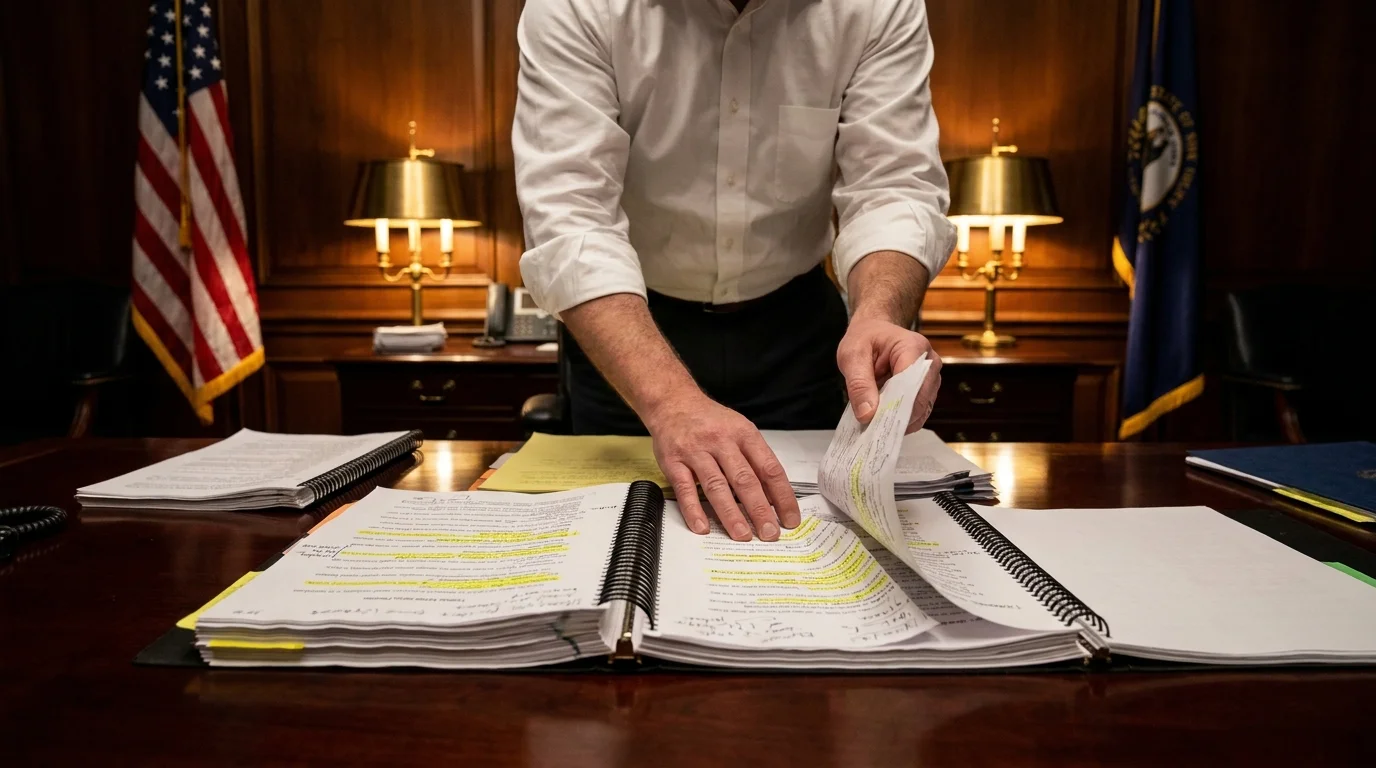
On long folding tables sit thick spiral-bound paper folders marked with jagged, bright yellow highlighter lines. These binders hold the manager amendment packets—the eleventh-hour compromise instruments that quietly rewrite millions of dollars in contested line items while the country sleeps.
You have likely been told that federal spending bills live or die by roll-call floor votes where lawmakers take clear public stands on contentious community earmarks. But when statutory reconciliation deadlines bear down and government shutdown clocks run down to single-digit hours, standard floor procedure quietly steps aside.
Instead, ranking members and committee staff settle disputes through manager substitute pages—loose-leaf inserts slipped between binding rings that can reverse months of committee arguments in a single pen stroke, bypassing isolated floor debates entirely.
The Legislative Switchboard: Why Paper Still Beats the Podium
Think of an appropriations bill not as a rigid monument carved in stone, but as an old-fashioned telephone switchboard. Every spending line is a live wire, humming with local project funds, university grants, and targeted infrastructure earmarks. When two factions reach an impasse, they do not smash the switchboard on the House floor; they reroute the plugs behind the wooden paneling.
The manager amendment packet is the tool that reroutes those wires. Unlike regular floor amendments, which require public debate, individual electronic roll calls, and recorded tallies, a manager amendment is bundled into a single procedural package. It is offered by the committee chair, accepted by voice vote under suspension of normal time limits, and enacted as a unified block.
- USPS whistleblower mail ballot concerns demand immediate federal sorting audits before primary deadlines
- Statehouse constituent petition sheets force lawmaker votes through physical hand delivered binders
- Dual-frame telephone polling screens strip rural turnout data through aggressive landline call filters
- Internal tracking poll cross-tabs demand immediate candidate schedule pivots across swing media markets
- Sunbelt precinct organizing drives derail establishment party slates using localized voter pledge cards
Marcus Vance, a 48-year-old former senior legislative clerk who spent fifteen years managing conference prints for the House Appropriations Committee, remembers the physical rush of the midnight substitution. Vance would sit at a folding desk with a red grease pencil, scratching out disputed water-treatment grants from one district and taping in replacement harbor dredging authorizations for another just forty minutes before the final printing run. The deal was never struck on CSPAN; it was negotiated across a grease-stained takeout box while lawmakers traded handwritten riders to ensure their home districts stayed funded.
The Anatomy of a Midnight Substitution
To understand how your tax dollars shift without a designated floor vote, you have to look at the three distinct layers where manager packets alter spending:
The Quiet Rescission Swap
When a high-profile earmark draws fierce public criticism in the morning headlines, leadership rarely kills the underlying cash allocation on the floor. Instead, the manager packet strips the named project from the primary text and shifts that exact dollar figure into a broad, discretionary agency account. The controversy vanishes from the news cycle, but the money remains inside the federal pipeline.
The Bipartisan Earmark Trade
During contentious budget cycles, stubborn holdouts are often brought into line through quiet project exchanges. A disputed community center grant in an opposition district is dropped, and in its place, a handwritten substitute page awards an equal amount to an emergency bridge repair project two counties over. Handwritten line-item substitute pages are slipped into the binder rings just minutes before the voice vote is called.
The Technical Corrections Camouflage
Manager packets are officially described as non-controversial adjustments meant to fix clerical typos or statutory cross-references. Yet tucked between legitimate formatting corrections, committee staff frequently insert substantive policy language—such as shifting compliance deadlines for regional utilities or exempting specific municipal projects from federal oversight reviews.
How to Track the Real Budget Shifts in Real Time
You do not have to accept legislative opacity as an unchangeable reality. Tracking these rapid adjustments requires shifting your attention away from floor speeches and focusing on raw committee filings:
- Monitor the Rules Committee Docket: Watch for late-night “Emergency Meeting” notices posted to the House Rules Committee portal. When an emergency rule is filed past 11:00 PM, the accompanying manager text is usually posted as a single unsearchable PDF.
- Search for Text Insertions: Use document comparison tools to run diff-checks between the reported committee bill and the final “Manager’s Text as Offered.” Look specifically for struck-through project names under Section 100 General Provisions.
- Watch the Voice Vote Cadence: Listen to the audio feed when the bill manager requests unanimous consent to modify the amendment text. If the chair speaks rapidly and gavels within five seconds without debate, a major compromise packet was just adopted.
The Appropriations Tracker Toolkit: Keep the House Committee on Rules repository bookmarked on your phone, set automated alerts for committee print updates on Congress.gov, and follow the sub-agency transfer language under Title IV administrative accounts.
The Balance Sheet of Closed-Door Compromise
It is easy to look at late-night legislative maneuvering with cynicism, viewing handwritten binder inserts as proof of a broken process. Yet in a polarized legislature, these quiet rooms serve as the pressure valve that keeps the basic machinery of government from seizing up entirely.
When you understand that the real spending fights happen on paper margins rather than behind television microphones, your perspective as a citizen changes. You stop reacting to the theater on the floor and start reading the text that actually changes your local economy.
“Legislation is never finished on the floor; it is survived in the margins of a clerk’s binder before dawn.”
| Mechanism | Procedural Detail | What It Means for You |
|---|---|---|
| Manager Amendment Package | Bundled substitute text adopted by voice vote without individual roll calls. | Changes local project funding without placing individual lawmaker votes on the public record. |
| Discretionary Rescission | Removes targeted earmark lines and moves cash to agency discretion. | Reduces political blowback while preserving total agency expenditure levels. |
| Technical Line Substitution | Handwritten replacement pages bound into final committee printings. | Enacts substantive policy riders under the guise of spelling and cross-reference fixes. |
Frequently Asked Questions
Are manager amendments legal under congressional rules?
Yes. Both the House and Senate operate under standing rules that permit committee chairs to offer manager amendments to streamline procedure and bundle widely agreed-upon technical changes.How do earmarks get inserted if they were previously banned?
Congress revived directed spending under new transparency labels called “Community Project Funding.” While individual requests must be submitted online, manager amendments can alter or remove these allocations late in the process.Can an individual lawmaker block a late-night manager packet?
An individual member can object to unanimous consent requests or demand a recorded quorum call, but party leadership usually marshals the necessary floor majority to adopt the special rule governing the packet.Where can regular citizens read the final text of manager substitutions?
Final substitute language is uploaded to the House Rules Committee website and Congress.gov, though it often appears only hours before the final floor vote.Why do committee leaders use paper binders instead of digital files?
Physical paper packets allow clerks and staff attorneys to make immediate, handwritten alterations and physical substitutions right on the committee floor up to the exact moment of formal introduction.