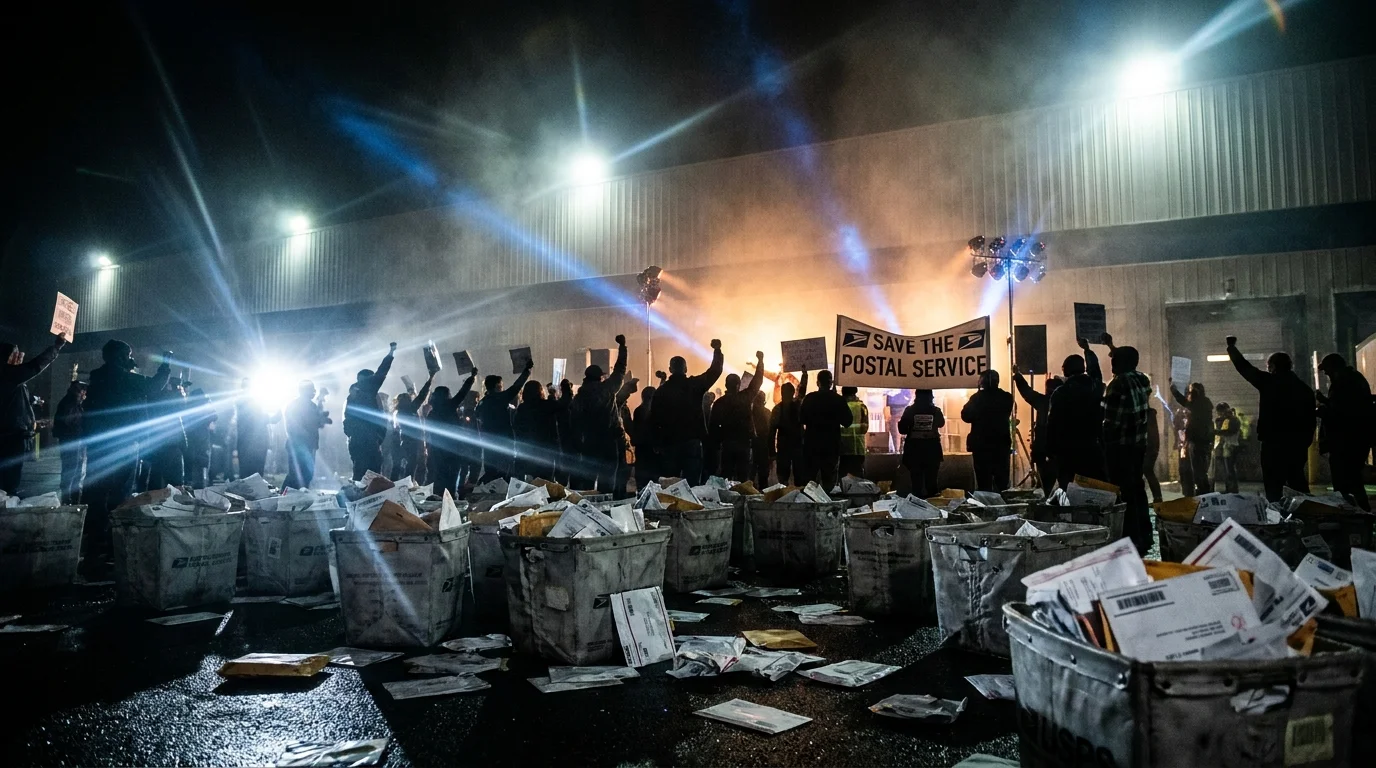
The dull hum of industrial fluorescent fixtures buzzes overhead as rubber conveyor belts screech through the pre-dawn quiet. In the cavernous belly of a regional postal processing plant, gray canvas mail sorting bins overflowing with barcoded envelopes sit idle beneath steel gantries. You are told every election cycle that your vote moves along an unbroken, frictionless line, gliding effortlessly from your kitchen table to the clerk’s lockbox.
Yet on the facility floor, the physical reality tells a different story. Paper jams stall high-speed sorters during critical graveyard shifts, leaving thousands of credentialed pieces of mail waiting in limbo while maintenance crews scramble for spare components.
When you drop your ballot into that blue steel collection box on the corner, you assume a steady municipal rhythm takes over. But recent whistleblower disclosures from veteran postal workers reveal that regional network overhauls have introduced structural chokepoints that can swallow transit days without leaving an immediate digital trace.
The Hub Consolidation Bottleneck
For decades, local post offices sorted local mail within local city limits. If you mailed a letter across town, it stayed within your county line, sorted on a local machine during evening operations and delivered the following morning. Today, that simple loop has been replaced by a sprawling regional hub model designed to streamline long-haul logistics.
Think of it like forcing a clean, rushing river through a single crimped firehose. Every single ballot must travel dozens or even hundreds of miles to a centralized Regional Processing and Distribution Center before it ever gets pointed back toward your municipal election office.
When automated Delivery Bar Code Sorters (DBCS) experience routine downtime windows—often between 2:00 AM and 5:00 AM for software resets and physical vacuuming—unprocessed bins back up along loading docks. In states where ballots must physically arrive by poll close on election day rather than simply bearing a postmark, a single four-hour sorting delay can quietly disenfranchise hundreds of voters without warning.
- Statehouse constituent petition sheets force lawmaker votes through physical hand delivered binders
- Dual-frame telephone polling screens strip rural turnout data through aggressive landline call filters
- Internal tracking poll cross-tabs demand immediate candidate schedule pivots across swing media markets
- Sunbelt precinct organizing drives derail establishment party slates using localized voter pledge cards
- Federal campaign finance databases resurface hidden PAC donations using exact recipient matching codes
Marcus Vance, a 52-year-old mail processing clerk at a major Midwestern sorting hub with twenty-four years on the floor, watched this transition unfold firsthand. During peak primary weeks, Marcus noted that while management dashboards displayed green system health metrics, physical trays of local election mail sat parked in auxiliary staging areas awaiting second-pass sorting codes that were delayed by system synchronization lags. His quiet field reports, alongside dozens of union grievances, triggered the current surge of scrutiny demanding independent federal sorting audits before general election deadlines hit.
How Routing Chokepoints Shift Across Geographies
The impact of regional consolidation does not fall equally across every ZIP code. Depending on where you live, the physical route your envelope takes encounters distinctly different logistical friction points.
For the Suburban Growth Corridor: Rapidly expanding suburbs often outpace local carrier capacity. In these districts, ballots frequently sit in transit containers at regional hubs awaiting sorting runs that prioritize commercial parcel volume during mixed-stream processing cycles.
For Rural Route Voters: If you live outside metro limits, your ballot often travels an extra 150 miles just to reach an automated optical character reader before returning to the adjacent township. Severe weather or mechanical transit breakdowns on rural interstate corridors introduce multi-day buffers that standard delivery estimates ignore.
For Overseas and Military Voters: Ballots originating from APO/FPO addresses enter domestic processing through specialized coastal gateway hubs. These facilities face stringent customs-level barcode indexing, meaning any regional system slowdown compounds international transit times dramatically.
A Tactical Protocol for Ballot Tracking
You do not have to leave your vote to the mercy of sorting machine maintenance cycles. Taking back control requires treating your ballot like a time-sensitive legal instrument rather than a standard holiday greeting card.
- Request your absentee ballot on the earliest date permitted by state law to sidestep the initial application processing backlog.
- Fill out and return your ballot at least ten business days prior to statutory deadlines if relying on standard postal transit.
- Opt into your county’s automated Intelligent Mail Barcode (IMb) tracking service to receive automated SMS updates at each processing scan.
- Utilize direct physical dropboxes or county board of elections hand-delivery options if you are within seven days of the deadline.
Maintain your tracking receipt number from the ballot envelope stub until your municipal election portal confirms final acceptance and processing.
The Bigger Picture
Civic participation should never hinge on the mechanical tolerances of an optical barcode scanner or the shifting maintenance shifts of a distant regional warehouse. Understanding how the physical mail stream functions strips away false comfort and replaces it with actionable, practical vigilance. When you recognize the mechanics of transit, you stop guessing and start ensuring your voice lands squarely where it belongs.
The health of an election is measured not by how fast mail travels on paper, but by the physical transparency of the machines that touch it.
| Transit Phase | Vulnerability Point | Voter Safeguard |
|---|---|---|
| Collection & Intake | Missed late-afternoon carrier sweep schedules | Deposit before the earliest posted collection time |
| Regional Hub Sorting | DBCS automated sorter downtime windows (2 AM – 5 AM) | Track IMb scans via county portals for hub clearance |
| Final Delivery to Board | Statutory receipt cutoffs vs. postmark grace periods | Switch to official secure dropboxes inside 7 days |
Frequently Asked Questions
Does a postmark guarantee my vote will be counted?
Not in every state. More than thirty states require ballots to be physically delivered to election offices by poll close on Election Day, regardless of when the postmark was applied.What is an Intelligent Mail Barcode (IMb)?
It is a 65-bar code printed on official envelopes that allows automated sorting machines to log the envelope’s exact location, giving you real-time tracking visibility.Why do sorting hubs experience maintenance downtime?
High-speed sorting machines accumulate paper dust and require daily calibration and clearing cycles, typically scheduled during overnight transit windows.How can I verify if my local facility is undergoing an audit?
Federal audit schedules and inspection reports are publicly posted by the USPS Office of Inspector General (OIG) on their oversight dashboard.What is the safest return method within one week of an election?
Hand-delivering your sealed ballot directly to your local clerk’s office or an official, monitored municipal drop box completely bypasses regional sorting risks.