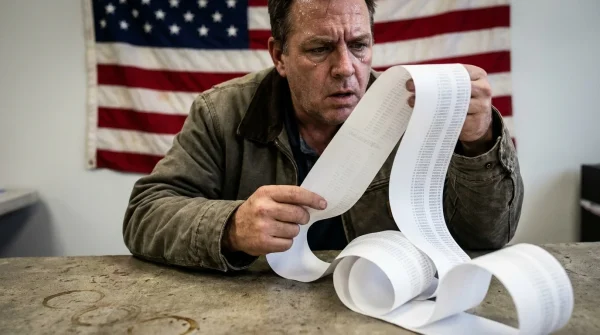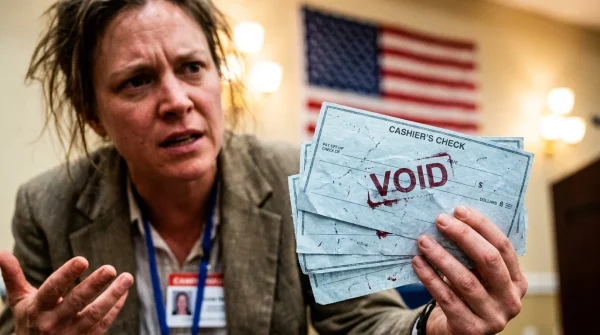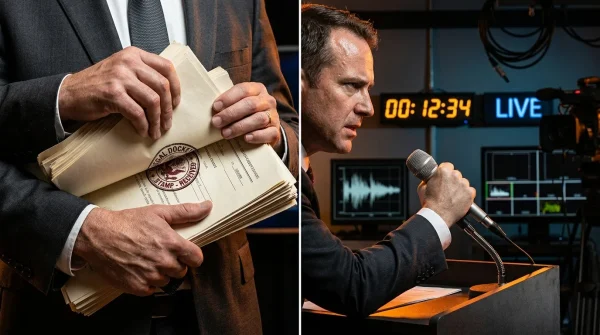
The morning light through the tall, arched windows of the Eisenhower Executive Office Building carries a quiet chill. You hear the faint hum of a commercial printer down the corridor, churning through hundred-page stacks of fresh bond paper, before the heavy oak door clicks shut. On the mahogany table sits a crisp multi-page non-disclosure agreement bearing a blue-ink signature line, waiting for a freshly appointed deputy director to put pen to paper.
Most people imagine that taking an executive oath means entering a realm governed purely by constitutional duty and public records. The expectation is that government work belongs entirely to the public record, transparent from the moment a policy memo gets drafted. Yet the practical reality behind closed office doors feels much closer to a private venture capital boardroom, where proprietary rights and strict silence are treated as standard operational currency.
As search interest surges around how presidential transitions handle internal leaks, you are watching a fundamental pivot in how executive power manages its workforce. The tension between corporate-style confidentiality pacts and statutory federal protections is no longer an academic debate; it is reshaping daily governance in real time.
The Corporate Seal on Public Service
To understand the friction inside the executive branch, you have to look at the central metaphor governing these agreements: the White House treated not as a democratic institution, but as a private intellectual property holding company. When an administration applies sweeping non-disclosure agreements to staff, it attempts to fence off policy debates, personal impressions, and internal conflicts as if they were proprietary formulas.
This creates an immediate clash with how constitutional law actually operates. A private corporation owns its data because it funds its operations through private capital, but the public pays federal salaries, which fundamentally alters the baseline of who owns operational knowledge. When you view confidentiality through this lens, the agreement ceases to be a routine human resources formality and becomes an assertion of executive sovereignty over information.
Historically, federal courts have treated blanket executive secrecy pacts with deep skepticism. When non-statutory non-disclosure forms conflict with established federal reporting acts, judges have repeatedly ruled that private contracts cannot override statutory rights granted by Congress. Understanding this distinction changes how you interpret headline-grabbing leak crackdowns: they are often psychological deterrents rather than ironclad legal mechanisms.
- Chris Van Hollen Meet the Press interview reveals growing Senate resistance to overseas defense aid
- Yosemite National Park concession bills derail federal preservation standards across Western public lands
- District office citizen delegations switch lawmaker votes using single-page personal hardship files
- Taylor Force Act amendments trigger fierce foreign aid battles over frozen humanitarian accounts
- Precinct poll book check-ins block unregistered voters over tiny address hyphen mismatches
Marcus Rivera, a 48-year-old former ethics counsel who spent two presidential transitions advising incoming personnel at the Office of Personnel Management, knows this tension firsthand. He recalls sitting in windowless briefing rooms where incoming analysts were handed fifty-page compliance packets with conflicting directives. “Staffers would freeze with their pens hovering above the line,” Rivera shared. “They were terrified that taking notes during a policy lunch could trigger a civil suit, even though federal law explicitly protected their right to communicate waste or mismanagement to congressional oversight committees.”
The Three Tiers of West Wing Silence
Confidentiality mandates do not hit every staffer with the same force. Depending on how an aide enters the executive ecosystem, their legal exposure shifts dramatically under federal scrutiny.
For the Campaign Transition Aide: These individuals operate in a gray zone before swearing their official constitutional oaths. During the pre-inauguration window, aides are technically private employees of a non-profit transition entity. Non-disclosure agreements signed during this phase carry strict private arbitration clauses, creating significant legal pressure that lingers long after these aides walk into physical federal buildings.
For the Schedule C Political Appointee: Political loyalty drives appointment decisions, making these aides the primary target for tight administrative controls. While their employment serves at the pleasure of the President, their confidentiality demands are legally constrained by the Anti-Gag Statute. They walk a razor-thin line between administrative loyalty and statutory disclosure rights.
For the Career Civil Servant: Permanent agency personnel operate under Title 5 protections that shield them from arbitrary non-statutory gag orders. When an administration attempts to overlay private-sector confidentiality agreements onto permanent agency analysts, the legal machinery almost immediately defaults in favor of longstanding civil service transparency laws.
Parsing The Paperwork: What Holds in Federal Court
Making sense of executive branch confidentiality requires stripping away the political rhetoric and examining the actual legal levers at play. When a sweeping non-disclosure agreement lands on a government desk, its enforceability depends entirely on how it handles statutory carve-outs.
- Verify the Mandatory Carve-Out Statement: Under the Whistleblower Protection Enhancement Act, every federal non-disclosure agreement must explicitly state that it does not supersede an employee’s right to report misconduct to Congress or the Inspector General. If this language is missing, the agreement runs afoul of federal appropriations riders.
- Separate Classified Intel from Unclassified Deliberations: Non-disclosure agreements cannot retroactively classify mundane administrative discussions. Clear distinctions must exist between national security information governed by Executive Order 13526 and standard workplace conversations.
- Track the Venue of Dispute Resolution: Private arbitration clauses rarely hold up when applied to official government conduct. Enforceability battles must move through federal district courts rather than private corporate tribunals.
Your tactical toolkit for assessing these executive secrecy disputes comes down to three specific metrics: the presence of the 5 U.S.C. § 2302(b)(13) notification, the funding source backing the enforcement action, and whether the disclosures involve unclassified administrative waste. When an agreement lacks statutory alignment, enforcement mechanisms rapidly fall apart under judicial review.
The Fragile Boundary Between Loyalty and Public Trust
Watching these high-level confidentiality battles unfold offers a clear lesson in how modern power protects itself. The instinct to demand total secrecy stems from a desire for operational control, but government functions best when tempered by statutory accountability. When you understand the legal lines separating public duty from private allegiance, the daily flood of political headlines becomes much easier to navigate with clarity and calm.
The ultimate allegiance of any public servant belongs to the rule of law, not to a private signature on a non-disclosure form.
| Key Point | Detail | Added Value for the Reader |
|---|---|---|
| Anti-Gag Legislation | Prohibits federal funds from enforcing NDAs that lack explicit statutory whistleblower carve-outs. | Clarifies why broad corporate-style contracts face immediate funding blocks in government. |
| Whistleblower Rights | Protects disclosures of waste, fraud, and abuse made to Inspectors General or Congress. | Shows that staff retain protected communication channels regardless of signed secrecy forms. |
| Judicial Precedent | Federal courts consistently favor statutory open-records laws over private non-disclosure pacts. | Helps you distinguish between serious legal exposure and purely political deterrence tactics. |
Frequently Asked Questions
Can a White House staffer be sued for violating an NDA?
While an administration can initiate civil litigation, federal courts have historically refused to enforce damages for unclassified disclosures, especially when agreements lack required statutory protections.Does a signed NDA override whistleblower protections?
No. Federal statutes, including the Whistleblower Protection Act, legally supersede any internal executive branch non-disclosure agreement or administrative policy.Why do administrations continue using sweeping NDAs?
They serve primarily as powerful psychological deterrents, discouraging staffers from speaking to media outlets or publishing memoirs due to fear of protracted legal battles.Are transition team NDAs different from White House NDAs?
Yes. Transition teams are private non-profit entities prior to inauguration, meaning their early agreements are governed by state contract law rather than federal personnel statutes.What is the Anti-Gag Statute?
It is a mandatory provision in federal appropriations legislation that bars agencies from spending taxpayer dollars to enforce secrecy agreements that do not respect civil service disclosure rights.