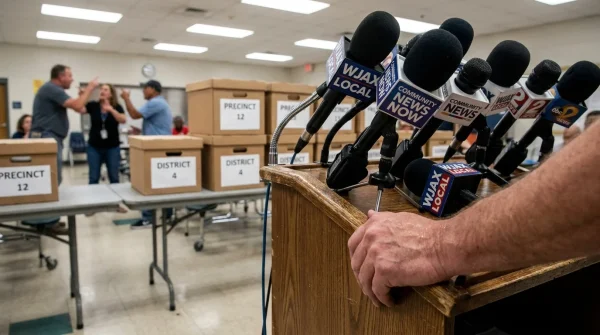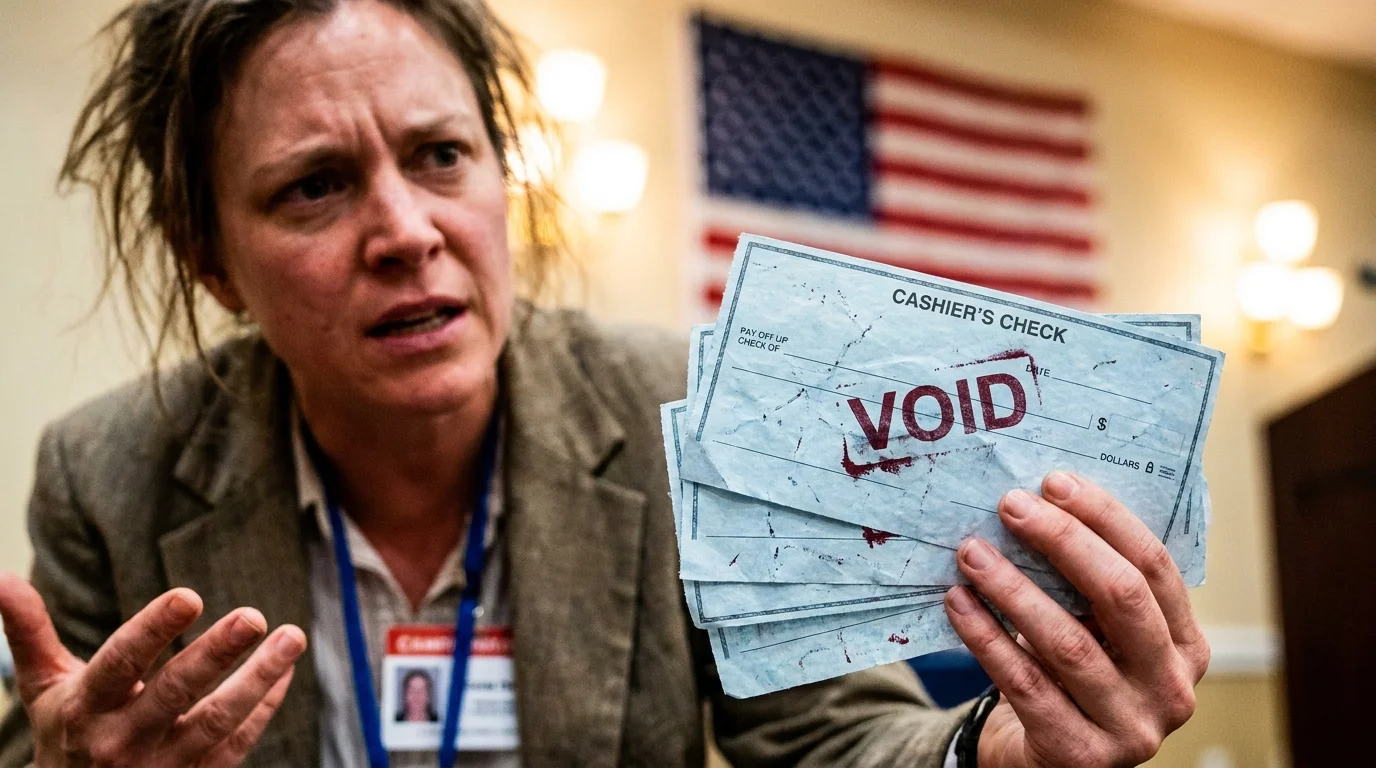
The administrative basement of a county elections office at five o’clock on a Friday rarely resembles what you see on cable news. There are no television lights or thunderous speeches, only the low hum of fluorescent ballasts and the steady tick of an official wall clock. On the intake counter sits a duplicate filing docket alongside a cashier check receipt, stamped diagonally in thick crimson ink: VOID – DEADLINE EXPIRED. When the promised private escrow funds never clear the wire, the grand legal theater collapses into the quiet snap of a three-ring binder closing.
You have likely watched months of high-decibel promises about sweeping, multi-county hand counts and forensic challenges. The public narrative always suggests that legal challenges are fueled purely by ideological will, sustained by endless grassroots fervor. administrative reality runs on hard currency and strict statutory clocks that do not pause for broadcast schedules or online rallies.
When high-profile figures pledge millions in personal escrow guarantees to bankroll statewide audits, state party committees build entire public strategies around those assurances. But when the escrow window closes without the required funds sitting in the state treasurer’s deposit account, party attorneys face an immediate, non-negotiable fork in the road: wire the six-figure bond from their own operating accounts within minutes, or file emergency motions to withdraw the petitions entirely.
The Cold Physics of the Statutory Escrow
To understand why state party strategies pivoted overnight, you have to look past the political rhetoric and examine the mechanics of election law bonds. Think of a recount petition not as an ideological crusade, but as a heavy freight elevator operated by a coin slot. The court clerk cannot push the button until the statutory fee lands in the municipal ledger; without that weight, the cables remain locked in place.
Election statutes across battleground districts are designed with deliberate friction. When a candidate or outside organization requests a recount that falls outside the narrow margin of a state-funded automatic recount, the petitioner must bear every cent of the administrative cost. every precinct table requires certified funding to pay bipartisan tabulators, security personnel, overtime for clerks, and specialized facility rentals.
For months, state party executives calibrated their messaging around outside financial backing. The expectation of third-party escrow accounts allowed leadership to promise aggressive legal intervention without tying up their internal war chests. The moment those third-party deposits missed their statutory deadlines, that financial buffer vanished. Party committees were abruptly forced to choose between draining their field-organizing budgets to cover administrative audit bonds or quietly shifting their institutional focus back to standard ballot-box operations.
- Curbside ballot drop box slots block creased paper ballots with narrow metal lips
- State legislative delegation breakfasts demand handwritten index cards to flip contested fiscal votes
- Seth Moulton primary challenge triggers intense voter realignment across Massachusetts coastal defense corridors
- Executive privilege declarations derail congressional subpoena power following sudden White House legal filings
- Medicare Advantage prior authorization mandates spark fierce policy clashes over denied medical claims
The Five-Minute Window in Carson City
Clara Vance, a 48-year-old compliance attorney who has managed precinct litigation across Nevada and Arizona for over two decades, remembers the exact afternoon the operational dynamic shifted. She was sitting in a county registrar’s conference room with a stack of signed contest declarations, waiting on a confirmation code from a private donor wire that was supposed to cover the seventy-thousand-dollar deposit for three rural counties.
At 4:55 PM, the state central committee’s phone line went quiet. Clara watched the deputy registrar pull out the red rubber date-stamp, adjust the day’s date, and place it beside the receipt book. Without that certified deposit confirmation, filing the petitions would have exposed the state party to immediate bad-faith sanctions and municipal collection suits. Clara packed the briefs back into her leather briefcase, walked out to her car, and called the party chairman to deliver the hard reality: the outside escrow model was dead, and the party needed an entirely new operational posture before sunrise.
The Realignment: How State Parties Are Adapting
When the promised outside funding evaporated, party strategists did not simply surrender their objectives; they retooled their playbooks to work within structural constraints. You can see this shift unfolding across three distinct operational layers:
1. The Legislative Rulebook Pivot
Instead of pursuing expensive post-election litigation, party leadership has redirected its legal talent toward administrative rule-making. Changing an administrative rule through county boards of commissioners costs a fraction of a full precinct recount bond. lawyers now target pre-canvass procedures rather than filing multi-million-dollar post-certification lawsuits that require upfront surety cash.
2. The Micro-Bond Precinct Focus
State committees have abandoned sweeping statewide audit filings in favor of hyper-targeted, single-precinct challenges. By narrowing the scope to a handful of targeted precincts, local organizers can cover the mandatory statutory deposit using small-dollar local accounts, entirely bypassing the need for national mega-donor escrow guarantees.
3. The Grassroots Ground-Game Reset
With outside escrow funds confirmed as unreliable, campaign directors have pivoted their messaging back to preventative field operations. Rather than banking on forensic challenges after the fact, parties are shifting resources into training volunteer poll watchers and early-voting mobilization, ensuring problems are documented during voting hours rather than contested in costly administrative hearings.
Tracking the Paperwork: A Field Toolkit for Election Scrutiny
If you want to understand what a political organization is actually doing, stop listening to press conferences and start reading county balance sheets. Real political power always leaves a paper trail in the county clerk’s filing cabinet.
- Check the Surety Bond Deadlines: Every jurisdiction sets a strict statutory window (typically between 48 hours and 5 days post-canvass) for depositing contest funds. If a bond is not posted by the exact statutory minute, the challenge is legally dead.
- Examine the Drawer Receipts: Public records requests for county deposit receipts reveal whether an audit was funded by a certified cashier’s check, an escrow wire, or an internal party operational check.
- Review the Withdrawal Motions: When outside funding fails, watch for phrases like “voluntary dismissal without prejudice” or “procedural restructuring” in court dockets. These are legal code for a missed deposit deadline.
- Monitor the Escrow Balance Sheets: Independent escrow accounts require third-party trustees. If a trustee does not file a notice of secured funds with the court clerk, the financial guarantee does not exist in the eyes of the law.
Understanding these procedural steps strips away the hyperbole. clear financial tracking reveals true intentions faster than any stump speech or digital campaign message ever could.
The Reality of Administrative Politics
It is easy to get caught up in the emotional velocity of modern political messaging. Headlines promise sweeping overturns, decisive audits, and dramatic courtroom showdowns funded by high-profile patrons. Yet the machinery of American governance remains resolutely administrative, bound by local ordinances, strict surety formulas, and unyielding deposit clocks.
When you understand that election litigation is governed by the cold mechanics of bank drafts and cashier check deadlines, the entire political landscape becomes clearer. The sudden pivot in party strategy is not a mystery or a backroom betrayal; it is the natural consequence of institutional reality reasserting itself over political theater. Learning to read these financial realities gives you an enduring clarity that no cable broadcast can cloud.
Real political accountability is not measured by the volume of a rally, but by the cleared balance on a county clerk’s ledger before five o’clock.
| Key Point | Detail | Added Value for the Reader |
|---|---|---|
| Statutory Bond Thresholds | State laws require petitioners to pay 100% of recount costs upfront via certified funds. | Reveals why outside verbal promises cannot stop official certification deadlines. |
| The Red-Stamp Cutoff | County clerks void petitions the second the statutory filing window lapses without verified escrow. | Helps you identify when a high-profile legal challenge is actually finished before the news reports it. |
| Strategic Realignment | Parties are moving funds from courtroom challenges into pre-election rules and poll watching. | Shows where political party budgets are actually flowing for upcoming election cycles. |
Frequently Asked Questions
Why do recount petitions require upfront cash deposits?
State statutes mandate that the requesting party covers all staffing, facility, and administrative costs so local taxpayers do not foot the bill for non-automatic recounts.What happens when an escrow wire misses the filing deadline?
County clerks immediately mark the petition as void for lack of statutory deposit, forcing attorneys to withdraw the filing or face immediate dismissal.Can a campaign use promissory notes instead of cash or surety bonds?
No. Election laws explicitly require certified cashier checks, cash, or verified state-licensed surety bonds before opening ballots.Why did state parties rely on outside donor escrow promises?
Outside pledges allowed party leadership to satisfy base demands for audits without locking up millions in internal party campaign funds.How can I verify if an election contest is legitimately moving forward?
Search the relevant county registrar or district court docket for a stamped certificate of deposit or posted surety bond rather than relying on press releases.