The basement hallways beneath the Capitol never truly go dark during spending week. At three in the morning, the air smells of burned drip coffee, reheated takeout, and the dry, powdery heat of industrial copy machines running at full tilt. You might picture national policy being forged under bright television studio lights or through eloquent floor speeches echoing across the rotunda. In reality, the final contours of trillions in federal spending often take shape over a low coffee table littered with empty soda cans.
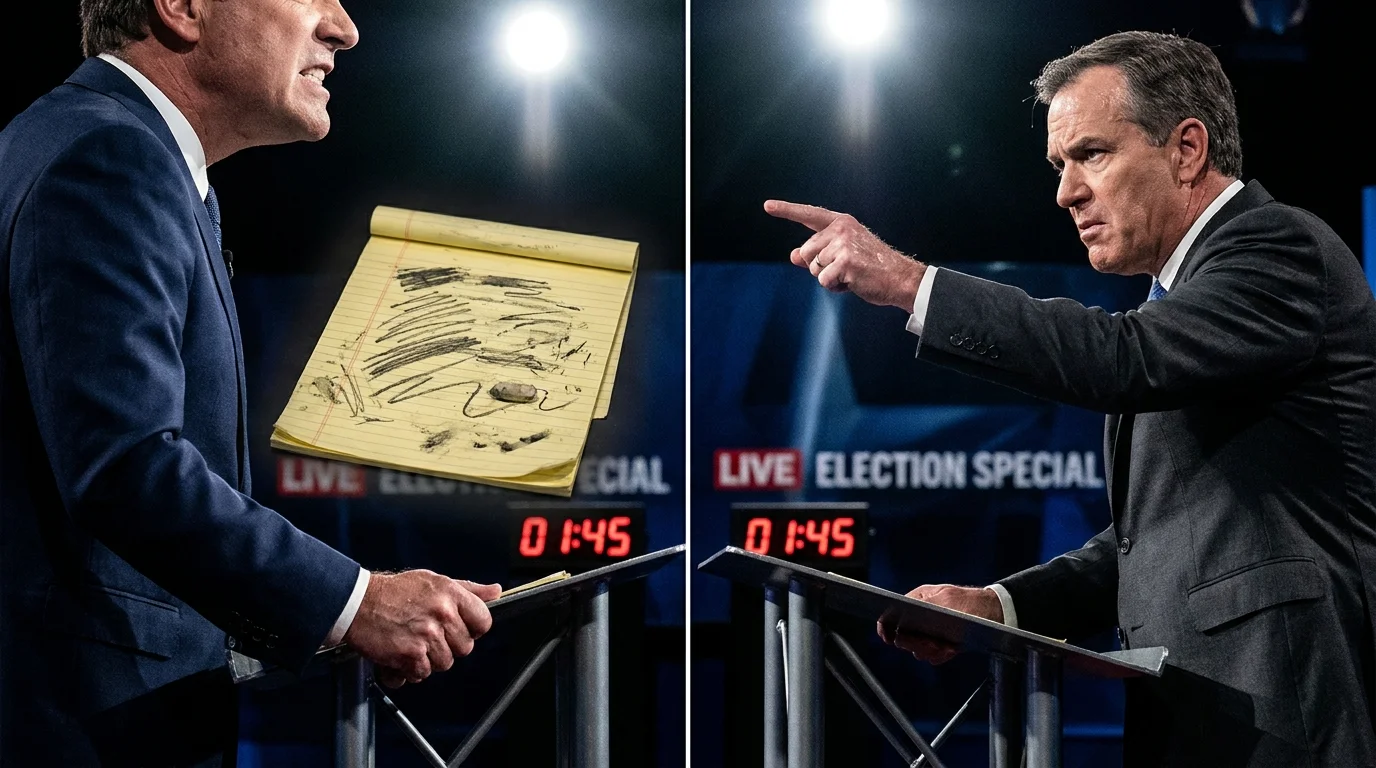
Spread across those laminate tables are sheets of creased yellow legal paper, covered in thick graphite scratches, hasty strikethroughs, and margin notes scrawled in dull number-two pencil. When government shutdown deadlines tick down to single digits, the polished rhetoric vanishes. What replaces it is an exhausted, highly focused scramble where senior aides swap entire funding provisions with a flick of a wrist.
You often hear about a thousand-page omnibus bill dropping mere hours before lawmakers cast their votes. What remains hidden from standard news broadcasts is how those pages actually get assembled. Tension peaks behind locked doors as rival committee clerks negotiate line by line, modifying statutory language in pencil long before it ever meets a digital printer.
The Geometry of the Last-Minute Rider
We are taught in civic textbooks that a bill begins as an idea, moves through deliberate open hearings, undergoes line-item markups in committee, and lands cleanly on the floor for debate. When an appropriations package balloons into an omnibus, that clean conveyor belt breaks down. Think of an omnibus not as an orderly bridge built from blueprinted steel, but as an overloaded barge navigated through dense fog, where ballast is jettisoned or added in the dark to keep the vessel afloat.
The hurried pencil scratches on those yellow legal pads represent the true currency of Capitol Hill: statutory riders. A rider is an amendment slipped into an appropriations bill that restricts or directs how federal funds can be spent. Because funding the government is an absolute must-pass priority, riders become irresistible leverage points. A single phrase, scratched out and rewritten at 2:45 a.m., can quietly freeze an agency regulation, restore an obscure regional subsidy, or block a controversial administrative rule.
- Florida primary election results expose massive precinct shifts across coastal suburban voting corridors
- Byron Donalds floor debate sparks explosive clashes over disputed congressional spending measures
- Dixville Notch midnight ballots reveal early primary momentum under harsh wooden lodge spotlights
- WinRed SMS fundraising blasts trigger urgent panicked ringtones to drain fixed retiree accounts
- Federal Register publishing queues block emergency administrative orders until midnight ink stamps dry
What seems like procedural chaos is actually a brutally rational system of brinkmanship. When both sides know failure means closed national parks, delayed military checks, and political blowback, the pressure forces rapid trade-offs. The messy graphite revisions are not evidence of a system collapsing; they are the friction points where irreconcilable political demands finally give way to practical necessity.
The Midnight Markup: A View from the Room
Consider Marcus Vance, a 42-year-old veteran appropriations staffer who spent twelve years managing subcommittee accounts for public land infrastructure. During the frenzied final hours of a contentious fiscal showdown, Marcus was not staring at computer spreadsheets. He was perched on an overturned plastic milk crate in an anteroom off the House floor, holding two conflicting printouts while his counterpart across the aisle worked down a single yellow pad.
A disputed line regarding water conservation grant allocations threatened to blow up the entire package. Marcus used a blunt carpenter pencil to cross out the word ‘shall’ and replace it with ‘may,’ adding a five-word exemption for municipal districts with populations under fifty thousand. That single, hand-written tweak, hammered out in forty seconds, resolved a two-month standoff between rival western delegations and paved the way for bipartisan sign-off by daybreak.
How Spending Lines Shift: The Three Rider Playbooks
To follow the money and understand what just passed through Congress, you need to understand the distinct shapes these eleventh-hour additions take. They rarely look like sweeping policy overhauls on the surface; instead, they operate as subtle linguistic levers.
The Funding Limitation Clause
This is the most common tool found on midnight legal pads. Rather than outright repealing an administrative program, the rider simply declares that ‘no funds made available under this Act may be used to implement’ a specific rule. Funding clauses starve programs without requiring a single debate on the underlying statutory authority.
The Earmark Swap (Directed Spending)
When leadership needs to secure the final ten votes to clear a procedural hurdle, individual community projects suddenly appear in the margins. You will see handwritten accounts added to account ledgers: a harbor dredging project in one district balanced against a rural broadband pilot in another. They serve as pragmatic lubrication for stubborn votes.
The Legislative Extension Hitchhiker
Expiring programs that have zero chance of passing as standalone bills often get stapled to the back of the omnibus. A five-year extension for a niche regional tax credit or a waiver for federal leasing fees gets inserted between dense technical tables, shielded from scrutiny by the sheer bulk of the surrounding text.
The Citizen’s Diagnostic: How to Track the Real Changes
When an omnibus bill lands on the public docket at midnight, reading all two thousand pages is impossible. You do not need to read every clause to spot where the real power struggles were settled. You simply need to know where the ink dried last.
- Check Division Headers and Explanatory Statements: The actual statutory text is only half the battle. The accompanying joint explanatory statement contains the granular directives that dictate how agencies must execute the hand-drawn compromises.
- Scan for Limitation Language: Search bill text specifically for phrases like ‘None of the funds made available by this Act’ or ‘Provided further, That.’ These are the telltale signatures of midnight rider bargaining.
- Monitor the General Provisions (Title VII): The back pages of individual appropriations divisions house the catch-all policy adjustments where leadership tucks controversial compromises away from the top-line budget numbers.
- Compare the Committee Draft to the Final Text: The sections with sudden formatting anomalies or unnumbered paragraphs are almost always the pieces inserted during final pencil-draft negotiations.
The Value of Seeing the Seams
Watching our laws come together through rushed pencil marks on yellow legal paper can feel unnerving. We want our governance to be serene, clinical, and purely rational. Yet, accepting the chaotic mechanics of an omnibus allows you to see American politics as it truly operates: an ongoing negotiation among deeply divided factions who must still share a single ledger.
When you learn to read the margins and trace the eleventh-hour riders, the national political landscape loses its mystery. You stop listening to the performative press conferences and start watching the language that actually controls the purse strings. That shift in focus is how you move from being a spectator of politics to truly understanding how power is negotiated in real time.
The loudest debates happen at the podium, but the permanent decisions are made in dull graphite on yellow pads before sunrise.
| Mechanism | Behind-the-Scenes Action | Impact on Your Daily Life |
|---|---|---|
| Limitation Rider | Prohibits agency budget use on specific regulations | Freezes or delays federal rules affecting consumer prices, labor, or land use |
| Directed Allocation | Handwritten inclusions for specific regional grants | Directs federal investment straight to local bridges, research labs, or transit hubs |
| Program Extender | Tucks expiring authorizations onto the back of the package | Keeps vital tax exemptions, flood insurance, or healthcare waivers active without standalone votes |
Frequently Asked Questions
Why do lawmakers write legislation by hand on legal paper?
In the final hours before a shutdown deadline, official drafting offices face enormous backlogs. Leadership aides and committee staff use physical markups to agree on exact phrasing instantly, digitizing the text only after both parties sign off on the paper draft.Are omnibus bills legal if members do not read them fully?
Yes. The Constitution gives each house of Congress the authority to determine its own procedural rules. Once a bill receives a majority vote and meets constitutional quorum, its passage is fully valid regardless of reading time.What is the difference between a rider and an amendment?
An amendment is formally offered on the floor or in committee through regular order. A rider is a targeted policy restriction or directive tucked inside a broader funding package, often negotiated off-the-record by party leadership.Can the President veto specific handwritten riders in an omnibus?
No. The Supreme Court ruled the federal line-item veto unconstitutional in 1998. The President must sign or veto the entire package as presented by Congress.Where can regular citizens view these omnibus agreements first?
Final omnibus drafts and explanatory statements are published on Congress.gov and the House Rules Committee website as soon as leadership files the final conference report.