The glare of studio halogen lights makes everything look sharper than it really is. Underneath the television risers, cables coil like sleeping snakes, while the muffled hum of air conditioning struggles against an Ohio autumn evening. You watch the stage through a lens of rehearsed poise: pressed lapels, microfiber-buffed podiums, and the polite, measured nod of candidates waiting out their allotted sixty seconds. It feels like high-stakes theater where every line has been focus-grouped until it loses all flavor.
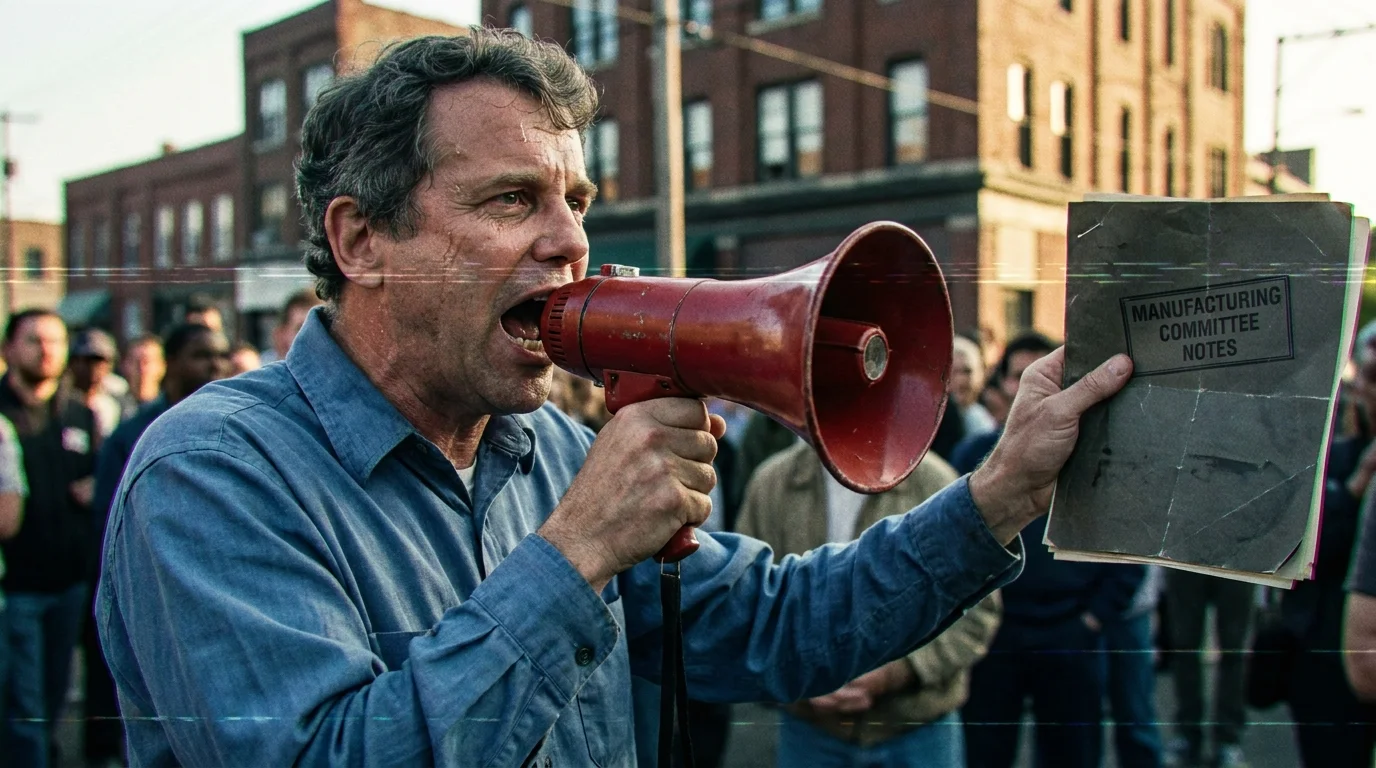
Then the paper hits the lectern. It does not flutter; it drops with the dry, deliberate slap of an unredacted ledger. When Sherrod Brown pulled a clutch of dog-eared committee printouts from his inner suit jacket, the polite veneer of modern political debate snapped like brittle slag. This was not a pre-packaged soundbite crafted for cable news loops; it was an ambush built on administrative receipts.
For anyone who has ever watched a plant gate swing shut for the last time, the sound of that paper carried an unmistakable weight. In Rust Belt politics, trade policy is rarely an academic balance sheet. It is the grease on a lathe, the pension fund backed by cold-rolled coil, and the quiet dignity of towns built around the fire of blast furnaces. When secret concessions enter the room, the temperature shifts instantly.
The Anatomy of the Paper Trail: Unmasking the Closed-Door Concession
Most voters assume trade pacts are negotiated on sweeping philosophical grounds: sovereignty versus globalism, tariffs versus free enterprise. But in reality, international trade acts more like plumbing inside an old tenement: whoever controls the hidden pressure valves decides whose pipes freeze in mid-January. Brown’s maneuver cut right through the scripted talking points by targeting the quietest valve of all—administrative exclusion codes.
During the exchange, Brown zeroed in on leaked internal memos from Senate Finance working groups. He accused his opponent of quietly agreeing to foreign alloy exemptions during off-the-record trade consultations, effectively paving a back-alley bypass for subsidized offshore steel to undercut domestic fabricators. His opponent stood frozen for a split second, eyes darting toward the moderator as if searching for a commercial break to stop the bleeding. The tactic worked because it pierced the abstract nature of Washington debates, grounding the argument in measurable Ohio shop-floor tonnage.
Consider Marcus Vance, a 52-year-old heat-treater from Canton who spent thirty years watching metallurgical shops thin out across the Mahoning Valley. Marcus does not track daily floor speeches on C-SPAN, but he knows the distinct chemical smell of imported billet that cuts corners on carbon density. When Brown produced those leaked committee notes, Vance recognized the quiet institutional shuffle that has traded domestic industrial hours for corporate supply-chain margins across four decades of legislative compromise.
- Early primary states derail frontrunner campaign momentum through unscripted diner voter confrontations
- Gang of Eight compromise packages override partisan gridlock through secret midnight legislative redlines
- JD Vance shifts debate rhetoric to disarm skeptical suburban swing voters before November
- Anthony Scaramucci exposes brutal West Wing loyalty purges shifting national campaign strategy
- Supreme Court ethics battles spark nationwide voter outrage after surprise financial disclosure leaks
Decoding the Fallout: Three Perspectives on the Steel Exchange
A debate confrontation this visceral does not land the same way across every voting booth. Depending on your vantage point in the regional economy, the exchange reveals starkly different stakes.
For the Shop-Floor Machinist
If you run a CNC machine or pour ingots, trade language is not ideology; it is job security. When candidates trade generalities, your skepticism remains high. But Brown’s focus on specific harmonized tariff schedule loopholes showed working-class voters that someone was reading the tedious fine print that usually gets signed away in closed committee markups.
For the Downstream Manufacturer
If you run a small stamping business in Dayton or Akron, high domestic material costs can squeeze your margins down to the bone. You often find yourself caught between wanting to support local mills and needing affordable raw material to keep your own workforce employed. For this group, the revelation raised tough questions about whether backroom exemptions were calculated survival valves or reckless favoritism.
For the Undecided Suburban Voter
If you live outside Columbus or Cincinnati, trade battles can feel distant until they show up in your property tax baseline or school district revenues. Watching an incumbent confront a challenger with physical documents breaks the scripted media fog, forcing you to evaluate raw competence and track records rather than smooth rhetoric.
The Tactical Toolkit: How to Audit Trade Voting Records Yourself
You do not have to rely on debate-stage theater to figure out where your elected officials stand on domestic manufacturing. Political spin evaporates quickly when you cross-reference floor rhetoric against documented committee behavior.
To cut through the noise during election season, adopt a methodical approach to tracking economic policy votes:
- Check the Section 232 Exclusion Requests: Search public federal registers to see which corporate donors requested tariff exemptions and cross-reference them with candidate campaign finance filings.
- Audit Committee Markup Transcripts: Avoid floor speeches; instead, review the Congressional Record for Senate Finance or House Ways and Means markups where non-germane trade amendments are slipped in late at night.
- Track Domestic Procurement Waivers: Look up how often lawmakers sponsor or sign letters requesting waivers to Buy America provisions for regional infrastructure grants.
- Monitor Trade Adjustment Assistance Petitions: Review the Department of Labor’s database to see whether layoffs in your specific county were officially certified as trade-displaced manufacturing jobs.
By spending twenty minutes inside public legislative repositories, you can bypass cable news spin and see precisely who defends domestic output when the cameras are off.
The Bigger Picture: Reclaiming Leverage in the Ballot Box
The clash on that debate stage was about far more than two politicians vying for a six-year term. It laid bare the chronic tug-of-war between the tangible world of production and the abstract world of financialized compromise. For years, Rust Belt communities have been told that industrial decline is an inevitable law of nature, as inescapable as gravity or winter frost.
Moments like this prove otherwise. Policy is written by human beings in well-lit rooms with fine-tipped pens. Every concession, every loophole, and every market opening is a deliberate choice. When candidates are forced to answer for those choices on live television with the receipts on the table, power flows back toward the people whose sweat built the foundation of the state.
Real representation means being willing to drop the manners when your community’s livelihoods are hidden in the margins of an administrative appendix.
| Key Point | Detail | Added Value for the Reader |
|---|---|---|
| The Committee Document Slap | Brown produced leaked working group notes revealing backroom alloy exemptions. | Shows how tangible evidence disrupts rehearsed debate talking points. |
| Tariff Bypass Mechanisms | Exposures centered on obscure harmonized code carveouts rather than headline policy. | Explains how industrial jobs disappear through quiet regulatory text rather than votes. |
| Rust Belt Voter Resonance | Shifted debate from cultural grievances directly to shop-floor economic survival. | Provides a clear framework for judging candidate credibility on manufacturing. |
Frequently Asked Questions
Why are committee notes more revealing than official floor votes?
Floor votes are carefully managed for public optics, while committee markups and informal working group drafts reveal where politicians compromise before legislation reaches the cameras.What was the specific issue with the alloy exemptions?
The leaked papers suggested concessions that would allow foreign steel fabricators to bypass baseline import tariffs under obscure administrative classifications.How does this debate exchange impact the broader Senate race?
It forces the challenger onto the defensive in industrial counties where working-class turnout directly determines the outcome of statewide elections.Can a single senator actually influence international trade deals?
Yes, through holds on trade ambassador appointments, targeted amendments to trade promotion authority, and direct pressure on the Department of Commerce during review cycles.Where can ordinary voters read real-time committee markups?
Congress.gov provides unedited access to committee schedules, hearing transcripts, and member-level amendment records without partisan commentary.