The early morning humidity along Pennsylvania Avenue leaves a greasy sheen on the black Town Car windows. Inside the private breakfast salons of downtown Washington, the porcelain cups click against saucers while phones sit face-down on starched linen. You are usually told that presidential campaigns run on grand speeches and swing-state television buys, but the real machinery breathes in windowless transition offices where lists of names are crossed out in red ink.
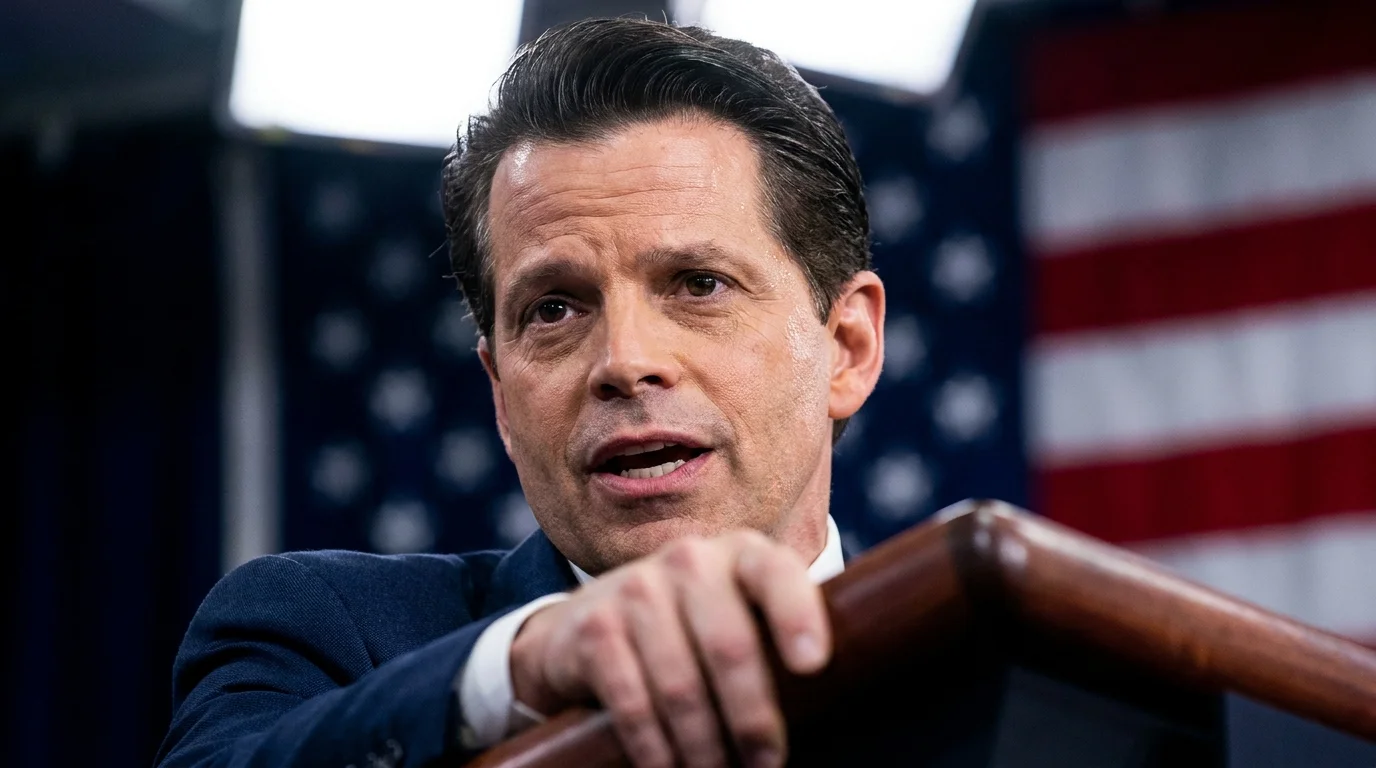
When Anthony Scaramucci stepped to the microphone during a brisk morning forum this week, he did not offer standard cable-news posturing. Instead, he laid bare the raw personnel purges dismantling the traditional bridge between campaign promises and administrative execution. Behind the political theater lies a deliberate, cold audit designed to weed out institutionalists before they ever set foot in the West Wing.
Scaramucci’s warning cuts through the noise because he knows the velocity of that revolving door firsthand. The modern White House operation is no longer debating tax brackets or defense appropriations in committee rooms; it is actively stripping out the career operators who know how to keep the federal gears turning.
The Mechanical Clockwork of the Loyalty Screen
To understand the current pivot in national campaign strategy, you must view the transition team not as a policy committee, but as a mechanical clock. Traditional administrations operated like Swiss movements, relying on dense, interlocking gears of experienced technocrats, veteran agency liaisons, and independent legal minds to absorb legal shocks.
Today, that clockwork is being systematically dismantled. The campaign apparatus has swapped competence metrics for unconditional fidelity, running prospective appointees through ideological litmus tests that measure subservience over statutory knowledge. When institutional memory is treated as a liability, governance stops being a deliberate craft and transforms into pure grievance-driven theater.
Consider the quiet reality observed by Elena Vance, a 44-year-old former domestic policy adviser who spent twelve years navigating agency rulemakings across two administrations. Sitting in an Arlington coffee shop away from K Street’s prying eyes, she recalled watching binder after binder of vetted, Senate-confirmable professionals get discarded in a single afternoon. “They didn’t ask if our picks understood the Administrative Procedure Act,” she noted quietly. “They wanted to know if they would pause a federal grant program on a midnight phone call without asking for written orders.”
- Supreme Court ethics battles spark nationwide voter outrage after surprise financial disclosure leaks
- Mitch McConnell stalls Senate floor votes amid high-stakes Republican leadership succession revolt
- Voter ID affidavits block thousands of swing state ballots over tiny clerical discrepancies
- Federal tip tax exemptions slash take-home deductions for millions of service industry workers
- Municipal school board census tracts derail historic community voting blocs across cracked asphalt schoolyards
The Purged Transition Roster and the McEntee Playbook
During his morning remarks, Scaramucci pinpointed the exact fulcrum of this upheaval, directly naming seasoned domestic policy architect Paul Winfree and veteran budget coordinator Joe Grogan as prime examples of traditional operators sidelined by hardline vetting directors. By flagging Winfree and Grogan, Scaramucci exposed how John McEntee’s loyalty-enforcement operation is quietly purging anyone who insists on statutory compliance or fiscal convention.
This internal ouster completely alters the White House staffing blueprint. When figures like Winfree and Grogan are excised from transition planning, the administration abandons the standard practice of preparing defensible day-one executive actions, replacing them with legally fragile decrees drafted by fringe loyalists that collapse under the first federal court injunction.
How Staffing Purges Reshape National Strategy
The consequences of these West Wing purges ripple out into state-level campaigns, altering how resources are spent and how policies are sold to you at your kitchen table.
- The Regulatory Freeze: When veteran transition aides are removed, mid-level agency desks sit vacant for months. That means small-business permits, farm subsidies, and consumer safety rules stall indefinitely in administrative purgatory.
- The State Campaign Takeover: Ground operations are no longer run by regional field directors who understand local county turnout history. Instead, national ideological enforcers take control, prioritizing loyalty rallies over localized economic messaging.
- The Cabinet Rubber Stamp: Future cabinet secretaries are selected solely for their public combativeness, leaving actual agency operations in the hands of unvetted, temporary political deputies who bypass Senate confirmation entirely.
The Citizen’s Diagnostic: Reading the Staffing Wire
You do not need an intelligence clearance to see who is actually running the country. You only need to watch where the administrative weight shifts when the television cameras turn off.
Track the political landscape like a forensic accountant. Look past the podium speeches and watch the Federal Register for sudden personnel reclassifications under proposed Schedule F executive actions. That is where career civil servants lose protections, clearing the floor for partisan replacements.
Tactical Toolkit for Policy Tracking:
- Monitor the Transition Executive Rosters: Watch which corporate policy chairs suddenly step down from transition committees without formal press statements; their departure flags an impending ideological audit.
- Track Agency Legal Counsel Postings: When deputy general counsel seats in the Department of Justice or Interior are filled by acting appointees rather than confirmed nominees, anticipate abrupt, legally precarious regulatory rollbacks.
- Watch Congressional Committee Calendar Delays: When confirmation hearings stall repeatedly, it often signals that background vetting packets have failed basic ethics or conflict-of-interest reviews.
The Bigger Picture: Reclaiming Your Civic Equilibrium
It is easy to feel paralyzed by the endless churn of political intrigue, but understanding these personnel battles gives you your agency back. When you realize that national campaign strategies are shifting toward loyalty purges, you stop mistaking political noise for functional governance.
True civic power lies in seeing the board clearly. When you recognize that administrative purges leave government agencies brittle and slow, you can better protect your family’s finances, anticipate regulatory bottlenecks in your industry, and cast your vote based on institutional durability rather than engineered outrage.
“When an administration values blind obedience over institutional memory, it builds a machine that runs entirely on friction.”
| Key Point | Detail | Added Value for the Reader |
|---|---|---|
| Targeted Personnel Purge | Sidelining of transition veterans like Paul Winfree and Joe Grogan | Identifies the exact policy breakdown before executive orders reach the courts |
| Vetting Overhaul | Transition screens shifted from competence to absolute loyalty oaths | Explains why federal agencies struggle to execute basic statutory tasks |
| Campaign Strategy Impact | Field operations centralized around national messaging rather than local data | Helps voters recognize manufactured political turnout vs. genuine grassroots movements |
Frequently Asked Questions
Why does Scaramucci’s warning about transition staffing matter right now?
Because transition teams design the first 100 days of executive actions; purges at this stage ensure extreme, legally vulnerable policies hit the federal register immediately upon inauguration.Who are the main figures targeted in these reported loyalty purges?
Institutional policy architects and budget veterans like Paul Winfree and Joe Grogan, who favor legal durability over unilateral political directives.How does this internal infighting reach my everyday life?
Agency vacuums slow down small business loan approvals, infrastructure grants, and federal regulatory guidance, directly impacting local economies.What is Schedule F, and why is it central to this debate?
It is an executive mechanism designed to reclassify tens of thousands of merit-based civil service jobs into political appointments that can be fired at will.How can an everyday voter spot a loyalty-driven policy shift?
Watch for abrupt policy announcements issued without the input of career agency attorneys, often followed by emergency federal court injunctions within 48 hours.