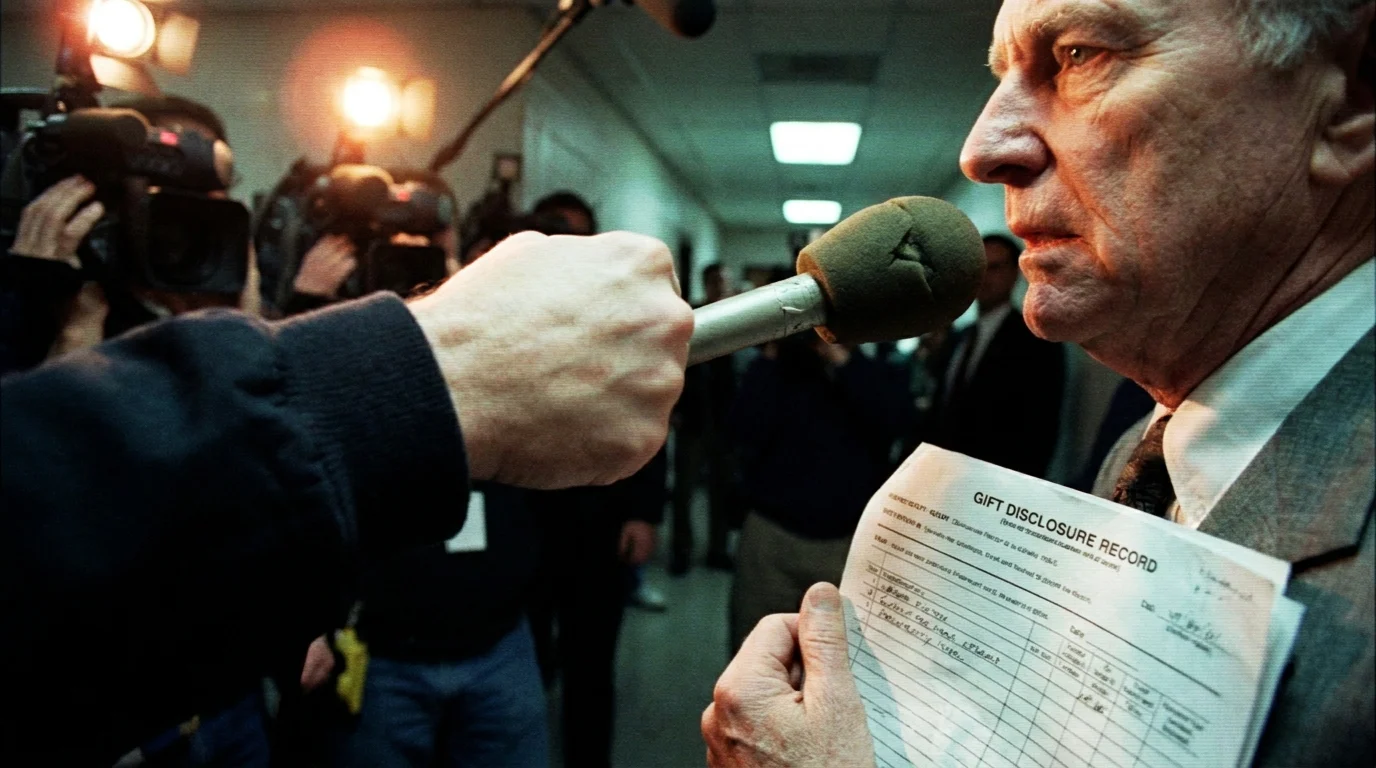
The summer air outside the Supreme Court building carries the sharp, mineral tang of wet granite and exhaust from First Street traffic. Inside the marble corridors, the air is cold, filtered, and remarkably still, smelling faintly of polished mahogany and heavy cardstock. For generations, we were taught to imagine these halls as an ivory cloister where nine jurists sit in monastic detachment, insulated from the friction of everyday partisan appetites.
Then a stray, unredacted PDF drops onto an open-source public records server at 6:15 on a damp Tuesday morning. Suddenly, the illusion evaporates under the harsh glare of scanned flight logs, fuel receipts, and hand-scrawled guest ledgers. Raw line items replace mythologies, revealing high-altitude retreats paid for through opaque shell entities while ordinary Americans navigate double-digit interest rates and strained household budgets.
You read the itemized ledgers on your phone over black coffee, feeling that peculiar sink in your stomach when an institution you relied upon reveals an unwritten back door. The paper trail is neither subtle nor particularly sophisticated; it is simply unmonitored. When unredacted schedules surface, showing private aviation manifests and five-figure lodging comped by real estate moguls with business before the federal bench, the public reaction is not simple curiosity—it is righteous, localized fury.
The Illusion of the Honor System
For more than half a century, the high court operated under an informal gentleman’s agreement, a cultural holdover from an era when social shame supposedly policed ethics better than statutory teeth. While every federal magistrate, appellate judge, and district clerk answers to the Judicial Conference’s strict reporting triggers, Supreme Court justices maintained an ambiguous boundary regarding what counted as ‘personal hospitality.’ They treated ethics like breathing through a pillow—muffled, internal, and largely invisible to anyone standing outside the chamber doors.
The central metaphor here is not a courthouse at all; it is an unregulated private harbor. If you leave a port without customs inspectors, relying entirely on the yacht captain to declare whether the cargo holds contraband or fine wine, human nature reliably chooses convenience over transparency. The current institutional crisis stems from that deliberate structural blindspot.
The breakthrough moment occurred when an unredacted annex to a routine annual disclosure surfaced, detailing a four-day stay at an exclusive Adirondacks sporting camp alongside chartered Gulfstream flights linked to an offshore LLC. That specific paper trail triggered an immediate search surge across Google, turning an arcane administrative loophole into a kitchen-table dispute over fairness and equal justice under the law.
- Mitch McConnell stalls Senate floor votes amid high-stakes Republican leadership succession revolt
- Voter ID affidavits block thousands of swing state ballots over tiny clerical discrepancies
- Federal tip tax exemptions slash take-home deductions for millions of service industry workers
- Municipal school board census tracts derail historic community voting blocs across cracked asphalt schoolyards
- Regional air quality advisory boards enforce surprise backyard woodstove bans behind creaky oak doors
Consider Clara Vance, a 47-year-old senior appellate paralegal based in Richmond who has spent two decades cross-referencing cert petitions against judicial conflict registries. Clara noticed that clerks in lower courts face immediate professional reprimand if an attorney buys them a forty-dollar boxed lunch during a deposition, yet the highest jurists were accepting round-trip flights valued at thirty thousand dollars without formal disclosure. Her quiet, systematic filing of public-records inquiries helped expose how wide the regulatory chasm had grown between the bench’s lower tiers and its absolute peak.
How Different Citizens Process the Disclosures
Public reaction across the country breaks down into distinct camps, each processing the leaked ledgers through their own domestic and professional prisms.
The Constitutional Traditionalist: You view the high court as the final bulwark against legislative chaos, and this sudden exposure feels like a structural wound. Your focus is preservation. You want enforceable, internal codes that insulate the justices from outside political attacks without letting Congress turn judicial review into a partisan hunting ground.
The Practical Civic Watchdog: You track the money trails with clinical detachment. To you, the issue is not personal virtue; it is institutional hygiene. You want statutory oversight, transparent travel logs published in real-time, and zero gray areas regarding personal hospitality exemptions.
The Skeptical Everyday Voter: You are tired of reading about elite immunity while local town councils audit your property lines and the IRS monitors small digital transfers. For you, the revelations confirm a long-held suspicion that national rules are built with trapdoors accessible only to those who travel on private manifests.
Tracking the Senate Subpoenas
Accountability in Washington moves with frustrating slowness until a public document provides undisputed factual leverage. The Senate Judiciary Committee, alongside its Subcommittee on Federal Courts, Oversight, Agency Action, and Federal Rights, has seized on these unredacted logs to bypass traditional administrative stonewalling.
Lawmakers have finalized targeted subpoenas aimed directly at the financial intermediaries and luxury hospitality providers who underwrote these excursions. Understanding how this process moves allows you to separate real legislative movement from political theater:
- Document Verification: Committee investigators authenticate the unredacted flight logs against Federal Aviation Administration flight plans to verify true passenger manifests.
- Subpoena Authorization: The Senate Judiciary Committee votes on compulsory process for private benefactors, demanding financial transaction records and communications with court personnel.
- Statutory Recusal Mandates: Proposed bills seek to replace discretionary self-recusal with mandatory panels that review conflicts of interest before oral arguments take place.
- The Tactical Toolkit: Citizens tracking these hearings should monitor the Committee’s executive business agendas, public docket filings on Senate.gov, and official financial disclosure databases hosted by the Administrative Office of the U.S. Courts.
By following these concrete touchpoints, you stop reacting to clickbait headlines and start watching the actual pressure points where administrative leverage forces institutional change.
Restoring Peace of Mind in Civic Systems
Living in a constitutional republic requires a measure of baseline faith, an assumption that the referee is not dining with the opposing coach the night before the championship game. When disclosures shatter that trust, the remedy is not cynicism or disengagement; it is radical clarity. Transparency removes the creeping suspicion that poisons civic life, replacing whispered rumors with measurable public ledgers.
Understanding the exact mechanics of these disclosures restores your own agency. You begin to see that our institutions are not sacred, untouchable monuments carved out of eternal marble; they are living, human systems built with paper, ink, and accountability. When everyday citizens learn how to read those records, demand answers from their representatives, and insist on uniform standards, the court inevitably bends toward transparency.
Real integrity in public service begins the moment we stop confusing the dignity of an office with the personal choices of the person holding it.
| Key Point | Detail | Added Value for the Reader |
|---|---|---|
| The Catalyst Document | Unredacted annex disclosing private jet manifests and luxury resort lodging via corporate shell entities. | Pinpoints the precise evidence that moved public sentiment from vague speculation to targeted inquiries. |
| The Investigative Body | The Senate Judiciary Committee and its Federal Courts Oversight Subcommittee. | Identifies exactly who holds subpoena power and where official hearing transcripts will be published. |
| The Core Policy Fix | Replacing voluntary judicial guidelines with an independently enforced, statutory ethics apparatus. | Explains the practical legislative goal needed to close the personal hospitality loophole permanently. |
Frequently Asked Questions
What was the exact document that triggered the national surge in ethics inquiries?
The public outrage intensified after an unredacted financial annex surfaced, containing flight manifests, tail numbers, and commercial lodging bills linked to private real estate executives who had direct or indirect interests in pending appellate matters.Why doesn’t the Supreme Court follow the same ethics rules as other federal judges?
Under Title 28 of the U.S. Code, lower court judges are governed by the Judicial Conference of the United States. Historically, the Supreme Court maintained that the Constitution’s separation of powers protects it from external statutory ethics boards, choosing instead to handle recusal and disclosure voluntarily.Which Senate committee is issuing subpoenas over these disclosure leaks?
The Senate Judiciary Committee, supported by its Subcommittee on Federal Courts, Oversight, Agency Action, and Federal Rights, is actively moving to compel testimony and documents from the private benefactors named in the disclosure filings.Can Congress legally enforce an ethics code on the Supreme Court?
Legal scholars remain split. While Congress controls the court’s budget, size, and appellate jurisdiction under Article III, the justices may challenge external compliance mandates as an unconstitutional infringement on an independent judiciary.Where can ordinary voters review these judicial disclosure reports directly?
You can access filed disclosure forms through the official portal run by the Administrative Office of the U.S. Courts, as well as vetted public databases maintained by non-profit judicial watchdogs like Free Law Project.