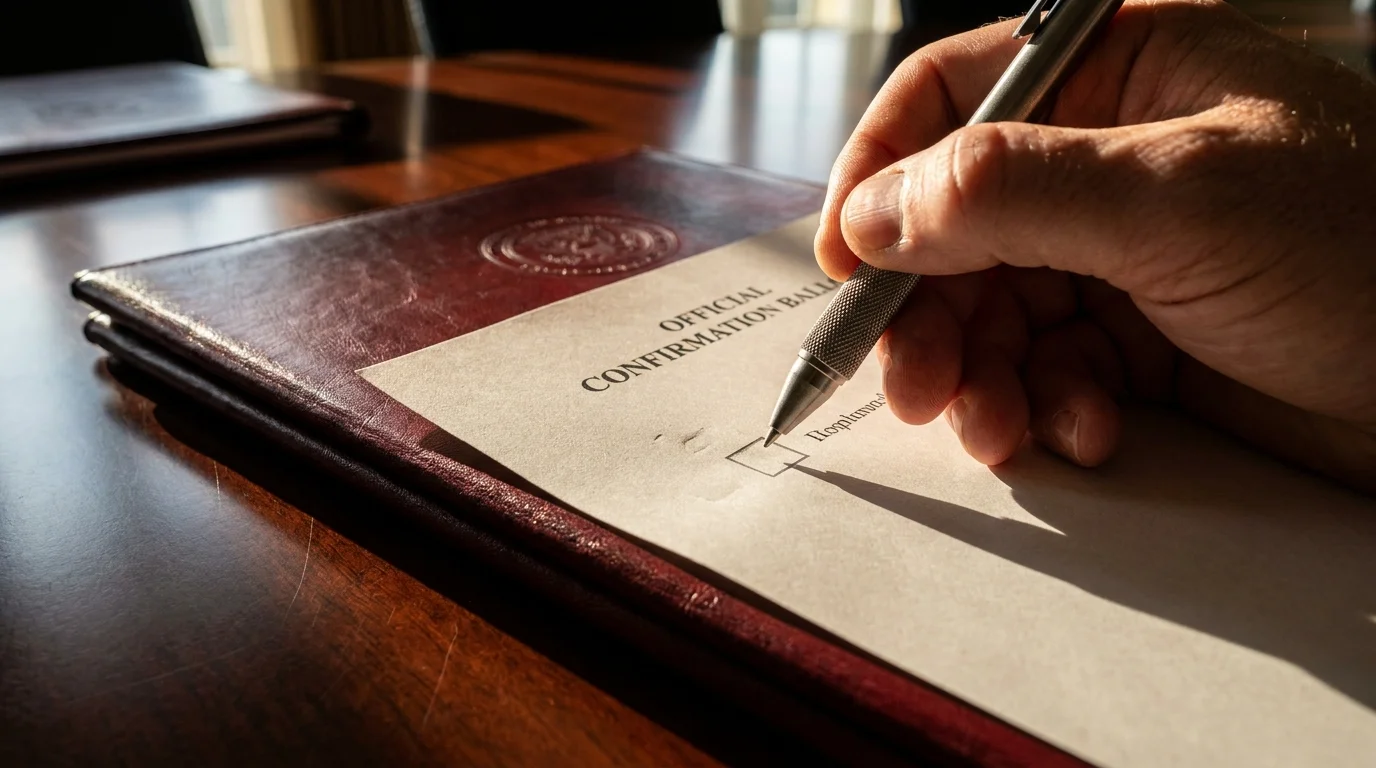
Morning light cuts across the Russell Senate Office Building at a sharp angle, catching dust motes drifting over the long rows of press chairs. On the Dais, bound dark red briefing folders stacked on polished mahogany hearing tables wait for lawmakers who have spent the past forty-eight hours trading private concessions. You hear the low, steady murmur of staff directors whispering near the heavy oak side doors, their hands full of marked-up nominee dossiers.
You might expect a debate over United States Attorney appointments to move with dry, mechanical efficiency. Standard headlines treat these confirmations like routine administrative chores, mere legal bookkeeping settled along predictable party lines before lunch. Yet when you watch the room stiffen as the clerk begins roll call, the illusion of routine procedural business vanishes completely.
These ninety-three federal jurisdictions do not simply enforce national code; they define how federal power actually touches everyday hometown reality. Every delayed confirmation stalls regional enforcement on corporate accountability, public corruption, and local civil rights protections, turning regional desks into high-stakes bargaining chips.
The Blue Slip Valve: Redefining the Checkpoints of Regional Power
To grasp why these appointments have suddenly paralyzed the wider executive calendar, you have to look at the process like a hydraulic pressure valve rather than a simple ballot. For decades, the century-old tradition of the blue slip allowed home-state senators to quietly approve or veto a nominee before a formal hearing could even be scheduled. When that valve closes, pressure builds up across the entire legislative pipeline.
What appears on cable news as petty obstruction is often a deliberate leverage play. When one faction holds up a federal prosecutor in the Midwest, they are rarely objecting to that lawyer’s specific credentials. They are trading local leverage to force concessions on regulatory oversight panels, judicial circuit vacancies, or federal grants destined for home districts.
Seeing this dynamic clearly shifts your view of Capitol Hill friction. The procedural logjam is not a sign that the machinery has broken down; it is proof that lawmakers are actively using the few precision instruments left in their arsenals to shape federal enforcement priorities from the ground up.
- Brooklyn Democratic Party rule changes derail progressive precinct power across urban districts
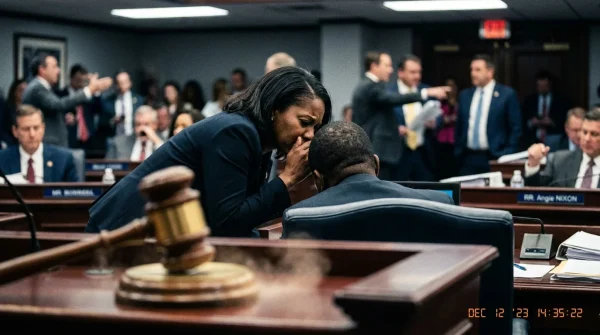
- Angie Nixon legislative debates trigger fierce floor clashes over disputed district funding
- New Hampshire retail diner stops force candidates into greasy breakfast booth interrogations
- ActBlue recurring donation forms trap elderly donors with pre-checked yellow boxes
- Office of Legal Counsel memos block executive orders with crisp embossed seals
Consider Marcus Vance, 47, a veteran procedural strategist who spent twelve years navigating judicial nominations through Senate committee backrooms. Late one evening in a basement cafeteria, Vance watched two opposing senior counsels negotiate a stalemate using a napkin and a red pen. By agreeing to pair a contentious district pick in the South with an uncontroversial career prosecutor in the Northeast, both offices preserved their home-state clout while quietly clearing three months of stalled business in under twenty minutes.
Mapping the Factions Across the Confirmation Floor
The current struggle is not just a straight line drawn between two parties. The real battle lines fracture into distinct ideological camps, each pushing a different blueprint for federal authority.
The Home-State Protectors
This group focuses strictly on preserving institutional prerogative. They care less about national media soundbites and far more about maintaining absolute veto power over appointments inside their state borders. For them, breaking procedural tradition sets a dangerous precedent that could strip their home communities of direct influence during the next administration change.
The Swift-Enforcement Bloc
Operating with an eye on immediate national mandates, these lawmakers view procedural delays as deliberate sabotage of federal law enforcement. They demand expedited floor votes, arguing that vacant United States Attorney seats leave critical public safety initiatives rudderless and overburden interim career attorneys who lack full statutory authority.
The Institutional Bridge-Builders
Working behind closed committee doors, these pragmatic lawmakers focus on multi-nominee compromise packages. They recognize that absolute purity tests freeze the entire pipeline, so they assemble balanced confirmation slates that give both sides simultaneous wins, preventing the complete breakdown of district-level justice systems.
Reading the Floor Action: A Citizen’s Legislative Decoder
You do not need an inside pass to understand where a nominee stands in this confirmation fight. By tracking three quiet markers, you can predict whether an appointment is heading toward a breakthrough or a protracted standoff.
- Blue Slip Return Speed: Monitor how quickly home-state offices return their physical blue slips to the Judiciary Chair. A delay longer than three weeks signals quiet negotiations over regional policy demands.
- Committee Hearing Pairings: Watch whether controversial nominees are scheduled alone or alongside widely supported consensus picks. Paired hearings almost always indicate a pre-arranged compromise package.
- Cloture Petition Filings: When leadership files for cloture on a regional prosecutor, backroom consensus has failed. The move forces a strict party-line floor vote, accelerating the nominee while burning valuable Senate floor hours.
Understanding these procedural steps helps you separate performative rhetoric from genuine legislative momentum. Tracking committee markup calendars reveals which districts will receive permanent legal leadership and which will remain under temporary stewardship for months to come.
The Tactical Toolkit: Confirmation Mechanics
When assessing the trajectory of federal enforcement nominations, keep these baseline legislative metrics in view:
- 60-Vote Cloture Threshold: The procedural benchmark required to break an active filibuster on executive business, though simple majorities now govern post-rule change confirmation floors.
- Two-Hour Post-Cloture Debate Cap: The condensed operational debate window used by leadership to swiftly process executive nominations without consuming full legislative workdays.
- 120-Day Interim Appointment Clock: The statutory limit under 28 U.S.C. § 546 that allows court-appointed interim attorneys to manage a district before permanent presidential nominations must advance.
The Architecture of Local Justice
When you look past the partisan theater, the struggle over United States Attorney appointments is really about who holds the pen when federal power writes its local priorities. A permanent federal prosecutor decides which environmental dumping cases get prosecuted, how aggressively consumer fraud is investigated, and where resources flow during major cross-jurisdictional task forces.
Understanding this balance gives you clarity amid the noise of breaking news alerts. Procedural grit protects local accountability from being completely steamrolled by centralized mandates, reminding us that democracy operates as much through quiet procedural checks as it does through sweeping national votes.
Real legislative power is rarely seized in dramatic floor speeches; it is negotiated millimeter by millimeter inside the margins of procedural rules.
| Key Point | Detail | Added Value for the Reader |
|---|---|---|
| Blue Slip Policy | Traditional senatorial courtesy mechanism | Signals whether a district nominee has bipartisan home-state backing. |
| Interim U.S. Attorneys | Temporary district leaders appointed under statutory deadlines | Identifies regional offices operating without full Senate confirmation authority. |
| Confirmation Package Deals | Multi-nominee legislative compromises | Explains why seemingly unrelated regional picks suddenly advance together. |
Frequently Asked Questions
Why are United States Attorney appointments considered so critical right now?
These ninety-three presidentially appointed prosecutors direct regional federal law enforcement, determining how national legal priorities are applied to local civil rights, white-collar crime, and public safety issues.What happens if a district goes without a confirmed U.S. Attorney for an extended period?
An interim attorney is appointed by the Attorney General or the local federal district court, but extended vacancies can complicate long-term strategic initiatives and inter-agency coordination.How does the blue slip tradition affect the nomination process?
It grants home-state senators significant influence over nominees in their territory, acting as a structural check that encourages the White House to consult local lawmakers before sending names forward.Can party leadership bypass home-state objections entirely?
While modern majority rules allow leadership to advance judicial and executive nominations, bypassing traditional home-state courtesy often triggers retaliatory procedural holds across other legislative priorities.Where can everyday citizens monitor the status of pending nominations?
The Senate Judiciary Committee official website and the congressional executive calendar publish real-time hearing schedules, markup agendas, and floor vote tallies.