The kitchen table holds a familiar autumn ritual. Sunlight angles across the mail pile, catching the dull glare of an official packet resting beside a warm ceramic mug. You slide the crisp paper into the sleeve, pull the adhesive strip, and press the flap shut with the palm of your hand, confident that civic duty has been neatly wrapped in cardstock.
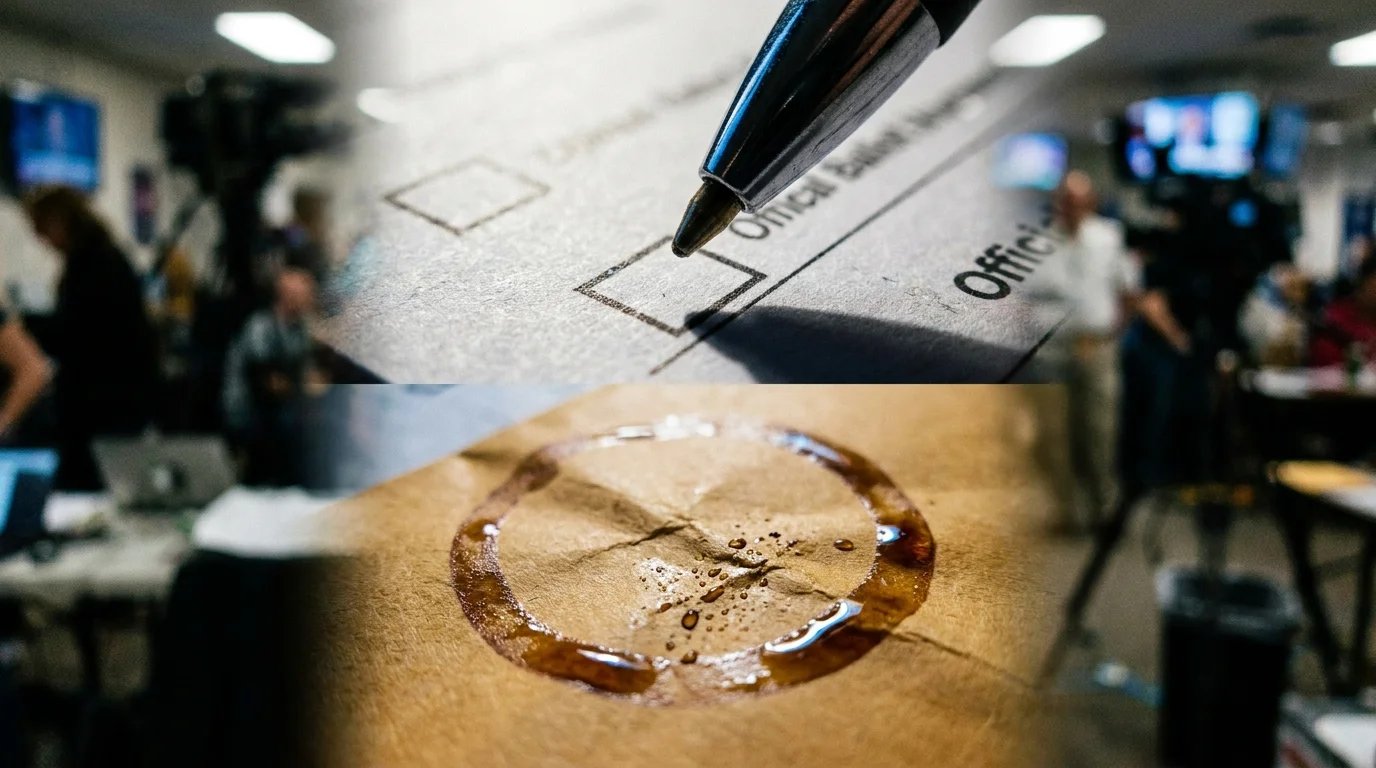
Then you lift your mug, revealing a damp, translucent halo stamped right across the manila return envelope. A faint brown stain soaks directly through the paper grain, settling across the printed timing marks and voter declaration barcode. To the naked eye, the signature is intact, the address is legible, and the postmark will verify on time.
Yet deep inside your county warehouse, that single droplet creates havoc. High-speed digital sorting trays run ballots through optical imaging tracks at twenty-five miles per hour. When moisture warps paper fibers or dulls contrast bars, the sensor defaults to an unreadable state, tossing the packet into a physical review bin alongside thousands of suburban mailers caught in administrative purgatory.
The Phantom Disqualification: When Hardware Rejects the Kitchen Table
Most voters assume disenfranchisement arrives through bureaucratic warfare, postal delays, or signature contests waged by partisan lawyers in courtroom trenches. The mechanics of rejection are far more mundane, physical, and unyielding. The real gatekeeper is not a skeptical precinct official squinting at handwriting, but a rigid optical sensor measuring infrared reflectance across a feed track.
Think of your ballot envelope as an instrument panel. The privacy sleeve within is not just a shield against prying eyes; it serves as a calibrated structural shim designed to maintain exact thickness and opacity as mechanical belts pull paper through high-speed sorting gates. When you warp that envelope with moisture or misalign the sleeve, you alter the mechanical geometry of the paper itself.
When a wet ring dries, it puckers the cellulose. The sensor reads that microscopic wrinkle not as paper, but as an irregular paper jam hazard or an obscured registration tick mark. In that split second, the machine does not read your intent; it simply diverts your envelope off the main line, kicking off a manual adjudication protocol that can drag past certification deadlines.
- Campaign yard sign cluster tallies switch suburban voting turnout predictions across soggy lawn turf
- 1976 Sunshine Act conference logs reveal backroom congressional bargaining over stained laminate hotel tables
- C-SPAN video archive timestamps expose doctored campaign soundbites through scratchy audio background hiss
- IRS Form 1099-K thresholds strip online garage sale proceeds behind crumpled paper receipts
- Cushing crude storage tanks trap independent fuel truckers under greasy diesel price spikes
Inside the Sorting Bay with Clara Henderson
Clara Henderson, a 58-year-old lead tabulation technician in Bucks County, Pennsylvania, spends election night listening to the rhythmic, mechanical thwack of automated sorting machines. Every year, Clara watches the rejection bins fill with perfectly valid votes tripped up by breakfast spills, dog hair trapped under sealing tape, and envelopes swollen with humidity. “People think ballots get contested because of signature flaws,” Clara explains, gently smoothing down a curled envelope edge with her thumb. “In reality, half our intake delays start because someone used coffee-damp fingers to seal the privacy flap, causing the high-speed feed cameras to miss the timing hash altogether.”
Voter Archetypes and Handling Pitfalls
Suburban vote-by-mail patterns reveal specific physical handling habits that accidentally trigger scanner stops. Recognizing your routine helps you guard against mechanical snags.
For the Multitasking Commuter
You fill out your ballot while nursing morning coffee at the breakfast counter, running between carpools and work calls. Ballots sealed in rush frequently suffer from uneven envelope adhesion. If the flap curls or catches on adjacent mail, the sorting feeder tears the envelope lip, automatically flagging the piece for manual security review.
For the Over-Cautious Protector
You believe extra security safeguards your vote, so you add Scotch tape along the edges or fold the privacy sleeve twice to keep everything snug. Adding non-standard adhesives introduces microscopic ridges that cause high-speed scanner optics to catch glare, blinding the registration sensor and sending the ballot to a quarantine drawer.
For the Mailbox Stager
You sign your packet days early and let it sit inside an unsealed drop box or an exterior porch box during foggy, damp weather. Atmospheric paper swelling increases the envelope thickness by fractions of a millimeter, triggering mechanical jam alarms inside county sorting tracks before the envelope is ever opened.
Mindful Assembly: The Clean-Surface Protocol
Securing your mail-in tally requires treating your ballot like sensitive optical media rather than everyday postal mail. Precision during assembly prevents scanner rejections before your vote leaves your hands.
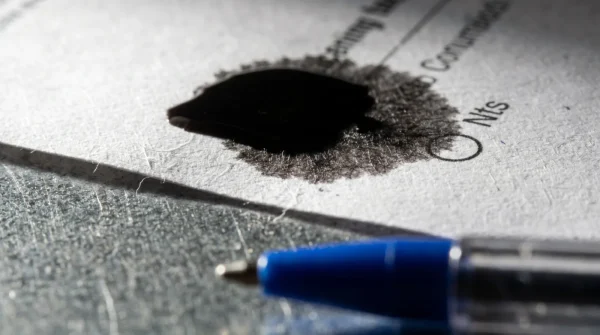
- Clear and dry a dedicated table surface entirely before breaking the envelope seal; never keep beverages, pens with leaking ink, or condensation-prone cups within arm’s reach.
- Insert the ballot flat into the privacy sleeve without creasing, ensuring the designated alignment edge faces outward as indicated by your county instructions.
- Moisten the envelope adhesive with a damp sponge or envelope roller rather than saliva, preventing moisture pooling and paper warping.
- Inspect the final seal to ensure the barcode strip remains pristine, dry, and free of tape, pencil marks, or food residue.
Your Tactical Envelope Toolkit includes a clean, dry, lint-free surface; a firm, non-gel black ink pen that resists water smudging; and an interior staging area kept at room temperature (under 75 degrees Fahrenheit) to prevent paper curling before drop-off.
The Quiet Dignity of the Unremarkable Ballot
True ballot authority does not reveal itself through passionate arguments or high-stakes legal motions. Quiet mechanical compliance is what ultimately protects your voice in a modern democracy. When your ballot slips through the sorting cameras without triggering a single warning light, it moves instantly into the official tally, silent and secure.
Taking two mindful minutes to check your envelope surface transforms an administrative chore into deliberate civic stewardship. You remove human error, mechanical friction, and digital doubt before the postal carrier even rounds your corner.
“A clean ballot is a fast ballot; machines do not decipher intent, they only measure contrast and paper integrity.”
| Key Point | Detail | Added Value for the Reader |
|---|---|---|
| Privacy Sleeve Alignment | Ballot must slide completely flat into the internal folder without dog-eared folds. | Maintains uniform thickness to prevent feed jams in optical sorters. |
| Barcode Cleanliness | Keep moisture, coffee drips, and hand oils off the envelope edge markers. | Guarantees automated intake without sending your vote to a manual review pile. |
| Adhesive Integrity | Avoid standard clear tape; seal only using the pre-applied envelope gum. | Prevents glare from blinding scanner cameras during intake processing. |
Frequently Asked Questions
What should I do if coffee spills directly onto my return envelope?
Contact your municipal or county elections office immediately to request a replacement packet. Attempting to blot, tape, or dry an envelope with residue often triggers machine rejections.Does the privacy sleeve matter if I already sealed the outer envelope?
Yes. Many jurisdictions legally require the privacy sleeve to separate voter identity from ballot selections during processing; omission can trigger secondary challenges depending on state law.Can tape be used to reinforce a weak envelope seal?
Check your county guidelines first, as many tabulators flag taped envelopes for tampering. Using a light moistening sponge on the original glue is consistently safer.How does a warped envelope affect scanner processing?
Warped paper changes how light reflects off timing lines, causing high-speed digital cameras to misread coordinates and reject the ballot as unscannable.Can I track whether my mail-in envelope passed intake?
Most state voter portals offer online ballot tracking that shows when your packet is received, verified, and sent through preliminary sorting.