You stand at the kitchen counter or the makeshift booth at the local library. The paper is thick, almost cardstock, carrying the weight of civic responsibility. You uncap your favorite pen—maybe it is a smooth-gliding gel rollerball that feels like velvet across the page. You carefully fill in the ovals, ensuring no white space remains, blow on the ink to dry it, and seal your choices away.
It feels like a completed transaction. You drop the envelope in the box or feed it into the counting machine, walking away with a sticker and a sense of finality. But inside the counting room, an entirely different mechanical reality is taking over. Your favorite writing tool might be quietly erasing your voice.
The truth about modern voting infrastructure isn’t found in grand political theory. It lives in the microscopic interaction between wet pigment and porous paper fibers. We think we are communicating with humans, but we are actually leaving a trail of breadcrumbs for highly sensitive optical scanners.
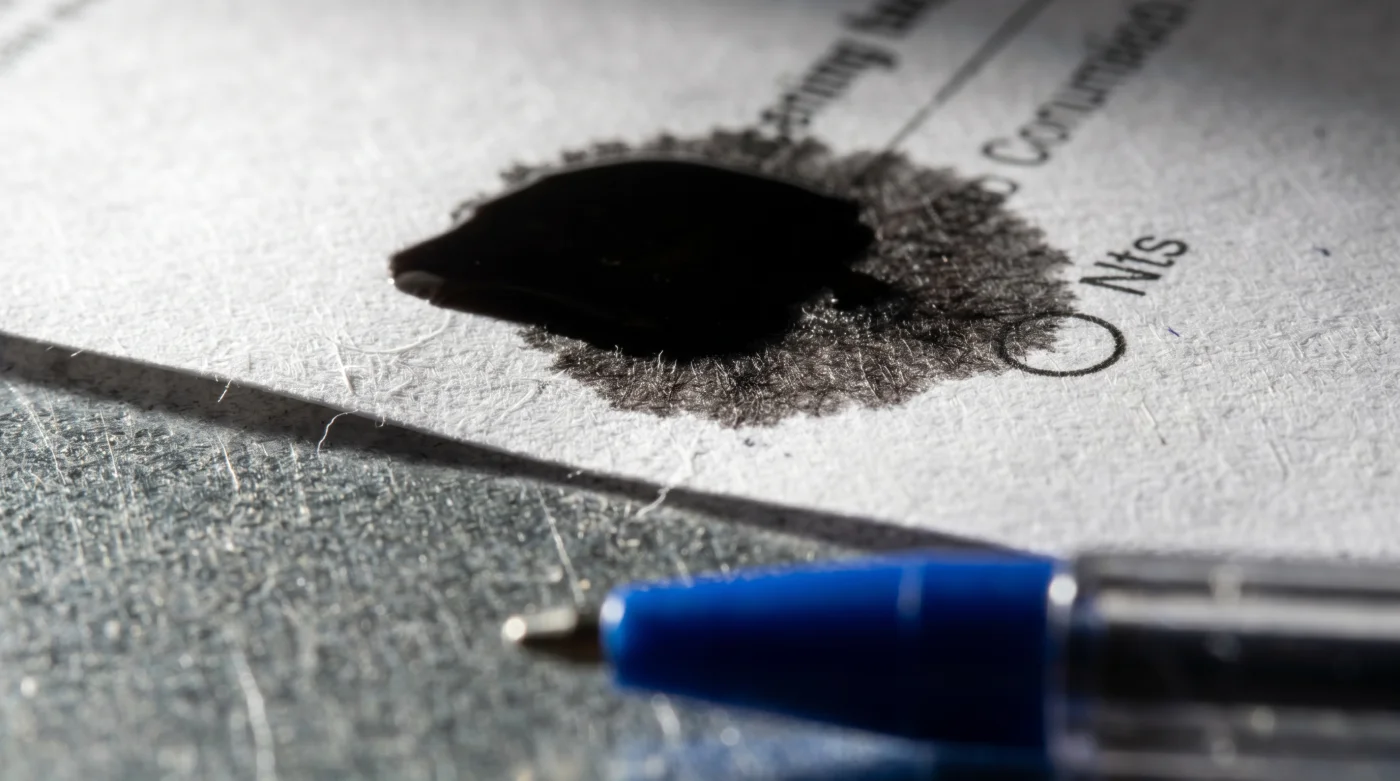
When you use a heavy liquid pen, the ink doesn’t just sit on top of the page. It soaks through the material. To a digital eye, a dark shadow on the back of the ballot looks exactly like a filled bubble, triggering an administrative purgatory for your submission.
The Perspective Shift: Seeing Like a Scanner
Imagine trying to read a letter through a stained glass window. That is how an optical voting scanner interprets your ballot. It doesn’t read names or understand intent; it simply registers the presence or absence of dark spots on a highly specific coordinate grid.
We naturally assume that darker, bolder ink creates a clearer signal. It makes sense to our human eyes to fill the space as deeply as possible. But this visual overcompensation fails completely when placed under the harsh, multi-directional light of an image scanner. Gel ink, felt-tip markers, and liquid rollerballs bleed through the thickest cardstock, creating ghost bubbles on the reverse side of the page.
This is where a seemingly mundane detail becomes your major advantage. The perceived flaw of the standard ballpoint pen—its dry, slightly scratchy application—is exactly what the system requires. Switching to a standard ballpoint prevents your vote from triggering an audit by keeping the ink strictly on the surface where it belongs.
Marcus Vance, a 54-year-old county election director in Ohio, spends the weeks following every November staring at ink ghosts in the counting room. “People love their gel pens,” Marcus notes, holding up a ballot that looks perfectly normal until he flips it over. “The scanner reads the back page, sees the gel bleed-through from the front, and registers an overvote—marking two candidates for the same office. The machine instantly spits it out. Now a bipartisan team has to sit here, pull the physical paper, and manually determine what the voter actually meant.”
Navigating Your Ballot: The Adjustment Layers
Not every voting scenario involves the same environmental stressors. How you prepare your ballot changes the physical demands on the paper and the ink. You need to adjust your approach based on your environment.
For the Mail-In Voter: You have the luxury of time, but you also introduce the risk of physical friction as your ballot travels through the postal system. Mail gets pressed, stacked, and subjected to varying humidity. Heavy liquid inks take hours to fully cure in cold transit. If you fold a damp gel-inked ballot, the wet pigment transfers to the opposite fold, creating false marks. Always let your ballot breathe on the counter for three minutes before folding it.
For the In-Person Voter: You are often at the mercy of whatever writing instrument is tethered to the booth. While polling places aim to provide standard ballpoints, supplies run low, and well-meaning poll workers sometimes substitute donated pens. Always check the tip. If it looks like a felt marker or rolls too wetly across your palm, ask for a basic ballpoint.
For the Last-Minute Fixer: If you realize you have just used a heavy gel pen to fill out your entire mail-in ballot, do not attempt to cover it with correction fluid or tape. These physical alterations jam the automatic feeders and guarantees a machine rejection every time they hit the rollers. Instead, contact your local clerk to request a replacement ballot, or surrender the spoiled ballot in person.
Mindful Application: The Tactical Toolkit
Securing your vote doesn’t require a degree in mechanical engineering. It simply asks you to pause and choose your tools with intention. Treat the act of filling the bubble less like signing a greeting card and more like drafting a technical blueprint.
Follow these physical rules to ensure clean optical machine readings on election night:
- Locate a classic, oil-based ballpoint pen. Look for the dry, slightly viscous ink typical of a standard Bic or Papermate.
- Choose blue or black ink exclusively. Red ink is invisible to the infrared scanners used in many jurisdictions.
- Apply firm, even pressure. The scanner needs a solid shape, not a completely saturated puddle of ink.
- Avoid resting your hand heavily on the paper to prevent skin oils from interfering with the ink adherence.
This tactical toolkit is your silent insurance policy. It guarantees that the equipment processes your choices at the speed of light, bypassing the human intervention pile.
The goal is to move your ballot through the counting facility without anyone ever needing to look at it. You are bypassing human intervention entirely and keeping your privacy completely intact.
The Bigger Picture
There is a profound peace of mind in knowing exactly how the machinery of your community works. We often feel disconnected from the sprawling apparatus of local governance, trusting blindly that our input survives the long journey from our hands to the final tally.
By recognizing the mechanical reality of the ballot box, you are reclaiming your civic agency in a very tangible way. It strips away the anxiety of the unknown. You aren’t just hoping your voice is heard; you are engineering the paper so that it cannot be ignored by the optical lenses reading it.
The simple, scratchy ballpoint pen sitting in your junk drawer isn’t just cheap plastic. It is the exact key the lock requires.
When you use it, you honor the fragile physical paper process that keeps the entire system moving forward, one perfectly dry bubble at a time.
“The most powerful tool in a democracy isn’t the loudest voice; it is a dry, oil-based pen that speaks clearly to the machine.”
| Writing Tool | Scanner Interaction | Added Value for You |
|---|---|---|
| Gel or Liquid Pen | Bleeds through porous paper, creating ghost bubbles on the reverse side. | Triggers manual audits and delays your vote being counted. |
| Felt-Tip Marker | Saturates fibers and transfers pigment when the ballot is folded. | Creates false marks that confuse optical readers. |
| Standard Ballpoint | Sits cleanly on the paper’s surface without soaking through. | Ensures instant scanning, protecting your privacy and vote integrity. |
Common Ballot Questions
What if my ballot instructions specifically ask for a black pen?
Always follow your local guidelines regarding color, but ensure the black pen you choose is a standard, dry ballpoint rather than a liquid rollerball.Can I cross out a mistake if I used the wrong pen?
No. Crossing out a bubble creates anomalous dark spots that optical scanners flag immediately. Request a new paper ballot instead.Does a Sharpie bleed through enough to ruin a ballot?
Yes, heavily. While some counties use specific Sharpies with offset ballot designs to prevent overlap, bringing your own marker is highly risky and should be avoided.How long does a ballpoint take to dry compared to a gel pen?
Oil-based ballpoint ink dries almost instantly upon contact with paper fibers, whereas liquid gel ink can take up to two minutes to fully cure before folding safely.Will my vote still count if the machine rejects it due to bleed-through?
Usually, yes, but it goes to a bipartisan adjudication board for human review. This delays the process and temporarily removes the absolute privacy of your automated vote.