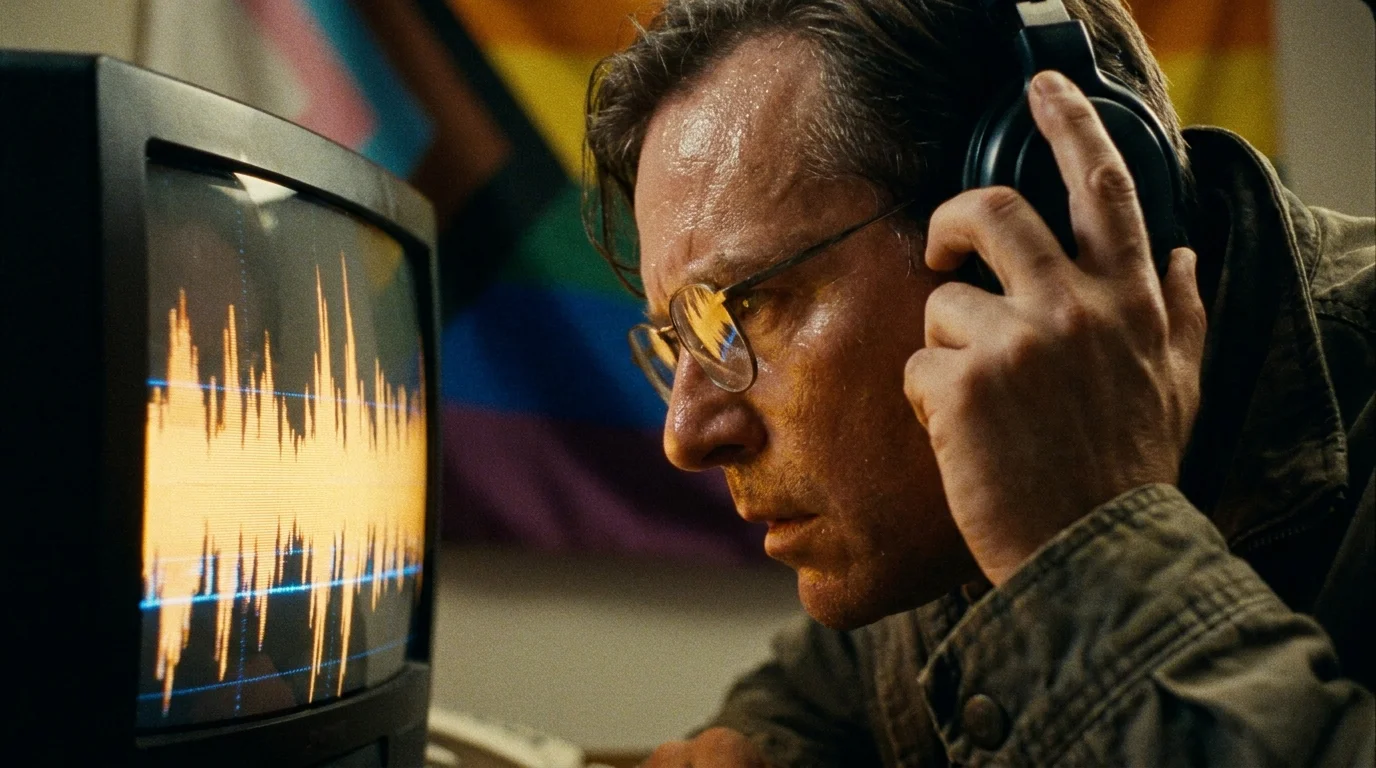
Late at night, in the pale glow of a flickering computer monitor displaying uneven waveform audio spikes, the digital political landscape looks less like a grand debate and more like a crime scene. You plug in a pair of over-ear studio monitors, close your eyes, and listen. It is not the politician’s polished delivery that gives away the deception; it is the scratchy, breathing cadence of the air conditioning inside the House chamber. Room tone never lies.
When a six-second clip ricochets across your morning feed, framed by outraged text overlays and urgent alarms, your instincts urge you to wait for a legacy fact-checker to deliver a verdict three days later. But institutional arbiters are slow, often partisan, and fundamentally unnecessary when you realize the source code of American governance has been sitting open, uncurated, and raw for four decades. The official floor feed hums with a constant acoustic fingerprint that amateur editors cannot perfectly stitch together.
Every congressional room possesses a subtle sonic thumbprint: the hollow resonance of walnut desks, the shuffling paper three microphones away, and the low-frequency electrical drone of 1970s broadcast wiring. When an operative splices two different answers to invent a scandalous gaffe, they must cut that ambient drone. To the casual eye on a smartphone screen, the seam vanishes behind an aggressive camera crop. To your trained ear, the atmospheric hiss stumbles, catches its breath, and snaps.
The Acoustic Seam: Why Pristine Audio Betrays the Cut
We are conditioned to think video manipulation requires hyper-realistic artificial intelligence or high-budget visual effects. In campaign backrooms, reality is far cruder. Operatives practice surgical extraction, lifting twenty syllables from a dull committee hearing at 10:14 AM and welding them onto a defensive response delivered at 3:45 PM. They hide the visual jump by cutting away to a reaction shot of an empty committee chair or dropping an explosive headline across the speaker’s face.
Yet, sound functions like water running through an old radiator; you cannot sever the pipe without making a mess. In the uncompressed feeds preserved inside the public record, ambient sound runs uninterrupted for eight hours straight. Audio room tone breaks instantly when an amateur splice attempts to glue separate temporal realities together. When you stop looking at the speaker’s mouth and start listening to the background silence, the architecture of viral manipulation collapses.
Consider Marcus Vance, 42, a former audio archivist who spent over a decade digitizing state senate proceedings before tracking viral campaign media. When a manufactured clip surfaced showing a veteran midwestern representative ostensibly admitting to financial self-dealing, mainstream fact-checkers spent seventy-two hours chasing interview requests with the candidate’s press secretary. Vance solved the riddle in four minutes flat. By loading the viral MP4 into an open-source audio editor and zooming into the 60 Hz electrical background hum, he discovered a seven-millisecond dropout where the room tone vanished entirely—the digital scar of an operative cutting out forty-two words of exonerating context.
- IRS Form 1099-K thresholds strip online garage sale proceeds behind crumpled paper receipts
- Cushing crude storage tanks trap independent fuel truckers under greasy diesel price spikes
- Declassified Operation Gladio files expose hidden Cold War arms caches across European municipal basements
- Kristen Welker moderator transcripts reveal contrasting network framing on contested border security statistics
- Accessory dwelling unit zoning mandates spark furious property tax disputes across suburban cul de sacs
Adjustment Layers: Three Ways to Audit the Feed
You do not need an acoustic engineering degree or high-end forensic hardware to pull off this level of cross-examination. Depending on the device in your hand and the amount of time you have before sharing a clip, you can calibrate your verification method across distinct analytical layers.
The Acoustic Earphone Audit (Two-Minute Triage)
When you encounter an incendiary clip on a mobile feed, strip away the visual distraction entirely. Plug in wired headphones, turn your screen face down against your desk, and crank the volume up into the quietest passages between the speaker’s words.
Listen for the breathing room. If the speaker finishes a sentence and the microscopic room noise abruptly cuts to absolute, sterile digital silence before the next word starts, someone bleached the audio floor to mask an awkward edit. Real legislative chambers are never dead quiet; they wheeze, settle, and rustle continuously.
The Gavel-to-Gavel Clock Match (Five-Minute Deep Verification)
Every official legislative chamber maintains an unbroken temporal backbone. Look past the speaker’s shoulder. In almost every committee room and chamber floor, subtle visual anchors tell the real story: the physical sweep second hands of wall-mounted clocks, the progression of sunlight across marble pilasters, or the small digital timecode burned into the corner of the original broadcast feed.
When an aggressive political action committee crops a video vertically to format it for mobile consumption, they deliberately shear off those temporal boundaries. By pulling up the corresponding archive day and searching the speaker’s name, you can locate the true timestamp within sixty seconds. If the wall clock behind the member jumps from 2:14 to 2:19 while their sentence appears uninterrupted, you have caught the splice red-handed.
The Parliamentary Transcript Overlay (Forensic Grade)
For high-stakes claims that threaten to reshape local elections, step beyond media files entirely and consult the official reporter of debates. The Congressional Record and state legislative journals document every single word uttered on the floor, transcribed by professional stenographers who note parliamentary interruptions, points of order, and procedural pauses.
Run a string search of the exact eight-word phrase used in the viral video against the day’s printed transcript. If the transcript shows three paragraphs of nuance, statutory references, and procedural qualifications between the opening subject and the damning predicate, you have illuminated the precise scaffolding the campaign team deleted.
The Mindful Audit: A Practical Step-by-Step Sequence
Transforming yourself from a passive consumer of political outrage into an active auditor requires deliberate, measured movements. When a piece of political media provokes an immediate surge of adrenaline, treat that physical reaction as a warning bell to slow down your breathing and execute a standard operating check.
- Isolate the Room Tone: Pull the video into an audio playback tool or hold your phone speaker directly to your ear. Locate the fractional second between the politician’s syllables and listen for sudden shifts in ambient hiss or air vent pressure.
- Identify the Visual Boundary: Look at the edges of the frame. Has the footage been blown up to 150% magnification or cropped into a 9:16 vertical ratio? If the podium microphone base or the date stamp is sliced off, the editor is hiding jump cuts.
- Pinpoint the Hearing Date: Note the committee name on the placard or the bill number listed on the dais. Open the public video vault, select that exact legislative committee, and scrub directly to the calendar date.
- Match the Acoustic Rhythm: Once you find the true moment in the unedited public record, play the raw footage side-by-side with the social snippet. Watch how the politician’s cadence naturally breathes when uninhibited by artificial scissors.
Your Tactical Toolkit: Keep free tools pinned on your browser bar. Use Audacity for rapid spectral frequency checks (set your low-pass filter to reveal the 60 Hz hum), the official C-SPAN Video Library search engine (utilize the closed-caption keyword scan tool), and the Congressional Record on Congress.gov for final textual confirmation.
The Quiet Freedom of Unmediated Truth
There is a profound, quiet serenity that settles over you when you cease outsourcing your reality to third-party interpreters. Modern political communications rely almost entirely on exhaustion; they bank on the probability that you will feel too overwhelmed to look under the hood, resigning yourself to cynical half-truths or waiting for partisan fact-checkers to tell you what to think.
When you learn to hear the seam—to track the unbroken scratch of background hiss and read the quiet testimony of a wall clock ticking in an empty committee room—the media circus loses its power over your emotions. You are no longer easily baited. You stand on the solid bedrock of primary evidence, where the truth does not require a spin doctor, only your willingness to listen.
Real integrity leaves an unbroken acoustic trail; deception always has to cut the room tone.
| Verification Method | Technical Metric Observed | Added Value for the Reader |
|---|---|---|
| Acoustic Hiss Audit | Ambient Room Noise & 60 Hz Hum | Detects hidden audio edits instantly without specialized software. |
| Timecode Cross-Reference | Official Gavel-to-Gavel Video Clock | Confirms whether contextual debate was chopped out between sentences. |
| Transcript Comparison | Congressional Record Daily Edition | Exposes deliberate omissions of qualifying policy language. |
Frequently Asked Questions
Why does the background hiss change when a video is edited?
Every physical room has unique ambient acoustics created by air systems, electronics, and structural acoustics. When two separate recordings are stitched together, the microscopic differences in that noise floor create sudden, audible drops or spikes that reveal the cut.Can political campaigns use noise reduction to hide these splices?
Yes, editors frequently apply heavy noise gates or digital room-tone smoothing, but this creates an unnaturally dead, robotic silence around the speaker’s voice that is just as easy to spot once you know what to listen for.Where can I find unedited, gavel-to-gavel political video footage?
The official C-SPAN Video Library hosts over 270,000 hours of unedited, primary-source congressional and administrative proceedings, completely searchable by keyword, speaker, and exact timestamp.How can I tell if a video clip has been artificially slowed down or sped up?
Listen to the pitch of the ambient room noise and watch the natural blinking rate or fluid movements of people sitting in the background. Warped audio frequencies and robotic physical twitches immediately flag rate alterations.Are visual deepfakes more common than basic audio splicing in elections?
No. Cheap, low-tech audio splicing—often called ‘cheapfakes’—is exponentially more common than generative AI deepfakes because it requires zero technical rendering and takes only minutes to produce on a phone app.