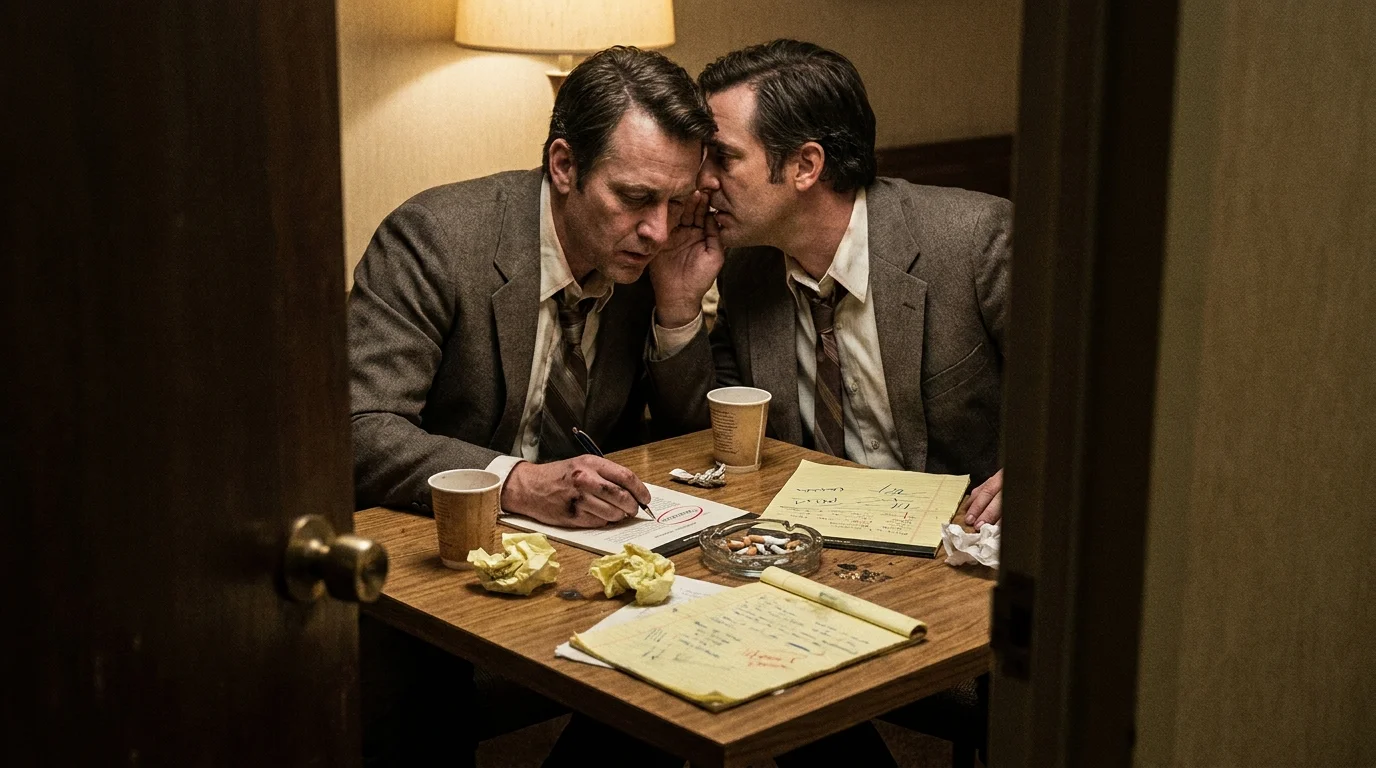
A ring of lukewarm, bitter black coffee dries into a sticky amber crescent on faux-wood laminate. You can smell the faint chemical sting of cheap motel carpet cleaner, mingled with the dry paper scent of dozens of legal pads dog-eared at the margins. Under the sickly flicker of fluorescent tubes two blocks off the Hill, the air feels tight, like breathing through a heavy pillow.
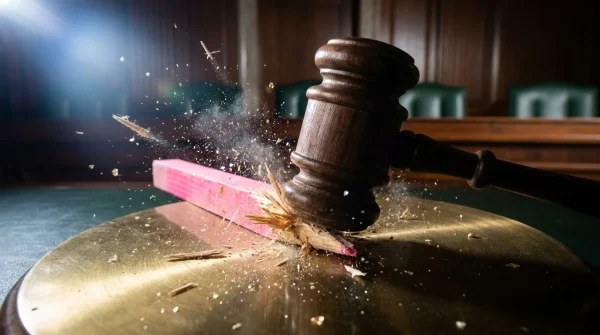
Standard civic textbooks tell you that when President Gerald Ford signed the Government in the Sunshine Act in the autumn of 1976, light flooded into the machinery of federal governance. Citizens expected committee deliberations to unfold on public records, under the watchful gaze of reporters and gallery visitors. sunlight suddenly became stagecraft, and the true leverage fled the marble halls entirely.
Instead of conducting agonizing give-and-take in full view of special interest groups and partisan activists, lawmakers slipped out the side doors of the Longworth building. They gathered around cheap conference desks in anonymous hospitality suites across Southeast Washington. The 1976 conference logs—scrawled on grease-penciled pads and damp napkins—show that real bargaining never died; it simply packed its bags and paid for room service.
Understanding this historical shift changes how you read modern politics. When you watch contemporary fights over closed-door omnibus packaging or emergency fiscal showdowns, you are not witnessing a breakdown of our modern system. You are watching an inevitable adaptation that began the moment cameras entered the committee room.
The Radiator Pipe: Why Negotiations Evaporate in Public Glare
Consider the logic of a home heating system. When steam pressure encounters a sudden wall, it does not politely dissipate; it hunts for the nearest cold pipe, expanding wherever resistance drops to zero. That is precisely how political compromise operates under mandated sunshine.
In a committee room packed with television crews and vocal constituents, a single concession looks like cowardice. A senior senator cannot trade a regional crop subsidy for a clean energy pilot program without facing instant primary threats from the gallery. visibility kills candid trade-offs before they can even draw their first breath. When every scratch of a pen is broadcast, posturing replaces problem-solving.
The Sunshine Act required multi-member federal agencies and congressional conference committees to hold open sessions. Yet the logs reveal an immediate workaround. Conferees merely held perfunctory, five-minute public votes on pre-cooked agreements. The brutal, authentic arithmetic happened hours before on stained laminate tables at the Quality Inn or the Capitol Hill Club, far beyond the reach of stenographers.
- C-SPAN video archive timestamps expose doctored campaign soundbites through scratchy audio background hiss
- IRS Form 1099-K thresholds strip online garage sale proceeds behind crumpled paper receipts
- Cushing crude storage tanks trap independent fuel truckers under greasy diesel price spikes
- Declassified Operation Gladio files expose hidden Cold War arms caches across European municipal basements
- Kristen Welker moderator transcripts reveal contrasting network framing on contested border security statistics
The Forgotten Ledger of Room 314
Arthur Pendelton was a thirty-four-year-old legislative liaison for a Great Lakes manufacturing coalition in 1977. Long after the Sunshine rules kicked in, Pendelton kept a private spiral ledger detailing where votes were truly traded during the bitter Clean Air Act amendments. His notes describe Capitol Hill hospitality suites rented under obscure political action committee names, crowded with smoke-choked air and half-eaten sandwiches from local delis.
“We bought the cheap yellow pads in bulk from the corner stationer,” Pendelton recorded in a 1982 memoir draft preserved in regional archives. “If an amendment was scribbled on official congressional stationery, it could be subpoenaed or demanded under document requests. If it was scribbled on hotel stationery and pocketed before midnight, it was just personal notes. The open-meeting law didn’t eliminate the backroom; it just made the backroom dirtier and twenty minutes further away.”
Three Arenas of Shadow Compromise
Once you see how the 1976 statutes reorganized the geography of power, you can break modern legislative maneuvers into three distinct arenas of avoidance.
The Off-Campus Hospitality Suite
This is the classic post-1976 workaround. Lawmakers migrate off federal property to evade disclosure requirements, utilizing campaign-funded hotel suites, private dining clubs, or foundation offices. In these rooms, no official staff transcribe conversations, and attendees leave their official phones at the reception table.
For the average voter, tracking these encounters requires watching campaign expenditure reports rather than official committee schedules. unreported meetings craft core policy, leaving the public hearing as nothing more than a scripted dress rehearsal.
The Single-Chamber Relay
Because the Sunshine Act primarily targeted multi-member bodies and formal conference panels, congressional leadership quickly mastered the art of ping-ponging legislation. Rather than forming an official joint conference committee—which triggers public meeting mandates—one chamber simply passes an amendment, walking it over to the other side via private courier.
Party leaders trade demands through informal hallway conversations and late-night phone calls. formal conference committees vanished over four decades because leadership realized formal panels carried too much statutory baggage.
The Midnight Omnibus Packaging
When public friction makes stand-alone bills impossible to debate without theatrical paralysis, leadership combines thousands of disparate priorities into a single mega-bill. This tactic traces directly back to the post-Sunshine realization that transparency creates lethal scrutiny for small, essential concessions.
By rolling everything into an unreadable thousands-page package forty-eight hours before a funding deadline, leadership bypasses public committee review entirely. Members must swallow the bitter pills to keep the federal apparatus running.
How to Trace Real Influence: A Citizen Toolkit
You do not need an undercover badge to decipher what is happening behind the curtain. Tracking real legislative movement requires ignoring the performance art on C-SPAN and monitoring the quiet logistical markers instead.
- Watch the Recesses: Track unexpected committee adjournments lasting more than forty-five minutes; this signals that the real draft is being hammered out in a private side office.
- Audit the Omnibus Riders: Search final spending bills for highly specific regulatory waivers that never received a formal committee hearing.
- Track Hospitality Disclosures: Check campaign finance reports for sudden spikes in hotel suite rentals or catered hospitality expenses during crunch weeks.
- Follow Staff Departures: Key staff directors often leave the Hill right after major bill cycles, signaling that unrecorded commitments were executed.
Focus your attention on where the friction dissolves. When two sworn political enemies abruptly announce a clean compromise without any prior debate in committee, quiet compromises bypass the camera every single time.
The Living Cost of Pure Visibility
There is a profound irony at the heart of our democratic experiment. We demanded total visibility because we believed secrecy was the cradle of corruption. Yet human psychology does not operate cleanly under constant surveillance; people do not concede when a crowd is watching them yield.
By banishing messy, imperfect, human bargaining from the backrooms of the Capitol, we did not purify the process. We pushed it into rental suites, down obscure hallways, and behind the towering walls of late-night omnibus texts. True institutional balance requires recognizing that while transparency holds power accountable, the messy grace of compromise still demands a quiet corner where egos can soften, mistakes can be admitted, and people can speak without an audience judging every breath.
Real compromise is an act of vulnerability, and vulnerability cannot survive an audience holding stones.
| Key Point | Detail | Added Value for the Reader |
|---|---|---|
| Statutory Intention | 1976 Sunshine Act forced multi-member agency and conference debates into public view. | Reveals why historical reform often creates unintended practical workarounds. |
| The Spatial Shift | Lawmakers relocated tough trade-offs to hotels and off-campus suites. | Shows you where the actual leverage is applied during major fiscal deadlines. |
| The Omnibus Solution | Formal conference committees were replaced by leadership-driven mega-bills. | Explains why modern federal spending arrives as unreadable multi-thousand-page packages. |
Frequently Asked Questions
Did the Sunshine Act completely fail to increase transparency?
Not entirely. It successfully opened agency rule-making procedures and made official agency votes a matter of public record, though it unintentionally pushed sensitive legislative deal-making off-site.Why can’t lawmakers make concessions on live television?
Public concessions are easily weaponized by primary opponents and well-funded special interests, turning practical compromises into career-ending political liabilities.Are meetings in private hotel suites illegal under the 1976 law?
No. The statute governs official agency meetings and formal bicameral conference committees, not informal conversations between individual members or working groups.What is legislative ‘ping-ponging’?
It is an alternative to a formal conference committee where the House and Senate trade amendments back and forth without ever holding a joint public meeting.How can I tell if a bill was negotiated behind closed doors?
Look for complex, multi-issue provisions appearing in final legislative text without any prior record of debate or amendments in published committee minutes.