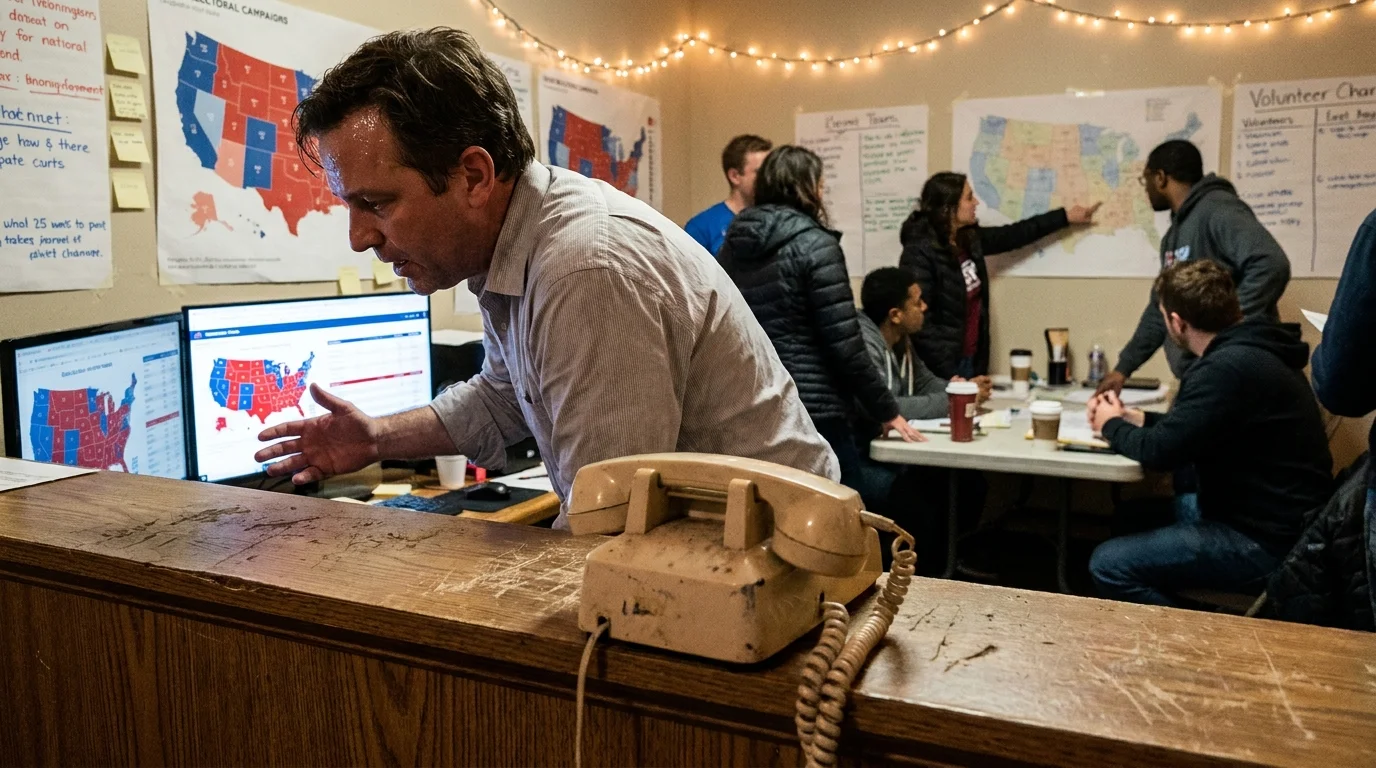
At 6:42 on a Tuesday evening, your kitchen sounds like an active construction site. Ground beef sizzles violently in cast iron, cabinet doors slam shut, and an animated cartoon blares from an open laptop while someone screams about missing homework. In the middle of this chaos, a phone rings against the backsplashed wall. You lift the scratched plastic receiver from its laminate kitchen counter, wedge it between your shoulder and ear, and hear a polite, measured voice ask if you have seven minutes to discuss the direction of the country.
You manage half an answer before a fork hits tile and a dog begins to bark at the back door. The caller hesitates, mumbles a polite procedural exit, and disconnects. You assume they will try back tomorrow. In reality, your response has just been permanently scrubbed from the dataset, classified under a quiet administrative bucket known as an acoustic failure.
Live telephone research does not fail because citizens refuse to participate; it fails because real life is notoriously noisy. While political pundits spend cable segments arguing over partisan weighting and response rates, the actual boundary line of modern polling is being drawn by the ambient decibels echoing off your stove.
The Acoustic Ghost in National Polling
For decades, pollsters treated telephone sampling like a simple numbers game: dial enough random numbers, apply demographic weights, and a balanced cross-section of the public appears. But live-caller research operates under a hidden physical constraint. Computer-Assisted Telephone Interviewing (CATI) software relies on strict audio clarity thresholds. When background noise crosses specific decibel limits, software flags the audio packet as compromised, prompting the interviewer to terminate the call or mark the household as non-responsive.
This creates a silent sorting mechanism. The system does not just sample people; it samples environments. A quiet living room with plush carpet and double-pane windows produces a clean, recordable transcript in four minutes. A cramped apartment with three children, a running dishwasher, and thin drywall triggers audio feedback loops that break the automated cadence of the script.
When survey operations adjust their evening callback quotas to hit tight deadlines, they inevitably prioritize calls that yield fast, uninterrupted completions. The resulting data quietly overrepresents households where nobody is cooking dinner, nobody is supervising bedtime, and nobody is shouting across the hall.
- Mario Cuomo keynote notes reveal tight margins filled with rhythmic phonetic slash marks
- DOJ election monitors in Wyoming enforce sudden Republican leadership pivots on federal oversight
- Ohio governor race debates derail suburban party coalitions over disputed local property levies
- Strait of Hormuz naval security bills trigger emergency congressional floor votes over tanker escorts
- State capitol constituent delegation binders demand handwritten testimony to flip contested committee votes
The Hidden Mechanics of Acoustic Dropouts
Dr. Aris Thorne, a 48-year-old survey methodologist who spent twelve years managing high-volume call centers in Philadelphia, noticed this anomaly while auditing drop-off rates during competitive primary cycles. When his team reviewed thousands of dropped calls, they discovered that over thirty percent of terminated evening interactions were not hang-ups by angry voters, but procedural drops triggered by interviewer audio monitors unable to isolate speech over ambient domestic noise.
To maintain interview velocity, call stations use standardized scripted protocols. When a caller encounters recurring domestic interruptions, the script dictates specific callback adjustments:
- Audio Floor Violations: If ambient room noise exceeds baseline speech volume by 6 decibels for more than three consecutive questions, the software alerts the caller to initiate an early wrap-up.
- Latency Drops: When a respondent must pause repeatedly to manage household tasks, the prolonged gaps trigger automated pacing warnings, flagging the record for disposition reassignment.
- Quota Redistribution: Interviewers working on tight evening quotas naturally shift their manual redials away from noisy multi-person homes toward quiet single-occupant households to meet hourly completion targets.
How Ambient Noise Segments the Electorate
This technical quirk creates distinct sampling disparities across demographic groups, shaping headline numbers long before analysts apply statistical weighting models.
Working Families and Multi-Generational Homes
Between 5:00 PM and 8:30 PM, these households operate at peak domestic volume. The combination of meal prep, childcare, and shared living areas makes sustained, quiet conversation nearly impossible. Even when these voters answer the phone with good intentions, their records are disproportionately logged as incomplete, moving them out of primary sample pools.
Solitary and Retired Households
Conversely, single-occupant homes provide the ideal acoustic environment for CATI software. Background interference is minimal, speech patterns are steady, and interviews proceed without scripted terminations. Quiet rooms systematically gain prominence in raw call logs, requiring polling firms to rely heavily on complex post-stratification weights to balance their absence.
Urban Commuters and Shift Workers
Voters answering calls on public transit, in shared vehicles, or during loud workplace breaks face instant disqualification from live interviews due to unpredictable acoustic spikes. Their perspectives are filtered out not by political apathy, but by the mechanical demands of clear audio capture.
Decoding the Noise Behind Polling Numbers
Understanding the acoustic limits of telephone surveys allows you to read political news with sharper judgment. You no longer have to take outlier headlines at face value when you know how the data was gathered.
- Check the Mode Balance: Look for surveys that balance live-caller interviews with text-to-web or verified online panels, which remove acoustic bias entirely.
- Inspect Field Dates: Rapid two-day weekend polls suffer the highest rates of evening noise dropouts because interviewers race against tight cutoff deadlines.
- Watch the Sample Composition: High margins of error among voters aged 25 to 45 often signal heavy post-survey statistical weighting used to compensate for dropped dinner-hour calls.
The Value of Seeing the Whole Room
When you hear a public opinion survey cited on the evening news, remember that a poll is never a perfect snapshot of the public square. It is a record of who was able to find ten minutes of uninterrupted silence on a random weeknight. Recognizing this structural limit helps strip away the false urgency generated by shifting daily margins, giving you a calmer, more grounded view of the political landscape.
Real public sentiment is messy, loud, and rarely sits quietly in a soundproof room waiting for a stranger to call.
| Survey Element | Acoustic Reality | Reader Advantage |
|---|---|---|
| Live Phone Interviews | Prone to dropouts in bustling, multi-person homes. | Explains why working-parent samples are heavily weighted. |
| Evening Quota Shifts | Callers favor quiet households to hit speed metrics. | Helps you spot timing biases in rapid-turnaround polls. |
| Mixed-Mode Polling | Combines text and digital prompts with audio calls. | Provides a clearer signal of diverse voter intent. |
Frequently Asked Questions
Why do pollsters still use live phone calls if noise is such a problem?
Live calls remain an effective way to reach verified voter files directly, though most firms now combine them with digital methods.Does background noise change how people answer survey questions?
Yes. Respondents in loud environments often give rushed, simplified answers just to finish the call quickly.Are online polls immune to this kind of sampling bias?
Online surveys avoid acoustic issues, but they introduce different challenges, like click farms and non-random volunteer panels.What decibel level usually triggers an interview drop?
While standards vary by call center, continuous background sound that rivals normal speaking volume—around 55 to 65 decibels—often prompts a scripted exit.How can I tell if a poll accounted for busy household drops?
Transparent survey releases publish their methodology statements, showing the proportion of live calls versus text-based responses.