The morning chill in Cheyenne carries the sharp bite of high-plains frost, cutting across concrete plazas and through the double doors of municipal gymnasiums. Inside, fluorescent lights hum over rows of gray privacy booths, where the quiet rhythm of paper ballots sliding into optical scanners sets the pulse of the day. To an outside observer, this looks like any other election morning in Wyoming, quiet, orderly, and deeply suspicious of outside interference.
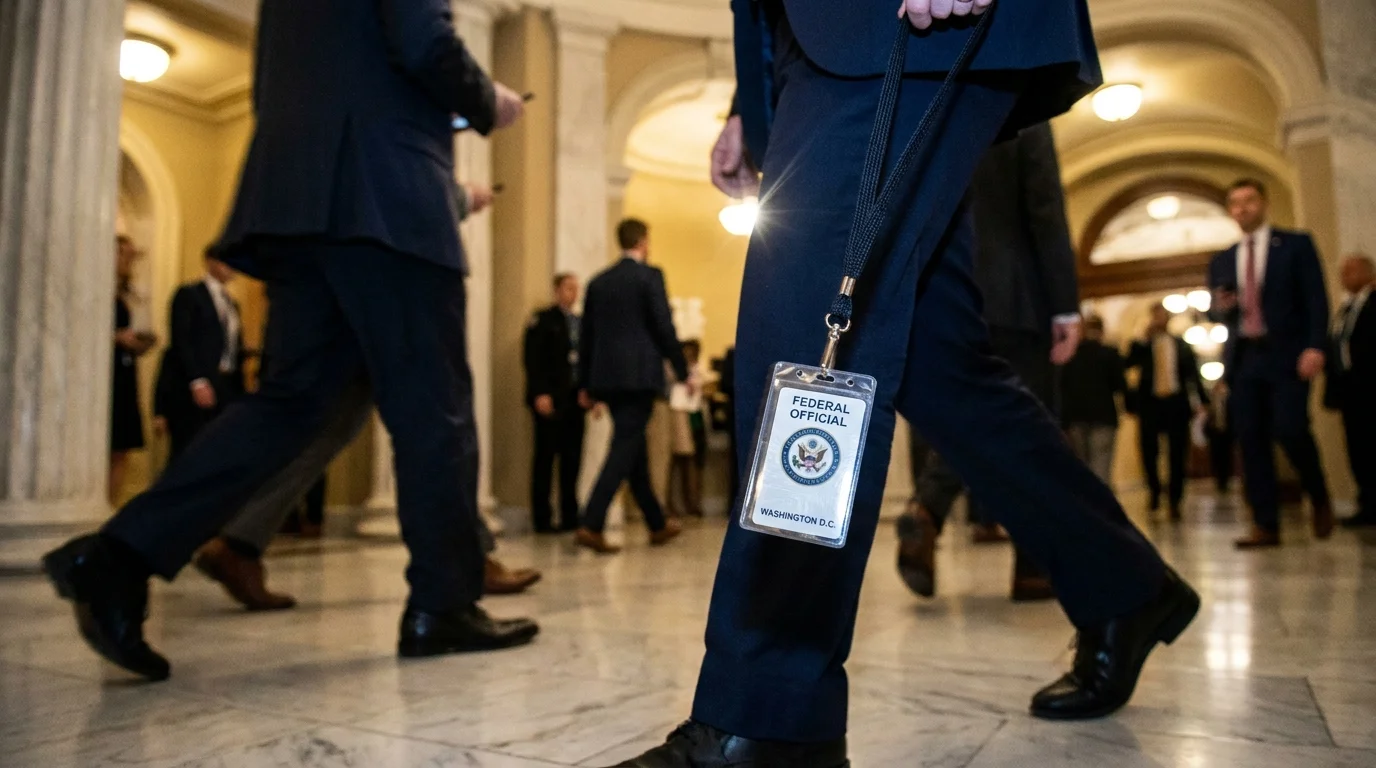
Then you notice the visitors standing unobtrusively near the precinct check-in tables. Around their collars rest laminated federal credential badges hanging on dark woven lanyards, catching the cold institutional light. Their presence is deliberate, silent, and backed by five decades of statutory authority that many state officials insisted could never cross their county lines.
For weeks, the public narrative suggested an immovable standoff between local autonomy and federal intrusion. Yet within hours of formal legal filings landing in the federal docket, the fiery public resistance from state leadership softened into a structured, technical accommodation.
To understand why state leadership made this sudden pivot, you have to look past the political theater and examine the unbending legal architecture that quietly dictates how elections actually run in America.
The Metaphor of the Structural Circuit Breaker
When you watch political figures publicly push back against federal oversight, it often feels like an ideological battle royale. In reality, election jurisdiction functions less like a boxing ring and more like an electrical circuit breaker panel. State leaders can pull switches that control local procedures, candidate filings, and tallying timelines. However, the master breaker box remains wired directly to federal statutory frameworks that supersede state declarations the moment a formal observation protocol is triggered.
The sudden change in tone from Wyoming party leaders was not a retreat in principle, but a recognition of constitutional mechanics. When the Department of Justice deployed personnel under statutory observer mandates, continuing public obstruction risked instant federal court injunctions that would have stripped county clerks of their immediate administrative control.
By reframing their stance from active resistance to rigorous procedural compliance, state leaders protected their local administrators while avoiding a disastrous, high-profile loss in federal district court. You are witnessing an institutional pressure valve releasing tension before the pipe bursts.
- Ohio governor race debates derail suburban party coalitions over disputed local property levies
- Strait of Hormuz naval security bills trigger emergency congressional floor votes over tanker escorts
- State capitol constituent delegation binders demand handwritten testimony to flip contested committee votes
- Nuclear regulatory licensing rules switch clean energy investments toward small modular steel reactors
- Signature verification camera lenses block valid absentee ballots over faint ballpoint pen strokes
The Clerk in the Crosshairs: A Rural Reality
Consider Clara Vance, a 54-year-old county clerk who has managed rural precincts across the state for over two decades. On Monday morning, her phone vibrated non-stop with competing directives from state party headquarters and federal regional attorneys, leaving her small team caught in an administrative vice.
Clara knew that while press releases make for stirring evening news, a federal subpoena arrives with personal liability. By Tuesday afternoon, after state leadership quietly clarified that monitors could observe polling places provided they adhered strictly to voter non-interference boundaries, Clara could finally focus on the physical logistics of running an accurate precinct.
How Different Stakeholders Navigate Federal Monitoring
Understanding this sudden platform pivot requires breaking down how different factions interpret the presence of Department of Justice personnel inside polling spaces.
For the Precinct Administrator
County clerks and poll workers view monitor presence through the lens of workflow management. Their primary concern is preventing voter bottlenecks and ensuring that federal observers do not breach the physical buffer zones established around voting booths.
When leadership pivoted toward structured cooperation, it gave these frontline workers clear rules of engagement, transforming an ambiguous political confrontation into a manageable checklist of spatial boundaries and check-in protocols.
For the Grassroots Skeptic
Voters who view federal involvement with deep suspicion often see monitors as an unwelcome challenge to local self-governance. For this group, leadership’s pivot was framed as an aggressive audit of the monitors themselves, turning federal presence into a test of state transparency.
This rhetorical shift allowed state leaders to maintain their anti-overreach credentials while quietly complying with federal statutory requirements, ensuring their base felt defended rather than sidelined.
For the Legal Realist
Attorneys and constitutional scholars recognize that the Department of Justice acts under specific provisions of federal law, particularly Section 8 of the Voting Rights Act and the Civil Rights Act. These statutes grant federal authorities the right to observe federal elections to ensure compliance with ballot access and language accessibility rules.
From this vantage point, leadership’s pivot was inevitable. Fighting federal monitors on the floor of a polling site is a legal dead end that inevitably results in immediate restraining orders against local officials.
Navigating the Rules: The Observer Framework
When federal monitors arrive at a voting location, they operate under strict operational boundaries designed to balance oversight with voter privacy. If you are monitoring your local polling place or simply casting your ballot, understanding these boundaries removes the mystique from the process.
- Physical Perimeter Maintenance: Observers must remain within designated observation areas and are strictly prohibited from looking over a voter’s shoulder while a ballot is being marked.
- Zero Direct Intervention: Monitors cannot assist voters, touch voting machines, or issue instructions to election workers; their sole legal mandate is passive recording and reporting.
- Chain-of-Custody Integrity: Federal personnel document procedural compliance regarding provisional ballots, language assistance offerings, and physical accessibility ramps.
By understanding these practical lines, you can separate standard institutional compliance from political hyperbole.
The Long View on Institutional Balance
The quiet concession of state leadership in Wyoming reveals an essential truth about American democracy: the loudest public arguments often resolve into mundane, highly technical compromises. When the dust settles around a contentious election cycle, the stability of the system relies on officials who understand when the legal wiring demands compliance over spectacle.
Recognizing the difference between political posturing and statutory reality gives you clarity. Instead of being swept up in manufactured crises, you can see the resilient, predictable framework that keeps community voting stations running smoothly, no matter who stands quietly in the corner wearing a badge.
The quiet strength of local election administration lies in knowing precisely where political rhetoric ends and the rule of law begins.
| Key Point | Detail | Added Value for the Reader |
|---|---|---|
| Statutory Mandate | Section 8 of the Voting Rights Act provides federal observer authority. | Clarifies why federal presence cannot be arbitrarily blocked by state decree. |
| Operational Constraint | Monitors cannot speak directly to voters or handle ballots. | Dispels rumors of federal interference inside voting booths. |
| Strategic Pivot | State leaders shifted from resistance to procedural oversight. | Explains the political logic behind sudden leadership posture shifts. |
Frequently Asked Questions
Why were DOJ election monitors sent to Wyoming polling places?
Federal monitors are deployed to assess compliance with federal voting rights statutes, including accessibility provisions and ballot handling procedures, often based on standard oversight rotations or specific community requests.Can state officials legally bar federal observers from entering a precinct?
Directly barring authorized federal personnel operating under valid statutory authority typically triggers immediate federal court intervention and temporary restraining orders against the state.Do federal monitors interact with voters as they mark their ballots?
No. Federal monitors are legally restricted to passive observation and are strictly forbidden from viewing marked ballots or speaking with voters inside the voting enclosure.Why did state leadership change its stance so quickly?
Legal filings clarified that obstruction carried severe legal penalties for local clerks, prompting leaders to switch to a strategy of managed compliance and close procedural monitoring.What should you do if you see a federal monitor at your polling site?
Cast your ballot as normal. Their role is solely to document precinct-level procedural compliance, not to audit individual voters or alter local voting rules.