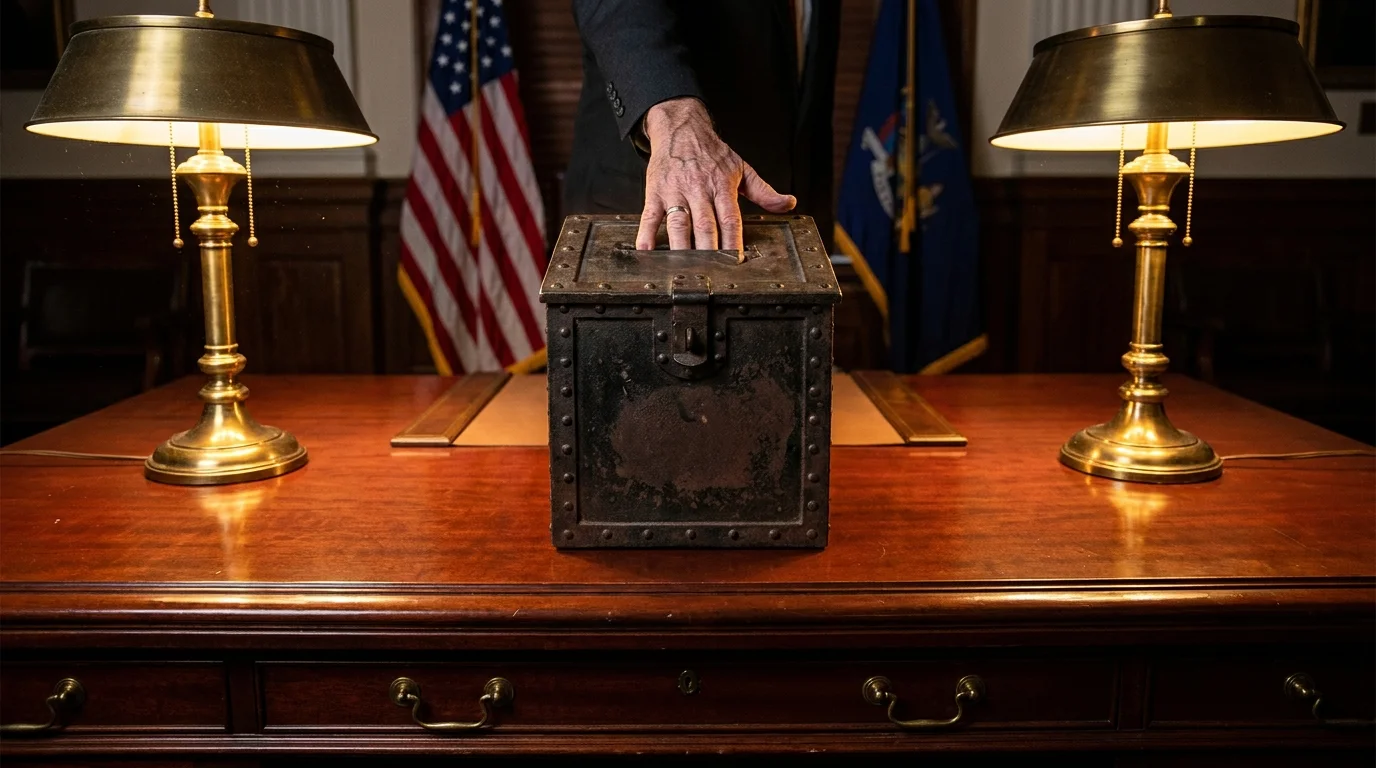
The winter draft sneaks beneath the heavy oak sill of the lodge room, cutting clean through the warmth of wool socks and hot diner coffee. Outside, northern New Hampshire sits under four feet of pack snow, silent and pitch-black beneath the White Mountain ridge line. Inside, harsh halogen spotlights hum over wood-paneled walls, reflecting off glossy camera lenses and the polished grain of a makeshift voting table.
You hear it before you see the final tally: the heavy, cast iron ballot box hinges clanking shut against a seasoned timber frame. It is exactly 12:01 AM. Six registered voters step backward into the glare of international news crews, their paper slips already dropping into the slotted dark.
By the time most of the country rolls over in bed to silence their first morning alarm, these six scraps of paper have already been dissected by three dozen digital strategists. The ritual feels antique, almost decorative, but the political mechanics it triggers are aggressively modern. You are not just looking at a quirky local tradition; you are watching the opening switch of a multi-million-dollar media engine flick into place.
The Acoustic Amplifier: Why Six Ballots Shake the Map
To understand the primary season, you have to treat early voting precincts not as representative samples, but as political tuning forks. A small town like Dixville Notch does not predict how a working-class ward in Manchester or a suburb outside Nashua will vote when the sun comes up. It sets the morning tone for every broadcast network scrambling to fill four empty hours of early-dawn airtime.
When a single candidate sweeps a midnight hamlet, cable news anchors do not spend six minutes discussing sample size variance. They spend six minutes running banner headlines across the bottom third of the screen, declaring sudden structural strength or an unexpected stumble. The acoustic resonance of that midnight room magnifies tiny margins until they sound like national mandates.
Think of it as the cold-air principle in sound engineering: sound travels farther and sharper through crisp, freezing air over still water than it does through a crowded, noisy city square. Dixville Notch speaks into a complete news vacuum. Because no other precinct has counted a single vote, its whisper registers on the national seismograph with the force of an earthquake.
- WinRed SMS fundraising blasts trigger urgent panicked ringtones to drain fixed retiree accounts
- Federal Register publishing queues block emergency administrative orders until midnight ink stamps dry
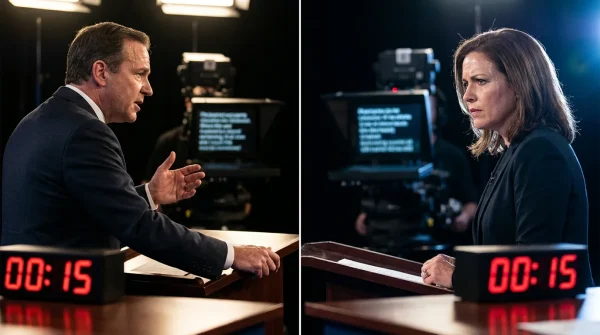
- Split-screen debate camera lenses trap squirming candidates during split second visual cutaways
- Automated robocall poll screens strip working class responses across noisy evening dinner hours
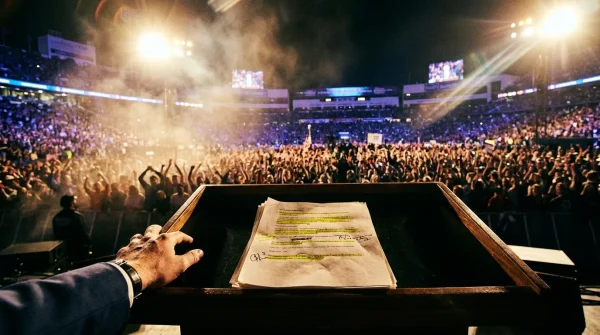
- Ronald Reagan speech cue cards enforce rhythmic pauses using bold underlined red ink
The Midnight Ledger of Tom Tillotson
For decades, Tom Tillotson, a longtime town moderator and resident whose family helped establish the midnight tradition at the Balsams Resort, guarded the mechanics of the midnight count with meticulous care. He understood something that professional beltway pollsters frequently overlook: ritual creates legitimacy, and speed creates narrative dominance.
Tom would watch national reporters arrive in heavy parkas, shivering as they strung heavy cables across the floorboards. In private conversations, he often noted that the press did not come north just for the numbers; they came for the visual proof that the machine of democracy was turning its first gear. The six ballots were real, tangible, and paper-marked, providing a sharp tactile contrast to the hazy algorithms of predictive modeling.
The Three Layers of Midnight Momentum
When those early results flash across donor dashboards at dawn, the ripple effect splinters into three distinct political realities. How you interpret these numbers depends entirely on which room in American politics you occupy.
1. The Donor Speed-Dial
In high-rise offices across Washington and New York, finance directors use early morning returns to nudge nervous bundlers. Early numbers trigger immediate cash flow adjustments before standard precincts even distribute their ballot stubs. If an underdog candidate captures four out of six midnight votes, campaign finance desks instantly blast fundraising emails claiming early over-performance, capturing impulsive online micro-donations before breakfast.
2. The Morning Cable Control Room
Television producers need a narrative arc before 6:00 AM Eastern. A clean sweep or a shocking shutout in a northern hamlet provides an effortless visual hook. The narrative constructed during these early hours becomes the baseline framing against which every subsequent exit poll is measured throughout the afternoon.
3. The Ground Field Office
For campaign volunteers knocking on doors in freezing southern New Hampshire towns, the midnight return serves as raw psychological fuel. Field directors harness early wins to fire up phone banks, using the symbolic momentum to convince undecided voters on their morning commute that a specific candidate has genuine grassroots traction.
How to Read Midnight Returns Without Falling for the Illusion
Navigating primary season requires a sharp filter. You do not need a degree in political science to separate genuine electoral signals from manufactured midnight hype. You only need a disciplined method for consuming the early morning wire.
- Check the Registered Demographics: Look at the party registration split of the specific midnight precinct. In microscopic voting pools, a single registered independent leaning left or right will skew the entire percentage by double digits.
- Track the Turnout Velocity: Pay attention to whether the hamlet had full registered participation or if locals opted out, which signals voter enthusiasm far better than the candidate split itself.
- Mute Cable Analysis Until Midday: Ignore morning punditry that uses six votes to extrapolate statewide demographic trends among suburban or working-class voters.
- Watch the Campaign Response: Observe how fast candidate war rooms blast the result; defensive silence or aggressive boasting reveals who was truly caught off guard by the town’s small ledger.
The Human Anchor in a Digital Gauntlet
There is something stubbornly grounding about watching neighbors gather in a chilly lodge room at midnight while the rest of the nation sleeps. In an era where politics feels increasingly flattened by predictive algorithms, tracking cookies, and manufactured soundbites, the clanking iron box in the North Country remains stubbornly human. It reminds you that every massive national shift starts with individual hands marking simple paper in quiet rooms.
When you learn to look past the cable banners and see the midnight ballot for what it really is—a fragile, poetic spark rather than a completed fire—the political landscape becomes remarkably clear. You stop reacting to the noise, and you start understanding the machine.
The early vote is never a mirror of the electorate; it is the flint that sparks the day’s national argument.
| Key Point | Detail | Added Value for the Reader |
|---|---|---|
| Sample Size Reality | Less than 10 total ballots cast in midnight hamlets like Dixville Notch. | Prevents overreacting to early percentage landslides that lack statistical weight. |
| Media Vacuum Effect | Zero competing domestic returns between midnight and 6:00 AM EST. | Explains why cable channels dedicate disproportionate coverage to microscopic counts. |
| Digital Donor Reflex | Automated email systems trigger within 30 minutes of ballot certification. | Helps you recognize manufactured urgency in morning campaign fundraising appeals. |
Frequently Asked Questions
Why do towns like Dixville Notch vote at midnight instead of normal hours?
New Hampshire state law allows precincts to close their polls as soon as 100 percent of registered voters have cast their ballots. In communities with fewer than a dozen residents, voting at midnight allows them to complete the process in minutes and report instantly.Does winning the midnight vote correlate with winning the primary?
Historically, no. The sample is far too small and demographically distinct to mirror the state’s broader voting population. It functions as a media milestone rather than an accurate predictive model.How many small hamlets participate in the midnight voting tradition?
While Dixville Notch is the most famous, other tiny communities like Hart’s Location and Millsfield have practiced midnight voting off and on across different election cycles over the past several decades.Why do campaigns invest resources in visiting towns with less than a dozen voters?
Candidates visit for the guaranteed national press photos. A single photograph of a candidate chatting by a woodstove in a midnight precinct generates earned media value far exceeding the cost of the trip.How should an everyday voter interpret these results on election morning?
View them as cultural pageantry and a signal of election day kickoff rather than hard political data. Real statistical momentum only emerges once high-density precincts begin reporting late in the evening.