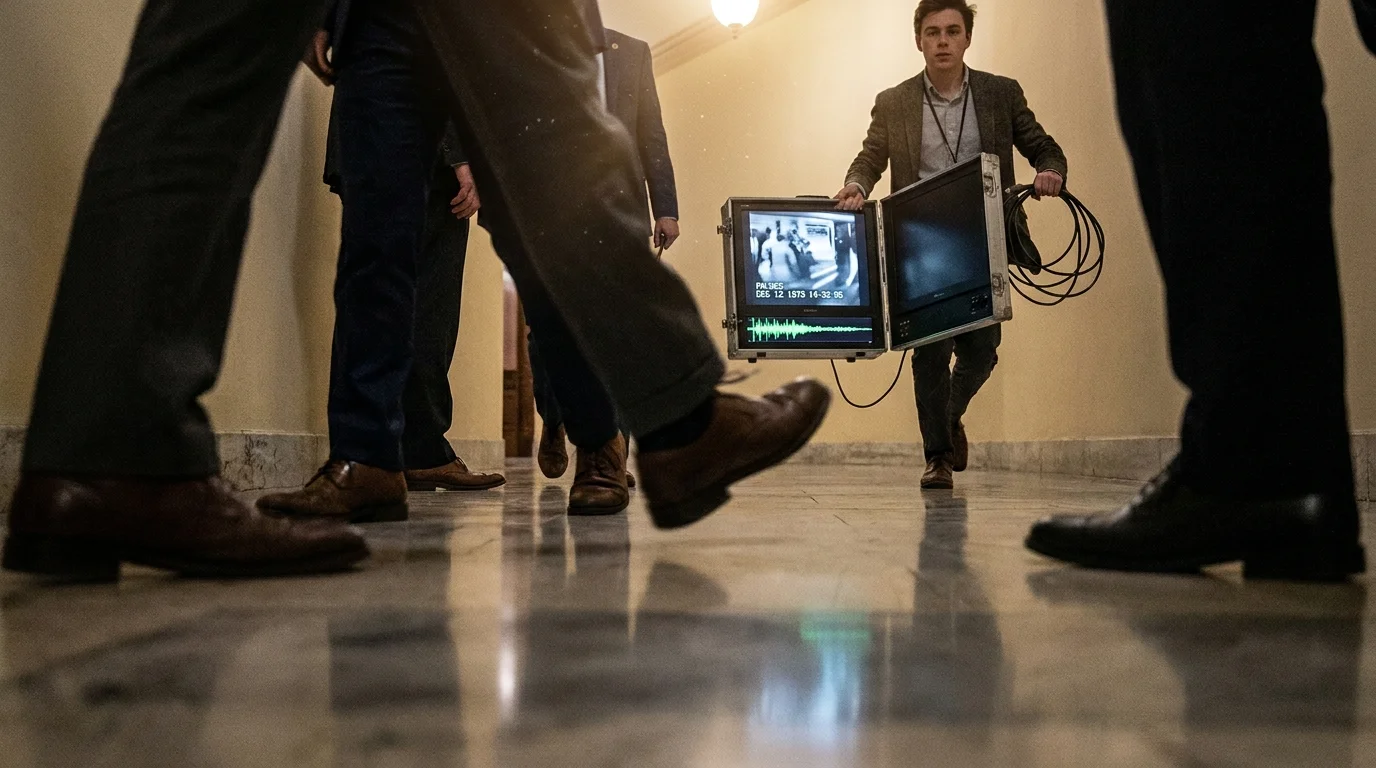
A dual-monitor editing screen glows softly in the dark, throwing cool blue light across a cluttered desk. On the left display, an authentic C-SPAN archival feed runs with a grainy pixelated timestamp overlay ticking steadily in the upper corner. On the right, a viral six-second clip circulating on social feeds plays on a frantic, endless loop. At a casual glance through phone speakers, the two clips seem identical—same lectern, same politician, same sharp accusation.
Listen closer, however, and the illusion cracks. The viral video carries a sterile, vacuum-sealed quality, where the speaker’s voice hangs unnaturally isolated, completely stripped of the hollow wooden floorboards and distant HVAC hum of the high school gymnasium. What millions took as an unfiltered slip of the tongue is actually a crude digital splice masked by artificial compression artifacts.
Every political campaign cycle now runs on microscopic cuts. When you scroll past an outrage-inducing soundbite, your brain reacts to the emotional sting before your ears register the mechanical seam. Spotting digital audio tampering requires abandoning the belief that our naked eyes and tiny phone speakers tell the whole story.
Understanding how raw archival footage operates transforms how you consume political news. Instead of feeling helpless against synthetic media and manipulative edits, you can train your senses to catch the physical signatures that bad actors simply cannot scrub away.
The Ghost in the Gymnasium: Decoding Room Tone
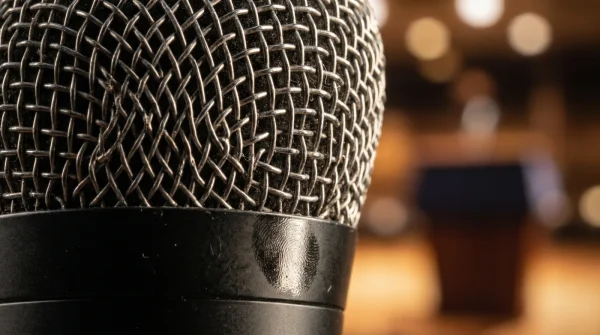
Every physical space has an acoustic fingerprint known as room tone. When a candidate speaks inside a brick-walled union hall or an open-air fairground, their voice bounces off surfaces, creating a microscopic decay of sound that audio engineers call natural reverberation. This echo wraps around every consonant, filling the tiny pauses between breaths with ambient noise.
- Federal Reserve Act amendments trigger hidden paycheck deductions with paper check processing fees
- Iowa precinct caucuses demand standing headcounts that trap exhausted voters in cold gymnasiums
- Federalist Society debates resurfaced forgotten nineteenth century judicial oaths using dusty leatherbound transcripts
- Zoning maps dictate modern housing shortages based on outdated redlining
- Mail-in ballots cause unexpected postal delays across crucial swing counties
When a bad actor alters a stump speech—either by splicing two unrelated sentences together or slotting in an AI-generated vocal clone—they inevitably introduce an audio vacuum. Amateur scrubbing removes natural reverberation, leaving sudden, unnatural pockets of total silence. The human ear may not consciously name it, but the subconscious senses that the voice is suddenly breathing through a pillow.
Marcus Vance, a 48-year-old forensic audio analyst based in Arlington, Virginia, spends his weeks comparing leaked political clips against untouched network pool feeds. Last month, Marcus received a viral clip alleging a major candidate made an unscripted policy reversal during an Iowa town hall. Within seconds of pulling up the raw C-SPAN archival tape, he spotted the deception: right at the controversial phrase, the background hum of the venue dropped by twelve decibels, accompanied by a single frame of visual jitter where the editor attempted to hide a hard video splice behind simulated broadcast static.
The Anatomy of an Audio Splicing Seam
Modern political manipulation rarely invents speeches from scratch; it stitches authentic phrases into hostile new contexts. Recognizing these edits means looking for the boundary lines where two separate realities meet.
For the casual scroller, the easiest tell is the abrupt death of crowd ambiance. If thousands of supporters are cheering in the background, their collective noise forms a steady, rolling wave. When an editor cuts into a sentence to insert an out-of-context word, that ambient wave snaps like a snapped rubber band. The sound doesn’t fade; it violently resets.
For the careful researcher, the clue lies in the visual cadence of speech. A candidate’s jaw, neck muscles, and chest move in tight harmony with their vocal delivery. When audio is altered or shifted, micro-expressions fall out of sync with plosive sounds—the hard ‘p’, ‘b’, and ‘t’ sounds that force air through the lips. Watch the throat and collarbone rather than the mouth; these muscle groups rarely align with hastily pasted voice tracks.
Your Field Verification Toolkit
You do not need a degree in audio forensics or expensive spectral editing software to verify a suspicious political moment. You only need a systematic routine and a willingness to look past the algorithmic feed.
- Locate the Unbroken Pool Feed: Always search for the full-length C-SPAN archival recording or local affiliate pool tape of the event. Match the pixelated timestamp on the original broadcast against the timestamp of the viral excerpt.
- Listen Through Over-Ear Headphones: Smartphone speakers compress dynamic range, flattening background noise. Over-ear monitors expose hard room-tone cuts and sudden acoustic dead zones instantly.
- Track the Waveform Glitch: If you drop the clip into any free media viewer, look at the visual sound line. An authentic speech shows soft, organic valleys between words. A spliced clip shows hard vertical cliffs where the background noise was severed.
- Isolate the Environmental Mic Bleed: Check secondary sounds like coughs, folding chairs, camera shutter clicks, or PA system hum. If a secondary sound vanishes mid-sentence, the audio has been manipulated.
The Power of Slower Consumption
The rush to be the first to share a shocking political reveal is the fuel that keeps manipulative edits alive. These clips are engineered to bypass critical analysis by triggering instant outrage or vindication, betting that you will share the video before your brain questions the acoustic reality.
When you take sixty seconds to cross-reference a viral soundbite against an untouched archival record, you reclaim your agency as an informed citizen. Patience is a civic superpower in an era of rapid synthetic media. By tuning your ears to the subtle presence of room tone and demanding primary source proof, you build an unshakeable defense against political illusion.
Real audio carries the messy, beautiful acoustics of the room it was born in; a fake always leaves a trail of synthetic silence.
| Key Point | Detail | Added Value for the Reader |
|---|---|---|
| Room Tone Continuity | Untouched venue audio maintains a constant floor of ambient acoustic noise. | Allows you to immediately spot edited sentences by listening for sudden drops into dead silence. |
| Archival Timestamps | Official pool feeds display persistent, unbroken time codes across the entire event. | Enables exact side-by-side verification to confirm whether an alleged soundbite actually occurred in sequence. |
| Spectral Consistency | Authentic vocal tracks match the physical distance and reverberation of the hall mic. | Helps you identify AI voice inserts that sound unnaturally flat or recorded in a sound booth. |
Frequently Asked Questions
How can I find the original C-SPAN footage of a viral speech?
Search the C-SPAN video library using the candidate’s name, the date, and the specific venue shown on campaign banners in the clip.Why do altered videos often have artificial static added over them?
Editors frequently add fake static or scan lines to conceal video cut points and mask unnatural audio drops between spliced clips.Can artificial intelligence replicate room reverberation accurately?
While generative tools are improving, they struggle to match the chaotic, multi-directional echoes of specific physical venues like gyms and convention centers.What is the quickest way to fact-check an audio clip on a phone?
Plug in headphones and listen specifically to the background crowd hum during pauses between words rather than focusing only on the speech.Are local news pool feeds as reliable as national archival networks?
Yes, unedited local broadcast feeds provide clean, continuous master audio that serves as an excellent primary source for verification.