Under the blinding wash of overhead halogen grids, sixty-five degrees inside an arena control room feels freezing, but at the podium, it feels like high noon in mid-August. You can hear the faint, hydraulic whisper of pedestal cameras tracking along tracks laid across the studio floor. The red tally lamp glows silently atop lens number three. In that tiny red glass bulb sits the modern political arena.
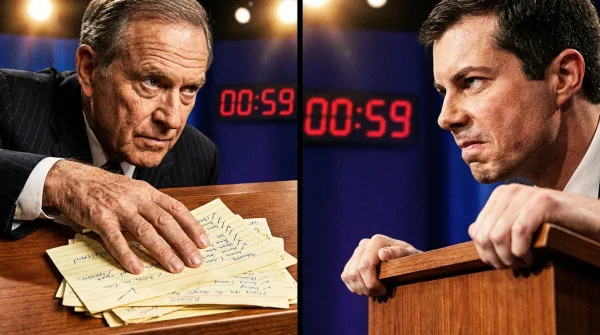
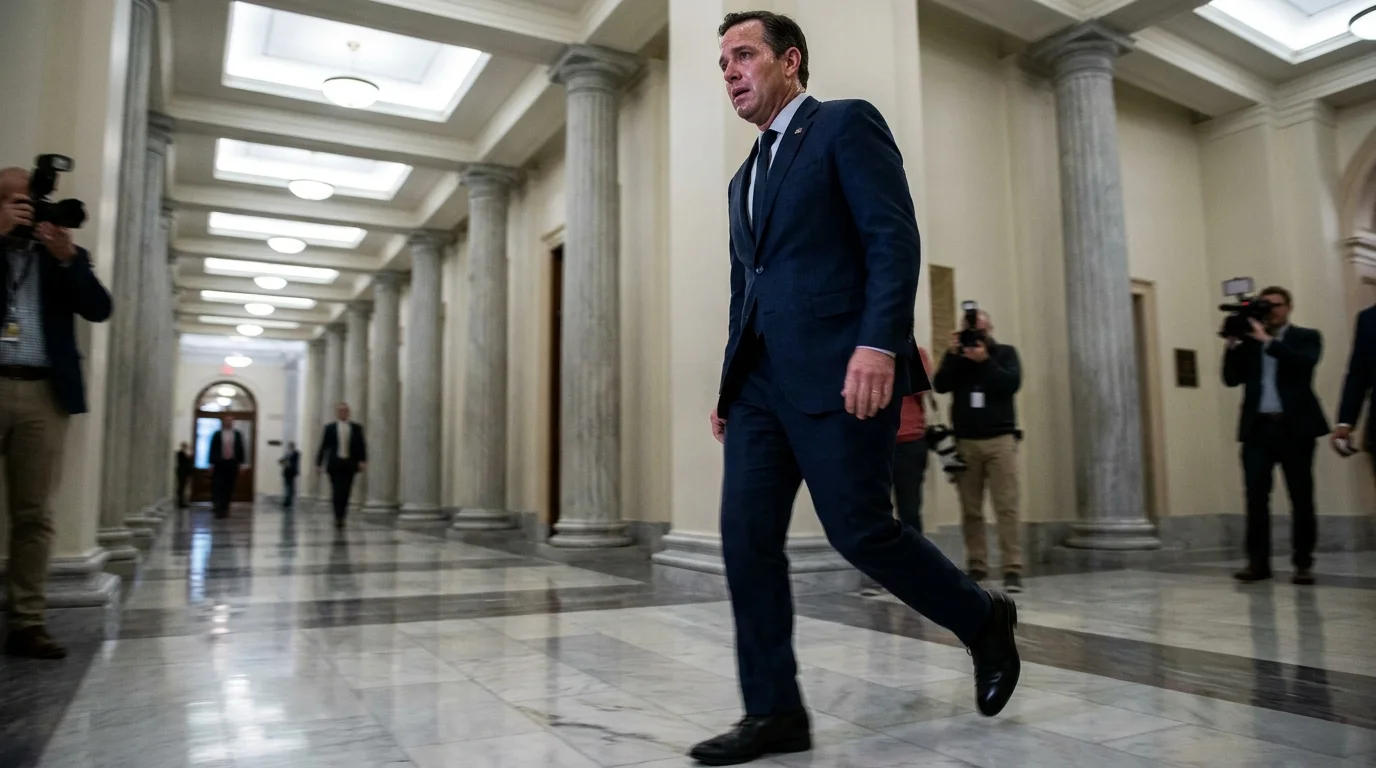
Most viewers tune in assuming a debate is an auditory duel—a contest of policy briefs, sharp rebuttals, and timed closing statements. But as the speaker on stage right launches into a blistering personal indictment, your eyes naturally drift to the right box of your television screen. There, framed in high definition, beads of forehead sweat glistening under hot studio halogen lights reveal everything words attempt to hide.
A tightened jaw muscle, a restless blink rate, or a dismissive twitch of the upper lip registers in milliseconds. In a split-screen broadcast layout, there is no off-camera sanctuary. You are watching two politicians simultaneously, but you are judging the one who is forced to remain silent.
The Reaction Frame: Decoding the Split-Screen Illusion
For decades, television networks operated on a simple rhythm: cut to the speaker, hold for ten seconds, cut back to the moderator, then pan wide. Today, broadcast trucks rely on persistent dual-box feeds. The moment an opponent levels an attack, the director locks into an ultra-tight isolated shot on the target, creating a theater of raw reaction that completely alters public perception.
Think of this layout like a mirrored interrogation room where one subject thinks they are merely waiting their turn. When a candidate glances down at their legal pad to scribble a defensive note, television optics translate that natural reflex into evasion or defeat. The audience does not evaluate policy substance during those ten seconds; they evaluate nervous system regulation.
Marcus Vance, a 52-year-old live broadcast director who spent twenty-three election cycles inside network control trucks in Washington, D.C., describes the split-screen switchboard as an emotional polygraph. During rehearsals, candidates practice their thirty-second soundbites obsessively, but Marcus looks entirely at the auxiliary monitors. He knows that the moment an unexpected jab lands, the true narrative is decided not by the microphone audio, but by whether the opposing candidate’s neck stiffens or their eyes dart toward the studio floor.
- Automated robocall poll screens strip working class responses across noisy evening dinner hours
- Ronald Reagan speech cue cards enforce rhythmic pauses using bold underlined red ink
- Internal Revenue Code 174 changes trigger sudden tax hikes with frozen cash reserves
- Donald Trump White House staff departures enforce strict loyalty pledges halting departmental policy
- Optical scan ballot ovals block stray pencil markings under sharp infrared sensors
Anatomy of the Visual Trap: Three Reaction Archetypes
When the camera splits your screen down the middle, human psychology prioritizes movement over sound. Candidates generally fall into three distinct physical traps when absorbing an incoming attack.
1. The Smirk and Chuckle
Many campaign advisors coach candidates to smile or laugh off sharp accusations to project calm confidence. On a high-definition wide lens, this tactic frequently backfires. The forced grin often reads as nervous condescension or thinly masked panic, alienating undecided voters who interpret genuine policy disputes as serious matters requiring solemn composure.
2. The Frantic Scribe
Looking down at a notepad to aggressively scribble talking points offers a momentary physical refuge from the red camera light. However, sustained downward eye contact instantly deprives the candidate of authority. To the viewer at home, breaking eye level signals retreat, making the speaker deliver their blows unopposed across the visual frame.
3. The Stone Statue
Attempting to show zero emotion can produce an uncanny, frozen posture where breathing becomes shallow and shoulders hike up toward the ears. When a candidate looks paralyzed, viewers perceive tension rather than poise. Authentic composure requires subtle, rhythmic breathing and a soft, steady focus on either the speaker or the moderator.
The Non-Verbal Calibration Playbook
Surviving the dual-lens broadcast demands rigorous physical discipline. When television directors refuse to cut away, you must learn to treat silence as an active performance.
Controlling physical tells under pressure is not about repressing your humanity; it is about anchoring your focus so the camera cannot exploit natural stress responses.
- Anchor your peripheral field: Keep your chin parallel to the stage floor and fix your gaze directly on the bridge of the opponent’s nose rather than looking at the floor monitors.
- Regulate the exhalation cycle: Maintain slow, nasal breathing to prevent the chest from rising abruptly, which prevents the collar from shifting visibly under tight microphones.
- Rest hands flat on the rostrum edges: Gripping the podium tightly turns knuckles pale white; resting fingertips softly maintains open body language without twitching.
- Hold neutral facial resting tone: Relax the micro-muscles around the temples and eyes to eliminate involuntary squints while listening to hostile charges.
The Tactical Toolkit for High-Pressure Presence
Whether facing network lenses or leading a high-stakes board meeting, physical composure relies on measurable baselines:
- Lighting Defense: Use translucent anti-shine setting powder rated for 4K studio sensors to eliminate halogen glare across the T-zone.
- Blink Threshold: Maintain an average blink rate between 15 to 25 blinks per minute; spikes above 50 blinks per minute signal acute cognitive overload.
- Gaze Horizon: Restrict downward eye shifts to under two consecutive seconds when reviewing reference notes.
The Bigger Picture: Seeing Past the Production Glass
Understanding the mechanics of televised split-screens transforms how you consume political discourse. The spectacle is engineered to provoke visible friction, turning split-second biological stress responses into sweeping electoral narratives.
When you recognize that a bead of sweat or an awkward smirk is often just the predictable result of brutal studio halogens and predatory camera switching, you can tune out the visual static. You begin evaluating leaders not by how smoothly they pose in a 16:9 digital rectangle, but by the weight, clarity, and truth of the ideas they carry.
The most decisive debate exchanges are never spoken; they are captured in the quiet frame beside the speaker.
| Key Point | Detail | Added Value for the Reader |
|---|---|---|
| Persistent Split-Screen | Continuous side-by-side feed of both candidates during attacks. | Reveals why modern debates prioritize non-verbal composure over verbal arguments. |
| High-Def Camera Lenses | Tight 4K zoom lenses calibrated to detect micro-expressions and sweat. | Helps you spot emotional tells and separate genuine poise from performance. |
| Visual Dominance Bias | Human cognitive tendency to weigh reaction visuals heavier than audio facts. | Empowers you to critically assess debate winners without getting swayed by production tricks. |
Frequently Asked Questions
Why do televised debates use split-screen layouts so frequently now?
Networks use continuous split-screens because audience retention spikes when viewers can watch real-time facial reactions during controversial or heated exchanges.Can candidates tell when the camera is focused on them during an opponent’s turn?
Yes, tally lights on the studio cameras glow red when live, but in a persistent split-screen setup, candidates must assume their isolated camera is active every second.Why does studio lighting make candidates sweat so noticeably?
Broadcast lighting rigs output intense heat to ensure sharp camera sensors operate at optimal shutter speeds, quickly elevating stage temperatures under heavy suits.What is the most damaging physical reaction a candidate can show?
Involuntary smirking or rolling eyes tends to alienate undecided voters faster than policy disagreements, as it reads as dismissive or defensive.How can viewers focus more on policy than camera staging during debates?
Try listening to brief segments of the debate via audio only; removing the visual production layer allows you to evaluate policy substance without visual bias.