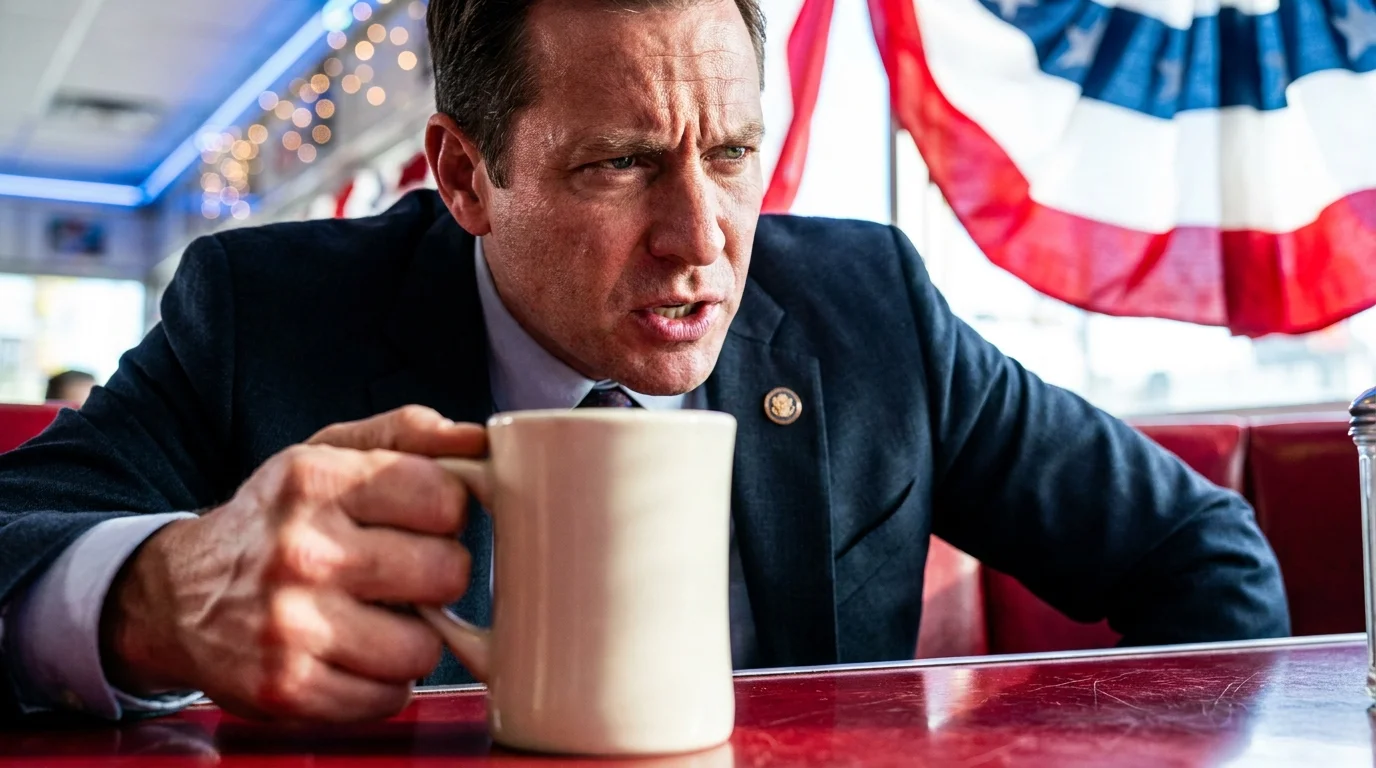
The steam rising off a seasoned cast-iron flat top carries the heavy scent of cured bacon and toasted butter, cutting through the frosty morning air of southern New Hampshire. Inside, the unmistakable clatter of thick white ceramic coffee mugs hitting sticky vinyl booths provides the rhythmic background to a peculiar American ritual. You watch a candidate in a crisp wool jacket, surrounded by an anxious phalanx of aides in tailored coats, try to slide gracefully into a booth built for working-class comfort.
In this room, polished soundbites die fast deaths. A multimillion-dollar media buy can saturate local airwaves for weeks, but it evaporates the moment an unsmiling voter looks up over a half-eaten plate of corned beef hash and asks a plain, piercing question about heating oil subsidies. National campaign momentum collapses instantly when a contender hesitates, talks down, or evades eye contact across a linoleum counter.
This is the grueling reality of retail politics in the Granite State. While national strategists increasingly look toward digital algorithms and massive ad reservations to manufacture momentum, the early primary gauntlet still runs directly through narrow diner aisles where voters demand unscripted accountability face to face.
The Mirage of the Multimillion-Dollar Ad Buy
Modern political machines are engineered for sterile environments: sound-treated television studios, tightly managed rallies with vetted attendees, and teleprompter-fed addresses. Yet the New Hampshire primary upends this balance by stripping away every layer of manufactured insulation. When you step into a community fixture like the Red Arrow Diner or MaryAnn’s, the rules of engagement invert entirely.
Think of it as acoustic feedback in a small room. In a stadium, a scripted answer echoes harmlessly into the rafters, swallowed by the roar of partisans. In a booth that smells of burnt sugar and old upholstery, that same scripted line sounds tinny, evasive, and hollow. The voter sitting across the table is not an audience member; they are an interrogator who has likely vetted three other future presidents before finishing their first cup of black coffee.
Consider Arthur Pendleton, a 68-year-old retired precision machinist from Merrimack. In late 2019, Pendleton sat across from a front-running senator who offered a five-point economic white-paper summary in response to a question about local manufacturing apprenticeships. Pendleton did not nod politely; he pushed his glasses down, tapped his fork against the table, and told the candidate to stop reciting bullet points and explain what happened to the machine shops in Hillsborough County. That sixty-second exchange, captured on a local reporter’s phone, punctured the candidate’s populist bona fides before the week was out.
- ActBlue recurring donation forms trap elderly donors with pre-checked yellow boxes
- Office of Legal Counsel memos block executive orders with crisp embossed seals
- Senate cloakroom drafts demand handwritten line edits on yellow legal pads
- Podium countdown timers spark sudden voice pitch jumps under harsh glare
- Likely voter screens strip young registrants using landline caller ID filters
The Three Diner Archetypes Every Campaign Fears
Navigating the floor of a Granite State breakfast joint requires an intuitive grasp of distinct civic personalities. Unscripted encounters carry immense friction because every table presents a different trial.
The Policy Griller
This voter arrives armed with dog-eared local newspaper clippings and municipal tax assessments. They do not care about charisma or sweeping historical rhetoric; they want to know why federal infrastructure formulas shortchange northern rural bridges. A candidate cannot charm their way past this table; only mechanical fluency with the actual machinery of government survives here.
The Skeptical Centrist
Often seated alone near the register, this resident has voted for both major parties across four decades. They observe body language, how the candidate treats the waitstaff, and whether the smile reaches their eyes when someone challenges them. For this voter, a candidate’s reaction to an awkward question reveals far more character than a thousand hours of scripted debate prep.
The Single-Issue Ambush
Positioned strategically near the exit, this activist waits for the candidate’s natural exit path. The objective is simple: force a clear, unhedged commitment on a controversial regulatory issue while cameras roll. Mishandling this exchange creates an instant viral clip that can dominate evening cable news cycles nationwide.
Surviving the Counter: The Retail Navigation Playbook
Surviving these early retail tests is not about outsmarting the room; it is about respecting the setting and understanding the civic culture that created it. Genuine presence disarms hostility far better than aggressive talking points.
- Respect the Physical Space: Never trap a voter in their booth with a swarm of staffers and cameras; leave breathing room for real conversation.
- Listen Past the First Sentence: Let the local finish their full thought, including the local context, before formulating an answer.
- Admit the Limits of Federal Action: Voters respect a candid acknowledgment that a problem belongs to local selectmen far more than a false federal promise.
- Acknowledge the Waitstaff: How a campaign interacts with diner staff under pressure tells observers everything they need to know about workplace culture.
The Tactical Toolkit for this environment is straightforward: keep your staff footprint to two aides, leave the teleprompters in the van, carry a working knowledge of regional fuel prices, and never, under any circumstances, leave a half-filled mug untouched when listening to someone speak.
Why the Human-Scale Gauntlet Still Governs Momentum
When national primary calendars shift and party committees attempt to centralize power into media markets, the diner test remains the great democratic equalizer. It reminds everyone who holds the true mandate in a representative republic. Power resides at the counter, resting in the hands of citizens who refuse to be bought by television saturation.
When you witness a candidate successfully navigate a packed diner floor on a freezing Tuesday morning, you are watching more than campaign theater. You are observing a leader being tested under pressure, shorn of consultants and high-gloss production. In an era dominated by synthetic media and distant political figures, that greasy booth interrogation is a rare and necessary grounding wire for American democracy.
The measure of a leader is never taken behind a podium with a prepared speech, but across a diner counter when an undecided neighbor asks where their livelihood went.
| Key Point | Detail | Added Value for the Reader |
|---|---|---|
| Physical Proximity | Candidates operate within inches of everyday voters rather than elevated on stages. | Demands authentic body language and eliminates reliance on artificial staging. |
| Unscripted Friction | Voters question policy directly without pre-screening from campaign staff. | Exposes whether a contender understands real-world policy outcomes. |
| Momentum Multiplier | Single interactions can redefine a national narrative via local and digital media. | Explains why early small-state stops outweigh massive national ad spends. |
Frequently Asked Questions
Why do presidential candidates spend so much time in small diners?
Diners provide direct, unscripted contact with primary voters, offering an authentic testing ground that national media uses to gauge a candidate’s retail appeal.Can a single bad diner interaction really end a campaign?
While rarely fatal on its own, a disastrous unscripted moment can crystalize an existing narrative about a candidate being out of touch or poorly prepared.Are the voters in these diners planted by opposing campaigns?
While operatives occasionally attempt ambushes, the vast majority are regular patrons and highly engaged local residents who take their early-state vetting role seriously.How do early primary states maintain this tradition despite calendar changes?
State statutes, entrenched civic habits, and intense local media coverage sustain retail campaigning regardless of national party schedule adjustments.What should an undecided voter look for during a diner stop?
Observe whether the candidate actually listens to the question or simply waits for their turn to recite a memorized policy slogan.