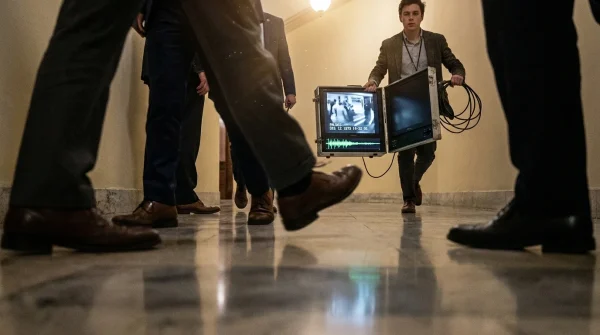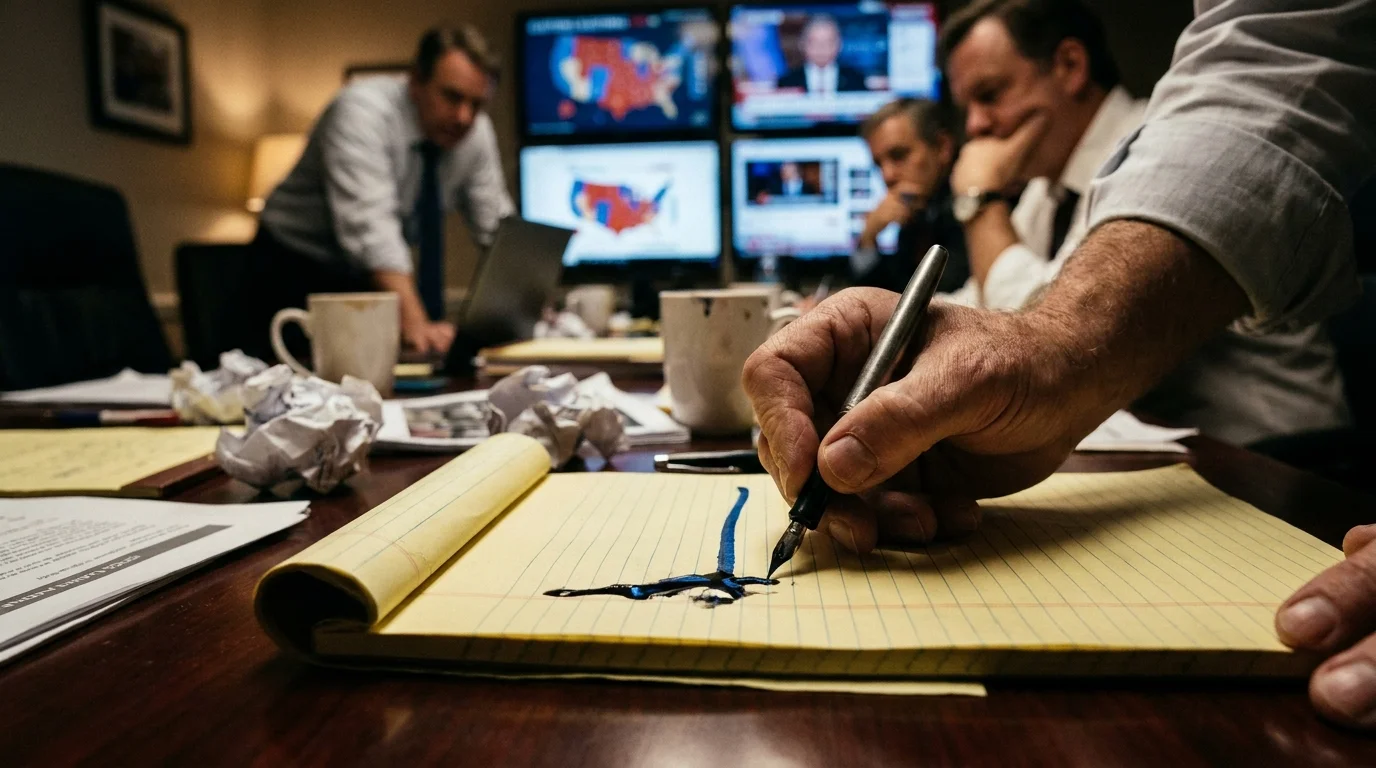
The corridor just off the Senate floor smells faintly of aged mahogany, floor wax, and lukewarm drip coffee brewed at midnight. Fluorescent lighting hums above leather couches where hundred-page legislative binders sit untouched on low glass tables. While television cameras outside the Capitol broadcast polished speeches about procedural regular order, the real mechanics of federal lawmaking happen without a single microphone in the room.
You might picture a modern bill taking shape inside high-speed collaborative documents or clean digital templates managed by nonpartisan clerks. In reality, when a looming budget deadline ticks down to single digits, the high-tech infrastructure disappears. Bipartisan compromise is hammered out on ordinary yellow legal pads passed quietly across cramped leather armchairs.
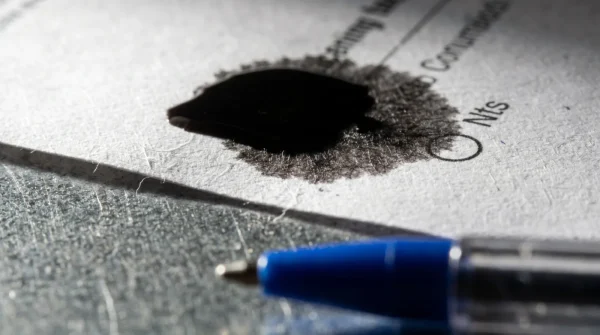
The scratch of a ballpoint pen cutting through cheap paper fibers carries more weight in these hours than any floor debate. Blue ink bleeds into canary stock as legislative directors cross out statutory phrases, insert handwritten exemptions, and initial margins before a printer ever warms up. Understanding this quiet ritual reveals why federal legislation arrives in its final, messy shape.
The Ghost Architecture of the Cloakroom Margin
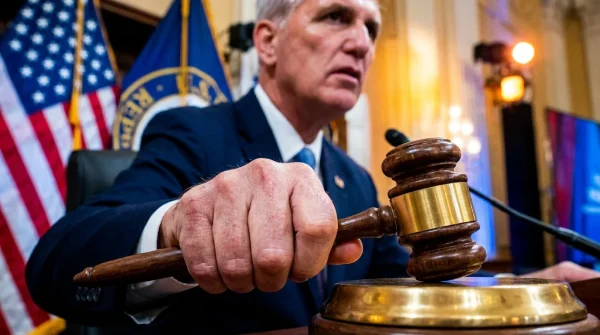
Public civics classes teach that legislation resembles a steady conveyor belt: subcommittees hold hearings, markups happen under gavels, and amendments receive recorded roll-call votes. Yet when party leaders face a shutdown or an economic freeze, that formal framework gives way to what insiders call margin governance.
Think of standard statutory text as the framed framing of a house, while handwritten yellow-pad riders act as the hidden shims hammered in to keep the foundation level. These handwritten clauses are not accidental oversights; they are deliberate compromises designed to survive moments of extreme friction. When two senators from opposite sides of the aisle reach an impasse over appropriations, a chief of staff will draft a sentence on a notepad, scratch out a modifier, and ask for a physical nod.
- Podium countdown timers spark sudden voice pitch jumps under harsh glare
- Likely voter screens strip young registrants using landline caller ID filters
- Barack Obama teleprompter scripts enforce cadence shifts with bold yellow slash marks
- Save America PAC leadership switches official donor guidelines after abrupt executive staff departures
- Florida governor race polling reveals sudden turnout shifts across fast-growing coastal retirement communities
This low-tech format offers an intentional strategic barrier against premature leaks. Digital files create timestamps, metadata trails, and instant screenshots that can torpedo fragile talks across social media within seconds. A piece of canary paper torn from a cardboard backing stays strictly between the four people sitting around the coffee table.
Consider Elena Vance, a 48-year-old senior legislative counsel who has spent twenty-two years navigating late-night fiscal reconciliation bills. During a contentious December tax negotiation, Vance watched two committee chairs debate a single agricultural tax threshold for three straight hours. Rather than updating the master digital document, Vance took a legal pad, drew three columns in faded navy ink, and manually rephrased a compliance clause until both sides signed their initials in the top right corner. That single scrap of yellow paper bypassed weeks of committee deadlock and was walked directly to the enrolling clerk at 3:15 a.m.
The Anatomy of Late-Night Legislative Markups
Not every handwritten alteration carries the same weight. Depending on who holds the pen and which phase of negotiation is underway, these cloakroom notes fall into three distinct functional categories:
1. The Precision Carve-Out
This is where specific industry thresholds, regional grant formulas, or tax exemptions are squeezed into broader packages. A lawmaker agrees to support an omnibus measure only if a three-line modification on page forty-two protects a specific municipal water project or regional manufacturing hub.
2. The Sunset Shrewdness
When two factions cannot agree on the long-term cost of a regulatory mandate, they compromise by shortening its lifespan. Staffers scribble strict expiration dates into the margins, ensuring the program requires reauthorization in three years rather than ten, punting the ideological fight to a future Congress.
3. The Enforcement Softener
Often, bipartisan consensus hinges not on what a bill mandates, but on how strictly agencies can penalize non-compliance. Replacing the word “shall” with “may” in blue ink across a legal pad can transform an aggressive federal mandate into discretionary agency guidance in less than ten seconds.
How to Read Between the Lines of a Compromise Bill
When an eleventh-hour bipartisan deal lands on the Senate floor, you can trace the exact fingerprints of this manual drafting process simply by knowing what anomalies to look for in the text.
Watch for sudden shifts in grammatical structure. When a five-hundred-page bill transitions from formal, rhythmically consistent legalese into abrupt, single-sentence provisos, you are looking at a clause born on a legal pad.
- Check the Section Numbers: Look for odd sub-clauses labeled with letters like (a)(1)(A-1) wedged between standard numbered paragraphs.
- Scan for Narrow Geographic Definitions: Phrases that limit funding to “municipalities with populations between 42,000 and 46,000 situated adjacent to navigable waterways” are tailored handwritten carve-outs.
- Look for Effective-Date Anomalies: Specific clauses that take effect 180 days later than the rest of the bill usually indicate a compromise conceded at the midnight mark.
- Monitor the Manager’s Amendment: This final composite package compiles all the loose legal sheets into a single binding text just hours before the roll call.
The Human Cost of Frictionless Compromise
It is easy to view these backroom legal pads with cynicism, as symbols of an opaque process shielded from daylight. Yet this manual drafting rhythm serves an unexpected purpose in an otherwise polarized landscape: it forces human beings into physical proximity, requiring them to look across a small wooden desk and make hard trades by hand.
When a staffer writes a line in ink, crosses out an adjective, and passes the paper across the table, both sides must sit in the silence while the other person reads. In an era dominated by instantaneous digital outrage and performative public hearings, the yellow legal pad remains the last refuge of deliberate, quiet negotiation. It is messy, imperfect, and stubbornly analog, but it is precisely where the business of governing actually gets done.
The ink on a legal pad represents the only moment in modern politics where two opposing factions must sit close enough to hear each other breathe.
| Drafting Stage | Primary Medium | Practical Impact on Policy |
|---|---|---|
| Formal Committee Markup | Digital PDFs & Printed Binders | Establishes public baseline language and partisan talking points. |
| Cloakroom Negotiation | Yellow Legal Pads & Pen Edits | Inserts critical funding carve-outs and secures final swing votes. |
| Enrolling & Passage | Consolidated Manager’s Text | Binds the handwritten amendments into permanent federal statute. |
How can you tell if a bill’s provision was written at the last minute?
Look for standalone provisos inserted near the end of spending sections that use narrow demographic or geographic parameters to direct funds without naming specific entities.Why do lawmakers avoid using laptops during cloakroom talks?
Paper documents prevent digital leaks, avoid creating immediate discoverable metadata, and keep negotiators focused on line-by-line language without screen distractions.What happens to the handwritten legal sheets after a deal is reached?
They are collected by the legislative counsel, transcribed into the official manager’s amendment, and physically filed with the Senate enrolling clerk before the floor vote.Are handwritten amendments legally binding once passed?
Yes, as long as they are incorporated into the final engrossed bill that receives a constitutional majority vote and the President’s signature.Does this cloakroom drafting process violate Senate transparency rules?
While regular order encourages public markups, Senate rules permit informal drafting and bipartisan manager’s amendments during active floor consideration.