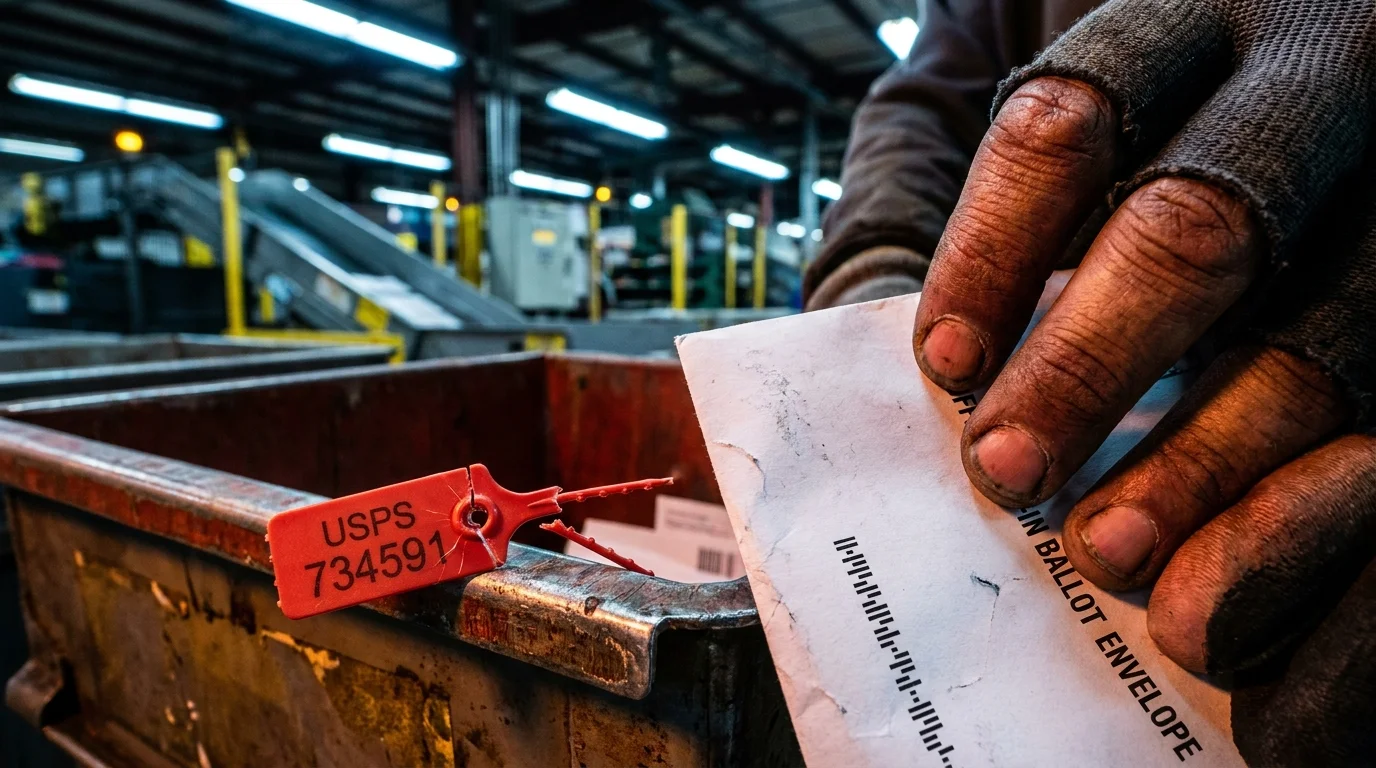
The afternoon light over the Wasatch Front hits the sorting floor with the pale tint of cold tin. Inside the postal distribution center south of Salt Lake City, the only rhythm is mechanical: the syncopated thrum of belts, the rhythmic slap of paper trays stacking, and the dry, flinty smell of millions of pulp envelopes rubbing against conveyor rubber. It feels like mundane logistics, the kind of quiet civil service that should happen in background silence.
You expect a crisis of democracy to arrive with blaring sirens or breaking-news banners on cable television. Instead, it enters as a thumb scroll on an illuminated glass screen while you wait at a red light on State Street. By the time a local route carrier sets their mail satchel down on an intake table, an altered sixteen-pixel thumbnail has already circled the planet twice, convincing hundreds of thousands of people that something sinister just unfolded on the asphalt outside.
The mechanics of modern dread rarely rely on grand conspiracies. They run on tight crops and synthetic amplification, catching you in that unguarded second between glancing at your feed and wondering if your community institutions are actually coming apart at the seams.
The Crop That Inverted Reality
To understand how quiet sorting docks become national flashpoints, you have to stop looking at viral claims as spontaneous anger and view them as precision engineering. The panic did not start with an actual missing tray of ballots or a rogue courier tossing tubs into a ravine behind an apartment complex. It started with a photo taken from the cab of an idling pickup truck—an image intentionally trimmed to remove the context of standard postal procedure.
Think of an authentic document like a wide-angle landscape photograph: when you see the whole field, the irrigation ditches and tractor tracks make ordinary sense. But zoom into a three-inch square of upturned dirt, strip away the horizon, and you can convince anyone they are looking at an unprovoked disaster. The original image showed a carrier handling undeliverable address verification forms, but a deliberate eight-millimeter digital crop stripped the official blue return-service placards out of the frame.
What remained looked startling to an untrained eye: white paper bundles resting near an open tailgate. In that visual void, suspicion rushed in. What should have registered as normal administrative refuse was reframed as intercepted democracy, proving that the easiest way to manufacture fraud is not to forge a vote, but to edit out the mundane proof of custody.
- Eric Adams defense strategies switch public messaging to counter federal bribery allegations
- Supreme Court homelessness rulings upend local shelter funding across western cities
- Vanguard ESG fund policies spark fierce state treasurer boycotts over public investments
- Schedule F reclassifications strip career civil servants of historic federal employment protections
- European wine tariffs freeze regional specialty distributor shipments under sudden customs bonds
Marcus Lind, a 48-year-old network forensic researcher based out of Lehi, tracked the initial digital blast when the image first caught fire. ‘When you pull the thread on these spikes,’ Marcus shared over coffee while pulling up server telemetry, ‘you rarely find a room full of furious local citizens. You find an automated schedule firing fifty-four coordinated posts every ninety seconds through dormant accounts purchased in bulk from overseas brokerages.’
Dissecting the Digital Relay: From Ghost Account to Cable Segment
The infection path followed an unsettlingly predictable cadence. If you trace the timestamp back to patient zero, the image did not surface on an established neighborhood forum or a legitimate municipal community board. It materialized on an unverified handle created four months prior, carrying an avatar lifted from a stock photography catalog.
Within seven minutes of that single upload, a secondary ring of offshore proxy profiles picked up the asset. These accounts did not debate or comment; they simply altered the metadata slightly to evade spam filters and tagged high-profile political influencers in three different time zones. The system treated this sudden wave of cross-network activity not as a coordinated strike, but as authentic grassroots breaking news.
By the second hour, the cropped snapshot had jumped from the fringe fringes to mainstream regional commentary. You watched the conversation mutate in real time: what began as an ambiguous question mark about postal procedure in a suburban county transformed into an absolute certainty of systemic corruption before county election workers had even returned from their lunch breaks.
Understanding this anatomy changes how you process political turbulence. The real leverage point was never the quality of the claim—it was the dead space between an alarming post going live and the four hours it takes a county clerk to pull security footage, review delivery logs, and release a sworn statement.
The Verification Toolkit: How to Spot the Synthetic Ripple
You do not need an intelligence clearance or specialized computer science degrees to keep your balance when these coordinated storms roll through your feed. You simply need to change the speed at which you absorb local alerts.
- Check the visual margins: Look for aggressive tight crops on paper forms where the letterhead, header tracking bars, or postal bar codes have been sliced away.
- Examine the account lineage: Trace who shared the media first; new accounts with fewer than fifty original updates that suddenly break statewide voting news are almost always cut-outs.
- Watch the quote-tweet cadence: If a dozen accounts use the exact same four-word phrase within forty seconds, you are observing an API push, not organic public alarm.
- Demand custody timestamps: Genuine election irregularities come attached to incident reports, police blotters, or verified precinct numbers, not anonymous neighborhood hearsay.
When you practice this kind of mindful restraint, you stop acting as an unpaid distribution node for synthetic panic. You clear room for authentic local reality to reassert its footing.
The Quiet Ground Beneath the Noise
There is an immense, stabilizing relief that comes with recognizing the machine behind the screen. When you realize that the outrage crackling through your timeline is often little more than automated code running on remote server banks, the world shrinks back down to its true, human dimensions.
Your local election is not run by anonymous entities in the ether; it is run by your neighbors—retired schoolteachers, municipal clerks who live two streets over, and postal workers who walk up your porch steps in heavy winter boots. Trusting the human friction of real work is the surest defense against digital illusions designed to make you feel perpetually under siege.
The fastest way to dismantle a manufactured panic is to measure it against the slow, accountable work of the people who actually live on your block.
| Verification Layer | Synthetic Distortion Signal | Ground Truth Reality |
|---|---|---|
| Visual Framing | Extreme crops hiding official postal placards and tracking tags | Full-context sorting bins clearly displaying standard undeliverable return mail |
| Account Network | Sudden retweets by synchronized profiles created within months | Fragmented, slow distribution by verified local residents and beat reporters |
| Institutional Response | Instant sensational claims without municipal or precinct citations | Methodical clerk reviews verifying log sheets and dock camera timecodes |
Frequently Asked Questions
Why do these rumors pick postal sorting facilities instead of voting precincts?
Postal hubs process enormous volumes of paper simultaneously under industrial conditions, making everyday logistics easily mischaracterized by anyone with a camera who chooses to omit context.How can I verify a viral image before sending it to family?
Run the image through a basic reverse image search on your phone or search the exact county clerk portal for real-time election equipment advisories.Are foreign bot networks actually targeting municipal-level procedures?
Yes, because local trust is easier to fracture; elevating an obscure regional rumor creates an impression of grassroots grassroots chaos that national media quickly repeats.What is the standard procedure for undeliverable ballots?
They are scanned, logged into an auditable statewide tracking database, secured in serialized containers, and returned directly to the county clerk under strict chain-of-custody protocols.What should I do when I see an unverified claim spreading in local groups?
Do not quote-tweet or re-share it to argue; instead, post a direct link to the county registrar’s official statement in the comments to anchor the conversation in verifiable facts.