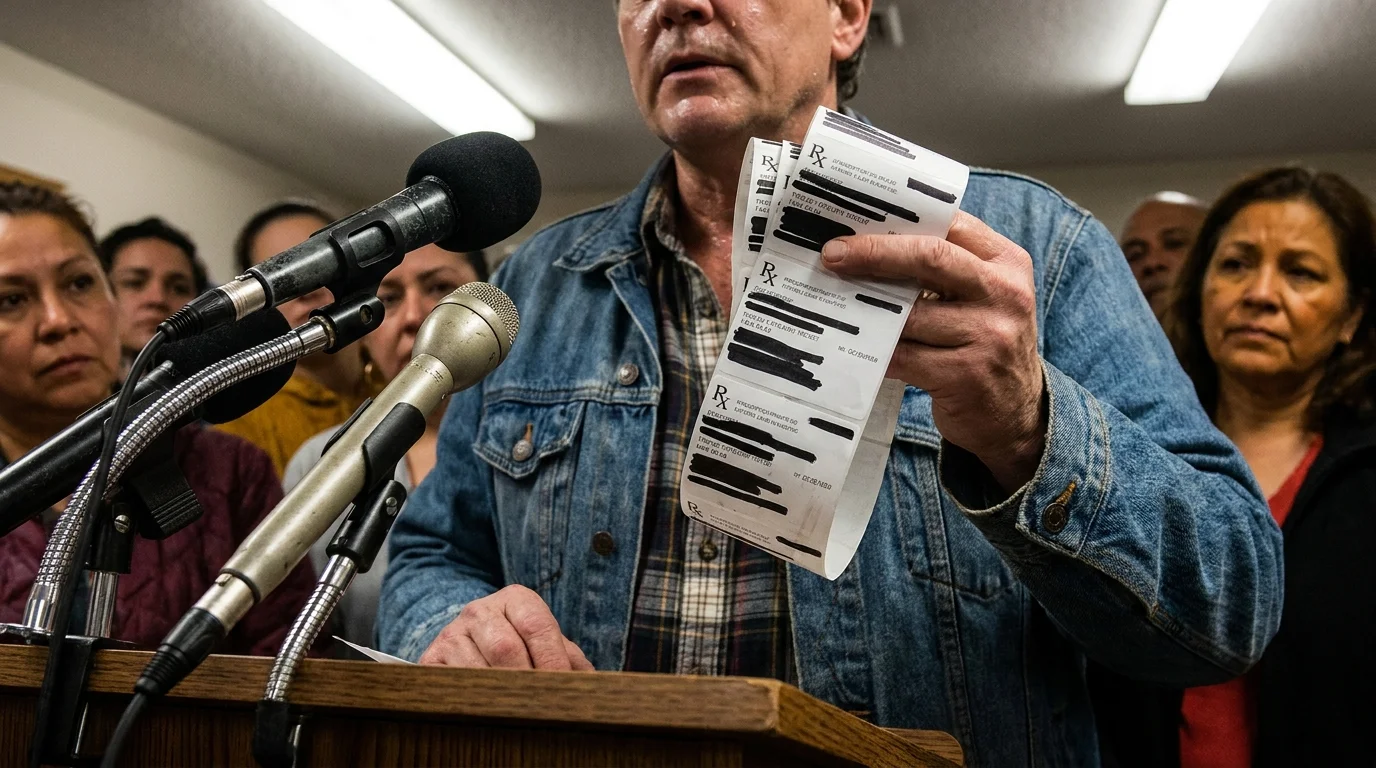
The fluorescent lights overhead emit a faint, high-frequency hum that vibrates against the white laminate counter. You hear the sharp, mechanical rip of glossy thermal prescription labels with blacked-out dosage lines coming off the roll, dropping beside the cash register. In the air hangs the stale scent of industrial floor wax and rubbing alcohol, familiar to anyone who has ever stood in a grocery store pharmacy queue waiting for an ordinary monthly refill.
You expect the system behind that counter to behave like a single, unified organism. After all, when you swipe a loyalty card in Cincinnati, the register knows what brand of milk you bought in Louisville three days ago. But when your medication file touches the keyboard this week, the national network suddenly fractures into fifty separate jurisdictions, each operating behind digital border checkpoints.
The pharmacy technician pauses, tapping the edge of the keyboard twice, then tilts the monitor away from your view. A quiet message has populated the dispensing interface: Transfer Prohibited: Statutory Cross-Border Compliance Lock. What you are witnessing is not an insurance glitch or an out-of-stock notification; it is the quiet deployment of a retail compliance firewall designed to shield corporate headquarters from conflicting state subpoenas.
The Invisible Digital Tollgate Behind the Counter
For decades, the promise of corporate retail medicine was frictionless continuity. Whether moving across state lines for work or visiting relatives over the holidays, you assumed your chart traveled with you through an invisible, benign cloud. That assumption quietly expired with the rollout of automated compliance routines embedded directly into central dispensing platforms.
Think of your digital prescription record less like an open river and more like a canal controlled by automated lock gates. As state attorneys general issue dueling mandates regarding reproductive health tracking and criminal liability for cross-border medication fulfillment, national supermarket chains have chosen structural self-defense. Rather than tasking individual staff pharmacists with parsing hundreds of pages of evolving regional statutes, corporate compliance offices have simply turned the dial to absolute risk avoidance.
The software update does not debate the nuance of your specific health history. Instead, the dispensing terminal automatically silences records whenever an electronic routing request originates from a jurisdiction with active reproductive or off-label investigation statutes. What looks like a broken computer screen to you is, to the corporate legal team, a perfectly functioning liability shield.
- Labor Day union rally speeches trap online audiences inside conflicting crowd attendance angles
- Grants Pass homelessness rulings derail municipal cleanup teams leaving heaps of shredded canvas tents
- Brazilian steel tariff hikes stop Midwestern farm equipment factories under soaring metal costs
- Raw dairy distribution waivers enforce sudden regulatory rollbacks across state milk inspection boards
- Ohio rust belt primary slates switch union endorsements away from longtime congressional incumbents
The View from Behind the Counter
Marcus Vance, a 44-year-old traveling relief pharmacist who rotates through retail counters across the Ohio River basin, watched the shift happen in real time on an ordinary Tuesday morning. Without a formal district conference call or training module, his central management system received an overnight firmware push that fundamentally altered the transfer queue.
“We used to pull up patient charts from four states over with a single mouse click,” Vance explains, recounting how entire medication histories suddenly began populating with redacted fields. “Now, if a patient standing in Indiana needs their ongoing methotrexate or hormonal therapy history transferred from an Illinois store, the system forces a hard stop. The records simply do not bridge. To the patient, it looks like administrative incompetence, but on our side, the transfer icon is literally greyed out by the corporate engine.”
Three Profiles in the Regulatory Squeeze
The Metro Interstate Commuter
If you live in one state and work in another, your daily commute now crosses legal jurisdictions that view your health data through drastically different lenses. When you try to move a refill between a suburban home branch and a downtown office counter, you are likely to trigger automated compliance flags. The system defaults to denial rather than verification, leaving you stranded between two stores that share a brand name but operate under separate compliance silos.
The Autoimmune Patient on Cross-Border Therapies
Patients managing complex conditions like rheumatoid arthritis or lupus frequently rely on medications that carry dual therapeutic uses. When an algorithm scans an interstate transfer request for compounds that intersect with state reproductive bans, it rarely stops to examine the diagnostic code. The software operates on broad chemical classifications, meaning routine chronic care treatments get swept into the same precautionary blackout meant for contested therapies.
The Caregiver Managing Family Portfolios
Handling medication runs for elderly parents or college-age dependents living across state lines has become an exercise in procedural friction. When power-of-attorney documents and proxy authorizations hit automated border gates, they fail silently. The system will not notify you that a record transfer was rejected; it simply parks the request in an internal audit queue that human pharmacists are not permitted to override without regional director sign-off.
Mindful Steps to Secure Your Medication Continuity
Navigating this fragmented landscape requires you to abandon the expectation of automated digital transfers. By stepping back into intentional, paper-first routines, you protect your access to vital treatment without depending on corporate networks that may freeze under political pressure.
Protecting your care continuity comes down to three deliberate habits:
- Request physical, printed copies of your primary prescription history directly from your home branch before traveling or relocating.
- Ask your prescribing physician to issue separate, serialized hardcopy paper scripts rather than relying exclusively on interstate e-prescribing networks.
- Demand an unredacted printout of your local pharmacy profile whenever you pick up a long-term maintenance refill.
Keep a physical records envelope in your personal files containing the exact dates, diagnostic codes, and prescribing physician National Provider Identifiers (NPI). When corporate software locks its digital gates, a legible piece of paper signed in ink remains the one bridge that regional compliance algorithms cannot instantly sever.
Reclaiming Control of Your Health Record
Standing in front of a retail pharmacy counter should never feel like navigating an interstate trade embargo. Yet as political mandates and corporate legal departments continue their high-stakes tug of war, the quiet casualty is your everyday peace of mind. The retail chains are not acting out of malice; they are simply executing automated risk management at scale.
Understanding that the corporate cloud is no longer neutral gives you your footing back. When you realize that the counter terminal is programmed to protect the company first and your convenience second, you stop pleading with the computer screen. You start carrying your own records, asking the right questions, and keeping your medical continuity firmly in your own hands.
“A corporate server will always sacrifice your continuity of care long before it accepts the risk of a multi-state subpoena.”
| Friction Point | System Behavior | Practical Workaround |
|---|---|---|
| Interstate Refill Request | System drops transfer into administrative compliance hold | Have your physician send a completely new electronic script directly to the destination branch |
| Dual-Use Medication Scans | Dispensing terminal blacklists record based on state-level chemical triggers | Carry a signed letter from your specialist verifying the diagnostic ICD-10 code for the therapy |
| Proxy Account History | Shared family digital access gets severed across state lines | Maintain physical signed paper HIPAA releases directly in the local store’s paper archive |
Frequently Asked Questions
Why is Kroger blocking certain prescription records across state lines?
Corporate dispensing software has been updated to automatically restrict interstate medication transfers involving therapies targeted by contested state reproductive statutes, protecting the company from legal liability.Can the local retail pharmacist manually override the digital block?
In most instances, no. The compliance lock occurs at the enterprise server level, preventing local store staff from releasing or routing the restricted medication file.Does this policy apply to all medications or only specific compounds?
While aimed primarily at reproductive health therapies, the broad chemical classifications in the automated filters frequently snag dual-use maintenance drugs, such as treatments for autoimmune disorders.What is the fastest way to get my medication if a transfer is denied?
Do not wait for the stores to resolve the transfer. Contact your prescribing physician immediately and request that they submit a fresh, direct prescription directly to the physical pharmacy you are visiting.Is this practice unique to Kroger pharmacies?
No. Multiple national retail pharmacy chains are quietly instituting automated cross-border compliance algorithms to navigate contradictory state mandates and active attorney general inquiries.