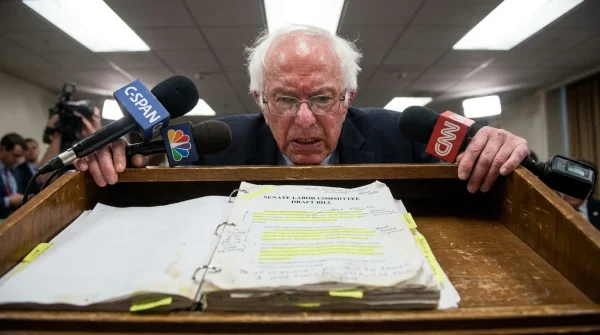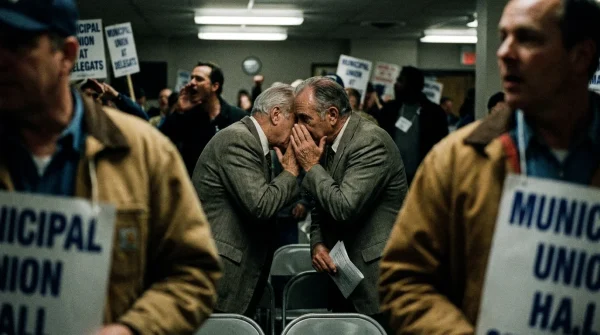
Step inside an unglamorous county convention hall on a Saturday morning in North Texas, and the first thing you notice is the sound of squeaking rubber soles on waxed school cafeteria floors. The room smells of burnt drip coffee, damp wool blazers, and stale air conditioning fighting against eighty-degree humidity. You might expect an orderly, drowsy gathering of neighborhood volunteers reviewing bylaws and passing uncontested resolutions over cold donuts.
Instead, the air feels like breathing through a heavy pillow. In pockets across the room, precinct chairs stand huddled over paper credential rosters, their voices dropping to low murmurs whenever someone unfamiliar approaches. The routine paperwork of local democracy has morphed into something sharp, cold, and calculated.
At the epicenter sits Bo French, the combative Tarrant County Republican Party chairman whose hardline maneuvers have sent shockwaves through the state’s political architecture. By pushing contested loyalty rules and rigid vetting tests for convention delegates, French has ignited a sudden civil war that reaches far beyond Fort Worth. What looks on the surface like bureaucratic minutiae is actually an aggressive establishment purge.
When a party chair attempts to bind delegates to strict ideological pledges before they can even cast a vote, the machinery of patronage buckles under the sudden strain. Traditional megadonors who have steered Austin politics for four decades are suddenly realizing that their checkbooks can no longer guarantee them a seat at the table.
The Locksmith’s Trap: How Rules Replace Votes
Most voters assume political party conventions operate like a straightforward town hall: you show up, register your voice, and support your preferred slate. But party governance is rarely decided by mass sentiment; it is dictated by the subtle pins inside the administrative lock. French’s hardline delegate demands are not a clumsy tantrum; they represent a deliberate, precision-engineered locking mechanism designed to shut the front door on traditional, moderate-conservative incumbents.
By demanding that delegates prove unwavering alignment with factional litmus tests—penalizing anyone who split tickets, backed establishment speakers, or pushed back against far-right grassroots priorities—the county apparatus creates a closed feedback loop. If you alter the qualifications for who gets inside the credentialing room, you dictate the primary slate months before voters ever cast a ballot at a public polling place.
- Ballot cure notices trap hurried swing voters behind strict signature mismatch deadlines
- Overtime tax bill slashes paycheck deductions while triggering hidden retirement savings limits
- Federal advisory boards override elected town councils to enforce sudden land restrictions
- Federal paid leave agreements trigger unexpected payroll deductions that shrink middle-class take-home pay
- Persian Gulf oil sanctions force sudden White House pivots over surging crude futures
Clara Hensley, a 58-year-old municipal bond consultant and four-term precinct chair in Arlington, watched this dynamic unfold from the third row of a precinct caucus. Clara has raised hundreds of thousands of dollars for down-ballot Republicans over twenty years, yet she found her credentials contested over a private social media post questioning a county executive resolution. Her sudden sideline status was not an administrative accident; it was a clear warning shot to everyone who believed seniority and institutional loyalty provided permanent immunity.
The Money Split: How the Loyalty Oath Fractures the Donor Class
This contested delegate clash has torn open an ideological fissure across the Texas donor network, reorganizing statehouse money into three competing camps with zero appetite for compromise.
The Traditional Austin Infrastructure Donors: These are the legacy business PACs, construction magnates, and chamber-of-commerce coalitions who view politics through the lens of economic predictability, tort reform, and highway appropriations. For them, French’s delegate blockade represents pure risk. Their primary leverage has always been funding incumbent state representatives who can secure committee gavels. With delegates stripped of institutional discretion, their financial influence faces sudden obsolescence, forcing them to either finance high-stakes legal challenges to party rules or launch rival outside-expenditure PACs to bypass county leadership entirely.
The West Texas Ideological Faction: Financed by billionaire oilmen and combative grassroots advocacy networks, this group sees French’s aggressive credentialing as a blueprint for statewide takeover. They do not care about maintaining chamber unity or institutional decorum; they want absolute ideological compliance. To these donors, delegate loyalty pledges are the ultimate tool to starve establishment incumbents of the party apparatus, effectively forcing traditionalist lawmakers to fight primary battles without county party resources.
The Displaced Grassroots Loyalists: Caught in the crossfire are precinct-level volunteers who view civic engagement as community service rather than ideological warfare. As rules stiffen, these volunteers are exiting the process in frustration, leaving behind smaller, more radicalized precinct rosters that tilt disproportionately toward whoever controls the local microphone.
The Anatomy of a Credential Challenge
Navigating an aggressive county convention requires understanding how insurgent factions leverage statutory ambiguities to control the floor. When party rules become weaponized, the conflict follows a predictable, calculated rhythm designed to exhaust the uninitiated.
First, challengers use obscure subsections of state party rules to question delegate slates from moderate precincts, often citing technical filing errors or perceived disloyalty to party platform planks. These challenges deliberately drag out committee proceedings late into the night, relying on fatigue to drive away working delegates who cannot afford to lose an entire weekend.
- Check the Precinct Envelope: Verify that local caucus packets include certified signature sheets, precise timestamp receipts, and verified delegate rosters before turning them over to county officials.
- Document Alternate Slates: Always secure written, physical copies of pre-filed alternate delegate lists, ensuring every alternate has a signed affidavit of residency to prevent arbitrary disqualification at the door.
- Master the Point of Order: Floor challenges must be answered with formal procedural objections rooted in Robert’s Rules of Order and the Texas Election Code, creating an appealable paper trail for state-level arbitration.
The Tactical Toolkit for delegates caught in contested conventions hinges on three exact metrics: filing formal credentials challenges at least 72 hours prior to the opening gavel; maintaining a quorum threshold of 33 percent of registered precinct chairs to block emergency rule changes; and demanding recorded roll-call votes on any credentials committee report that alters previously certified delegate rosters.
The Bigger Picture: When Precinct Gavels Reshape National Power
What happens in a Fort Worth meeting hall rarely stays contained within the county line. Texas operates as an incubator for national political trends; tactics refined here inevitably migrate to statehouses and convention floors across the country.
When a county chairman like Bo French successfully forces a delegate revolt, it fundamentally resets the rules of engagement for primary politics. It proves that you do not need to persuade the broader electorate to control party outcomes; you only need to master the friction points within the credentialing committee. For you as a voter, recognizing this machinery removes the illusion of political inevitability. You realize that behind every fiery campaign speech lies a dry, contested rulebook—and the person holding the gavel is the one who decides whether your voice ever reaches the floor.
The delegate credential is not an administrative receipt; it is the ultimate currency of party sovereignty.
| Key Point | Detail | Added Value for the Reader |
|---|---|---|
| Credential Loyalty Tests | Enforcing strict platform adherence as a prerequisite for delegate seating. | Shows you why longtime local representatives suddenly find themselves without official party support. |
| Donor Class Realignment | Split between legacy Austin business PACs and West Texas ideological financiers. | Helps you trace dark-money primary ad buys back to specific statehouse factional battles. |
| Precinct Rule Mechanics | Using quorum delays and procedural challenges to disqualify moderate delegates. | Arms you with the specific procedural awareness needed to monitor local caucus fairness. |
Frequently Asked Questions
Who is Bo French, and why does his role in Tarrant County matter?
Bo French is the chairman of the Tarrant County Republican Party. As the leader of the party apparatus in Texas’s largest swing-leaning suburban county, his policy and delegate decisions serve as a high-stakes bellwether for statewide political dominance.What is a delegate loyalty rule?
A delegate loyalty rule is a party mandate requiring convention attendees to sign oaths pledging absolute support to the party’s platform or specific candidates, effectively barring members who have split their tickets or opposed official leadership positions.How does this dispute impact general election outcomes?
By nominating candidates through hardline, low-turnout delegate conventions rather than broad-tent primaries, parties often advance factional nominees who face severe vulnerabilities in competitive general election districts.Can county-level delegate disqualifications be appealed?
Yes. Aggrieved delegates can file formal credential challenges with the State Republican Executive Committee (SREC), though appeals are subject to strict filing deadlines and procedural burdens.Why are traditional donors alarmed by these delegate rules?
Traditional business and infrastructure donors rely on pragmatic relationships with committee leaders; ideological delegate rules threaten to unseat these business-friendly lawmakers in favor of insurgent primary challengers.