A late-autumn chill settles against the glass of a downtown DC dining club, where the clinking of heavy silver against bone china sounds muted, almost cautious. Across the white linen, private equity partners and tech lobbyists lean inward over untouched plates of braised short ribs. The room hums not with celebration, but with the specific, dry tension of money realizing that its usual levers no longer work.
You might picture antitrust battles as roaring floor fights under the Capitol dome or dramatic courtroom confrontations splashed across evening cable broadcasts. In that version of Washington, corporate titans parade before stern-faced senators, lawyers trade polished jabs, and the process crawls along a predictable, decades-old track where financial compromises quietly smooth over political theatrics.
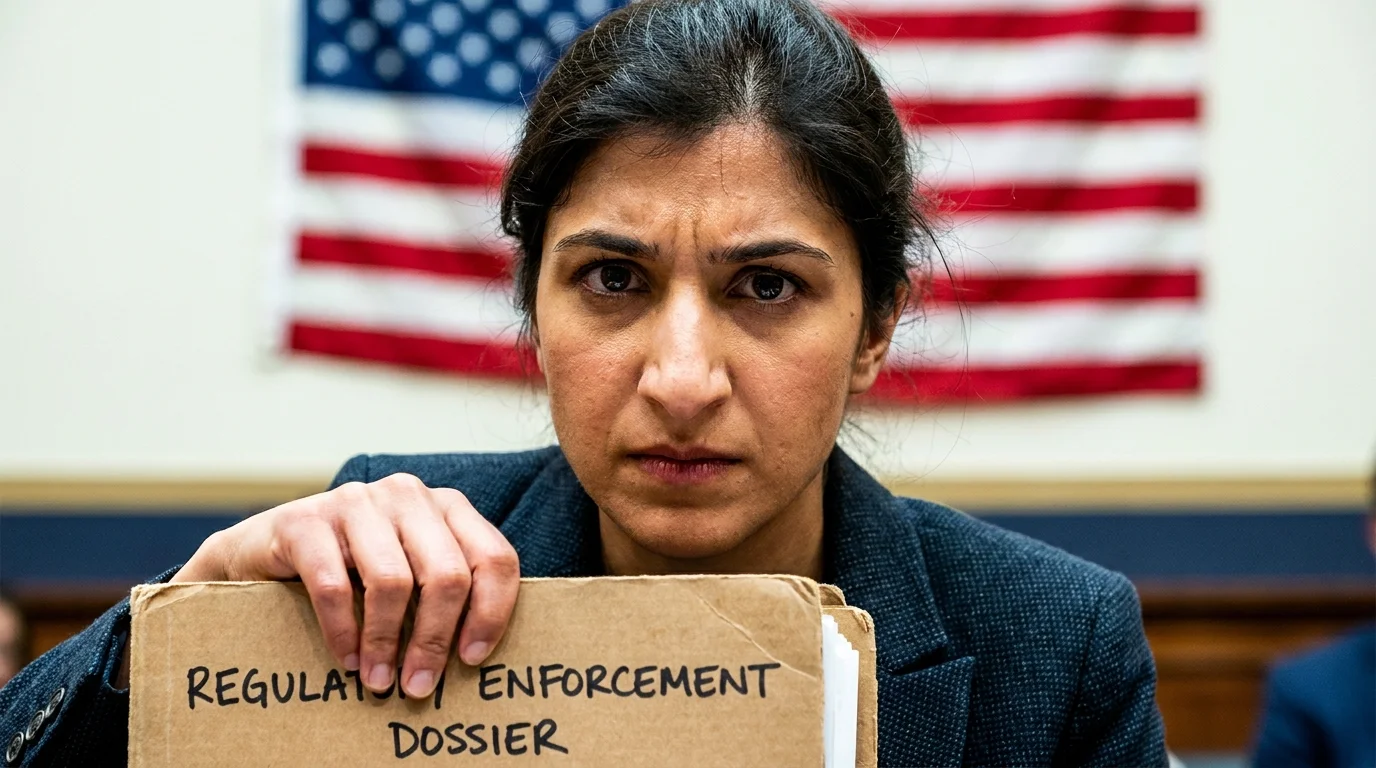
That conventional picture has vanished. Behind closed oak doors, high-rolling political donors are staging an urgent, high-stakes rebellion against the White House, driven by a profound panic over administrative authority. The real squeeze is not happening through televised congressional inquiries or lengthy legislative debates; it is tightening through swift, unheralded administrative shifts orchestrated by Federal Trade Commission Chair Lina Khan.
By fundamentally redefining how unfair methods of competition are penalized, the regulatory apparatus has bypassed the usual congressional check points. The ground beneath enterprise capital has shifted overnight, turning long-held financial engineering practices into immediate regulatory landmines long before a single lawmaker can call an oversight gavel to order.
The Icebreaker Metaphor: Decoding the Enforcement Shift
For four decades, corporate America operated under an unspoken maritime rule: as long as consumer sticker prices remained low, regulators treated massive acquisitions and labyrinthine add-on fee structures like open ocean. Companies could consolidate market share, fold regional rivals into monopolies, and pad their balance sheets with hidden junk fees, confident that the Chicago School of economics held court. If the customer was not paying a higher headline price, the administrative waters were deemed calm.
Khan did not merely adjust the compass; she steered an icebreaker directly through that frozen philosophy. The agency began targeting the structural mechanics of fee distribution, tying administrative enforcement to the hidden costs embedded deep within platform ecosystems, supply chains, and consumer subscriptions. The shift is not focused on whether a conglomerate makes goods cheaper today, but on whether its predatory infrastructure suppresses wage earners and locks out competitors tomorrow.
- Rahm Emanuel nomination battle forces Senate Democrats into fierce floor clash
- Newsweek debate metrics spark fierce frontrunner clashes over working-class Rust Belt economic loyalties
- Early primary debates derail presidential frontrunners during dangerous unscripted retail diner stops
- Congressional conference markups quietly strip contentious riders before final bipartisan compromise votes
- Donald Trump stump speeches target voter attention through calculated rhythmic cadence shifts
To traditional mega-donors, this pivot feels less like regulation and more like an existential betrayal. A silent administrative overhaul has dismantled their standard operating playbook. When the FTC can initiate enforcement actions directly against corporate balance sheets through Section 5 rules without waiting for antitrust legislation from a paralyzed Congress, the traditional currency of political access loses its purchase.
The View from the Ledger: Marcus Vance’s Calculation
Consider the predicament of Marcus Vance, a 52-year-old managing director at a mid-Atlantic logistics conglomerate that provides critical freight infrastructure across three states. For over twenty years, Vance structured his company’s expansion on bolt-on acquisitions—quietly swallowing regional freight dispatchers, absorbing their capacity, and standardizing their back-office logistics while layering on automated service premiums. In early autumn, his compliance team received a direct inquiry from federal regulators challenging the firm’s non-compete agreements and tiered administrative surcharge model. Vance sat in his Richmond office, realizing that a playbook vetted by three previous administrations was now flagged as potentially unlawful competition under revised agency guidelines. His firm suddenly faced tens of millions in potential structural penalties before his regional trade association could even secure an appointment with their congressional representative.
Layered Disruption: How the Administrative Squeeze Hits Different Tiers
The impact of this high-level donor mutiny does not remain cordoned off within the boardrooms of billionaire contributors. It cascades through every economic layer in specific, tangible ways.
For the Independent Enterprise and Main Street Operator
Smaller firms have spent years paying mandatory access tolls to dominant software suites, payment processors, and online marketplaces. Under aggressive agency posture, dominant suppliers find their coercive contractual lock-ins under direct scrutiny. If you run a regional distributorship or an independent repair shop, relief from captive platform pricing arrives not because Congress drafted a targeted small-business bill, but because federal monitors are actively chilling coercive tying arrangements at the source.
For the Tech-Enabled Freelancer and Salaried Professional
Historically, aggressive consolidation directly suppressed mobility through aggressive non-compete covenants and restrictive arbitration clauses tucked into onboarding packets. The agency’s stance views these labor restrictions not as harmless employment policies, but as anti-competitive barriers that artificially depress take-home pay. For professionals navigating mid-career mobility, the shift breaks the administrative lock holding their skills hostage, regardless of corporate donor protests.
For the Household Consumer Budget
At the family kitchen table, corporate power is rarely experienced as a theoretical monopoly; it is felt as a death by a thousand micro-deductions. From mandatory resort fees added to family stays to opaque processing fees tacked onto ticketing platforms, the FTC’s enforcement doctrine targets fee opacity as direct economic harm. Everyday household balance sheets gain breathing room when federal watchdogs strip away the arbitrary penalties corporations use to subsidize speculative debt.
Mindful Application: Navigating the New Regulatory Landscape
Understanding these shifts allows you to adjust your own financial and operational positioning with deliberate calm. When administrative agencies rewrite the boundaries of market fairness, waiting for media clarity leaves you vulnerable. You can move with strategic clarity using focused, minimal adjustments.
- Audit contractual commitments for restrictive clauses. Review vendor agreements, platform fees, and employment paperwork to identify terms that lean on outdated legal assumptions regarding non-competes or unbundled penalty charges.
- Diversify platform dependencies. Shift your business or personal reliance away from monolithic walled gardens that face imminent agency review over algorithmic bundling and fee extraction.
- Document predatory pricing spikes. Maintain detailed transactional records when enterprise providers introduce arbitrary service surcharges without corresponding increases in functional utility.
- Leverage regulatory public comment windows. Engage directly with active administrative dockets, ensuring your real-world economic friction is officially cataloged before corporate lobbyists shape agency compromises.
By treating regulatory shifts as operational indicators rather than partisan theater, you protect your autonomy before legacy markets catch up to the change.
The Bigger Picture: Reclaiming Market Dignity
Beneath the fury of donor ultimatums and frantic closed-door meetings in Washington sits a fundamental question about economic agency. For decades, regular consumers and independent business owners were told that corporate scale brought efficiency, even as personal autonomy withered under layers of mandatory account maintenance fees, non-competes, and algorithmic price changes. The feeling was that of an individual shouting into an automated customer service line that had been intentionally programmed never to transfer to a human.
The donor mutiny currently unfolding in the West Wing is historic because it marks the first time in a generation that administrative power has challenged that dynamic without asking for permission from a divided Congress. When you strip away the frantic political rhetoric, the message is simple: market systems are supposed to serve human agency, not the other way around. Recognizing how administrative power operates gives you clarity. You no longer have to accept arbitrary corporate surcharges as an inevitable fact of modern life, but rather as the frantic, temporary defense of an economic architecture finally losing its grip.
The measure of a market’s fairness is found not in the valuation of its largest participants, but in how freely its smallest members can leave.
| Key Point | Detail | Added Value for the Reader |
|---|---|---|
| Regulatory Mechanism | Section 5 administrative rulemaking against unfair competition practices. | Bypasses congressional gridlock to immediately invalidate deceptive pricing and labor barriers. |
| Donor Pushback Cause | Loss of leverage via campaign contributions against self-executing FTC enforcement. | Reveals why corporate leadership is panicking over policy rather than legislative elections. |
| Consumer & Worker Impact | Chilling effect on non-compete agreements and junk fee structures. | Provides immediate leverage to renegotiate unfair enterprise fees and personal employment contracts. |
Frequently Asked Questions
How does FTC enforcement impact my household bills right now?
By targeting add-on fee structures, agency pressure forces telecom, banking, and ticketing platforms to show transparent upfront pricing, preventing unexpected charges at checkout.Why are political donors threatening the White House over an agency chair?
Because Khan’s enforcement utilizes administrative rule changes rather than legislative bills, traditional campaign contributions cannot easily stall or dilute the penalties.Does this shift ban non-compete clauses permanently?
While ongoing court challenges work through federal circuits, the agency’s persistent actions have already dramatically reduced corporate willingness to litigate and enforce aggressive non-competes against employees.How does this affect smaller independent businesses?
Small enterprises gain competitive room when massive platform providers are legally prevented from tying core services to exclusive, overpriced third-party add-ons.Can Congress overturn these antitrust enforcement actions?
Congress can alter the FTC’s statutory authority through new legislation, but current political division makes passing an industry-friendly antitrust overhaul exceedingly improbable.