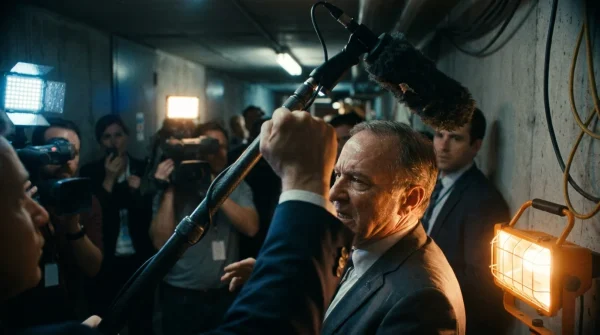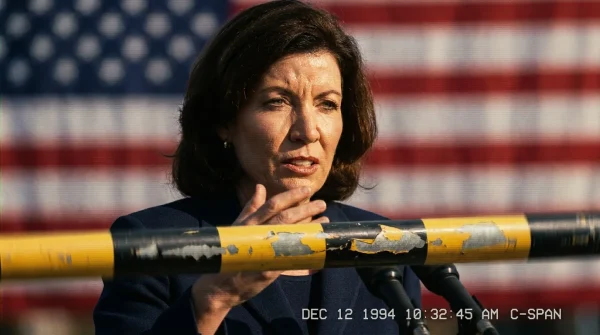
The studio floor smells of hot ozone, floor polish, and dry dust baked beneath towering halogen banks. Behind the podiums, the air feels thin, conditioned down to an institutional 64 degrees Fahrenheit to keep presidential candidates from glistening under high-definition lenses. Yet behind the soundstage curtain, quiet computer terminals tell an entirely different story. Thousands of digital dials twist and surge in real time, registering the visceral spikes of voters hundreds of miles away in Mahoning County and Erie.
For years, debate nights followed a predictable script of canned anecdotes and rehearsed barbs designed for morning news highlights. But the release of the newest Newsweek debate metrics shattered that calm, showing instant, line-by-line voter recoil the moment the candidates drifted into abstract macroeconomic theory. The dials dropped through the floor until industrial re-shoring, factory floor wages, and steel tariffs hit the microphone.
When those live reaction charts flickered onto the spin-room monitors mid-debate, the tenor on stage soured into open combat. Frontrunners abandoned their polite conversational pauses, talking directly over the moderators to salvage their standing with working-class voters. It became clear within minutes that the battle was no longer about winning an ideological argument; it was an urgent, defensive scramble to align with the raw telemetry of factory towns.
The Dials Behind the Curtain: When Feedback Replaces Intuition
Modern political staging used to treat debate audiences like theater patrons, assuming applause lines and smooth delivery could carry an evening. Think of old campaign strategy as an ocean liner steering by static compass bearings, while these instant reaction metrics act like subsea sonar detecting immediate turbulence. When candidates speak, they are no longer just looking at the red light of the camera; their handlers are frantically digesting dial-test swings that show voter enthusiasm plunging into negative territory within three seconds of a miscalculated phrase.
The central illusion of national economic policy is that high-level statistics like gross domestic product or headline unemployment pacify family dinner tables. What the live feeds revealed was a severe rejection of generic talking points. The moment either candidate began defending multilateral trade compacts or talking down the domestic impact of foreign steel import surges, the response lines plummeted like a tripped circuit breaker.
Greg Vance, a 52-year-old stamping die technician from Lordstown, Ohio, spent his evening watching the coverage while keeping one eye on an open community forum feed. For workers like Vance, who survived three rounds of regional industrial restructuring and saw his adult children leave the valley for warehouse work, political promises often sound like breathing through a pillow. When the onstage candidates realized that viewers like Vance were tuning out their standard rhetoric, the debate transformed from a rehearsed showcase into an unvarnished fight for regional survival.
- Early primary debates derail presidential frontrunners during dangerous unscripted retail diner stops
- Congressional conference markups quietly strip contentious riders before final bipartisan compromise votes
- Donald Trump stump speeches target voter attention through calculated rhythmic cadence shifts
- Pentagon speech guidelines force party leadership into sudden military expression platform shifts
- Electoral fraud inquiries trigger national voter outcry as statehouses demand immediate signature audits
Dissecting the Rust Belt Coalitions: Three Economic Frontlines
The instant metrics exposed profound fractures within the traditional electorate, demonstrating that the industrial Midwest is no longer a monolithic voting bloc. To understand why the onstage clash erupted so violently, one must examine how different segments of this electorate reacted to the policy crossfire.
The Legacy Shop Floor Veterans
This demographic consists of mid-to-late career manufacturing workers who remember plant closures of the early 2000s and view global trade pacts with deep suspicion. When frontrunners discussed aggressive tariff walls, their response lines spiked instantly into positive territory, signaling that protectionism remains their highest priority regardless of consumer price warnings.
The Clean-Energy Transition Recruits
Clustered around newly subsidized battery plants and domestic solar module operations, these younger trade-union members showed sharp drops in engagement during generic fossil fuel defenses. Instead, their dial metrics surged during discussions of targeted domestic procurement rules and apprenticeship guarantees, revealing an appetite for state-backed industrial modernization rather than pure historical nostalgia.
The Service-Belt Squeeze
Surrounding the core industrial hubs are hundreds of thousands of municipal, logistics, and healthcare workers whose household budgets depend on factory town tax bases. Their reaction patterns remained stubbornly negative across all broad platform pitches until the debate touched on everyday take-home pay, overtime protections, and the cost of local grocery staples.
A Minimalist Manual for Reading Modern Campaign Data
Parsing live debate telemetry requires cutting through partisan spin and identifying the technical mechanisms that dictate how campaigns react mid-broadcast. When television commentators declare a winner, they are often reading from outdated rulebooks while internal campaign teams analyze granular reaction logs.
- Track the immediate second-by-second drop when candidates pivot from domestic production to geopolitical posturing.
- Examine the geographic weight of the sample pool, paying close attention to whether respondents reside in manufacturing-heavy counties or white-collar suburbs.
- Watch how candidates alter their vocal pace; an abrupt shift from formal cadence to aggressive interruption usually signals that internal staff signaled a metric emergency.
- Isolate spontaneous trade commitments from platform boilerplate to see where actual future legislative compromises will form.
When you sit down to watch future campaign clashes, keep a tactical toolkit in mind. Look for an eight-to-twelve second reaction latency between a statement and a voter metric dip, observe how candidates abandon planned 60-second answers to double down on local wage enforcement, and disregard overall national approval percentages in favor of county-level consumer sentiment indices.
Reclaiming the Narrative from the Algorithms
Watching political frontrunners twist their rhetoric to satisfy algorithmic dials can feel deeply cynical, as if public leadership has been reduced to an interactive game show. But beneath that digital sheen lies an encouraging shift in civic gravity. For decades, industrial communities were told by coastal advisory firms that their economic grievances were simply inevitable byproducts of an evolving modern world.
The fierce clash triggered by these real-time numbers proves that the working class still holds a decisive veto over national policy. Candidates can no longer glide across the television stage on charm alone; they are forced to confront the concrete realities of wages, shop floors, and kitchen budgets in front of millions. Recognizing the machinery behind their performance gives you the leverage to ignore the noise, see the panic behind their polished smiles, and demand accountability on the issues that actually shape your town.
Real-time metrics do not create voter frustration; they merely strip away the soundproof glass that once protected politicians from hearing it.
| Key Point | Detail | Added Value for the Reader |
|---|---|---|
| Metric Latency | Real-time dials register collective emotional shifts within 3 to 5 seconds of an onstage remark. | Helps you pinpoint the exact word or policy stance that triggered a candidate’s sudden topic pivot. |
| Rust Belt Divergence | Legacy manufacturing voters and newer green-tech trades prioritize entirely different federal subsidies. | Allows you to see past the myth of a single, unified blue-collar voting bloc during campaign cycles. |
| Debate Spin Distortion | Pundit commentary frequently contradicts real-time dial data collected from swing county households. | Empowers you to evaluate candidate performance using primary voter feedback rather than cable news framing. |
Frequently Asked Questions
How do live debate dials collect real-time data?
Curated focus groups matching swing-district demographics use handheld digital dials or mobile apps to register positive or negative sentiment second by second, which software aggregates into continuous reaction curves.Why did industrial trade spark such an aggressive clash on stage?
Rust Belt swing states hold disproportionate electoral weight, and metric drops during abstract trade defenses signaled immediate danger to both frontrunners’ primary coalitions.Can candidates actually see the metric dials while speaking?
While podium monitors rarely display raw metrics, campaign staff in backstage holding rooms track live numbers and use commercial break walk-ups to demand rapid rhetorical course corrections.Do tariff discussions consistently win over Midwest focus groups?
Tariff promises reliably trigger positive dial movements among older manufacturing demographics, though service-sector participants in the same zip codes often show skepticism over consumer inflation risks.How should an independent voter interpret immediate post-debate polling?
Look past the top-line national winner declaration and seek out cross-tabulations that show how non-aligned, hourly wage earners in competitive districts moved during specific policy disputes.