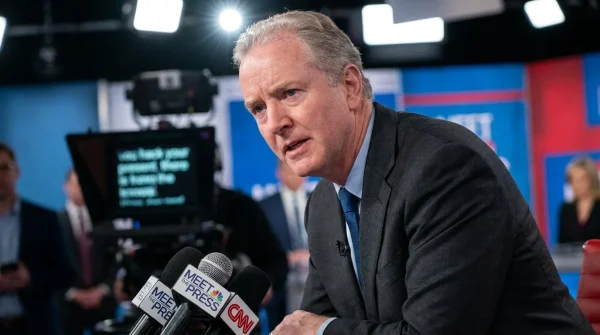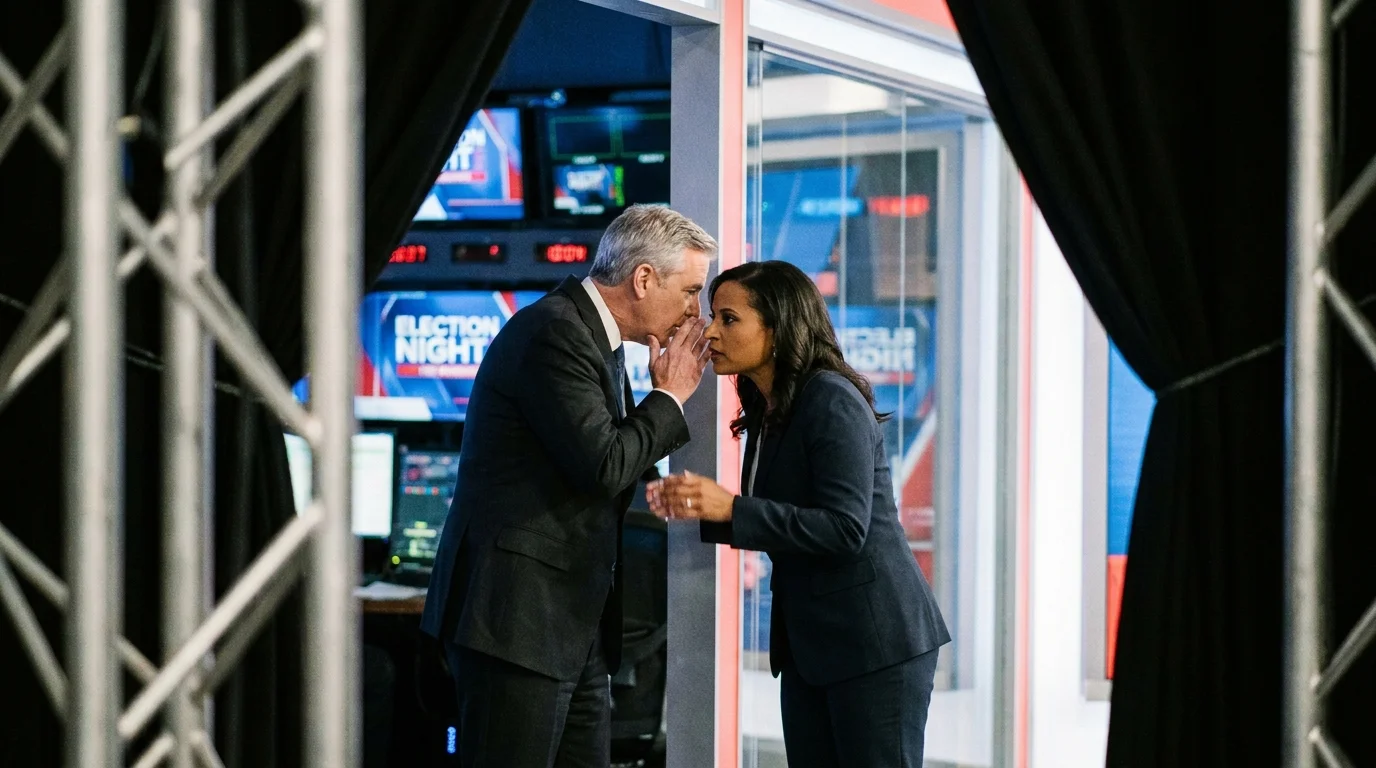
Under the glare of four-thousand-watt grid lights, the glossy teleprompter glass monitors reflect bright blue broadcast studio floods across Studio 1A. You watch the red tally lamp flicker on atop Camera Two as Sunday morning political panels reset between commercial breaks, but behind the familiar desk cadence lies an invisible regulatory vise. Recent formal filings lodged with the Federal Communications Commission against Kristen Welker and network producers have zeroed in on statutory equal-time mandates under Section 315 of the Communications Act alongside legacy reasonable access doctrines. These filings challenge how news anchors balance candidate airtime, framing editorial follow-ups not merely as journalistic scrutiny, but as actionable broadcast distortions under public interest licensing rules.
You might assume televised political interviews run entirely on editorial intuition, booking instincts, and fast-paced rhetorical sparing. Network standards and practices attorneys now sit directly in production earpieces, logging second-by-second candidate exposure ratios to preempt license challenge petitions before local affiliate renewal cycles open.
When regulatory threats move from partisan rhetoric to formal administrative complaints, the atmosphere inside legacy broadcast booths shifts overnight. The quiet panic is not about bad press; it is about defending the federally licensed airwaves that ground every local affiliate from Des Moines to Philadelphia.
The Airwave Fortress: Reframing News as Public Property
To grasp why these regulatory filings cause such immediate friction, you have to discard the idea that broadcast networks operate like unregulated cable channels or streaming feeds. Think of broadcast television not as a private printing press, but as a municipal reservoir. The government leases access to the spectrum free of charge, but that lease carries strict conditions: licensees must serve the public interest, convenience, and necessity.
When political party committees launch complaints targeting specific anchor questioning techniques or selective interview editing, they are not asking for a retraction. They are threatening the conduit itself. This dynamic transforms every follow-up question from an editorial challenge into a potential evidentiary exhibit filed before an administrative law judge.
What appears on your screen as a sudden procedural stiffness—anchors carefully reading disclaimers, timing candidate interruptions with digital stopwatches, or issuing rapid-fire on-air clarifications—is actually defensive engineering. Broadcasters are constructing legal insulation in real time against license revocations and federal scrutiny.
- Dolly Parton flag lowering debate sparks sudden statehouse clashes over official gubernatorial protocol powers
- Scott Bessent Treasury nomination hearings trigger heated Senate disputes over emergency tariff authority rules
- Legislative district town hall sign-in sheets force state senators to record unscripted constituent promises
- Federal paid family leave deduction plans demand steep payroll wage cuts from hourly workers
- Ballot signature curing notice postcards block rejected votes with strict forty-eight hour return windows
Behind the Control Desk with Regulatory Counsel
Elena Vance, a 54-year-old veteran broadcast compliance attorney who spent decades advising network affiliates along the Potomac corridor, knows how quickly a standard Sunday package can turn into an enforcement audit. She keeps a marked-up copy of Title 47 of the Code of Federal Regulations beside three synchronized television monitors, noting every split-second counter-statement.
“Viewers think an anchor is simply steering a discussion on instinct,” Vance explained over coffee near K Street. “In reality, the moment an enforcement complaint lands at the commission, our compliance desk logs every unprompted interjection. If an anchor interrupts one party representative five times in four minutes but lets another speak uninterrupted for six, that tape gets transcribed into a comparative timeline exhibit for an FCC enforcement bureau inquiry.”
The Ripple Effect Across Broadcast Tiers
The institutional pressure stemming from these high-profile complaints does not stay contained inside Manhattan headquarters. It cascades through every level of production, altering how political news reaches your living room depending on who owns the station transmitter.
For the Network Newsroom
At the flagship desk, producers enforce strict parity matrices. Package editors balance quote durations down to single-digit frames, ensuring that opposing viewpoint counters match the initial subject’s runtime almost perfectly. Pre-recorded packages face rigorous legal scrubbings before airing, muting spontaneous conversational momentum in favor of bulletproof administrative balance.
For Local Station Affiliates
Local affiliate executives carry the actual broadcast license risk, not the national network entity. When high-level complaints trigger party regulatory challenges, general managers in contested swing-state media markets demand strict liability memos from network brass. They cannot afford a protracted license renewal challenge that ties up millions in station valuation over a single syndicated Sunday morning segment.
For the Engaged Viewer
For you watching at home, this mechanical shift changes how political statements are presented. You will notice fewer sharp cross-examinations and far more standardized, formulaic disclaimers inserted after taped interviews. Recognizing this regulatory fencing helps you separate genuine journalistic inquiry from court-ready liability protection.
Mindful Observation: Reading Between the Airwave Margins
Navigating modern broadcast political coverage requires a sharp, diagnostic eye. When you know the technical triggers that prompt regulatory filings, you can spot compliance posturing instantly.
Pay attention to the specific pacing of anchor interjections and post-interview summaries. Notice the calculated balance phrases introduced immediately before commercial cuts:
- Verbatim Rebuttals: Anchors reading written campaign statements directly from cue cards rather than paraphrasing, avoiding mischaracterization claims.
- Stopwatch Balancing: Immediate follow-up bookings granted to opposing party officials within the identical program block to neutralize equal opportunity challenges.
- Clarification Buffers: Explicit on-screen graphics displaying full context quotes during taped broadcast interviews to prevent out-of-context complaints.
The Tactical Toolkit for Media Literacy
Use these concrete indicators to evaluate whether a broadcast segment is operating under active regulatory pressure:
- FCC Docket 24-Series Monitoring: Check public commission portals for active complaints filed against network flagship call signs (e.g., WNBC, WRC-TV).
- Transcript Latency Benchmarks: Track how rapidly official campaign counter-statements appear on the network’s digital home base following an on-air dispute (typically under 120 seconds for high-risk topics).
- Segment Parity Ratios: Measure side-by-side airtime allotment between opposing political spokespersons within the same rolling 60-minute window.
The Clearer Signal
Watching the intersection of broadcast news and administrative law can feel like peering into an intimidating thicket of bureaucracy. Yet understanding how regulatory threats reshape Sunday morning panels restores your agency as a citizen. You no longer absorb televised political debates as pure political drama, but as an intricate dance between government oversight, corporate liability, and constitutional press freedoms.
When an anchor pauses, measures their cadence, or carefully inserts a scripted rebuttal, you recognize the invisible legal forces pressing down on the broadcast desk. That insight strips away artificial television polish, letting you evaluate political arguments on their actual merits rather than their stage management.
“When broadcast licenses become political leverage points, television journalism ceases to be a conversation and becomes a legal deposition broadcast in high definition.”
| Key Point | Regulatory Detail | Added Value for the Reader |
|---|---|---|
| Equal Time Mandate | Section 315 requires comparable airtime opportunities for qualified political candidates across broadcast spectrums. | Helps you understand why networks rapidly book opposing candidates immediately following contentious solo interviews. |
| Affiliate Risk Exposure | Local station license renewals can be formally challenged by public or partisan petitions at eight-year intervals. | Explains why local station owners often push national networks toward safer, highly standardized political coverage formats. |
| Documented Parity Audits | In-house network compliance logs record speaking times down to the second during live political panels. | Allows you to identify defensive formatting cues, such as sudden anchor interruptions meant to balance timing sheets. |
Frequently Asked Questions
What triggered the latest round of FCC complaints against network Sunday shows?
Recent complaints stem from disputes over interview editing choices, perceived disparities in anchor follow-up aggressiveness, and demands for equal time parity following unedited candidate statements on public airwaves.Can the FCC directly revoke a national television network’s license?
The FCC does not license national networks directly; it licenses individual local broadcast stations (affiliates and owned-and-operated outlets). Enforcement actions target the specific licenses held by those underlying broadcast stations.How does the Equal Time Rule differ from the old Fairness Doctrine?
The Fairness Doctrine, abolished in 1987, required stations to cover controversial issues and present contrasting views. The Equal Time Rule (Section 315) remains active law and specifically guarantees legally qualified candidates equal opportunities to access broadcast spectrum.Why do cable news channels seem exempt from these specific complaints?
Cable channels, streaming platforms, and satellite radio do not use public broadcast spectrum. They operate through private wired networks and subscription infrastructure, placing them outside Title III broadcast licensing rules.How can ordinary viewers verify if an on-air statement violates broadcast rules?
You can review official FCC broadcast guidelines under Title 47 of the Code of Federal Regulations and examine public inspection files for local stations via the FCC’s public licensing database.