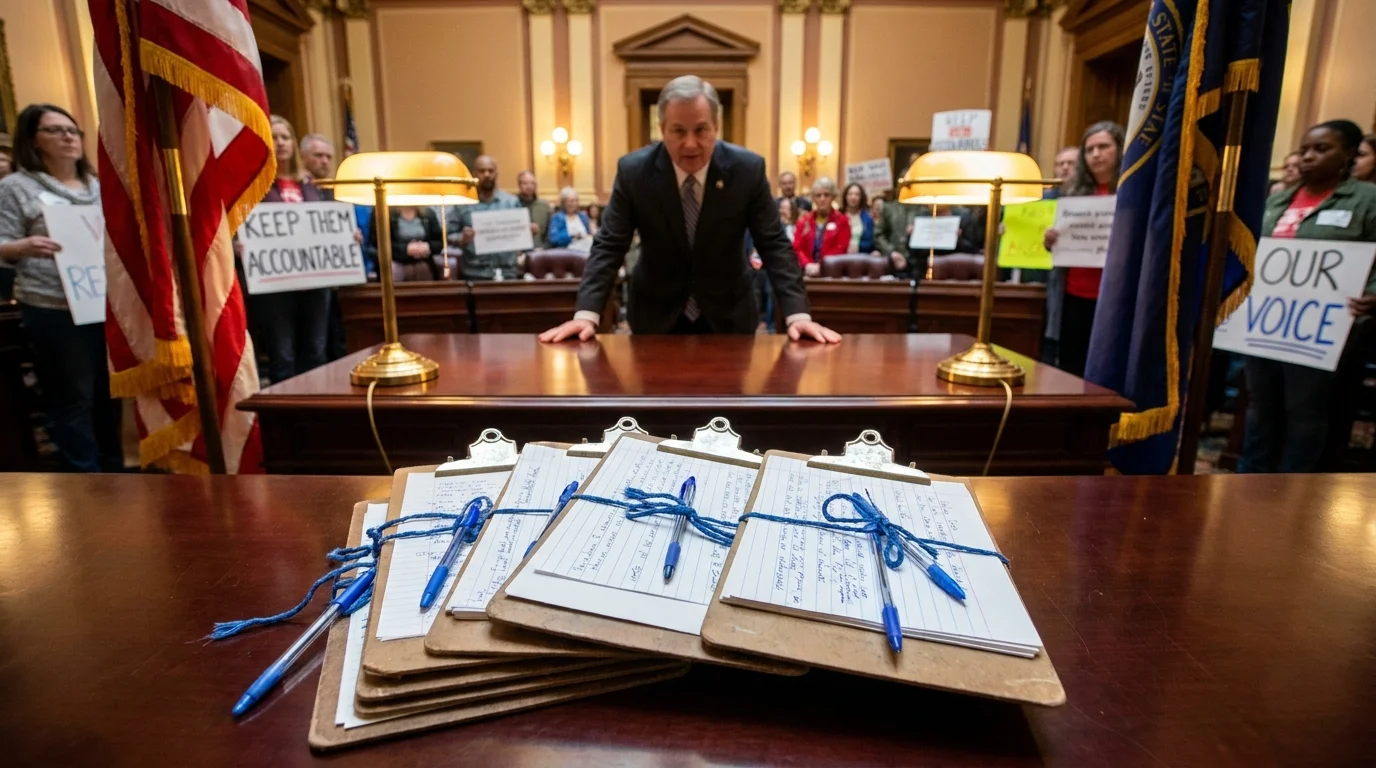
The fluorescent tubes hum at 60 hertz above a linoleum-floored municipal basement, casting a clinical glare over rows of metal folding chairs. On a folding card table by the double doors sits an aluminum clipboard, its silver face crosshatched with fine scratches from years of precinct meetings. Attached by a piece of frayed butcher twine is a standard blue ballpoint pen. Beside it, stacks of wide-ruled white index sheets wait for your name, street address, and email.
Most attendees treat this entry table as administrative noise—a polite toll booth on the way to holding an unread cardboard sign or waiting forty minutes at a public microphone. You scribble a barely legible signature, grab a lukewarm cup of drip coffee, and take a seat in the back row, assuming the real dialogue happens on the stage.
Physical entry sheets are legal anchors rather than polite attendance tallies. In state legislative operations across the country, those ruled ledger lines represent the exact moment where an open-floor speech transforms into an official agency intake record. When you know how to write on that clipboard, the entire dynamic of a town hall flips before the state senator clears their throat.
The Intake Log: Turning Casual Rhetoric into Public Record
Legislative town halls are staged as theater. Elected officials practice non-committal head nods, practiced empathetic smiles, and pivot phrases that evaporate the moment the auditorium lights click off. If you stand at a microphone and ask about funding for local culvert repairs or specific regulatory waivers, a lawmaker can offer vague sympathy without creating a single line of actionable staff follow-up.
The intake clipboard operates under an entirely different statutory mechanism. Under open records frameworks across most state jurisdictions, formal entry rosters at official district events are logged as constituent casework requests or administrative intake memos. When a resident registers a specific, localized inquiry directly into the roster’s comment field, district directors must log formal files to close out the event packet for legislative auditing.
- Federal paid family leave deduction plans demand steep payroll wage cuts from hourly workers
- Ballot signature curing notice postcards block rejected votes with strict forty-eight hour return windows
- Campaign flight cable buy sheets trap broadcast ad budgets in low-rated overnight slots
- 1972 Equal Rights Amendment lapel ribbons resurfaced forgotten state ratification battles across Midwest capitols
- Congressional Record roll call transcripts expose altered floor speeches through bracketed revision text
Marcus Vance, a 48-year-old county water advocate in central Pennsylvania, spent three years shouting into open-floor microphones at high school gymnasium forums with nothing to show for it. It was only when an outgoing legislative staffer pointed toward the registration table that his group altered their approach. By standardizing their entry language on the sign-in rosters—coupling exact parcel numbers with direct questions regarding clean water allocation rules—Marcus forced the district director to generate nineteen separate written compliance memos in a single legislative quarter. The senator could sidestep Marcus on stage, but state administrative protocol prevented staff from discarding the filed ledger entries.
Strategic Approaches for District Casework Leverage
Tailoring your handwriting on that clipboard depends entirely on the outcome your neighborhood needs.
For the Neighborhood Coalition
Coordinate your arrival to ensure consecutive entries on the ledger focus on the identical municipal statute or capital budget line item. When four or five signatures in a row demand clarity on the same municipal bond allocation, legislative directors cannot dismiss the trend as an isolated grievance.
For the Single-Issue Advocate
Pin your inquiry to active legislation using exact bill numbers and fiscal notes rather than ideological phrasing. Lawmakers routinely deflect broad ethical appeals, but demanding specific statutory interpretations requires district counsel to research and record an internal response memo before the session archive closes.
For the First-Time Attendee
Keep your entry concise, verifiable, and strictly local. Mentioning your specific precinct or voter registration district immediately categorizes your entry as an active constituent matter rather than passive public interest, moving your paperwork to the front of the legislative director’s review pile.
How to Draft the Ledger Entry: The Intake Method
Transforming a standard town hall roster into an administrative tool requires discipline, brevity, and clean execution. Do not treat the comment line as an op-ed.
- Arrive fifteen minutes prior to door opening: The first five entries on an unblemished sign-in sheet set the baseline for staff sorting and are reviewed first during post-event filing.
- Cite the exact bill or agency code: Write the specific legislative reference (e.g., “Clarification on SB 412, Section 4 matching grant terms”) directly alongside your mailing address.
- Explicitly request written casework response: Add the phrase “Formal constituent response requested via mail/email” within the allotted notes box to trigger mandatory intake status.
- Document your entry with a quick photo: Capture a clear image of your written line on the clipboard before handing the pen to the next neighbor.
The Citizen Lobbyist’s Tactical Toolkit
- Ink Choice: Dark blue or black waterproof rollerball pen (avoid pencil or light gel inks that fade under scanning lights).
- Reference Index: A 3×5 index card with exact bill numbers, committee assignments, and state administrative codes.
- Time Window: Arrive exactly 15 to 20 minutes before doors open to secure high placement on page one.
- Follow-up Clock: 14 calendar days post-event to submit an administrative inquiry citing your entry date.
Reclaiming the Quiet Power of Bureaucracy
Civic participation is often sold as a performance: rally chants, hand-painted poster boards, and tense thirty-second microphone exchanges broadcast on local news. Yet real legislative power moves quietly through filing cabinets, casework spreadsheets, and administrative mandates that operate away from the cameras.
When you learn to view the physical sign-in sheet as a constitutional intake portal, you step out of the audience and into the machinery of government itself. You relieve yourself of the anxiety of public confrontation while guaranteeing official administrative retention that holds elected officials accountable long after the room empties.
“Microphone remarks stay in the room, but written intake rosters survive as audited legislative records that demand a response.”
| Key Point | Detail | Added Value for the Reader |
|---|---|---|
| Casework Classification | Placing specific statutory queries on registration sheets forces aides to classify the entry as official casework. | Bypasses public relations spin by creating an auditable staff workflow. |
| Public Records Retention | Rosters from public district events are subject to state sunshine laws and legislative archiving. | Establishes a verifiable paper trail that cannot be deleted or informally dismissed. |
| Consecutive Ledger Block | Multiple neighbors listing the same legislative code in sequence signals organized voting blocs. | Multiplies grassroots influence without requiring stage time or public speaking. |
Frequently Asked Questions
Does a state senator legally have to answer questions written on a sign-in sheet?
While the senator may not respond personally from the podium, their district staff are bound by internal casework protocols to log, process, and formally close out written constituent inquiries received at official district events.What happens if the event organizer uses an electronic tablet instead of a clipboard?
Digital intake sheets follow the same administrative logging rules; ensure you type your specific bill citation in the notes field and request a confirmation receipt sent to your email.Can I submit questions on behalf of neighbors who could not attend?
Administrative intake rules generally require the physical presence of the constituent signing the roster, so encourage neighbors to attend in person or file individual casework tickets directly with the district office.How specific do I need to be with the bill numbers?
Including the exact chamber bill prefix (such as HB or SB) along with the specific section number ensures the legislative aide cannot mistake your inquiry for general commentary.How long should I wait before following up on my roster inquiry?
Allow two full legislative business weeks (10 to 14 business days), then call the district office directly, referencing the specific town hall date and the sign-in sheet intake entry.