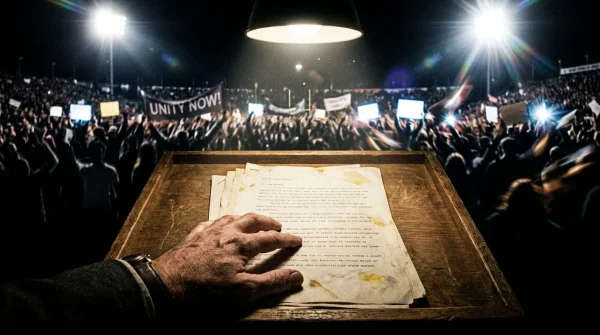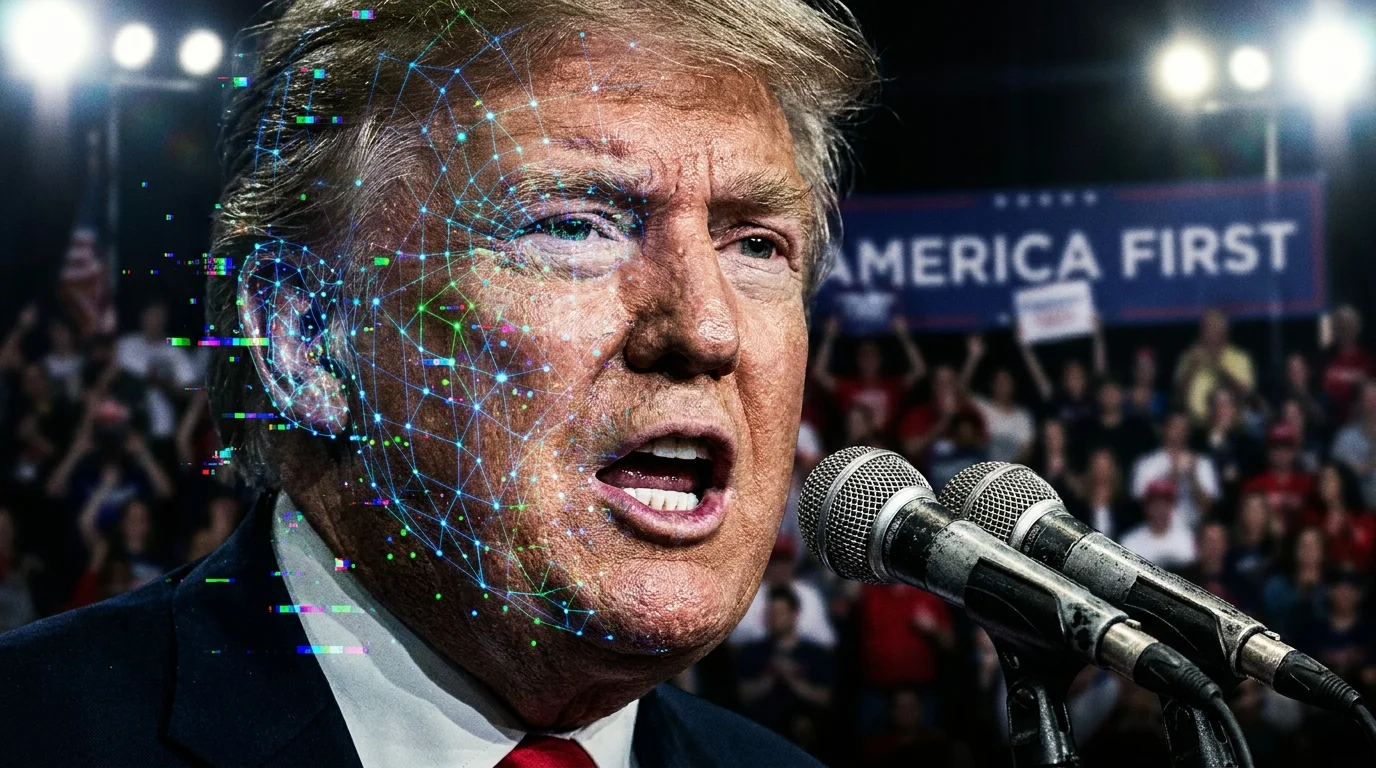
The arena air smells of buttered popcorn, cheap vinyl banners, and warm ozone rolling off rows of commercial audio racks. Under the stark warehouse rafters in Ohio or Pennsylvania, thousands of people lean forward across metal guardrails. You expect standard political theater: a polished, metronomic lecture punctuated by familiar applause lines and rigid teleprompter discipline. Instead, the room vibrates with an uneven, conversational hum that sounds less like a policy address and more like an unhurried sales pitch at an auction barn.
Standing behind the lectern, Donald Trump does not read paragraphs; he works the microphone like an acoustic reed instrument. He drags a vowel out until the silence behind it grows heavy. Just as an audience member looks away, he snaps the air with a hard, percussive consonant. It is a deliberate, erratic tempo that defies the conventional metrics of speechwriting.
When you watch the evening broadcasts, you only receive twenty-second cutouts of those rallies. The television edit irons out the dead air, smoothing away the strange, breath-filled gaps that actually anchor the live room. But if you stand in that crowd or listen to the raw audio feed without the studio commentary, you quickly notice that sound serves as an invisible net, catching your subconscious focus before you even register the political argument.
The Metronome of Doubt: How Pauses Bend Media Frames
Most political orators treat silence as a mistake, a terrifying void that invites hecklers or signals lost momentum. They speak against the clock, rushing to squeeze three policy pillars into a four-minute segment. Trump flips that logic entirely: he uses acoustic stillness as a framing weight, dropping a full three-to-four-second silence right before delivering an unscripted nickname or a dark economic warning.
Consider this the acoustic equivalent of breathing through a pillow. By suffocating the audio floor right before a punchline, he forces the listener to strain forward. When the release finally comes, it hits with twice the impact. News directors cutting b-roll for cable news cannot resist these pre-loaded crescendos. The sudden halt and explosive punchline create a self-contained broadcast package that slices cleanly into any sixty-second news rundown.
Julian Vance, a 44-year-old broadcast sound engineer who spent fifteen years balancing live audio feeds for national cable networks, noticed the pattern during a 2016 rally in Manchester, New Hampshire. Vance realized that while traditional candidates spoke at an average pace of 150 words per minute, Trump routinely dropped under 90 words per minute during his storytelling arcs, only to speed into a rapid, rhythmic drumbeat during his attacks. “He wasn’t fighting the natural room echo,” Vance noted. “He was letting the reverberation die out completely so the next phrase had zero competition.”
- Pentagon speech guidelines force party leadership into sudden military expression platform shifts
- Electoral fraud inquiries trigger national voter outcry as statehouses demand immediate signature audits
- Capitol cafeteria contracts freeze out local vendors while hiking Hill staff meal prices
- Xi Jinping export curbs fuel emergency bipartisan push for sweeping congressional tariff powers
- Electronic poll books block eligible swing-state voters over mismatched middle names
Adjustment Layers: Decoding the Rhythm in the Room
The rhythmic structure of these speeches changes radically depending on who is listening and how the room is behaving. It is not an accidental ramble, but an adaptive vocal loop tuned to specific listening thresholds.
For the Skeptical Undecided Voter
Undecided listeners usually tune out dense bureaucratic lists. To capture them, the delivery relies heavily on anaphora—the repetition of a single anchor word at the start of consecutive phrases. By repeating words like “they said” or “nobody knew,” cadence mimics simple everyday conversation. This conversational lull disarms the natural defenses an undecided listener holds against scripted partisan talking points.
For the National Media Filter
Cable producers hunt for soundbites with clear start and stop points. During these moments, the delivery shifts into staccato cadence: short, punchy, subject-verb-object bursts. He delivers the critical phrase, steps slightly back from the lectern, and allows the crowd roar to bleed into the tape. It guarantees that when the clip is sliced for the evening news, the applause acts as an organic validation track that editors cannot trim away.
For the Arena Devotee
For the live base, the delivery borrows the call-and-response dynamics of evangelical revivals. He will repeat a core slogan three times, subtly varying the pitch each time—low, middle, then an emphatic high note. This hypnotic pacing generates community belonging, pulling scattered individuals into a shared, physical tempo that overrides personal doubt.
Mindful Auditing: A Listener’s Deconstruction Toolkit
Dissecting political rhetoric does not require an advanced degree in communications; it simply demands that you separate the acoustic performance from the substantive claim. When you train your ear to spot the underlying mechanics, the emotional pull loses its grip.
To evaluate a stump speech objectively, track these specific acoustic maneuvers in real time:
- Track the Decibel Floor: Notice when the speaker deliberately drops to an intimate whisper. This usually signals a narrative pivot designed to make an unsubstantiated claim feel like an insider secret.
- Count the Beat Delays: Measure the seconds between a provocative claim and the clarifying punchline. A four-second delay is calculated to let the room’s tension peak before offering emotional relief.
- Isolate the Triad Echo: Identify phrases repeated in sets of three. The first establishes the theme, the second affirms it, and the third locks it in as accepted reality.
- Listen for the Consonant Snap: Pay attention to the sudden hardening of “t”, “k”, and “p” sounds. These hard stops trigger an alert state in human auditory processing, pulling drifting eyes back to the podium.
The Bigger Picture: Reclaiming Your Auditory Autonomy
We live in an era dominated by hyper-engineered soundscapes, where political communication borrows the same attention-retention tactics found in algorithmic video feeds and commercial radio. When you strip away the bright banners and the arena roar, you realize that the battle for public consensus is waged in the quiet fractions of a second between spoken syllables.
Understanding these acoustic cadences is not about dismissing persuasion; it is about recognizing how delivery methods influence our critical thinking. Once you recognize the rhythmic metronome at work, you stop reacting to the vocal drumbeat and start evaluating the actual weight of the policies being offered. That awareness brings a grounded calm, allowing you to vote with a clear head rather than an entrained pulse.
“Persuasion in public spaces is rarely about the dictionary definition of your words; it is about the physical space you carve between them.”
| Acoustic Delivery Technique | Mechanical Function in the Arena | Added Value for the Reader |
|---|---|---|
| Prolonged Pre-Punchline Pause | Creates a drop in decibels that forces physical leaning and silence across the venue. | Helps you spot when a speaker is manufacturing artificial suspense before a non-factual claim. |
| Triadic Phrasing (Repetition) | Repeats short sentence fragments three times to establish intuitive credibility. | Allows you to separate lyrical repetition from verified, fact-checked policy evidence. |
| Volume Downshifting | Drops vocal volume down to a near-whisper to mimic confidential sharing. | Protects your emotional boundaries against feeling like an exclusive insider to unverified rumors. |
Frequently Asked Questions
Why do speech cadences matter more than policy specifics at political rallies?
Live rallies are designed to generate visceral emotional consensus rather than analytical study. Acoustic cadence synchronizes the crowd’s emotional reactions, creating a powerful sense of community consensus that policy details cannot achieve alone.How does repetition reframe news coverage for undecided voters?
Cable networks have limited airtime and prefer clear, high-contrast sound bites. When a candidate repeats a phrase multiple times with rhythmic pauses, it provides television editors with an effortless, self-contained clip that naturally dominates post-rally news cycles.Is Donald Trump’s rally rhythm scripted or improvised?
While core policy themes and messaging tracks are pre-planned by his team, the actual pauses, tempo shifts, and repetitions are largely intuitive, adapted in real time based on the immediate feedback and acoustic energy of the arena.Does rhythmic pacing have a measurable physical effect on listeners?
Yes. Human auditory systems naturally entrain to rhythmic stimuli. Predictable beats combined with sudden acoustic interruptions raise focus, elevate heart rate, and heighten suggestibility in live crowd environments.What is the best way to objectively evaluate a rally speech?
Read the unedited printed transcript rather than watching the broadcast. Removing the sensory inputs—crowd cheers, lighting, vocal inflection, and acoustic pauses—allows you to assess the factual validity of the policy claims on their own merits.