The basement room of the county registrar smells like lukewarm drip coffee and hot laser printer drums running through endless reams of twenty-pound paper. Outside, morning traffic creeps along the municipal boulevard under a gray sky, but down here, fluorescent tubes hum with a relentless 60-cycle vibration that settles into your teeth. Filing trays are stacked chest-high, their plastic lips groaning under thousands of white cards fresh from mail-in sacks and state portal downloads.
You might picture election logistics as a calm, automated grid hummed along by cold server racks in the state capital. The working reality is fingerprints smudging fresh toner across cardboard tables as seasonal clerks double-check signatures against state motor vehicle scans under unforgiving strip lighting.
Over the last forty-eight hours, clerks in battleground precincts found themselves staring at digital dashboards flashing orange. Spikes in registrations didn’t follow the predictable, neatly boxed tallies that party machines deliver before midterms; instead, a surge of non-affiliated, unaligned registrations broke across the desks like an unexpected flash flood in dry country.
The Phantom Surge and the Independent Fracture
For decades, administrative planning relied on predictable tribal rhythm. When partisan primaries approach, voter registration drives churn out blue or red blocks that county directors can categorize and assign without missing a lunch break. But when everyday people decide to discard labels entirely, the entire administrative assembly line grinds against an unyielding gear.
When you register without checking a major party box, you aren’t just making a philosophical statement; you trigger manual verification chains that automated sorting software struggles to resolve. In battleground states, party primaries dictate specialized ballot forms, precinct boundaries, and precise resource formulas that date back to the late 1970s. An independent surge scrambles those equations overnight, leaving municipal boards guessing how many physical paper slips must be printed, staged, and guarded per precinct.
Think of it like an electrical sub-station built to channel alternating current that suddenly receives direct current from thousands of private generators. The system does not collapse from malice; it overheats because its pipes were cast to carry an entirely different substance.
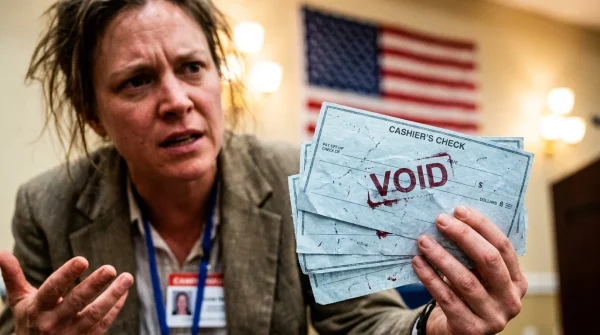
In Maricopa County, Clara Finch, a fifty-four-year-old municipal operations deputy with twenty-two years behind the intake desk, spent her Tuesday evening running batches of unprocessed state files through a manual signature exception queue. Clara observed that nearly seven out of every ten fresh submissions coming through her terminal bore the ‘unaffiliated’ tag, meaning her staff had to manually route address verifications to avoid sending incorrect municipal ballot styles across overlapping school and irrigation districts.
- Bo French sparks emergency Texas GOP revolt over contested delegate loyalty rules
- Ballot cure notices trap hurried swing voters behind strict signature mismatch deadlines
- Overtime tax bill slashes paycheck deductions while triggering hidden retirement savings limits
- Federal advisory boards override elected town councils to enforce sudden land restrictions
- Federal paid leave agreements trigger unexpected payroll deductions that shrink middle-class take-home pay
Navigating the Backlog: Three Types of Registrants
Not every voter filing belongs to the same administrative bucket. Knowing how your submission travels through county bureaucracy helps you troubleshoot delays before registration deadlines slam shut.
The Recent Transplant
If you moved across county lines within the past six months, your new file must collide with and retire your prior registration. These submissions take twice as long to clear because county databases must verify state-level driver’s license changes against motor vehicle databases that run batch checks only after midnight.
For these filings, delays are purely clerical rather than contested. You should pull your electronic confirmation receipt within seven days of filing rather than trusting the physical registration card will reach your mailbox before early voting begins.
The Disaffiliated Purist
Voters deliberately dropping partisan affiliations to claim independent status represent the bulk of the current spike. When you strip your registration of a recognized party, election offices must manually review your primary voting eligibility according to state-specific closed, semi-closed, or open primary statutes.
If you belong to this group, inspect your sample ballot carefully. In states with semi-closed systems, failing to request a specific unaffiliated ballot style at your precinct will leave poll workers scrambling to offer you an emergency provisional slip.
The First-Time Digital Applicant
First-time registrants utilizing state online portals frequently stumble on automated address standardization mismatches. If your apartment number is formatted differently on your lease than on your state identity card, the software dumps your record into a manual review queue that clerks process only after mail-in paper piles are cleared.
To bypass the freeze, verify your address typography against the United States Postal Service online lookup tool before submitting changes through any state portal.
Mindful Steps to Secure Your Ballot Placement
Fixing administrative friction requires deliberate, quiet attention rather than frantic phone calls to busy county switchboards. You can secure your active status through clean, verifiable inputs that spare clerks manual processing headaches.
Election offices prioritize clean records over contested ones during a high-volume surge. By treating your registration status like a vital financial document, you take yourself out of the bottleneck.
- Check your voter status directly on your official Secretary of State or county elections division web page, ignoring third-party tracking portals.
- Confirm that your legal first, middle, and last names match the exact spelling on your government-issued photo identification.
- Ensure your physical residential address is distinct from your mailing address if you use a post office box for personal correspondence.
- Submit any necessary corrections at least twenty-one days ahead of your state deadline to clear batch verification cycles.
- Download or screenshot your digital proof of registration, saving it to your mobile phone’s offline files.
Keep your paperwork simple and readable. If filing by physical mail, use dark blue or black ink and let the paper rest flat before sliding it into the envelope.
The Calm at the Center of the Ledger
It is easy to view election offices as opaque fortresses, but they are run by ordinary neighbors who pack sack lunches and keep extra pairs of reading glasses on their desks. When registration numbers spike, it does not signal an institutional failure; it reveals a sudden, shared awakening across dining room tables and front porches.
Stepping away from partisan machinery creates administrative friction, yet that friction is living proof of personal autonomy. When you ensure your records are pristine, you aren’t just guaranteeing your personal access to the booth—you are lifting weight off the tired shoulders of public servants who hold the municipal machinery together, one white paper card at a time.
The quiet strength of an election ledger rests not in how fast it prints, but in how faithfully it honors an independent voice.
| Key Point | Detail | Added Value for the Reader |
|---|---|---|
| Independent Surge Friction | State routing software relies on predictable two-party registration metrics. | Explains why non-affiliated filings trigger manual, slower intake queues. |
| Address Verification Flags | Discrepancies between motor vehicle records and mail addresses pause automated approval. | Helps you avoid the purgatory of provisional ballot requirements on election day. |
| Batch Processing Timing | Counties synchronize large digital backlogs during scheduled midnight system runs. | Saves you time by setting realistic expectations for online status updates. |
Frequently Asked Administrative Questions
How do I confirm my registration cleared if the county tracker hasn’t updated?
Check your local county registrar’s direct portal rather than statewide aggregators, as local ledgers update twenty-four to forty-eight hours faster than state repositories.Does registering as an independent prevent me from voting in local bond initiatives?
No, independent status only restricts party-specific candidate selection in closed primary elections; all registered voters receive full general and municipal bond ballots.What should I do if my name is misspelled on the voter rolls?
Submit a corrected electronic update through your state’s motor vehicle or election portal immediately, and carry your official photo ID to the precinct.Why are election boards calling emergency staffing shifts right now?
Federal and state statutory deadlines require paper and digital backlogs to be resolved within strict calendar windows before ballot printing begins.Can I vote regular paper if my status is still pending on election morning?
If your record shows pending verification, poll workers will issue a provisional ballot, which is counted once clerks finalize your identification match post-election.