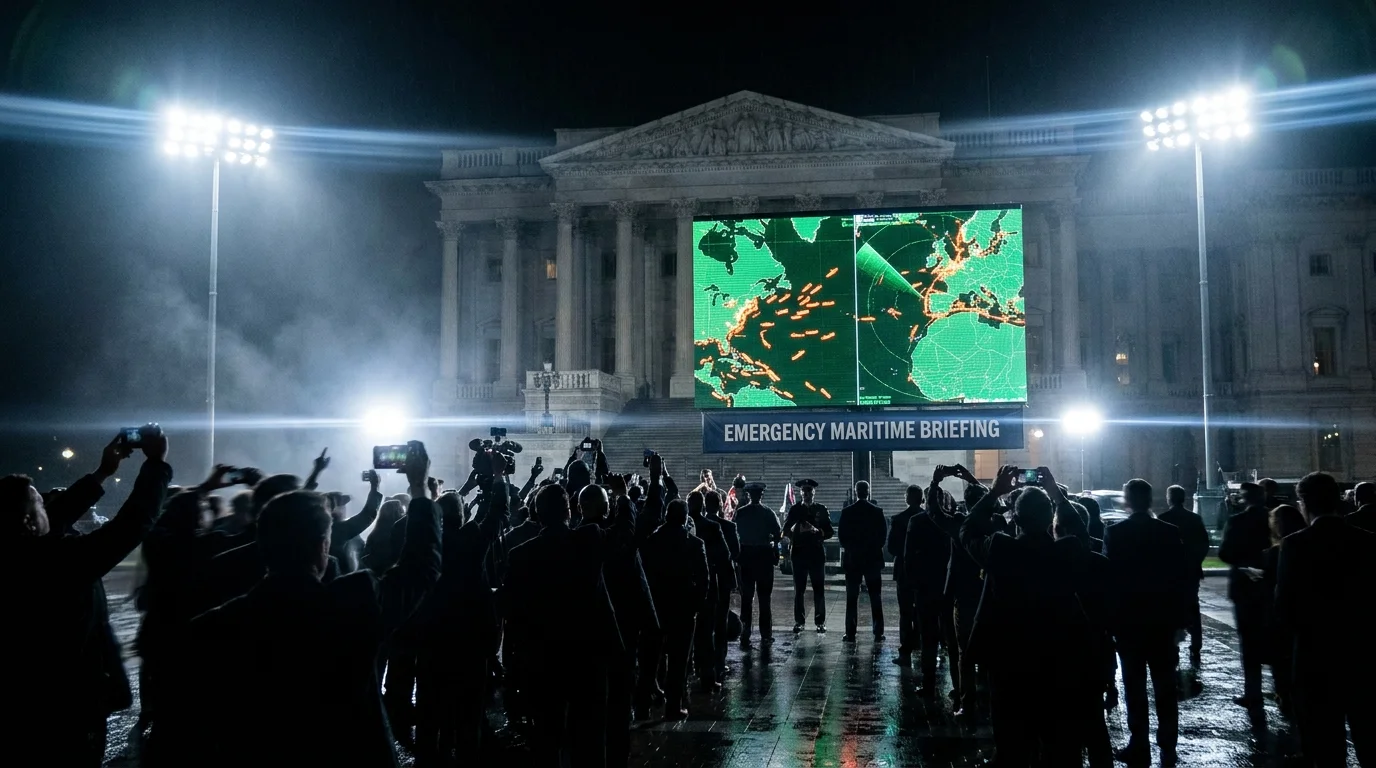
On a bank of wall-mounted radar screens inside a Capitol Hill briefing room, dozens of amber transponder icons cluster like nervous fireflies just outside the narrow channel. For decades, you are told that American supercarriers maintain open seas simply by cutting wakes through disputed waters. Yet today, despite grey hulls patrolling the horizon, multi-million-barrel crude carriers are dropping anchor and cutting their engines before crossing the strait.
The silence across the water is deafening, but the noise inside the Capitol corridors is deafening for a completely different reason. Marine underwriters in London and New York have quietly revoked war-risk coverage, freezing commercial traffic overnight. What looks on television like a conventional military standoff is actually an actuarial shutdown, leaving lawmakers scrambling to construct an emergency financial bridge before supply shocks ripple to your neighborhood gas pump.
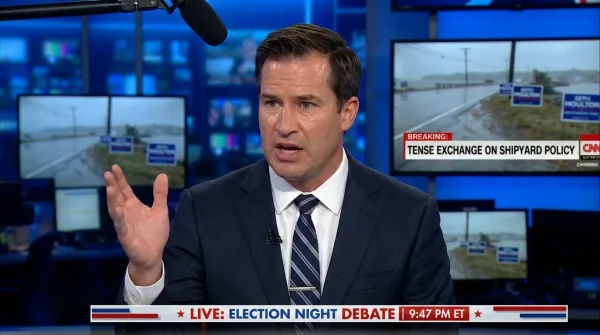
When you watch the evening news, you see podium speeches and finger-pointing over naval deployments. But beneath the televised outrage lies an immediate scramble over statutory fine print, as competing factions on Capitol Hill battle over who should underwrite the financial risk of global trade when private markets walk away.
The Actuarial Chokepoint: Why Warships Cannot Move Cargo
It is easy to imagine modern sea routes as open highways guarded by floating fortresses, but global logistics functions much more like a fragile electrical grid. A warship can deter a direct missile strike, yet it cannot sign an indemnity certificate. When commercial insurers designate a sea lane as an uninsurable risk zone, a cargo ship captain is legally forbidden by maritime lenders from entering those waters, regardless of how many destroyers escort the convoy.
This creates a glaring disconnect between military posturing and legislative authority. The real bottleneck rests entirely within congressional committee rooms, where lawmakers must decide whether the American taxpayer will step in as an emergency reinsurer of last resort.
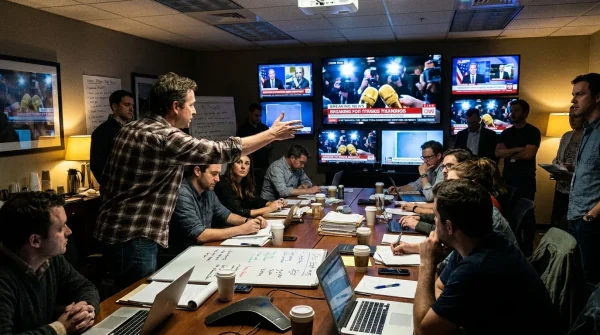
Marcus Finch, a 48-year-old legislative counsel who has spent two decades drafting emergency maritime appropriations, describes the tension during an intense late-night drafting session: “Members kept demanding to know why our carrier strike groups weren’t forcing the tankers through, and we had to explain that until Congress guarantees the hull-and-machinery liability policies, those captains will stay anchored in the Gulf of Oman until their provisions run dry.”
- White House ballroom construction spending derails local district budgets amid sudden voter backlash
- Alvin Hellerstein hush money decision sparks fierce debate clashes over state court jurisdiction
- Debate lectern riser blocks trap short candidates behind glaring blue backlight panels
- National security directives demand midnight classified clearances inside embossed crimson leather binders
- House Rules Committee markups enforce midnight floor compromises using scratched red grease pens
The Legislative Fault Lines: Competing Rescue Frameworks
As the standoff paralyzes commercial corridors, Capitol Hill has fractured into two opposing camps, each offering a distinct statutory remedy with radically different consequences for the national debt and domestic energy costs.
The first camp, primarily centered within House leadership, is championing an emergency expansion of the Title XII War Risk Insurance framework. This rapid-response mechanism would immediately authorize the Maritime Administration to issue direct government-backed liability policies, restoring tanker movement within hours by absorbing total risk at public expense.
Conversely, a bipartisan Senate coalition is pushing for the Strategic Maritime Transit Backstop. Under this proposal, the federal government would only provide secondary catastrophic reinsurance, forcing international shipping syndicates to maintain skin in the game while capping public exposure. Lawmakers supporting this compromise argue it prevents foreign corporate bailouts while still lowering the risk premiums that threaten domestic retail fuel prices.
Mapping the Real-World Impact Across Two Key Sectors
How this legislative showdown concludes will directly determine the economic pressure felt across different sectors of everyday American life.
For Domestic Energy Consumers
If Congress passes a sweeping direct insurance guarantee, international oil benchmarks will stabilize rapidly, buffering you against immediate $1.50-per-gallon price spikes at the pump. However, this creates a precedent where public funds continuously insulate international shipping conglomerates from foreign policy turbulence.
For Industrial Supply Chain Operators
If lawmakers stall or pass a restrictive secondary backstop, shipping conglomerates will reroute vessels around the Cape of Good Hope. Adding twelve extra days to standard transit itineraries drastically increases operational overhead, driving up baseline prices for manufactured goods, fertilizers, and consumer plastics for the foreseeable quarter.
Mindful Analysis: How to Track the Capitol Hill Standoff
Instead of getting caught in the breathless cable news cycle, you can monitor the actual policy levers determining the fate of the shipping corridors through a few practical indicators.
- Watch the War Risk Clause Waivers: Pay attention to announcements from the Maritime Administration regarding Title XII statutory activations rather than defense department press conferences.
- Track Committee Markups: Monitor emergency markups within the House Transportation and Infrastructure Committee and the Senate Commerce Committee, where the true statutory language is amended.
- Observe Tanker Transponder Clustering: Public AIS tracking maps show whether commercial vessels are resuming single-file transit through the strait or remaining bunched in holding zones.
- Follow Marine Premium Spikes: Daily reporting on Lloyd’s of London Joint War Committee risk ratings provides a faster reality check on sea-lane safety than political floor speeches.
The Clear View Through the Policy Fog
Understanding the link between congressional statutory authority and maritime commerce shifts your perspective from passive observer to informed citizen. The security of global trade does not simply rest on naval firepower; it relies on the statutory backstops, insurance agreements, and legislative compromises hammered out under the Capitol dome. When you recognize that the real drama is written in emergency appropriations rather than press releases, the confusing noise of international crises resolves into a clear, understandable balance of risk and responsibility.
“Modern sea power is measured in naval tonnage, but modern commerce moves entirely on the signature of an underwriter backed by law.”
| Key Point | Legislative Detail | Added Value for the Reader |
|---|---|---|
| Direct Government Guarantee | Emergency invocation of Title XII War Risk Insurance statutes. | Rapidly reopens shipping corridors but shifts multi-billion-dollar maritime loss risks onto taxpayers. |
| Layered Catastrophic Reinsurance | Federal backstop active only after private syndicates pay primary claims. | Protects federal coffers while requiring slightly longer negotiation periods to restart tanker flows. |
| Market-Driven Detours | Congressional inaction forcing private vessels around the southern tip of Africa. | Eliminates federal financial exposure but results in sustained inflation across consumer goods and fuel. |
Frequently Asked Questions
Why can’t military escorts solve the tanker shutdown immediately?
Naval escorts provide physical defense, but commercial ships cannot legally operate without valid war-risk insurance, which commercial underwriters revoke during active military threats regardless of naval presence.What is Title XII War Risk Insurance?
It is an existing statutory authority that allows the U.S. government to provide commercial vessel insurance when private insurance markets cannot function due to war or foreign policy crises.How does this Capitol Hill debate affect my monthly budget?
If the maritime backstop fails or stalls, extended shipping delays and surging risk premiums can drive up retail gasoline prices and imported consumer goods within two to three weeks.Why are foreign-flagged tankers the focus of U.S. legislation?
Because the vast majority of the world’s energy transport sails under international flags, and stabilizing global energy benchmarks requires restoring transit for the entire commercial fleet, not just U.S.-flagged vessels.When will commercial tankers begin moving through the strait again?
Tankers will resume transit as soon as Congress finalizes an emergency reinsurance mechanism or private underwriters lower their risk assessments following clear legislative guarantees.