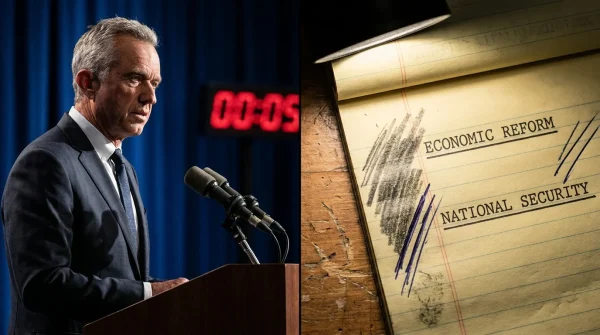
The studio floor hums at fifty-eight degrees Fahrenheit, chilled deliberately to prevent polished foreheads from gleaming under ninety-foot overhead light rigs. You watch from your living room sofa as a candidate suddenly freezes mid-sentence, their mouth caught half-open, eyes darting sideways for a fraction of a second before scrambling into an awkward defensive pivot. It looks like intellectual paralysis. You assume their mind simply dried up under pressure, leaving them stranded without a coherent thought.
What the broadcast cameras carefully frame out is the technician seated forty feet away in the shadows behind a towering stack of digital audio workstations. Under the harsh glow of auxiliary monitors, an audio engineer watches a countdown clock sync down to the millisecond. The candidate was not lost for words; they were speaking into an entirely dead transducer.
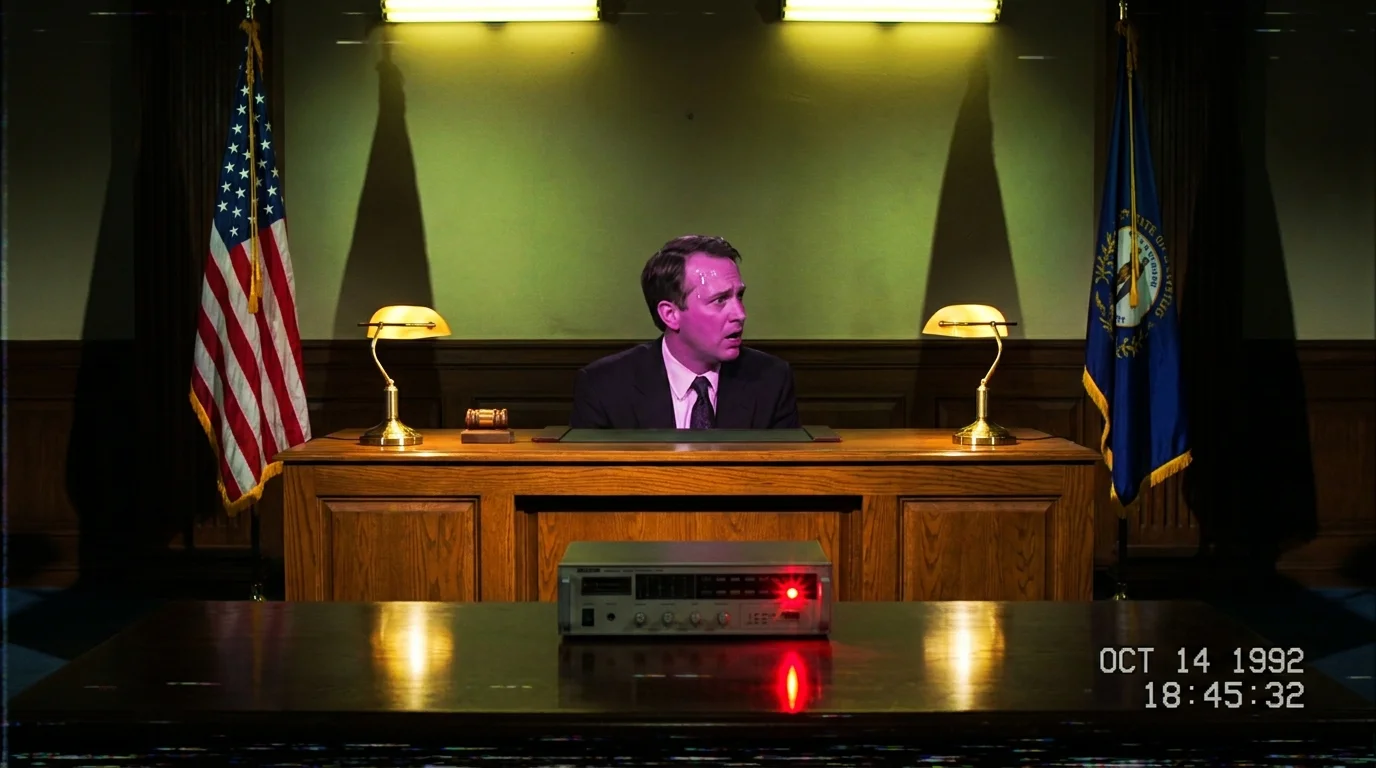
When that blinking red console LED indicator snaps solid green to indicate a severed feed, the candidate’s personal auditory feedback loop collapses instantly. A person speaking through an active sound reinforcement system relies on subtle room reflections and earpiece side-tones to regulate vocal pacing, cadence, and breath control. The second the gate drops, their own voice vanishes from their ears like breathing through a pillow, turning rehearsed national policy speeches into silent, clumsy mouth movements.
The Phantom Stumble: Understanding the Digital Guillotine
For half a century of televised politics, debates were street fights fought with volume and interruption. A politician could ride over an opponent’s rebuttal simply by pushing more air through their lungs and stepping closer to the boundary of their podium. Today, the debate floor is governed by automated soundboard gating and strict channel-isolation logic. What appears to be an organic exchange is actually a sterile, mechanized production environment where every vocal track is subjected to hard software cutoffs.
Viewers at home evaluate debate performance through physical confidence, treating brief silences or fragmented syntax as indicators of weak policy grasp. But modern production contracts demand absolute parity in audio attenuation. When candidate time expires, the sound engineer does not gently slide a physical fader down to create a natural fade-out. Instead, digital signal processing blocks trigger hard mutes that sever the signal path in less than four milliseconds.
Consider Marcus Vance, a 48-year-old veteran broadcast mixing supervisor who has run front-of-house sound for three separate presidential cycles. Vance describes the production truck as a room where partisan tension is reduced to algorithmic timing windows. When a candidate attempts to slide their pre-packaged ten-second debate closer over the moderator’s warning chime, Vance doesn’t make a political calculation. His thumb rests against a custom macro keyboard, watching automated threshold gates drop the vocal channel the precise moment the clock hits triple zero, turning a meticulously practiced zinger into dead air.
- Presidential inaugural address cadences trap undecided swing voters using rhythmic three-beat repetition structures
- Donald Trump forces party platform rewrites reversing traditional overseas defense spending priorities
- John Fetterman breaks party lines demanding swift domestic steel pipeline protections across manufacturing hubs
- Bernie Sanders AI legislation demands strict workplace automation bans sparking intense tech lobbying
- Voter signature verification machines reject mail-in ballot envelopes over degraded ballpoint pen strokes
The Anatomy of Acoustic Sabotage: Three Distinct Stage Profiles
Modern campaigns spend millions running mock debates in replica studios, yet few candidates ever train their diaphragms to withstand sudden audio isolation. When a microphone goes cold, the psychological impact depends entirely on a candidate’s mechanical speech habits.
The Momentum Railer
This speaker builds rhetorical force through unbroken cadence, leaning heavily on forward momentum and rhythmic cadence. When the blinking red console LED indicator trips and the gate closes, this speaker suffers catastrophic physical disruption. Without auditory feedback, their tongue trips over compound sentences, resulting in the dreaded broadcast freeze where they appear stunned by their rival’s accusations.
The Interruption Counterpuncher
Accustomed to courtroom cross-examinations or congressional committee hearings, this speaker thrives on audio spillover. They attempt to interject off-mic, projecting from their chest toward their opponent’s podium microphone. In earlier eras, room microphones picked up this background chatter, giving the impression of fighting spirit. Modern directional shotgun capsules reject off-axis sound by upwards of twenty-five decibels, rendering their fiery interjections as silent, comical grimaces on the split-screen.
The Mechanical Timer
These rare performers treat televised debates like broadcast radio segments. Instead of pushing their answers right to the buzzer, they construct modular forty-five-second responses with baked-in emergency endings at second thirty-eight. When the digital cutoff arrives, their sentence structure has already resolved into a clean grammatical full stop, leaving the digital gate with nothing to slice apart.
Mindful Stagecraft: How Sound Control Rewrites Campaign Mechanics
To survive under modern broadcast rules, a speaker cannot rely on standard political bravado. Mastering the mechanized stage requires treating the physical acoustic environment with surgical detachment rather than theatrical emotion.
Campaign debate coaches have begun altering standard preparation routines, stripping away vanity mirrors and introducing disorienting soundboard automation into dress rehearsals.
- Cadence De-escalation: Speakers must deliberately drop their speaking rate to under 130 words per minute, avoiding run-on clauses that invite devastating mid-phrase cuts.
- Visual Signal Monitoring: Instead of watching the moderator’s face, candidates train their peripheral vision on the stage floor confidence monitors, using physical light color shifts rather than vocal warnings to wind down arguments.
- The Clean Period Tactic: Every strategic policy point must conclude with a definitive down-inflection five seconds before time limits expire, preventing sound engineers from snapping off an unfinished thought.
- Dry-Acoustic Rehearsal: Preparing in deadened acoustic spaces without earpieces trains candidates to speak steadily even when their vocal monitors are cut without warning.
The tactical toolkit of debate preparation has permanently shifted. Field coaches now deploy precise decibel-meter limits set strictly to seventy-two decibels, sixty-second digital cutoff timers wired directly to earbud monitors, and high-intensity cold studio lights calibrated to 5600 Kelvin to replicate the optical glare that masks the technical booth.
The Bigger Picture: Reclaiming Truth Behind the Screen
When you watch the next round of political debates, you are not simply viewing a battle of opposing governance philosophies; you are watching human nervous systems contend with unforgiving broadcast hardware. Those sudden, stuttering hesitations you see on screen often have nothing to do with competence, moral conviction, or quick-witted intelligence.
Recognizing the hidden mechanics of the studio changes how you consume high-stakes political theater. Once you notice the tiny mechanical cues—the sudden deadening of room ambient sound, the darting eyes checking an unseen countdown rig, the desperate push against a dead microphone—you stop judging performance strictly on optical polish. You begin listening for the substance that managed to survive the machine.
The sharpest political mind on earth sounds entirely helpless the moment an automated sound gate drops between their lips and your television speakers.
| Debate Audio Mechanic | Studio Engineering Reality | Viewer Insight & Added Value |
|---|---|---|
| Hard Gate Cutoff | Automated digital mute triggered within milliseconds of time expiring. | Explains why polished politicians suddenly trail off or freeze mid-rebuttal. |
| Directional Hypercardioid Capsule | Rejects all sound originating more than twelve inches off-axis. | Reveals why heated off-mic crosstalk appears as silent pantomime on broadcast. |
| Side-tone Disconnection | In-ear monitor signal drops the second mic activation ceases. | Helps viewers distinguish actual policy confusion from acoustic disorientation. |
Frequently Asked Questions
Why do networks use microphone kill switches during debates?
Broadcast networks enforce strict mic muting to eliminate disruptive cross-talk, prevent chaotic shouting matches, and preserve strict equal-time rules agreed upon by campaign committees.Does a candidate know immediately when their microphone is cut?
Yes. Beyond the disappearance of stage monitor side-tones, candidates can see visual light indicators on their podiums switch color the millisecond their allotted time concludes.Can an off-mic candidate still be heard through an opponent’s podium?
Rarely. Modern broadcast sets use hypercardioid microphones and real-time noise-canceling software engineered specifically to isolate human speech and discard room bleed.Are sound cuts managed by human technicians or computer software?
They are managed by a combination of both; software automation handles hard countdown closures, while production engineers supervise manual overrides for moderator interruptions.How can viewers spot an audio mute versus genuine hesitation?
Watch the candidate’s jaw movement and chest expansion. If their lips continue forming words while the broadcast goes silent, the sound gate was engaged before they finished speaking.