The kitchen table holds a pool of dim yellow light while you smooth out the return envelope. You pull a standard black stick pen from the drawer, uncapping it against the paper’s tooth. As your wrist sweeps across the affirmation box, the ballpoint stutters over the coarse, recycled Manila grain, leaving a faint skipping trail along the initial capital letter. You press down harder on the second stroke, forcing wet paste into the fibers, watching the line feather slightly at the edges.
You lick the flap, seal the seam, and drop it into the blue curbside mailbox the next morning, confident that your civic duty is finished. Most voters assume that once an envelope enters the postal stream, its path to the ballot tally is guaranteed. You imagine a pair of human eyes glancing warmly at your cursive before slipping the privacy sleeve free.
The physical reality inside an election processing warehouse looks nothing like that quiet kitchen table. In those cavernous, climate-controlled rooms, high-speed sorting machines feed thousands of envelopes per minute under blinding optical scanners. High-resolution cameras capture your signature at 300 dots per inch, converting your handwritten name into a mathematical constellation of pixel coordinates, stroke widths, and vector paths. A split-second algorithmic miscalculation can instantly derail your vote before a human worker ever touches the envelope.
When an automated scanner flags your envelope, it does not do so out of suspicion of malice or organized fraud. It does so because mechanical sensors cannot tell the difference between an imposter’s forgery and an ordinary ballpoint pen starving for ink on low-grade paper pulp.
The Ghost in the Optical Scanner
Voter signature verification machines rely on biometric algorithms originally engineered for bank check processing and postal routing. These systems do not read your name like a person reading a letter; they dissect your signature like a seismic wave. The software maps your stroke sequence into a grid of binary nodes, measuring line thickness, entry angles, and curvature velocity against the baseline file stored in your state registration profile.
That baseline file, however, is rarely pristine. In most states, your official comparator signature is a low-resolution digital capture pulled from a Department of Motor Vehicles touchscreen terminal. When you signed that DMV stylus pad years ago, your hand slid across slick glass with zero friction, flattening your natural loops and truncating your tails. Comparing slick glass to rough paper creates an instant mathematical conflict inside the verification software.
- Voter turnout micro-targeting models force precinct door knockers onto very specific gravel driveways
- Suffragette picketing parade banners sparked modern street demonstrations using high contrast purple silk
- Highway trust fund gas taxes trigger hidden state fuel surcharges on weekly paychecks
- Precinct redistricting GIS software splits historic neighborhood school seats across arbitrary boundaries
- Municipal historic commission codes strip homeowner renovation rights behind closed advisory panels
Elena Vance, a 54-year-old county election administrator in western Pennsylvania, watches this mechanical clash unfold every November. Standing beside an optical sorting conveyor that processes 18,000 envelopes an hour, Vance routinely watches machines reject envelopes from voters who simply chose the wrong writing instrument. The automated verification engine flags any signature where the algorithmic confidence score falls below 82 percent, or where line variance drifts past an 18 percent pixel threshold. When a dry ballpoint skips over recycled paper fibers, the scanner registers empty space as an aborted stroke, dropping the match score into the danger zone.
How Ink Chemistry Confuses the Algorithm
Your handwriting is not a static stamp; it is a physical interaction between liquid, metal, and cellulose. When you sign a mail-in envelope, microscopic dynamics dictate whether an automated camera sees an authentic citizen or an unverified anomaly.
The Dry Ballpoint Void: Traditional oil-based ballpoint pens require significant downward pressure to rotate the tungsten carbide sphere inside the brass socket. If the envelope rests on an uneven surface or a porous placemat, the ballpoint skips across microscopic ridges in recycled envelopes. The scanner interprets these tiny, millimeter-wide gaps as distinct pen lifts—a classic biometric marker of an amateur tracing someone else’s name.
The Gel Bleed Expansion: Liquid gel pens deliver dense, dark pigmentation that feels satisfying on the hand. However, untreated envelope stocks absorb liquid ink rapidly through capillary action. As the ink feathers into the paper grain, the stroke widens by up to forty percent. Algorithms reject bloated line weights because the pixel density suggests an entirely different pressure profile than the thin stylus stroke on file.
The Surface Texture Trap: Recycled Manila envelope stock contains irregular woody fibers and uneven binder resins. When you drag a pen across this uneven terrain, your natural speed falters microsecond by microsecond. These subconscious micro-hesitations register on high-density machine cameras as tremors—triggering automated security flags designed to catch hesitant counterfeiters.
Guarding Your Mark: The Mechanical Protocol
You do not need to alter how you sign your name to protect your ballot. You only need to control the physical conditions under which your ink meets the paper. By treating the signature box like an optical document rather than a casual receipt, you eliminate the mechanical noise that confuses processing scanners.
Take two quiet minutes at a firm desk to execute your envelope signature deliberately. Treating your pen strokes mechanically ensures the optical sensors receive clean, uninterrupted vector data that mirrors your state baseline.
- Anchor your surface: Never sign an envelope against your knee, a soft sofa arm, or a padded tablecloth. Place the envelope on a hard, flat surface with a single sheet of clean copy paper underneath to absorb minor inconsistencies without allowing the pen tip to puncture the envelope fibers.
- Select a hybrid rollerball: Use a fine-point (0.5mm to 0.7mm) rollerball or pigmented hybrid pen rather than a cheap giveaway stick ballpoint. Rollerballs deposit consistent fluid lines without requiring heavy muscle pressure, preventing microscopic skips across recycled pulp.
- Match your historic registration medium: If you registered to vote at the DMV on an electronic screen, sign with a steady, continuous movement rather than an overly ornate flourish. Keep your baseline speed consistent from the initial loop to the final cross.
- Allow two minutes of drying time: Mail-in ballot envelopes pass through sorting belts at rates exceeding twenty feet per second. Wet ink that rubs against adjacent envelopes during transit creates peripheral smudges that fool scanner boundary boxes into registering extraneous strokes.
- Track your ballot curing window: Familiarize yourself with your state’s statutory cure deadline. If an automated system does flag your envelope, election offices are legally required to notify you via mail, email, or phone to sign an affidavit before the count concludes.
The Dignity of an Imperfect Line
We often think of democratic participation as an ideological act, a grand calculation of values, policies, and collective futures. Yet at its most vulnerable threshold, your vote is tethered to raw materials: a brass ball rolling across recycled wood fibers under a neon warehouse lamp. When an administrative system relies on rigid algorithmic models, an ordinary physical glitch can silence a valid voice.
Understanding this mechanical handoff restores agency to your kitchen table. When you choose the right pen and steady your hand on a flat surface, you are doing more than simply following instructions. You are consciously translating your voice into a clean, unassailable physical signal—ensuring your intent travels from your front door to the ballot box without being swallowed by the machine.
The line you draw across an envelope is an artifact of your personal identity, and no optical sensor should discard it over a missing droplet of ink.
| Verification Variable | Mechanical Root Cause | Added Value for the Reader |
|---|---|---|
| Stroke Skipping | Oil paste starving at the ball socket over rough pulp | Prevents false ‘pen-lift’ flags by using smooth hybrid rollerball ink |
| Edge Feathering | Liquid ink bleeding across untreated recycled fibers | Maintains original stroke width to stay within the 18% variance limit |
| Tremor Distortion | Pen tip snagging on coarse paper inconsistencies | Eliminates artificial hesitation markers by signing on a smooth, hard backing |
| Smudge Artifacts | Wet envelopes compressed against warehouse transport belts | Prevents automated optical boundary errors by ensuring ink cures before mailing |
Frequently Asked Questions
Can election workers immediately throw away my ballot if the machine rejects my signature?
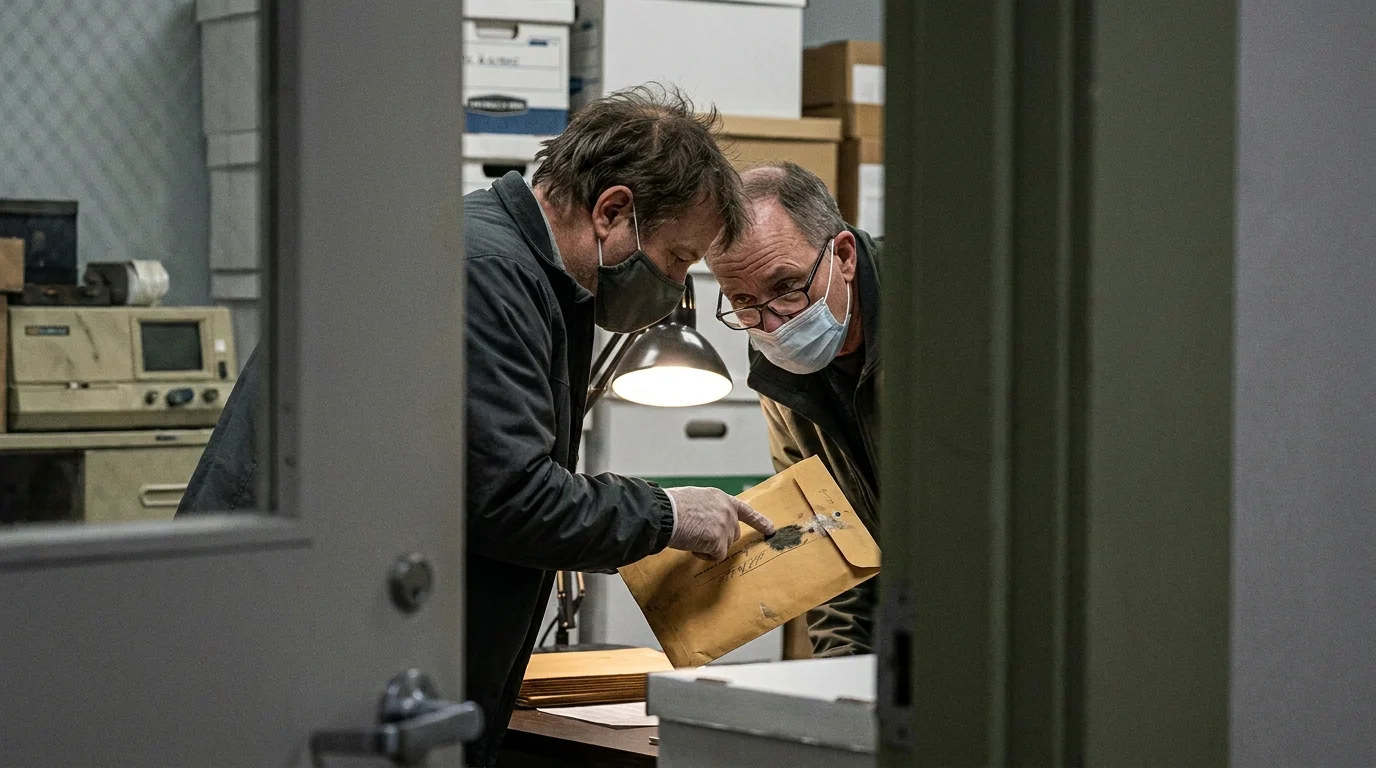
No. Federal and state election procedures require that flagged envelopes transition to human review. Bipartisan teams of election workers manually inspect the physical envelope alongside multiple historical registration records before any ballot moves to a challenged or cured status.What is the typical algorithmic match threshold for mail-in envelopes?
Most optical envelope processing platforms trigger an automated secondary review when the algorithmic confidence score falls below 80 to 85 percent, or when total stroke vector variance exceeds approximately 18 percent compared to the DMV reference file.Should I sign my ballot envelope with blue or black ink?
Black ink is consistently preferred by optical processing machinery. While blue ink helps human inspectors distinguish an original signature from a photocopy, high-speed greyscale infrared cameras read high-contrast black carbon pigmentation with significantly fewer digital vector errors.What happens if my handwriting has changed due to medical conditions or aging?
If age, tremor, or physical injury has altered your signature, update your voter registration profile directly with your county clerk before election season. This introduces fresh baseline signatures into the state database, updating the algorithm’s comparative parameters.How do I resolve a flagged signature before the official deadline?
If your signature is flagged, your local election office will issue a cure notice. You can verify your identity by returning a signed cure affidavit along with an approved photo ID copy through an online state portal, by mail, or in person at your county board of elections.