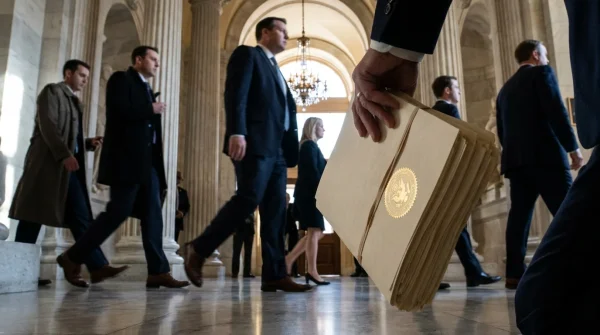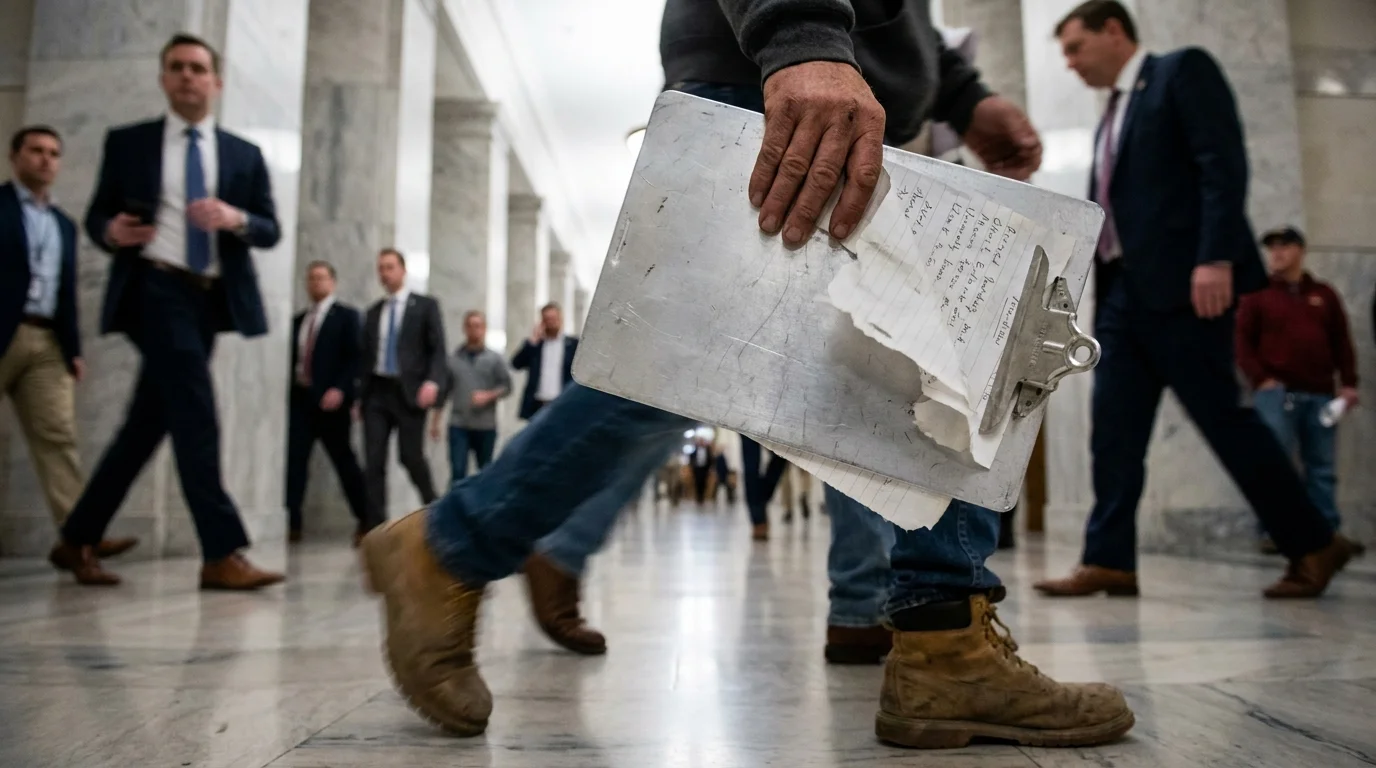
A dented aluminum clipboard scrapes against the Formica counter of a county annex office, its metal clamp biting down hard into a pad of dog-eared sign-up sheets. Outside, damp morning air clings to the plate-glass doors as a dozen neighbors stand shoulder-to-shoulder, coats unzipped, breath fogging the glass. Inside the legislative district office, the quiet hum of a humming fluorescent ballast competes with the rhythmic tap-tap-tap of a junior staffer typing up another polite brush-off email. You can smell stale drip coffee, damp wool coats, and the faint, sweet tang of printer toner warming up behind the partition.
Standard political advice tells you to flood an inbox, sign an online form, or chant slogans outside the statehouse steps until someone notices. We are taught that influence belongs exclusively to well-heeled lobbyists who glide through marble corridors in bespoke suits, carrying leather binders stuffed with polling cross-tabs. Yet when you walk into a representative’s satellite office holding nothing more than an online petition link, the front-desk aide smiles, nods, and quietly drags your digital signature directly into a generic spam folder.
Real leverage does not arrive in a slick digital packet; it arrives in ink, smudge, and relentless chronology. When neighbors begin compiling raw municipal receipts on cold metal boards, the entire dynamic in the state capital fractures. The staffer behind that desk is not terrified of your anger, but they are terrified of your ledger. That battered aluminum clipboard, covered in dates, agency reference numbers, and timestamps, is the quietest weapon in American civic life.
The Anatomy of the Paper Ledger
For decades, political insiders pushed the notion that volume alone commands respect in committee rooms. We were encouraged to click a button, generate a pre-written form letter, and imagine a senator agonizing over the resulting tally. But inside district offices, digital petitions register as background static—a low, harmless hum that legislative directors ignore while sipping cold sparkling water. Physical casework logs reverse that power dynamic by turning administrative neglect into personal legislative liability.
Think of constituent service like the brake lines in a truck: when they snap, the vehicle does not merely drift—it crashes through the guardrail. Casework is the single metric a district director cannot spin to their political donors. When a state representative votes in committee to slash an agency budget or rubber-stamp an executive appointment, they rely on plausible deniability. They claim the agency runs smoothly because their intake portal reports zero open grievances. A physical tracking logbook strips away that insulation, exposing the rot in broad daylight.
The Quiet Mutiny in District Twelve
Consider Marcus Vance, a 52-year-old water treatment operator from eastern Ohio who spent eighteen months watching his neighbors wait on delayed clean-water variance checks from the state environmental division. Rather than organizing a megaphone rally that local papers would ignore after twenty-four hours, Marcus picked up a nine-dollar aluminum clipboard at an army-navy surplus store and began visiting local diner booths at dawn. Within six weeks, he cataloged 142 distinct case numbers, each accompanied by the date of application, the name of the unreturned intake officer, and the exact dollar loss incurred by the household. When Marcus sat across from his representative’s chief of staff and laid down ninety-four pages of verified, dated administrative failure, the representative quietly walked back her sponsorship of the agency deregulation bill before the noon committee roll call.
- Universal school voucher accounts force suburban district cuts under dusty chalkboard classroom shortages
- Absentee ballot privacy sleeves block suburban mail-in tallies when sticky coffee rings smear envelopes
- Campaign yard sign cluster tallies switch suburban voting turnout predictions across soggy lawn turf
- 1976 Sunshine Act conference logs reveal backroom congressional bargaining over stained laminate hotel tables
- C-SPAN video archive timestamps expose doctored campaign soundbites through scratchy audio background hiss
Tactical Adjustments Across the Battleground
Not every community faces the same wall of bureaucratic silence, and how you deploy your tracking records must shift depending on your district’s specific fault lines.
For rural counties where district offices sit sixty miles away, your biggest hurdle is physical distance. Consolidate paper entries at municipal hubs like grain elevators, volunteer fire halls, or utility co-op meetings. Rural legislative directors frequently claim their constituents face no regional bottlenecks; presenting seventy-five handwritten service log entries from a single zip code dismantles that claim in minutes.
In dense suburban districts where satellite offices hide inside anonymous corporate office parks, staff members use security checkpoints to filter out walk-ins. Here, your ledger acts as an administrative subpoena. When delivering your logs, bypass the reception lobby by filing them directly through the official constituent casework liaison, requesting a physical time-stamp on your duplicate cover sheet.
For urban precincts facing aggressive redistricting, legislative offices often dismiss complaints by claiming an issue belongs to an adjacent ward. Map every case number directly to precinct voter rolls before setting foot in the building. When staff realize your dog-eared clipboard contains names of habitual primary voters who live three blocks away, the dismissive posture evaporates instantly.
Mindful Application: Building the Unshakeable Ledger
Transforming personal frustration into legislative leverage requires precision rather than volume. You are not writing an emotional manifesto; you are assembling a courtroom-grade administrative audit.
Begin by securing a heavy-duty aluminum storage clipboard with an interior compartment. Keep your blank intake forms protected inside, shielded from coffee spills and rain, while maintaining your active signature sheet clamped tightly to the face.
- Record the citizen’s full legal name, voting address, and primary contact phone number across the first three columns.
- Capture the exact state or municipal agency involved, including the original filing date and any system confirmation codes.
- Document every single point of contact: the names of desk clerks spoken with, dates of unreturned calls, and copies of form denial letters.
- Calculate the exact household cost caused by the delay, whether lost wages, utility late fees, or out-of-pocket medical bills.
- Require each constituent to initial a verification statement granting the legislative office permission to open a formal inquiry on their behalf.
Once you gather twenty-five verified records, do not mail them. Walk into the district office unannounced on a Tuesday morning at 10:15 AM—just after morning staff meetings conclude, but well before the lunch lull. Hand the ledger to the casework director, open your calendar, and calmly schedule an in-person follow-up review for seven business days later.
The Bigger Picture: Reclaiming Local Sovereignty
When you hold a battered clipboard filled with the handwriting of your neighbors, you step out of the spectator stands and into the machinery of governance. Modern politics encourages you to feel small, noisy, and perpetually broke, tricking you into believing that change requires million-dollar super PAC buys or prime-time television blitzes. Yet the entire edifice of state and federal government rests on the fragile fiction that district staff manage local problems with quiet competence.
A ledger of unreturned calls and stalled applications breaks that illusion with surgical precision. It pulls governance away from cable news debates and roots it back into the cracked pavement of your hometown. You do not need an invitation to hold power accountable; you only need a reliable ballpoint pen, a sturdy piece of metal, and the discipline to write down what they hoped you would forget.
The fastest way to unseat an indifferent politician is not to shout at their podium, but to audit their desk.
| Key Point | Detail | Added Value for the Reader |
|---|---|---|
| Physical Casework Audits | Handwritten records of agency delays with verified case numbers | Bypasses spam filters and forces mandatory district staff tracking files |
| Constituent Dollar Harm | Itemized tally of financial losses caused by administrative backlogs | Creates undeniable economic evidence that committee members cannot brush aside |
| In-Person Filing Rhythm | Mid-morning Tuesday delivery with a scheduled seven-day review window | Removes staff plausible deniability and locks in accountability timelines |
Frequently Asked Questions
Why is a handwritten clipboard more effective than an online form?
Online petitions get batched and filtered by software before human eyes ever see them. A physical ledger delivered in person requires staffers to physically scan, log, and assign individual casework numbers under state records retention laws.What if the district office staff refuses to accept our tracking logs?
Politely request the name and employee title of the staff member declining the documents, then write their response directly onto the top sheet of the logbook while standing at the counter. The refusal itself becomes public record.How many documented cases do we need before requesting a committee vote walkback?
You do not need thousands of entries; between twenty-five and fifty verified, local district cases showing agency failure are usually enough to panic a legislative director ahead of a close committee vote.Does a constituent need to be a registered party member to be included?
No. In fact, compiling records from independent and opposition-party voters provides stronger proof that the issue cuts across the district’s entire electorate.Can staff claim privacy laws prevent them from reviewing shared logs?
Staff cannot hide behind privacy rules if your logbook includes an explicit constituent authorization clause permitting the office to access agency records on their behalf.