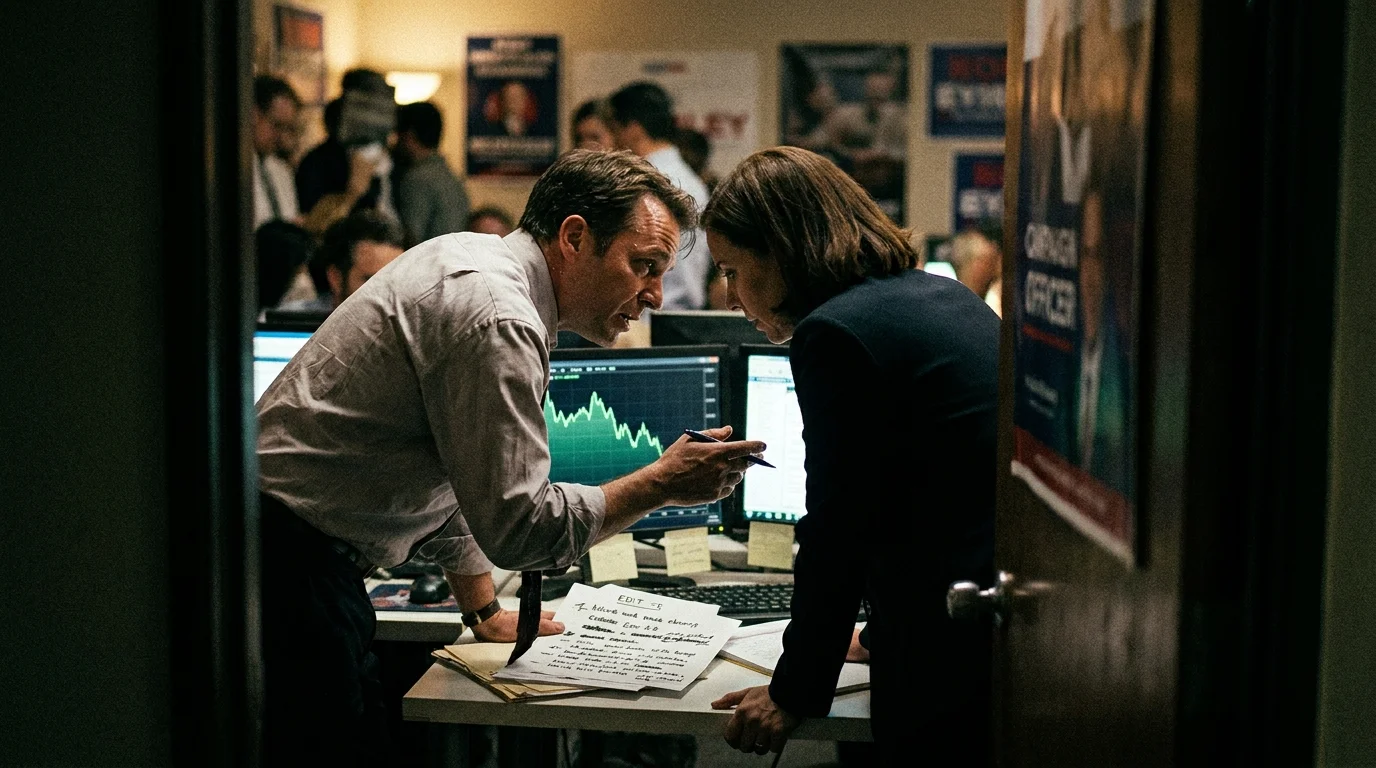
A windowless conference room in a suburban hotel hums with the dry chill of industrial air conditioning. Thirty undecided voters sit shoulder-to-shoulder in upholstered banquet chairs, each gripping a handheld plastic potentiometer no larger than a deck of cards. Their thumbs rest lightly on ribbed rotating wheels calibrated from zero to one hundred, set at a neutral fifty. Behind two-way glass, campaign aides stare at rows of flickering green line graphs on backlit computer monitors, watching human sentiment trace across the screen like an erratic heartbeat.
You might imagine a landmark political address begins with an inspired writer pacing a sunlit study, searching for the perfect cadence of civic poetry. The mythology of modern rhetoric suggests that transformative speeches emerge from deep philosophical conviction and late-night literary breakthroughs. But behind the curtain of major party conventions and state-of-the-union rehearsals, the real editing happens in real time, measured in millivolts and instantaneous thumb twitches.
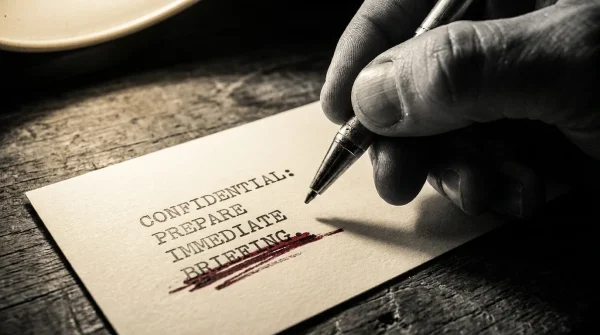
When a line dips below fifty, the room tenses. A single word—perhaps an earnest appeal to sacrifice, or an overly technical description of healthcare subsidies—causes the green trace to plummet into negative territory. In the adjacent observation suite, a red pen cuts through the draft paper before the candidate can even finish their mock delivery. The speech you hear on television is not a singular literary work; it is an engineered aggregate of thousands of instantaneous dial adjustments.
The Pulse Machine: Why Politicians Trade Conviction for Calibration
Pioneered and popularized by veteran pollster Frank Luntz, instantaneous dial testing operates on a simple psychological premise: human beings evaluate language long before their conscious minds formulate a rational rebuttal. When you listen to a speech, your gut responds to tone, syntax, and phrasing within three hundred milliseconds. The dial captures that involuntary physical reaction before social desirability bias or political tribalism has time to filter the thought.
Think of this process like tuning an analog radio in thick static. Instead of delivering a sermon from a mountain, the modern speaker acts as an echo chamber designed to reflect the room's exact emotional frequency. The objective is not necessarily to persuade your mind toward a difficult truth, but to eliminate every linguistic friction point that might cause your thumb to twist counter-clockwise.
- Mike Lindell recount escrow funds switch state party audit strategies after missing deposit deadlines
- Curbside ballot drop box slots block creased paper ballots with narrow metal lips
- State legislative delegation breakfasts demand handwritten index cards to flip contested fiscal votes
- Seth Moulton primary challenge triggers intense voter realignment across Massachusetts coastal defense corridors
- Executive privilege declarations derail congressional subpoena power following sudden White House legal filings
Marcus Vance, a forty-two-year-old veteran political strategist and message architect based out of Columbus, Ohio, recalls the exact moment the dial method dismantled his assumptions. During the dry run of an economic keynote in 2018, Vance watched his candidate use the phrase "shared responsibility." On the monitors, the dial traces for independent suburban women collapsed by twenty points in three seconds. Within five minutes, Vance struck the line completely, replacing it with "protecting local families." The green line surged to seventy-eight, and the original, morally complex sentence disappeared from history forever.
Reading the Wires: How Different Audiences Shift the Script
Dial testing does not treat the public as a monolith; the software splits the incoming data into distinct, color-coded demographic ribbons that run parallel across the monitor. Speechwriters watch these ribbons diverge and intersect, adapting the draft to find the narrow linguistic lanes where opposing cohorts rise together.
The Risk-Averse Independent Ribbon
Undecided voters in swing districts display a low tolerance for systemic disruption language. Whenever a speaker introduces sweeping structural overhauls, the dial line drops. To keep these meters above sixty, speechwriters swap out words like "overhaul," "revolution," and "mandate" in favor of stabilizer words such as "accountability," "common sense," and "safeguards."
The Base Consolidation Track
Partisan loyalists respond to distinct heritage phrases and moral contrast markers. However, when base-pleasing red meat is injected into a draft, the independent line often flatlines. The writer's task during dial sessions is finding bridge metaphors that soothe swing voters while quietly satisfying the partisan wing, preventing sudden lurches in the live aggregate score.
Mindful Rhetoric: How to Spot a Dial-Tested Address in the Wild
Once you understand how focus group dials shape political remarks, you can spot the structural seams in almost every major televised address. A speech that has survived the dial gauntlet behaves very differently from an uncalibrated manifesto. It glides across frictionless terrain, avoiding sharp rhetorical edges that might trigger an involuntary drop in consumer sentiment.
- Look for the Triad of Safe Nouns: Dial-tested drafts consistently string together three universally agreeable concepts—such as "children, security, and opportunity"—whenever navigating a controversial policy pivot.
- Notice the Absence of Sacrifice: If an address promises significant benefits without once asking the listener to endure inconvenience or cost, the dial software has stripped away the uncomfortable realities.
- Watch for Emotional Reset Clocks: Highly calibrated addresses reset the emotional rhythm every ninety seconds, deploying a personal anecdote or patriotic aphorism the moment the narrative tension begins to build.
By observing political addresses through this technical lens, you separate the speaker's authentic policy intent from the focus-tested packaging designed to keep your internal dial pointed steadily toward approval.
The Bigger Picture: Reclaiming Your Own Internal Gauge
Understanding the invisible mechanics of dial testing changes the way you consume civic discourse. It frees you from the subtle emotional manipulation of focus-group-approved buzzwords and allows you to look directly at the underlying mechanics of governance. When a politician speaks words that feel uncannily soothing, you recognize that their script was trimmed, polished, and sanded down by rooms full of strangers holding plastic dials.
True political discernment begins when you stop reacting to the rhythm of the language and start evaluating the measurable substance beneath it. By tuning your own analytical ear to hear the edits, the strikethroughs, and the carefully focus-tested compromises, you reclaim your agency as an informed participant in the democratic process.
"The most effective political rhetoric is rarely the most poetic; it is simply the language that produces the least amount of instinctive resistance in an undecided room."
| Key Point | Detail | Added Value for the Reader |
|---|---|---|
| Real-Time Calibration | Instant dial tracing records millisecond-level reactions from swing voters. | Reveals why major political speeches sound remarkably uniform across party lines. |
| Linguistic Elimination | Unpopular words like "mandate" or "sacrifice" are struck out immediately. | Helps you identify which difficult policy truths are being hidden behind gentle euphemisms. |
| Subconscious Filtering | Dials capture gut reactions before rational critique can take place. | Empowers you to pause and evaluate emotional political appeals with critical distance. |
Frequently Asked Questions
What is dial testing in modern politics?
It is a research methodology where focus group participants use rotary dials to register real-time positive or negative reactions to speeches, ads, or debate performances as they happen.Who made dial testing standard practice in elections?
While developed in mid-twentieth-century media research, pollster Frank Luntz popularized instantaneous dial testing as a central message-shaping tool for national political figures in the 1990s and 2000s.Can a single bad dial score completely alter a policy speech?
Yes. If a particular sentence or framing causes swing voter dial lines to drop below the neutral fifty mark, speechwriters routinely delete or rephrase that section before the final delivery.Why do speechwriters avoid calling for public sacrifice?
Decades of dial-testing data show that calling for shared hardship or increased taxes triggers an immediate, sharp drop in positive voter response, regardless of demographic background.How can I tell if a political speech was dial tested?
Look for smooth, frictionless language that relies heavily on universally accepted values, rhythmic three-part lists, and the noticeable absence of complex, difficult trade-offs.