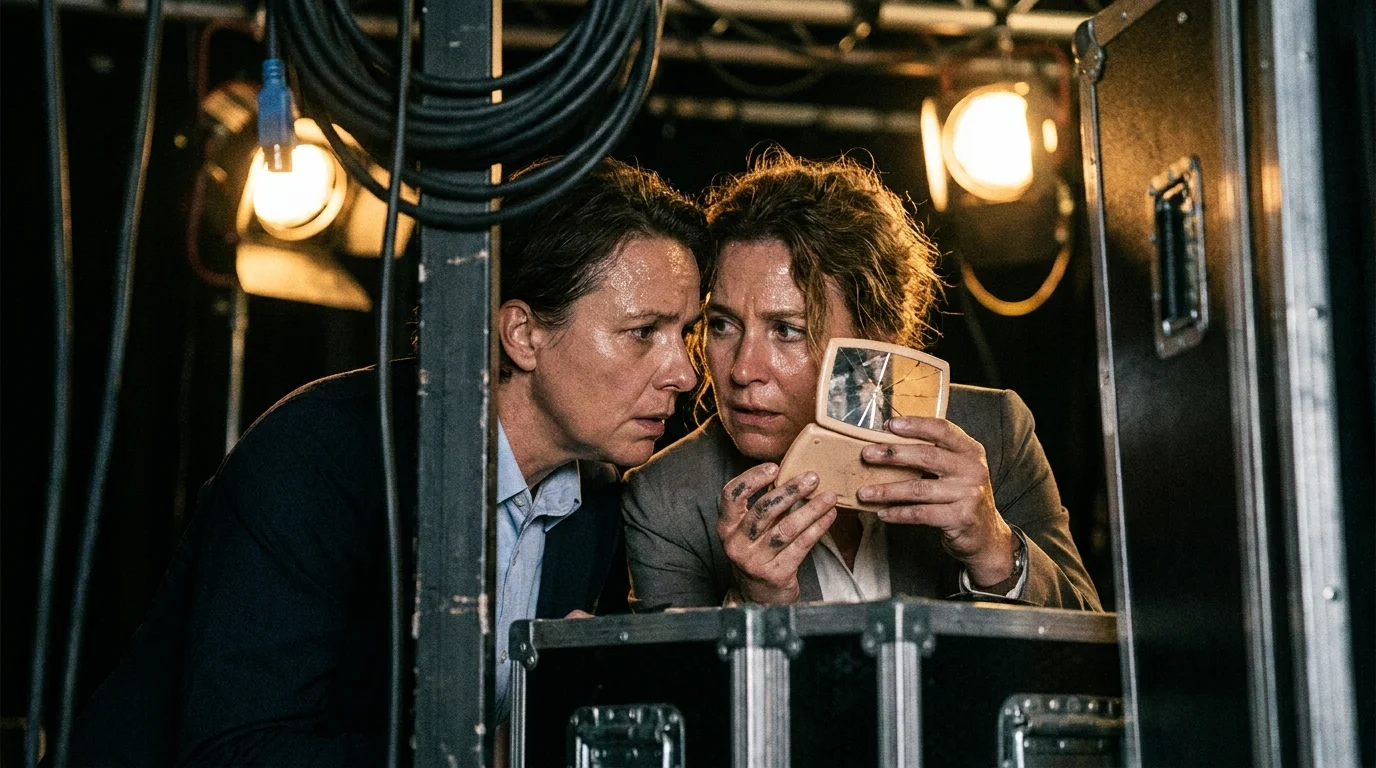
A cramped backstage dressing room at WBBM-TV in Chicago sits dead quiet minutes before airtime. On a chipped laminate counter rests a cracked compact mirror caked in powdery beige foundation, surrounded by a scatter of coarse foam sponges. The room smells of stale coffee, ozone, and dry theatrical chalk.
Overhead, banks of five-thousand-watt incandescent studio bulbs hum with low electric menace, radiating enough raw heat to push the studio floor past ninety degrees within minutes. You might expect a presidential race to pivot on international treaties or fiscal doctrine, but inside this glass-and-steel kiln, physical comfort collapses into a battle against lighting physics.
When Richard Nixon stepped before sixty-five million American viewers on September 26, 1960, his encyclopedic mastery of foreign policy was instantly eclipsed by a fundamental failure of sweat management. His campaign staff had applied ‘Lazy Shave’—a drugstore pancake powder designed to mask heavy stubble—rather than allowing network makeup technicians to balance his skin tones for monochromatic television tubes.
Under the searing intensity of unshielded studio lamps, that makeshift coating liquified. It pooled in the hollows of his cheeks, leaving streaks of chalky gray grease that transformed every sharp intellectual counterpoint into an image of autonomic distress.
The Thermal Trap of Modern Broadcast Optics
Televised debate studios are not neutral arenas for civic discourse; they are high-thermal pressure chambers calibrated to expose human vulnerability. For decades, viewers believed the myth that debate mastery came down to rhetorical speed, but seasoned political operatives understand that visual stability is your primary defensive shield.
Think of broadcast television as an optical furnace. If you treat lighting as mere illumination rather than an active environmental factor, the camera will ruthlessly magnify your body’s natural cooling response. Nixon’s team saw makeup as an unmanly cosmetic indulgence, missing the reality that broadcast powder is simply non-reflective engineering designed to stop glare from reading as guilt.
- Ed Markey debate clashes expose bitter Democratic splits over clean energy infrastructure
- Manchester Union Leader front pages derail primary campaigns across icy snowbank doorsteps
- Crowdpac digital donor prompts strip working balances with blinking green recurring buttons
- Oval Office signing pens switch binding administrative policy with heavy black ink strokes
- Ways and Means markup drafts demand handwritten blue ink strikes across crowded margins
Don Hewitt, the thirty-seven-year-old CBS executive producer overseeing that historic broadcast, famously offered both candidates professional studio makeup. John F. Kennedy, already bronzed from weeks of open-air campaigning, politely declined before allowing his own aides to apply a light dusting to kill skin shine; Nixon followed suit out of pride, attempting to conceal a recurring five o’clock shadow with a heavy, oil-based drugstore paste that suffocated his pores.
Within twelve minutes of continuous broadcast, the heat from overhead lighting grids turned Nixon’s face into a reflective surface. Radio listeners scored the debate a clear victory for Nixon on substantive policy points, while television audiences overwhelmingly handed the win to Kennedy, forever tethering political credibility to the mechanics of cosmetic glare control.
The Three Layers of Stage Glare Defense
Modern studio setups no longer use blistering incandescent scoops, but modern 4K high-definition digital sensors introduce an even harsher scrutiny. Surviving the visual crucible requires a layered strategy that controls light, temperature, and skin moisture simultaneously.
1. The Base Evaporation Layer
Perspiration is the enemy of visual authority. When sweat rises to the surface, it reflects studio backlights into the camera aperture, blowing out skin tones and creating the illusion of feverish anxiety. Modern stage professionals use silicone-based matte primers that act as a moisture barrier, allowing skin to breathe without letting oils break through foundation layers.
2. The Chromatic Contrast Layer
Nixon wore a pale gray suit that vanished into the light-gray studio backdrop, forcing broadcast cameras to compensate by adjusting iris settings, which inadvertently highlighted his pale skin and dark beard shadow. Kennedy selected a rich navy wool suit that created crisp edge definition, commanding the foreground and stabilizing the camera’s light metering.
3. The Absorbent Finish Layer
Using dense cosmetic sponges rather than brushes prevents powder from clinging unevenly to facial hair. Pressing a micronized, translucent silica powder into the T-zone locks down skin texture, turning sharp directional light into soft, diffuse illumination that holds up over ninety minutes of scrutiny.
Mindful Physical Control Under Broadcast Spotlight
Commanding a stage requires you to manage your involuntary reflexes while high-intensity lighting tests your endurance. When the room warms up, your heart rate naturally rises, triggering micro-expressions that look like evasiveness on screen.
- Hydrate with room-temperature water: Ice water constricts vocal cords and triggers sudden rebound flushing in facial capillaries when you speak under hot lights.
- Anchor your posture against lens drift: Plant both feet flat to stabilize your core, eliminating the subtle weight shifting that reads as agitation on tight camera cuts.
- Breathe below the collarbone: Shallow chest breathing pushes warmth straight into your neck and cheeks; deep diaphragmatic breathing keeps your skin cool and steady.
- Dab, never wipe: If you must manage brow moisture during commercial breaks, press a dry lint-free sponge straight down to lift oil without smearing your base layer.
The Tactical Stage Toolkit: Maintain studio temperatures at 64°F prior to taping, utilize 3200K warm LED panels diffused through silk, select a minimum fabric weight of 120s wool in charcoal or midnight blue, and deploy high-density teardrop sponges paired with oil-free silica blotting cakes.
The Real Measure of Presence
Visual mastery is not about vanity; it is about eliminating physical distractions so your message can actually be heard. When an audience watches a leader, their primitive instincts scan for physical composure before their analytical mind processes a single syllable of policy.
The lessons of that 1960 Chicago broadcast remain absolute. When you step into any high-stakes arena—whether a national debate stage, a boardroom presentation, or a digital broadcast—your environment will test your physical boundaries. Respecting the relationship between light, heat, and composure ensures that your ideas remain the center of gravity.
Visual credibility is not an accident of genetics; it is the deliberate discipline of mastering your environment before you speak a single word.
| Key Point | Detail | Added Value for the Reader |
|---|---|---|
| Thermal Impact | 5,000-watt bulbs generate extreme localized ambient heat. | Understanding heat management prevents visible physical strain. |
| Product Selection | Drugstore pastes trap sweat; silica primers diffuse light. | Choosing correct matte barriers stops camera glare completely. |
| Color Contrast | Wardrobe must contrast sharply with studio backdrops. | Proper suit color anchors your visual presence on camera. |
Frequently Asked Questions
Why did Nixon refuse professional network makeup?
Nixon declined because John F. Kennedy initially turned down the CBS staff makeup artist, prompting Nixon to match the refusal so he would not appear weak, unaware Kennedy had his own team apply subtle powder.What was Lazy Shave and why did it fail?
Lazy Shave was an over-the-counter tinted powder cream meant to cover heavy beard stubble. Under high studio heat, the oil-and-wax formula melted into perspiration rather than absorbing it.Did radio listeners really think Nixon won the debate?
Yes, multiple post-debate surveys showed that radio audiences believed Nixon won on policy points, while over seventy million television viewers gave the decisive edge to Kennedy due to visual presence.How do modern debate stages handle studio lighting heat?
Modern studios use cool LED soft panels rather than incandescent lighting and keep the debate halls chilled to near sixty degrees to prevent any candidate from sweating under pressure.How can public speakers manage sweat during presentations?
Use an oil-free matte primer on the forehead and nose, dress in breathable natural wools, drink room-temperature water, and practice deep diaphragmatic breathing to stabilize body temperature.