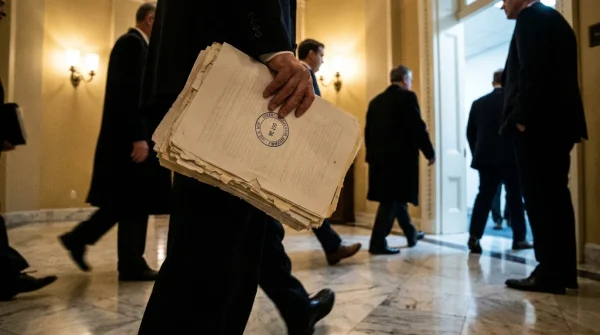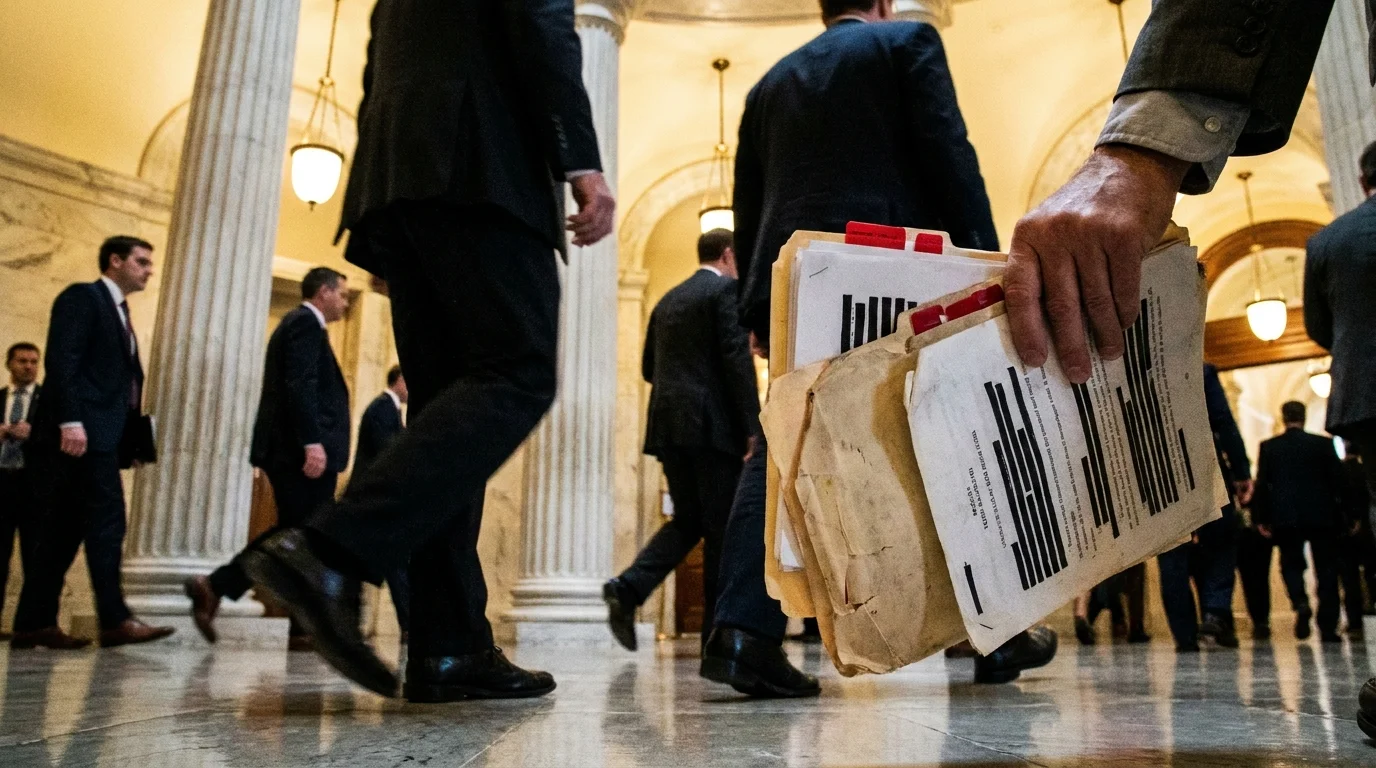
The halogen lights in the sub-basement corridors of the Rayburn House Office Building buzz with a faint, low-frequency hum just past four on a Friday afternoon. While the tourist galleries upstairs empty out and staff aides wheel rolling garment bags toward Union Station cabs, a different kind of commerce takes place behind unmarked committee doors. Thick stacks of red-tabbed manila folders sit on laminate conference tables, smelling faintly of heavy industrial toner and dried black correction marker where lines of sworn testimony used to run.
You might imagine a major political revelation arrives like a lightning strike—abrupt, uncontrolled, and deafening. In reality, the most damaging ethics transcripts never burst into the sunlight on a Tuesday morning when television producers are hunting for lead stories. They are quietly pushed out into an emptying room just as the national gaze turns toward three-day weekends, highway traffic, and back patio grills.
When an ethics binder surfaces at 4:45 PM before Labor Day or Memorial Day, you are not witnessing a sudden victory for transparency. You are watching a highly calibrated release valve, engineered to let just enough pressure escape into an empty newsroom so the boiler never actually bursts.
The Calendar Trap: Turning Document Chaos into Strategic Silence
Crisis communications on Capitol Hill rarely centers on proving total innocence. Instead, the real craft lies in managing the clock, treating public attention like a shallow reservoir that evaporates quickly in humid weather. The central trick relies on a simple rule: friction hides damning details better than any classified lockbox ever could.
- Mexican avocado import tariffs trigger sudden packing plant shutdowns across border warehouse corridors
- Raw milk interstate transport bills spark fierce statehouse clashes over pasteurization standards
- EPA lead pipe replacement mandates force local town budgets into massive property tax hikes
- AIPAC primary spending blitzes derail veteran House incumbents with rapid television ad buys
- EPA lead pipe replacement mandates force local town budgets into massive property tax hikes
When an investigation threatens a sitting lawmaker, their defense team does not fight to keep every binder secret forever. They negotiate the mechanics of disclosure. They trade volume for timing, agreeing to hand over hundreds of pages of unindexed deposition files right when network assignment desks are running on skeleton weekend crews. By the time Monday morning talk shows organize their rundowns, the revelation is already considered old news, replaced by the natural drift of the weekend cycle.
The Fifteen-Year Playbook from the Longworth Corridors
Marcus Vance, a 47-year-old independent crisis strategist who spent over a decade guiding representatives through ethics inquiries, describes the process with cold mechanics. He calls it controlled structural dampening. “If you drop a five-hundred-page binder on a Tuesday at nine in the morning, twelve hungry interns have parsed every footnote by lunch,” Marcus explains over lukewarm black coffee. “If you drop that identical binder as flattened, unsearchable image files at five o’clock before a holiday, you overwhelm the two junior reporters left covering the late shift.”
Marcus built his reputation by mapping out reporter transit schedules and production deadlines down to the minute. His entire strategy rests on understanding that when raw data outpaces a reporter’s clock, narrative control stays protected in the hands of the person being investigated.
The Four Moves of the Late-Friday Ethics Dump
The execution follows a strict operational rhythm. Once you understand the sequence, you can spot the pattern every single time a major ethics finding slides into your newsfeed:
- The 1:30 PM Background Whisper: Aides offer select fragments of favorable context to a few favored beat reporters on deep background, establishing an early, soft frame before the raw files arrive.
- The 3:45 PM Raw File Drop: Hundreds of pages land in the press gallery as image-only PDF scans without an index, forcing journalists to manually skim through dozens of red-tabbed transcripts under a ticking clock.
- The 5:10 PM Network Broadcast Lockout: Documents arrive right after national evening news packages are already edited, voiced, and locked in satellite queues, preventing prime-time broadcast coverage.
- The 6:30 PM Boilerplate Rebuttal: The target lawmaker issues a brief, dense written statement asserting full cooperation and closure just as editors log off and head for holiday transit.
By splitting the release across these specific intervals, operatives ensure that reporters chase technical red herrings during the few working hours remaining before the long weekend begins.
The Tactical Toolkit: How to Read a Dumped Document
When you encounter a sudden pre-holiday document release, your approach to reading it should bypass the spin entirely. You can cut through the fog by looking at the margins rather than the headlines.
- Examine Document Headers: Look for timestamps on email exhibits; the most critical concessions often appear in the late-night chains buried behind routine schedule logs.
- Check the Redaction Consistency: Notice where blackouts shift from full sentences to isolated phrases; these edge-points usually hide names of unindicted staffers or private donor entities.
- Track the Exhibit Pagination: Operatives frequently re-order exhibit attachments out of chronological sequence to scramble the underlying timeline of events.
- Search for Supporting Invoices: Payment vouchers and flight itineraries tucked in back appendices tell a far clearer story than polished deposition transcripts.
Recognizing these subtle patterns turns you from a passive consumer of political news into an active reader who sees the levers operating behind the curtain.
The Freedom of Seeing Through the News Cycle
Once you recognize the choreography of the holiday document dump, the chaotic noise of modern political reporting loses its power to disorient you. You no longer feel whiplashed by late-breaking disclosures or frantic Friday alerts that seem to evaporate into thin air by Tuesday.
Understanding this machinery gives you breathing room. Instead of reacting to the manufactured urgency of the news cycle, you control your attention, choosing when to inspect the evidence on your own terms rather than dancing to an operative’s carefully timed whistle.
Read More