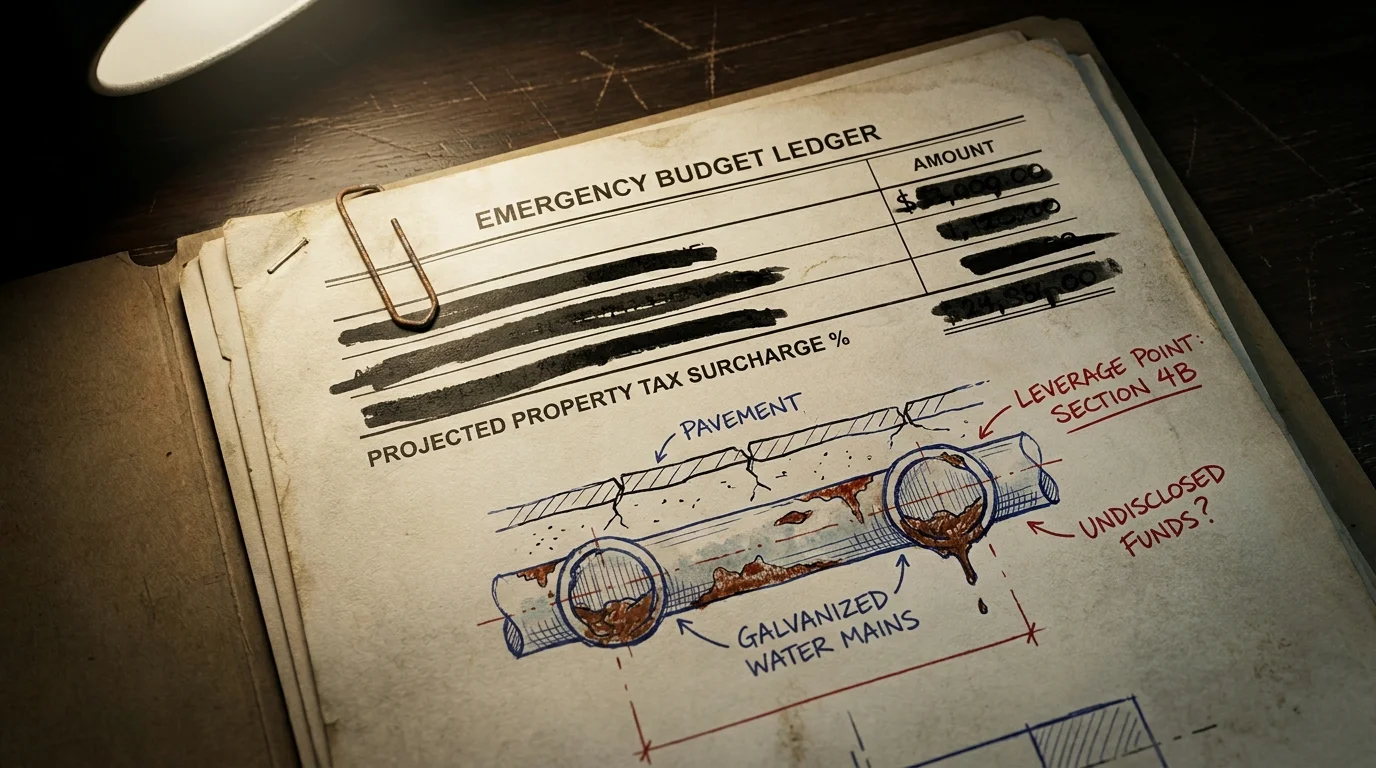
Step outside at sunrise, and you can smell the damp earth clinging to worn residential curbs. Spray-painted arrows and harsh blue chalk markings coat the crumbling asphalt, pointing directly toward rusted galvanized water mains buried four feet beneath the front lawn. To the casual eye, those fluorescent lines look like routine road work, but they signal a profound administrative crisis quietly unfolding beneath American streets.
For decades, municipal infrastructure survived on out-of-sight neglect. Water flowed through ancient feeder pipes installed during the postwar building boom, tested just enough to maintain routine compliance while local town councils balanced razor-thin public budgets. Now, the ticking clock has run out, and the bill has arrived in the mailbox with your name on it.
When national headlines celebrate historic clean water mandates, the announcement feels reassuring and necessary. Yet inside municipal office basements across the country, local administrators stare at balance sheets that simply do not add up. The noble intention of pristine drinking water runs straight into the unforgiving reality of local property taxes.
The Balance Sheet Mirage and the Unfunded Pipe Mandate
The regulatory world operates on an elegant assumption: clean standards create clean outcomes. But when Washington sets a sweeping mandate without funding every foot of trench work, the administrative machinery shifts downward like an avalanche. Federal mandates quietly become local surcharges because town managers cannot print currency to cover multi-million-dollar excavation bids.
Under the revised Lead and Copper Rule Improvements, the Environmental Protection Agency has set a strict ten-year deadline for towns to identify and replace every lead and galvanized service line connecting mains to private properties. Failure to comply does not result in polite warnings; it brings punitive daily fines that would bankrupt a small township overnight. Consequently, local leaders are turning to the only lever they control: emergency millage adjustments and utility property line-item surcharges.
- AIPAC primary spending blitzes derail veteran House incumbents with rapid television ad buys
- EPA lead pipe replacement mandates force local town budgets into massive property tax hikes
- CFPB overdraft fee rules strip checking account buffers triggering sudden deposit fee spikes
- Qatar diplomatic lobby filings demand emergency congressional hearings on foreign consultant disclosure
- South Carolina voting age exemption ruling sparks sudden suburban youth registration shifts
Marcus Vance, a 54-year-old township manager in Northampton County, Pennsylvania, keeps three legal pads filled with red ink on his desk. “Washington passed an incredible moral victory for clean water,” Vance says, adjusting his reading glasses over a map of 1,800 unmapped 1940s connections. “Then they left my office with a $6.2 million deficit and an ultimatum: dig up half the town by 2034, or pay tens of thousands a day in civil penalties. The state revolving fund gave us $400,000. Every single homeowner is about to see an unexpected $480 annual line-item on their county assessment just to keep our public works crew out of court.”
Who Absorbs the Squeeze: Mapping the Municipal Exposure
The financial impact does not land evenly across every ZIP code. Depending on your home’s age and your local tax structure, the municipal ledger audit takes distinct paths:
The Postwar Suburban Homeowner
If your home was built between 1920 and 1986, your property line likely conceals a lead gooseneck or galvanized connector. In these neighborhoods, towns are drafting special assessment districts. Your property tax bill will reflect trenching fees, even if your personal household plumbing was updated decades ago, spreading the municipal street-digging liability across the entire block.
The Small-Borough Renter
Tenants often assume infrastructure shifts belong strictly to landlords. However, when multi-family residential parcels absorb four-figure property tax surges to fund town compliance bonds, those costs pass directly into annual lease renewals. Renters absorb hidden utility overhead within twelve months of a town’s debt issuance.
The Fixed-Income Rural Resident
Small unincorporated communities with minimal commercial tax bases face the sharpest per-capita spike. Without big-box retailers or industrial parks to absorb bond issues, three hundred households must shoulder the cost of replacing twenty miles of decaying mainlines, resulting in sudden 15% to 25% jumps in school and municipal property levies.
Auditing Your Town Hall: A Citizen’s Defensive Playbook
You do not have to wait for an unexpected tax assessment to land in your mailbox. Navigating local infrastructure shifts requires proactive oversight of your municipal council’s bond schedule.
- Inspect Council Agendas for SRF Applications: Search your borough or city council minutes for “State Revolving Fund” (SRF) loan approvals or “Lead Service Line Inventory” contracts. This reveals how much federal subsidy your town secured versus the remaining unfunded deficit.
- Audit Private-Side Ownership Ordinances: Check local bylaws to see if your municipality defines the pipe between the curb stop and the water meter as city property or private homeowner responsibility. If it is private, you could face both a tax hike and a mandatory $3,000 contractor bill.
- Request the Municipal Inventory Map: Federal rules require towns to publish public service line inventories. Reviewing this map tells you whether your neighborhood will undergo phased street cuts this year or later in the compliance decade.
- Attend Capital Improvement Hearings: Most property tax surcharges must be proposed during annual Capital Improvement Program (CIP) budget reviews held every autumn.
• Compliance Timeline: Strict 10-year federal replacement window.
• Average Excavation Cost: $4,500 – $9,000 per private-side connection.
• Common Assessment Mechanism: Special Municipal Debt Service Surcharge (Millage increase).
• Key Agency Benchmark: 40 CFR Part 141 Subpart I (Lead & Copper Rule Improvements).
The Hidden Cost of Living in an Aging Nation
Public health regulations are easy to cheer when announced behind podiums, but their real weight is carried across municipal desks and kitchen tables. Clean water should never be a luxury, yet modernizing century-old iron and lead conduits is an engineering feat of immense expense. When you see blue spray paint drying on your street’s asphalt, recognize it for what it truly is: the physical boundary where national policy turns into a local bill that every resident must balance.
“When an unfunded federal decree meets an empty township reserve, the property tax roll becomes the court of last resort.”
| Compliance Layer | Regulatory Reality | Added Value for the Reader |
|---|---|---|
| Federal Mandate (EPA) | 10-year total replacement timeline with daily civil fines. | Explains why your town council is rushing bids instead of spreading work over thirty years. |
| Township Ledger Shift | Emergency municipal bond issues and local tax millage spikes. | Helps you anticipate property tax line-item increases before assessments arrive. |
| Private Service Line Status | Homeowners often legally own the pipe from curb to house. | Alerts you to potential personal repair liabilities beyond public tax hikes. |
Frequently Asked Questions
Why are property taxes rising instead of water utility bills?
Water utility rates are often capped by state public utility commissions, making it faster and legally simpler for small municipalities to fund infrastructure debt through property-backed municipal bonds and direct tax surcharges.Can I opt out of the lead pipe replacement on my private property?
Most local ordinances now include mandatory access easements. If federal or state regulations require line elimination, refusing replacement can lead to utility service termination or forced municipal remediation added to your tax lien.Did federal infrastructure bills not pay for these pipe replacements?
While federal funding provided billions in grants and low-interest loans, the nationwide estimate to replace every lead line exceeds $45 billion, leaving smaller and mid-sized towns to bridge massive funding gaps on their own.How can I verify what material connects my home to the water main?
You can locate your indoor water meter, find the pipe entering through the basement floor or wall, and perform a simple scratch test with a coin; lead scratches easily and shows a dull silver shine, while a magnet will not stick to it.Will my property assessment increase permanently after the lines are replaced?
General millage rate increases often stay on county books indefinitely, but dedicated infrastructure bond surcharges should legally sunset once the municipal debt service is paid off, typically within 10 to 20 years.