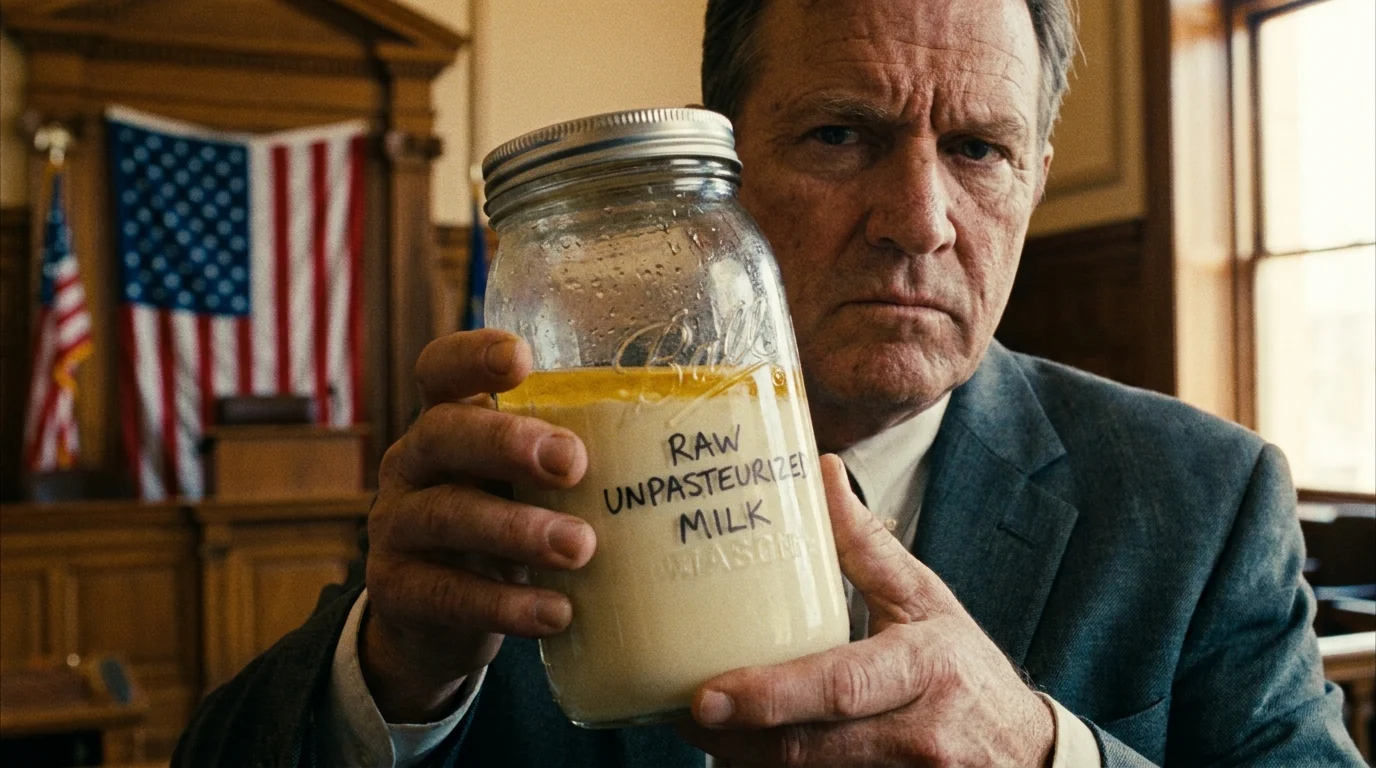
Step inside a small rural dairy barn at daybreak, and the quiet is broken only by the low hum of vacuum pumps and the rhythmic clink of metal pails. On the wooden counter sit heavy glass mason jars filled with fresh, unpasteurized milk, where a thick, golden cap of cream settles naturally against the pale fluid below. For decades, this separation was something modern processing engineered away, treated as an aesthetic flaw to be smoothed out by high-heat pasteurization and homogenization.
When you hold one of those jars, it represents more than just breakfast. It has become the centerpiece of a fierce political battleground spreading across American statehouses, where the line between personal bodily autonomy and municipal food safety is dissolving under relentless grassroots pressure.
State legislative hearing rooms from Iowa to Tennessee are filling not with corporate lobbyists in tailored suits, but with homesteaders, alternative health advocates, and suburban parents holding cool glass jars. They are demanding the right to buy, sell, and transport raw dairy across county and state lines without federal inspectors intervening.
What began as a quiet counterculture preference has transformed into a sophisticated deregulatory campaign. Agricultural committees are systematically voting to bypass long-standing public health warnings, redefining who gets to decide what lands on your family table.
The Radical Pipeline: From Counterculture Remedy to Statutory Law
To understand the sudden momentum behind raw milk legislation, you have to look at how fringe wellness philosophies quietly merged with deregulation politics. For almost a century, pasteurization stood as a non-negotiable pillar of American public health, a standard created to eradicate tuberculosis, brucellosis, and scarlet fever from the national milk supply. The process was simple: heat milk to at least 161 degrees Fahrenheit for 15 seconds to kill pathogenic bacteria before distribution.
Today, that foundational standard is viewed by a growing voting bloc not as protection, but as institutional overreach. The philosophical flip is stark: advocates argue that raw dairy preserves live digestive enzymes, beneficial bacteria, and fat-soluble vitamins that commercial heat processing damages.
When state lawmakers draft direct-to-consumer exemptions, they are not merely debating microbial counts; they are testing the limits of federal commerce authority. By categorizing raw milk sales as private herd-share agreements or neighbor-to-neighbor farmgate transactions, legislators are effectively building legal firewalls that prevent state health departments from inspecting farm facilities or testing bulk tanks.
- EPA lead pipe replacement mandates force local town budgets into massive property tax hikes
- AIPAC primary spending blitzes derail veteran House incumbents with rapid television ad buys
- EPA lead pipe replacement mandates force local town budgets into massive property tax hikes
- CFPB overdraft fee rules strip checking account buffers triggering sudden deposit fee spikes
- Qatar diplomatic lobby filings demand emergency congressional hearings on foreign consultant disclosure
Marcus Vance, a 48-year-old independent dairy farmer in southern Missouri, watched this shift firsthand when his county health board attempted to shut down his herd-share distribution point. Instead of paying the fines or switching back to commercial co-op pooling, Vance worked with a regional civil liberties legal fund to draft a localized agricultural rights bill. Within two legislative sessions, his statehouse sponsor shepherded the measure through the agriculture committee, stripping local health officers of their jurisdiction over raw farm products and turning Vance from an alleged violator into a protected family business owner.
Navigating the New Farmgate Landscape
As statehouses rewrite the rulebook, the practical realities of sourcing, transporting, and storing unpasteurized dairy vary wildly depending on where you live. Understanding these legal tiers helps you separate verified farm safety practices from pure political theater.
The Herd-Share Subscriber
In states where retail raw milk remains outlawed, lawmakers have expanded herd-share agreements. You do not purchase milk directly; you buy an ownership percentage of a specific dairy cow or goat. Because you legally co-own the animal, the farm simply boards and milks your livestock, allowing you to pick up your jar of raw milk without triggering commercial retail licensing rules.
The Direct Farmgate Purist
Other states have legalized on-farm sales with strict direct-to-consumer boundaries. In these jurisdictions, you must drive directly to the farm property to complete the transaction. Proponents prioritize local transparency, asserting that when you see the cleanliness of the milking parlor, the pasture quality, and the demeanor of the herd yourself, you create a natural incentive for sanitation that surpasses state agency clipboard audits.
The Interstate Transit Frontier
The most contentious legal frontier involves interstate transport bills. Federal law strictly prohibits moving unpasteurized milk across state lines for commercial sale. However, newly introduced state bills seek to legalize the transport of raw milk purchased legally in one state into neighboring states for personal consumption, creating a direct constitutional clash between federal commerce oversight and state-level food freedom acts.
A Mindful Approach to Farm-Level Quality
If you choose to navigate the deregulated dairy landscape, safety rests entirely on your personal vetting process rather than a regulatory seal. High standards on a small homestead require discipline, meticulous temperature management, and continuous microbial monitoring.
Evaluating a raw dairy operation requires looking past the charming rustic aesthetic to inspect core sanitary practices:
- Rapid Cold-Chain Management: Verify that the farm uses a mechanical plate cooler or ice-bank bulk tank capable of dropping milk temperature below 40 degrees Fahrenheit within two hours of milking.
- Independent Lab Testing: Ask the producer for their monthly Standard Plate Count (SPC) and coliform test results. Clean raw dairy should consistently maintain a coliform count below 10 CFU/ml.
- Pasture and Feed Quality: Observe whether cows graze on well-managed perennial pastures or stand in unmanaged mud lots, as clean udders drastically reduce bacterial contamination risks during milking.
- Dedicated Sanitation Protocols: Ensure the dairy uses food-grade acid rinses and sanitizing washes on all stainless steel lines, valves, and milking claws between each milking shift.
Once you bring fresh milk home, keep your refrigerator set between 34 and 38 degrees Fahrenheit. Store your mason jars on the back of the lowest shelf rather than the door bins, where constant opening causes temperature swings that shorten the shelf life of fresh dairy.
The Redefinition of Consumer Trust
The legislative clashes over raw milk are not simply about dairy; they reflect a profound recalibration of how everyday Americans view institutional expertise. When public health agencies insist on absolute pasteurization while state lawmakers pass sweeping farm exemptions, you are left to bridge the gap between safety and freedom.
Taking responsibility for your food supply requires continuous awareness rather than blind trust in slogans on either side of the debate. Understanding the farm environment and the biology of clean food production restores a direct connection to what sustains you, turning a simple glass of milk into an informed, intentional choice.
“True food sovereignty is not merely the legal right to purchase unpasteurized milk, but the practical discipline to understand every step of its journey from pasture to glass.”
| Key Point | Detail | Added Value for the Reader |
|---|---|---|
| Regulatory Status | Varies from total ban to full retail depending on state code. | Helps you identify local compliance and avoid illegal transport issues. |
| Safety Standard | Pasteurization heats to 161°F; raw milk relies on strict sanitation. | Clarifies how processing differences affect microbial activity. |
| Storage Protocol | Must be kept consistently between 34°F and 38°F. | Prevents premature souring and slows natural bacterial replication at home. |
Frequently Asked Questions
Is it legal to bring raw milk across state lines for my family?
Federal regulations prohibit transporting raw milk across state borders for commercial distribution. While personal possession is rarely prosecuted, interstate transport bills are actively being contested in state legislatures to protect consumers traveling home from out-of-state farms.Why do agricultural committees support raw milk while health agencies oppose it?
Agricultural committees focus on small farm economic viability and direct-to-consumer revenue, whereas public health agencies prioritize broader population-level disease prevention metrics.What is the golden cream line on unpasteurized milk?
Raw milk naturally separates because fat globules have not been mechanically broken down through high-pressure homogenization. The rich yellow hue comes from fat-soluble carotenoids found in pasture grasses.How long does fresh unpasteurized milk last in the refrigerator?
When handled with strict cold-chain management and stored below 38 degrees Fahrenheit, clean raw milk typically stays fresh for 10 to 14 days before natural lactobacilli begin to sour it into clabber.What testing should I look for from a direct-to-consumer dairy?
Look for producers who voluntarily test monthly for Standard Plate Count (SPC), coliforms, and pathogens like Salmonella, E. coli O157:H7, and Listeria monocytogenes, keeping records open for customer inspection.