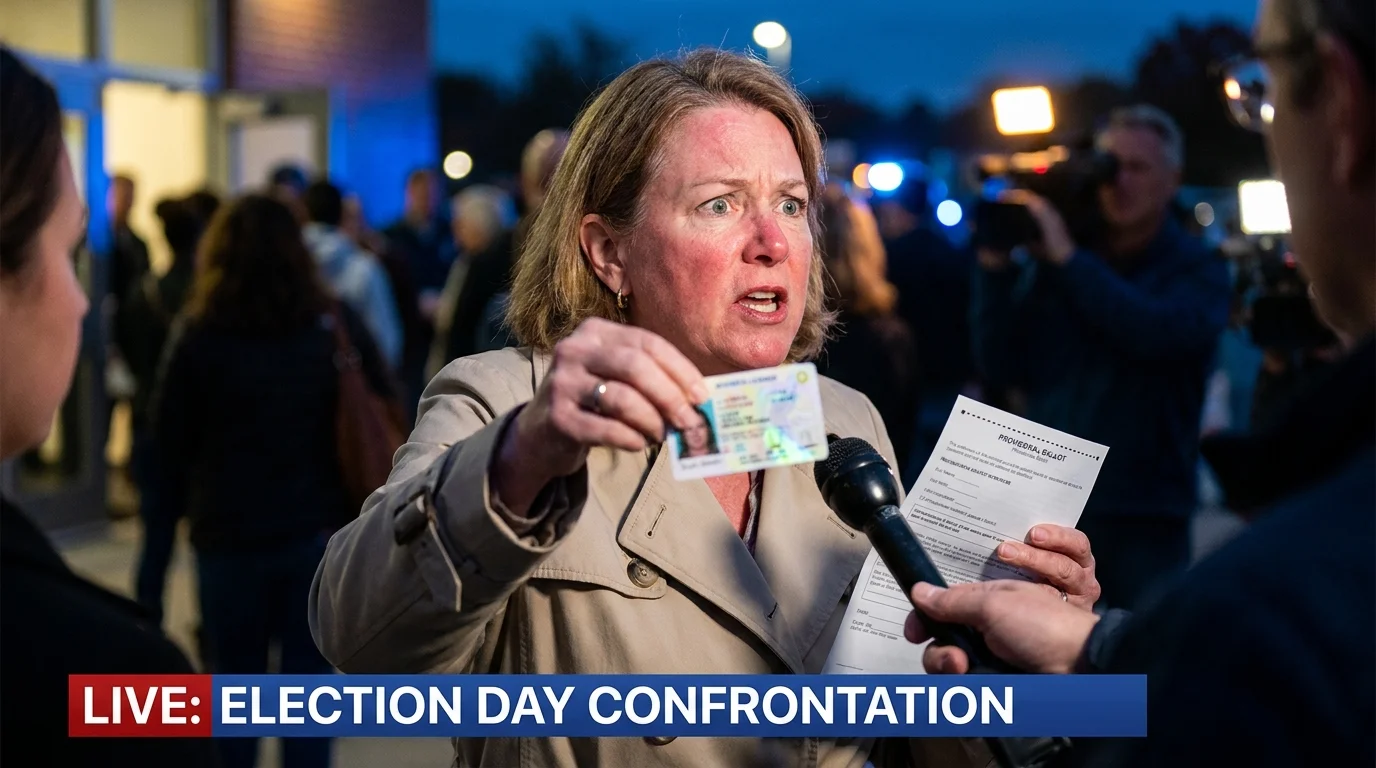
The gymnasium smells of floor wax and stale instant coffee poured into thin paper cups. At 6:45 on a damp Tuesday morning, you stand under the pale buzz of amber sodium lights, shifting your weight from boot to boot on the taped basketball court line. You have your driver license tucked between your thumb and forefinger, still shiny and crisp from the plastic mailer that arrived six weeks ago. You did everything by the book.
You sat at your kitchen counter in late August, paid the state fee through the department of motor vehicles portal, and checked the box to verify your home address. The entire transaction took four minutes between unloading the dishwasher and putting the kettle on. You assumed the digital pipeline between the state bureau of motor vehicles and your county board of elections was a clean, uninterrupted copper wire. It is comforting to believe that public computers talk to one another with clarity and goodwill.
Then you reach the check-in table. The volunteer runs a dry finger down the laminated registry, turns the page backward, tilts her glasses, and searches again. Your name simply is not there. She slides a ballpoint pen across the wood grain and reaches for a manila folder filled with green provisional ballot sleeves, offering an apologetic shrug that leaves your stomach hollow.
The Digital Tripwire Behind the DMV Counter
When you update your credentials online or swap an expiring card at a local branch, you assume you are confirming your civic life. Instead, you are walking into an administrative vacuum where mismatched software architectures scrape and collide. Decades ago, the National Voter Registration Act intended to tether ballot access directly to the driver licensing desk, imagining a seamless bridge. In practice, modern state record software operates less like an open bridge and more like an automatic weed whacker trimming away mismatched records to satisfy state maintenance quotas.
State motor vehicle registries and municipal voter registration lists were built on completely different data foundations, often decades apart. When an agency pushes an overnight batch update, tiny discrepancies trigger automated purge sequences that drop active voters into inactive or cancelled status without a human clerk ever touching the file. A missing apartment numeral, an abbreviated street designation, or an ambiguous opt-out prompt on a touchscreen keypad can suddenly classify you as an unverified resident in your own precinct.
Instead of receiving a notice in your mailbox warning you of the clerical drop, the silence lasts until you show up on election morning. The system does not raise an alert or lock your driver credentials; it simply cancels your municipal poll listing while leaving your driving privileges untouched. You are left standing in a precinct vestibule clutching a provisional ballot that local canvassing boards may never tally.
- Privatized toll concessions fuel soaring commuter rate spikes across suburban highway corridors
- Overtime rule injunctions force employers into emergency dawn payroll resets after midnight rulings
- IRS automated filters freeze standard family mortgage transfers without human caseworker review
- Precinct redistricting maps splinter historic urban neighborhoods to neutralize local school board votes
- Historic preservation panels override local city councils to enforce sudden neighborhood building bans
Elena Vance, a 44-year-old county database administrator in eastern Pennsylvania, watches this breakdown repeat itself during every off-year and municipal cycle. “People walk in thinking the state computer treats their life as a single record,” Vance explains over the steady clatter of a high-speed ballot scanner. “In reality, the motor vehicle database sees you as a customer credential, while the county election registry sees you as a territorial jurisdiction. When you renew that card, the software runs an uncalibrated scrub script. If your license renewal address drops a single character from your voter record, the machine tags the registration as an address conflict and quietly unhooks your file.”
Where the Digital Registration Lines Fracture
Automated database maintenance is rarely malicious, but its mechanical indifference disproportionately strikes commuters and suburban renters whose daily lives involve frequent digital updates. To protect your access at the ballot box, you need to understand the three distinct fault lines where routine DMV updates quietly sever your registration.
The Commuter Suffix Dropper. If your legal identity carries a familial suffix or a hyphenated name, batch processing algorithms often stumble over the syntax. When the motor vehicle database registers ‘Street’ and the county file records ‘Avenue’, or if an algorithmic cleanup script truncates ‘Junior’, the system flags a fatal mismatch between the two files. Rather than pausing to flag the record for manual verification, state automated cleansing routines automatically flag the registration as stale or relocated, shunting the voter into provisional status.
The Ambiguous Digital Checkbox. When renewing credentials at a self-serve kiosk or web terminal, state interfaces present confusingly worded electronic prompts regarding voter registration preferences. A poorly formatted question asking whether you wish to update your current voter file can be misread as an opt-out. If you skip the prompt or select ‘No’ under the assumption that your existing registration is already secure, the software routinely interprets that entry as an affirmative cancellation request, scrubbing your name from active municipal rosters before dawn.
The County Boundary Desync. Crossing a municipal or county boundary introduces severe administrative latency. When you record a suburban home move through a regional licensing bureau, your motor vehicle update processes within forty-eight hours. However, the cross-county inter-agency data transfer often stalls in backlogged administrative queues. The old county removes you from their books based on the change-of-address ping, but the new county fails to complete the intake before the registration cut-off, leaving you stranded in administrative limbo on election day.
Auditing Your Ballot Footprint Before Election Morning
You cannot rely on the state bureaucracy to catch its own database errors. Securing your vote requires taking quiet, methodical control of your personal voter registration trail well before you arrive at your neighborhood precinct.
Treat your civic registration with the same deliberate scrutiny you give your personal credit report or property deed. Verify your status across state and county channels rather than trusting a third-party automated prompt:
- Log directly into your Secretary of State or State Board of Elections verification portal thirty days before the registration deadline, bypassing motor vehicle portals entirely.
- Inspect every field of your listed residence: ensure directional markers (North, South) and secondary apartment or suite identifiers match your residential utility records to the letter.
- Print or save a time-stamped digital snapshot of your ‘Active’ status screen directly to your smartphone so you have immediate leverage at the polling table.
- If you completed a license renewal within the past ninety days, phone your municipal county clerk directly to confirm that your voter profile did not inherit an administrative ‘Inactive’ hold.
- Request a physical sample ballot by mail or check your precinct roster; if your current name does not appear on the precinct list online, file an immediate manual registration affidavit.
These five simple actions require less than fifteen minutes at your kitchen desk. Taking control of your paper record neutralizes the silent software traps that routinely catch unassisted voters off guard.
The Registration Audit Toolkit
- Audit Window: Run an online status check 30 days prior to municipal registration cutoffs.
- Critical Document: Keep a current utility bill or bank statement on your phone alongside your physical license.
- Clerk Contact: Dial your municipal registrar, not the state DMV helpline, to clear record holds.
Reclaiming Sovereignty Over Your Record
Standing in a precinct hallway trying to argue with an automated administrative script is a losing battle. The volunteer at the registration desk cannot rewrite code, and the provisional ballot envelope you are handed is an emergency patch, not a guarantee. True civic sovereignty begins by recognizing that public systems are held together by brittle digital scaffolding that requires your personal oversight.
When you take twenty minutes to independently verify your precinct standing, you take responsibility for your democratic agency. You step out of the crowd of blindsided commuters and claim an unimpeachable seat at the municipal table. Bureaucratic software may run silent scripts that discard clean files, but an attentive citizen with a verified paper trail cannot be erased.
The real barrier to the ballot box is rarely an intentional gate; it is the silent, unfeeling script running unchecked in an unattended server rack.
| Key Point | Detail | Added Value for the Reader |
|---|---|---|
| Database Desync | DMV credential updates use distinct software engines from county voter rosters. | Prevents assuming that updating a driver license automatically corrects your voting record. |
| Kiosk Opt-Out Trap | Poorly designed UI prompts can interpret skipped questions as an affirmative registration cancellation. | Helps you read state digital prompts carefully to avoid accidental self-purging. |
| Provisional Risk | Provisional ballots require manual post-election canvassing review and are frequently rejected for address mismatches. | Highlights the need to resolve clerical drops before election morning rather than relying on paper backups. |
Frequently Asked Questions
Can the DMV legally cancel my voter registration without my signature?
Automated administrative scripts do not technically cancel your registration intentionally; rather, they mark your file as conflicting or inactive when address discrepancies surface between state agencies, which drops your name from the active pollbook on municipal election day.What should I do if a poll worker cannot find my name on the roster?
Politely request that the worker double-check the inactive or supplemental roll. If you are still missing, provide an official confirmation printout or current utility bill, ask for the on-call precinct judge, and only accept a provisional ballot as a final recourse.Does an online renewal carry a higher purge risk than an in-person DMV visit?
Yes. Online portals rely on automated form logic with ambiguous opt-out checkboxes and lack human intake clerks who can spot missing unit numbers or street designation mismatches before your update triggers a system purge.How far in advance of an election should I verify my registration?
You should review your status at least 30 to 45 days prior to an election. This window gives you ample runway to clear administrative flags or submit a manual paper registration form before statutory deadlines close.Will casting a provisional ballot ensure my vote is counted?
Not always. Local canvassing boards review provisional envelopes against county registry records; if your automated cancellation has not been resolved, your provisional vote can be disqualified during post-election certification.