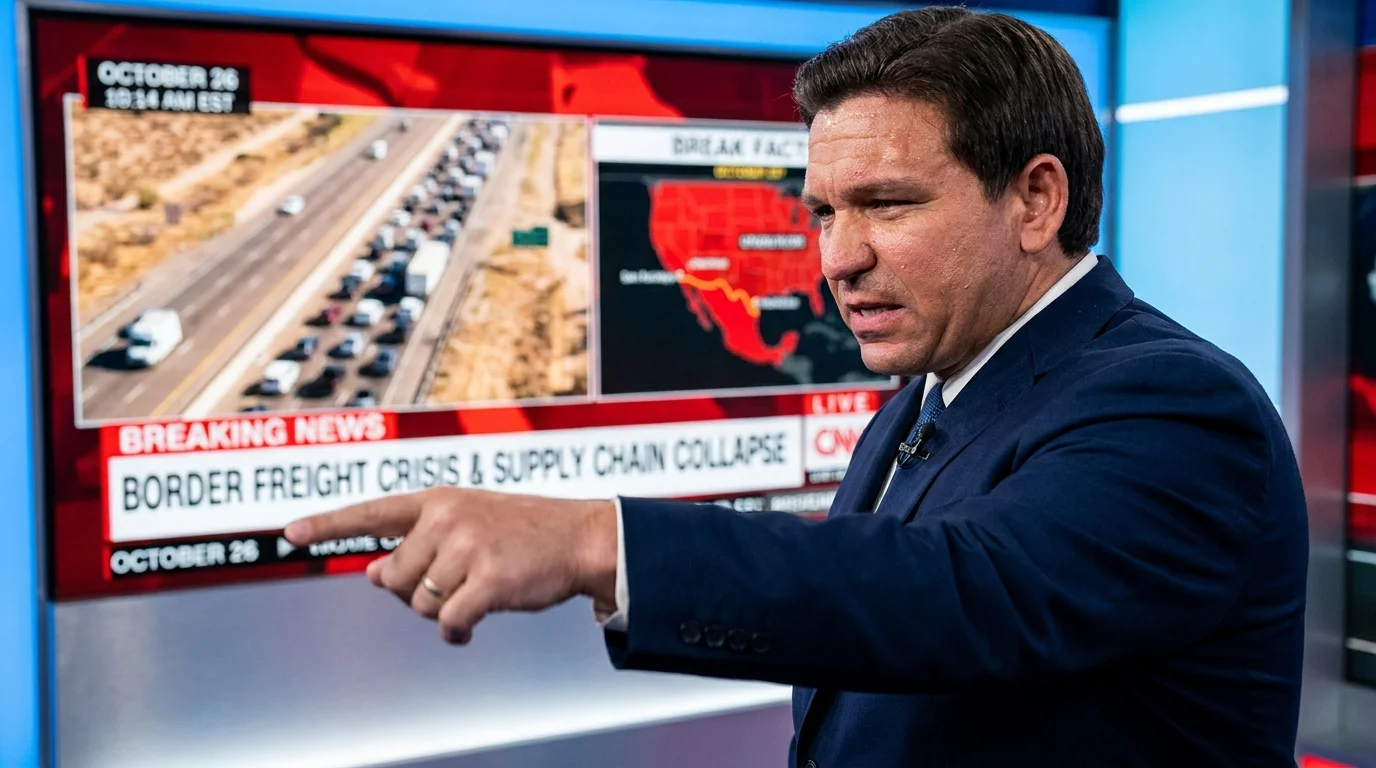
The heat rising off the tarmac at the Pharr-Reynosa International Bridge reaches 104 degrees Fahrenheit before noon, shimmering in waves above three continuous miles of idling diesel engines. You can smell the exhaust mingling with the sharp, fermenting tang of bruised papayas and softened limes trapped inside five hundred refrigerated trailers. Cab drivers sit with their windows rolled halfway down to conserve fuel, listening to the metallic hum of auxiliary power units fighting an uphill battle against the South Texas sun.
You might expect an international freight inspection to look like routine civic maintenance—a clipboard, a tire gauge, a polite wave through a concrete gate. Instead, you are looking at an engineered standstill where freight corridors turn into parking lots overnight. When state authorities layer redundant safety checkpoints onto federal ports of entry, the friction is not absorbed by international cartels or policy architects; it settles squarely onto steel trailer floors where fragile perishables tick down toward total loss.
By the time a single tractor-trailer crawls forward ten feet, grocery inventory algorithms two thousand miles away in Minneapolis and Philadelphia begin rewriting retail availability. The bridge is no longer an artery connecting two integrated economies. It has been transformed into a choke point, where administrative theater extracts an immediate toll on the trucks feeding American dinner tables.
The Cold Chain Tourniquet: Why Border Friction Punishes Your Refrigerator
To understand why a state-level inspection blockade collapses produce availability so swiftly, you have to picture the commercial cold chain as a high-pressure line. Perishable transit does not operate with warehouses of backup stock sitting quietly in reserve. Fresh berries, tomatoes, and leafy greens move through a continuous, delicate conveyor that relies on velocity rather than storage capacity to remain viable.
When arbitrary state inspections add forty-eight hours of dwell time to an international crossing, logistics networks suffer immediate paralysis. The issue is rarely that a mechanical inspector finds a faulty brake line; the issue is that the physical yard cannot process five hundred trucks per hour through two inspection bays. Time itself becomes the destructive agent.
A refrigerated trailer, commonly known as a reefer, burns roughly one gallon of diesel every two to three hours just to keep its cargo at a steady 34 degrees Fahrenheit. When a rig sits stranded on asphalt for two full days, the driver burns through fuel reserves intended for cross-country haulage. If the auxiliary unit runs dry, thirty tons of fresh produce can warm past the safety threshold in four hours, rendering the entire shipment legally adulterated and commercially worthless before it even reaches Interstate 35.
- Municipal fluoridation bans spark fierce medical establishment backlash following sudden state platform adoptions
- Club for Growth endorsements target veteran Senate establishment figures in escalating primary battles
- Federal disaster relief cutbacks force immediate property tax hikes across rural county budgets
- Gallup party affiliation metrics mask massive working-class voter realignments across industrial battlegrounds
- Lina Khan antitrust enforcement fuels high-stakes White House donor mutiny over corporate penalties
Hector Ramos, a 52-year-old independent owner-operator out of McAllen, knows this arithmetic intimately. Last spring, Ramos watched his electronic logging device lock him out of drive-time after spending twenty-two hours in a border inspection line with forty thousand pounds of Roma tomatoes. By the time he cleared the state troopers and pulled into a distribution warehouse outside San Antonio, the receiving broker rejected the lot due to internal pulp breakdown, leaving Ramos with an empty fuel tank, three thousand dollars in personal debt, and twenty tons of rotting fruit he had to pay a landfill to take.
Mapping the Fracture Lines: From Regional Wholesalers to Household Receipts
The shockwaves radiating from state-level border disruptions do not strike everyone equally. Different sectors of the domestic economy absorb the damage across three distinct layers, each translating bureaucratic delays into direct financial hits.
The Independent Grocer and Regional Distributor: Large national grocery conglomerates hold long-term, priority contracts that force primary distributors to fulfill their orders first, even when supply plummets by forty percent. Independent neighborhood grocers and small regional chains, however, buy on the spot market. When shipments dry up, small grocers face empty shelves and astronomical wholesale premiums that cannot easily be passed along to their cash-strapped neighborhood shoppers.
The Long-Haul Fleet Operator: Federal law limits truck drivers to eleven hours of driving within a fourteen-hour window before mandating ten consecutive hours of rest. When drivers spend fifteen hours crawling across a state checkpoint, their legal working clock runs out while sitting still. Fleet managers lose driver availability across the entire country, creating an artificial driver shortage that drives spot freight rates up by double digits in forty-eight hours.
The Household Consumer: You notice the final fracture at the end of the line. The damage appears not just as outright shortages of avocados, peppers, or berries, but as shortened home shelf life. When produce spends its peak freshness sitting on a sweltering highway before arriving at your local market, an avocado that usually stays firm on your counter for five days turns to black mush inside thirty-six hours, effectively taxing your weekly grocery budget through forced waste.
Navigating the Supply Squeeze: Tactical Resilience for Household Pantries
You cannot personally dispatch regional traffic at an international port of entry, but you can change how you buy and store fresh food when politically driven supply disruptions skew the market. A few disciplined shifts in your kitchen routine will protect your wallet from the fallout.
Audit your produce buying habits around structural vulnerability. Vegetables that carry high surface-to-mass ratios and delicate cell walls suffer first during transit delays.
- Pivot temporarily to robust root crops, squashes, and hearty brassicas like cabbage and kale, which tolerate supply chain delays without catastrophic cellar breakdown.
- Inspect fragile fruits at the retail bin using tactile firmness rather than color alone, checking stems for early mold spore colonies triggered by fluctuating reefer temperatures.
- Employ cold-water blanching and freezer staging for delicate greens within twenty-four hours of purchase rather than allowing them to linger in your crisper drawer.
- Cultivate direct supply ties with regional farmers’ markets or domestic hydroponic growers who bypass international highway corridors entirely.
By shifting your purchasing rhythms away from hyper-vulnerable imports during active border standoffs, you protect household food budgets from paying premium prices for compromised, expiring goods.
The True Price of Borderland Theater
Modern trade runs on predictable logistics. When elected officials use state enforcement agencies to stage high-visibility transport bottlenecks, they treat commercial supply lines as an abstract political stage rather than the physical machinery that feeds the continent. The true cost of political posturing is never paid on a press conference dais; it is deducted silently from an owner-operator’s fuel card, scraped into municipal compost bins behind distribution centers, and tallied on your receipt at the register.
Recognizing the machinery behind your grocery store shelves turns what feels like random inflation into a visible, mechanical reality. When you know why the cilantro is wilting and the price of limes has doubled, you can organize your pantry with precision, vote with clear-eyed economic awareness, and build personal resilience against manufactured friction.
“Supply chains are not ideological battlegrounds; they are biological lifelines that fail the exact moment political theater takes precedence over physical transit.”
| Supply Chain Shockpoint | Direct Operational Reality | Added Value for the Reader |
|---|---|---|
| Secondary State Inspections | Duplicative mechanical checks create 20 to 40-hour delays at border crossings. | Explains why fresh inventory disappears even when fields in Mexico are producing record yields. |
| Reefer Diesel Depletion | Auxiliary cooling units run out of fuel during extended highway queues, spiking internal cargo temperatures. | Helps you identify compromised produce that looks acceptable on the shelf but spoils within a day of purchase. |
| Driver Hours-of-Service Runouts | Federal electronic log mandates force drivers off the road while waiting in administrative lines. | Reveals why regional domestic freight rates spike nationwide, inflating prices on non-imported goods. |
| Spot-Market Contract Bumping | Brokers divert limited arriving stock to corporate giants, leaving independent stores dry. | Directs you to alternative local farm sources before regional shelves empty completely. |
Frequently Asked Questions
Why are state inspections happening if federal border agents already inspect the trucks?
Federal agencies like Customs and Border Protection oversee immigration, customs declarations, and agricultural pest control at official border checkpoints. State-level vehicle inspections are technically conducted under state highway safety authorities to check physical equipment like brakes, tires, and lights, but their deployment at international ports is often politically directed to project hardline border enforcement.Does this inspection process actually catch illicit contraband or illegal crossings?
Historical data from previous statewide inspection surges shows that these commercial vehicle checkpoints overwhelmingly uncover mechanical paperwork issues or minor equipment infractions—like worn tires or burnt-out tail lamps—rather than major contraband seizures, while costing billions in commercial delays.Why can’t truckers simply take alternative routes around Texas?
Texas shares the largest commercial border infrastructure with Mexico, handling the overwhelming majority of cross-border produce transit. Rerouting fleets through Arizona or California requires hundreds of extra road miles, days of added route planning, and steep logistical costs that smaller trucking operations simply cannot absorb.How long after a border inspection backlog begins do grocery store prices rise?
You will generally see produce gaps and retail price adjustments within forty-eight to seventy-two hours of an international bridge bottleneck, starting with highly perishable items like berries, avocados, and fresh culinary herbs.What is the best way to keep imported produce fresh if its cold chain was disrupted?
Keep fragile items unwashed in their original containers until use, line crisper drawers with clean paper towels to absorb excess moisture caused by condensation, and keep your home refrigerator set consistently between 35 and 38 degrees Fahrenheit.