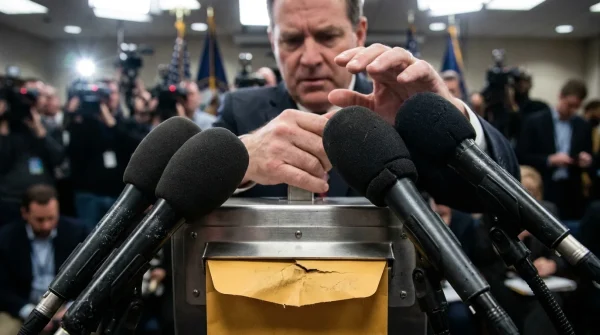
The kitchen table smells faintly of stale coffee and ink. You have the blue ballpoint pen uncapped, the deed packets spread across the laminate, and your real estate agent on speakerphone humming a quiet, distracted tune. Everything is supposed to wrap by noon. The moving truck is already idling two miles away near the interstate off-ramp, its diesel engine rattling the cab while the driver checks his watch.
Then the title officer stops mid-sentence. Her tone thins out, turning brittle over the line as she refreshes her terminal. The wire did not clear. The down payment—pooled methodically from a savings bond liquidation, your mother’s modest contribution, and three years of relentless frugality—has not landed in the closing account. It has vanished into an administrative holding queue, frozen cold by an uncalibrated federal screening filter that flagged the family transfer as a suspicious financial anomaly.
There is no warning bell, no flashing red prompt, and no human caseworker on the other end of the line. The bank teller cannot override it; the branch manager cannot see past an automated internal routing code. What was intended as a routine intergenerational gift has tripped an unvetted regulatory script designed to catch offshore shell companies, leaving your family standing on the curb of an empty house.
The Digital Sieve with Teeth Too Sharp
Most borrowers assume the federal tax apparatus operates like an old courthouse ledger: deliberate, cautious, and reviewed line by line under warm incandescent lamps. The reality is far closer to an unmonitored digital dragnet sweeping blindly through domestic Automated Clearing House rails. When mortgage applicants shift funds between domestic family accounts within sixty days of closing, modern automated IRS filters do not see a mother helping her daughter buy a starter home. They see fragmented layering.
The system treats every rapid capital movement as a potential evasion tactic. Rather than routing flagged transactions to a human reviewer who could scan a certified gift letter in three seconds, the model automatically slaps a quiet anti-structuring hold across the clearinghouse conduit. You find yourself trying to prove an innocent transaction happened out in the open, while the code behind the wall operates under a presumption of guilt.
Understanding this machinery changes how you move money. It turns an opaque institutional roadblock into a predictable obstacle you can outmaneuver if you recognize the trigger points before moving a single dollar.
- Precinct redistricting maps splinter historic urban neighborhoods to neutralize local school board votes
- Historic preservation panels override local city councils to enforce sudden neighborhood building bans
- Paid family leave payroll hikes slash middle class worker paychecks across Western states
- Permian Basin crude pipeline limits squeeze regional refineries fueling sudden Midwest pump spikes
- National Archives records reveal secret Cold War intelligence directives overriding congressional oversight
The View from the Escrow Desk
Sarah Lin, a 43-year-old independent title attorney in Columbus, Ohio, watches this algorithmic paralysis unfold three or four times every month. She keeps a stack of printed clearance affidavits beside her desk, though she knows they rarely pierce the silence of an automated agency hold. Last October, she watched a young couple lose their earnest money deposit when a clean $38,000 wire from the bride’s father triggered an algorithmic flag that took seventy-two days to resolve. By the time a regional examiner finally opened the file, the seller had relisted the property and walked away with the deposit.
Mapping the Trigger Thresholds Across Different Transfers
The code does not treat every household transaction equally. It responds to velocity, account tenure, and the specific narrative tags attached to incoming funds. Navigating this bureaucratic minefield requires adjusting your financial footprint based on exactly how your down payment comes together.
The Intergenerational Family Gift
Direct parent-to-child gifts represent the sharpest point of algorithmic friction. If a parent transfers cash directly from their personal checking into an escrow account within forty-five days of loan underwriting, automated compliance filters often tag the wire as unverified third-party capital. Clean paper trails must precede the electronic transfer by at least two billing cycles, creating an unbroken chain of custody that strips the transaction of its algorithmic volatility.
The Private Asset Liquidation
Selling a collector vehicle, cashing out long-held certificates of deposit, or liquidating personal equity poses a distinct set of hurdles. When large lump sums suddenly appear in an otherwise quiet checking account, the system flags the deposit as non-payroll income with unresolved tax obligations. You must tether every dollar to a bill of sale, a bank appraisal, and a stamped wire notification long before your lender pulls the final verification of deposit.
The Self-Employed Draw
For independent contractors moving owner distributions into personal accounts to fund earnest money, the tripwires are even more sensitive. The automated models conflate standard corporate distributions with hidden tax liabilities. Maintaining strict entity separation and routing draws through regular quarterly cadence buffers protects your capital from being miscategorized as an unauthorized tax lien risk.
Mindful Steps to Inoculate Your Mortgage Wire
Protecting your closing day requires treating your down payment like fragile freight. You do not simply click send and hope the clearinghouse understands your intentions; you build an air gap around the capital long before underwriting begins.
Begin the movement of all third-party funds at least sixty-five days before your target closing date. This allows the money to season quietly across two consecutive monthly statements, rendering it invisible to high-frequency compliance filters.
- Transfer gift funds directly into your personal account well before loan pre-approval, rather than wiring them directly into title escrow at the eleventh hour.
- Execute an IRS Form 709 gift tax allocation letter contemporaneously with the wire, keeping signed copies in your personal records.
- Instruct your sending institution to annotate the internal wire notes with the exact phrasing: Non-Taxable Family Gift Under IRC Section 2503(b).
- Secure an unredacted two-month account statement from the donor showing clear seasoning before the wire originates.
Keep these documents bound in a single physical file on your desk. When an automated flag trips, your only defense is burying the regional underwriter in clear, irrefutable primary documentation before the clearing window lapses.
Reclaiming Control in an Era of Silent Codes
There is a quiet psychological toll when an unseen computer system freezes your family’s life savings. It feels personal, invasive, and deeply disorienting. Yet recognizing that these filters are not sentient investigators—that they are simply blunt, uncalibrated instruments executing outdated scripts—restores your agency.
By respecting the timeline that these digital filters demand, you take the power back from the algorithm. You transform an arbitrary barrier into a predictable routine, ensuring that when you finally pick up that blue pen at the closing table, the ink flows without interruption.
The modern tax apparatus does not hate your mortgage; it simply cannot read your heart through an Automated Clearing House memo line.
| Key Point | Detail | Added Value for the Reader |
|---|---|---|
| Algorithmic Tripping | Automated filters flag intra-family transfers over $10,000 as potential structuring. | Identifies the exact dollar velocity that triggers automated holds. |
| Seasoning Window | Clearing funds require 60 to 65 days in a personal account to clear automated screening. | Prevents last-minute settlement delays and lost earnest money deposits. |
| Direct Escrow Wires | Wiring gift funds straight to title companies trips institutional anti-money-laundering filters. | Keeps the closing workflow clean by avoiding third-party deposit scrutiny. |
Frequently Asked Questions
Why does the IRS automated filter freeze family down payment gifts?
Automated screening systems monitor high-value banking transfers for indicators of structuring or concealed income. When a lump sum arrives without seasoned account history, the algorithm flags it for compliance holds before human caseworkers review the file.How long do automated transfer holds usually take to clear?
Without aggressive manual intervention from your lender and title officer, an automated compliance flag can freeze funds between thirty and ninety days. Prompt submission of gift letters and donor statements can compress this to several business days.Can my mortgage lender override an automated screening flag?
No. Mortgage lenders operate under federal banking mandates and cannot force an ACH clearinghouse or receiving bank to release funds caught in an algorithmic compliance freeze until clear sourcing documentation is verified.Does a family gift letter prevent an algorithmic transfer hold?
A gift letter satisfies loan underwriting standards, but it does not automatically bypass bank clearing filters. The underlying wire must still be correctly annotated and seasoned to pass automated institutional screening.What is the safest way to transfer money from parents for a down payment?
Move the funds at least sixty-five days prior to your loan application directly into your personal account. This allows the balance to season across two full statement cycles, eliminating automated red flags.