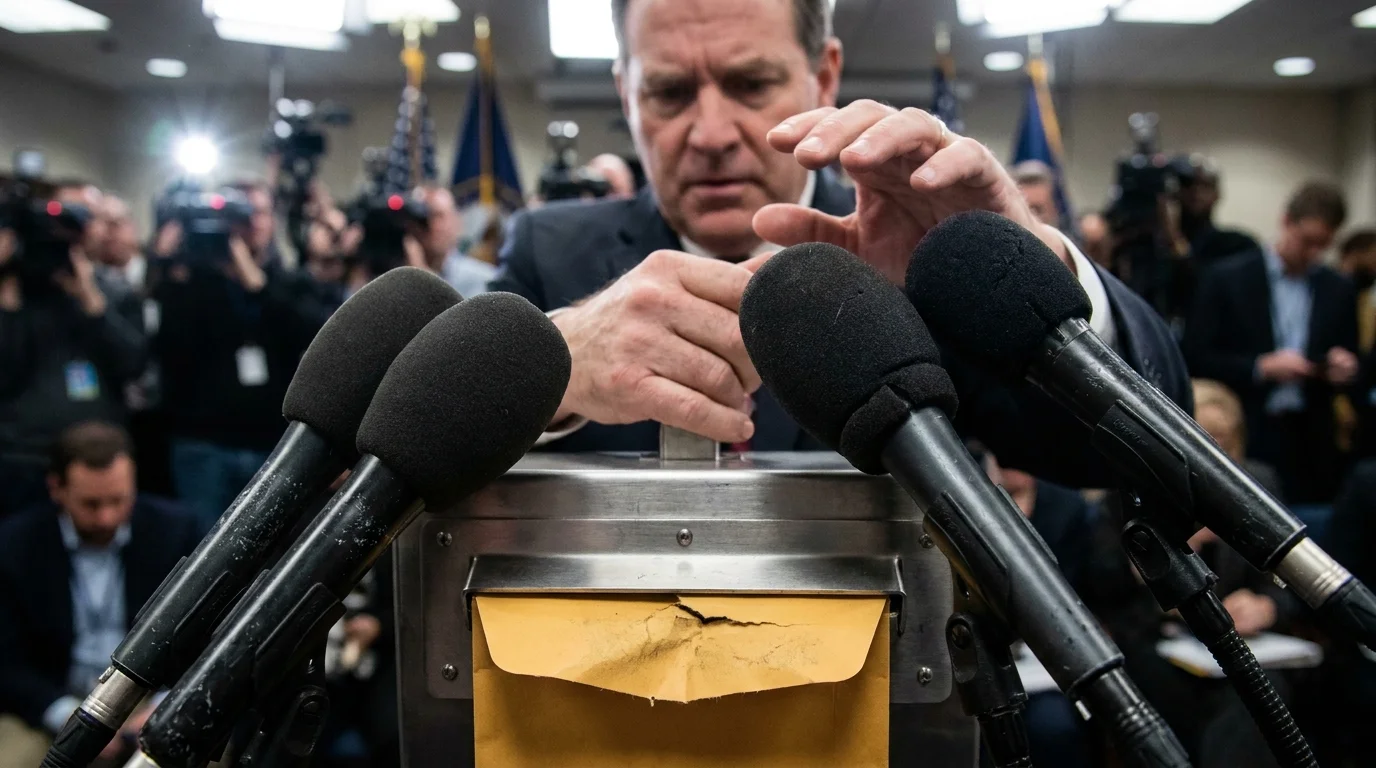
The autumn wind pulls yellow leaves across the municipal parking lot while you pull your car up to the curb. Under the glow of a sodium streetlamp, the heavy steel drop box stands bolted to the concrete sidewalk, painted matte navy and wrapped in official county seals. You roll down your window, slide your ballot envelope through the intake slot, and hear the heavy steel deposit door snapping shut with a cold metallic clang.
You drive away feeling an immediate rush of relief, convinced that the physical act of deposit equals a recorded vote. Yet inside county processing warehouses just a few miles away, automated intake trays and two-person inspection teams are preparing to handle thousands of envelopes that will never make it to the tabulation scanners.
In dozens of battleground jurisdictions across the country, election boards now operate under hyper-literal statutory interpretation standards. A ballot deposited safely inside a vault is still vulnerable to administrative disqualification before anyone ever views the candidate bubbles you filled in. The most frequent points of failure are not fraudulent interventions or lost postal bags, but tiny, mechanical missteps on the outer paper sleeve.
The Illusion of the Steel Safe: Why Physical Delivery Does Not Equal a Counted Vote
Most voters treat the return envelope like ordinary postal packaging—a simple carrier designed to move a piece of paper from your kitchen table to a government office. In reality, election law treats the outer envelope as a sworn legal affidavit. Think of it not as an envelope, but as a passport presenting your identity at a hard border crossing. If a single stamp, signature baseline, or seal orientation fails the automated inspection gate, the carrier remains closed forever.
When you drop your envelope into the slot, it does not bypass statutory screening; it simply bypasses the postal truck. The ballot inside remains completely invisible to the legal process until the exterior shell passes three distinct layers of mechanical and human verification. Understanding this machinery shifts your mindset from passive delivery to deliberate protocol.
- Major Jason Watson promotion hearings trigger explosive Senate clashes over Pentagon command
- Donald Trump state approval ratings reveal sudden suburban voter drift across Sunbelt precincts
- Richard Nixon makeup sponges resurfaced sweaty pale skin under searing studio spotlights
- Ed Markey debate clashes expose bitter Democratic splits over clean energy infrastructure
- Manchester Union Leader front pages derail primary campaigns across icy snowbank doorsteps
Behind the Intake Trays: A Clerk’s View on Disqualification
Linda Vance, a 58-year-old lead canvassing clerk in Pennsylvania with seventeen years of election experience, spends the forty-eight hours before Election Day watching high-speed optical sorters flag hundreds of packets per hour. Her team sits under fluorescent lights at long metal tables, inspecting flagged envelopes through standardized magnification lamps. Her most frequent discovery is not malicious tampering, but plain voter misunderstanding regarding the outer security flap.
“People assume that because the flap is tucked inside the sleeve, it counts as sealed,” Linda explains while reviewing a tray of flagged submissions. “Or they sign the inner modesty sleeve instead of the designated affidavit box on the outside flap. By statute, our hands are tied. If the outer legal instrument does not meet the exact physical geometry mandated by county code, that heavy steel door you heard shut outside did nothing to protect your vote.”
Anatomy of the Friction Points: Where Ballots Get Tripped Up
The journey from the drop box slot to the counting room involves three precise paper layers, each with its own strict failure threshold:
- The Secrecy Sleeve Orientation: The inner sleeve exists to separate your personal identity from your candidate selections. If you fold your ballot improperly or insert it backward so your markings peek through the sleeve’s cutout window, canvassing boards must set the packet aside to prevent compromising your constitutional right to a secret ballot.
- The Adhesive Flap Boundary: Modern county guidelines often demand that the exterior security flap be fully adhered using its factory moisture strip. Using tape, staples, or simply tucking the triangular flap into the pocket often triggers an automatic ‘tampered or unsealed’ flag during high-speed thickness scans.
- Signature and Date Geometry: Automated intake cameras crop specifically to the coordinates of the signature box. If your signature extends outside the bounding box lines, or if you write your birthdate instead of the current signing date, optical verification software rejects the match.
Understanding these micro-boundaries ensures your packet clears automated sorting without human friction.
The Five-Point Pre-Drop Audit: Guaranteeing Your Ballot Clears Inspection
Before you make the drive to your nearest official collection point, sit at a well-lit table and run this mechanical check on your documents:
- Check the Ink Formula: Use only black or dark blue ballpoint ink. Avoid gel pens or felt-tip markers that can bleed through paper layers and trigger optical false positives on the exterior affidavit.
- Center the Secrecy Sleeve: Slide the ballot cleanly into the inner sleeve without added staples or paperclips. Ensure no black markings are visible through any viewing windows.
- Seal the Perimeter Completely: Moisten the factory gum strip thoroughly across the entire width of the flap. Press firmly for ten seconds; never use scotch tape or correction fluid to fix an envelope tear.
- Anchor Your Signature: Sign your name matching the general rhythm of your driver’s license signature. Keep every stroke strictly within the printed borders of the signature box.
- Verify the Date Format: Confirm you have written today’s date—not your date of birth—in the exact format requested (MM/DD/YYYY) alongside your signature.
This deliberate routine takes less than two minutes but eliminates ninety-nine percent of administrative hurdles.
Protecting Your Voice in a Hyper-Regulated System
Voting by drop box offers exceptional convenience, but convenience should never be confused with informality. When you understand the rigorous sorting systems operating behind municipal walls, you reclaim complete agency over your civic participation.
Mastering these mechanical steps removes the anxiety of wondering whether your voice made it through the sorting trays. When you take the extra minute at your desk to verify the seal, align the signature, and respect the physical boundaries of the packet, that heavy steel door closing in the night becomes what it was always meant to be: a guarantee of a recorded voice.
“The ballot is the voice, but the envelope is the key that opens the room.”
| Processing Checkpoint | Common Voter Misstep | Added Value for the Reader |
|---|---|---|
| Exterior Flap Adhesive | Tucking the flap inside without moistening the gum strip. | Prevents instant automated rejection by high-speed envelope thickness sensors. |
| Affidavit Signature Box | Allowing signature loops to cross outside the printed rectangular boundary. | Ensures signature verification cameras capture 100% of your signature data. |
| Inner Secrecy Sleeve | Inserting the ballot upside down with marked bubbles visible through cutouts. | Protects your ballot from disqualification under statutory voter-secrecy rules. |
Frequently Asked Questions
Can I use clear tape to seal my envelope if the glue will not stick?
In many counties, adding tape or foreign adhesives can cause the sorter to flag the envelope as potentially tampered with. If the seal fails, contact your county elections office for a replacement envelope.What happens if I write my birthdate instead of the current date on the flap?
This is one of the most common clerical mistakes. Many election boards are required by law to reject affidavits containing mismatched dates. Always double-check that you wrote the date of signing.Does dropping my ballot off earlier reduce the risk of disqualification?
Yes. Early submission gives election workers time to process your envelope and, in states with ballot cure laws, notify you to fix minor signature or seal issues before certification deadlines.Can I drop off a family member’s ballot in the same drop box?
Rules vary significantly by state. Some jurisdictions require an authorized caregiver or family member form to be signed on the outer envelope to avoid third-party drop-off penalties.How can I confirm my drop box ballot was officially accepted?
Use your state or county online ballot tracking portal. Most systems update within 24 to 48 hours after collection to show whether your affidavit was approved.