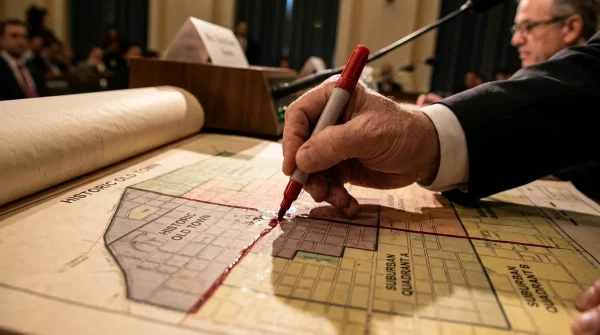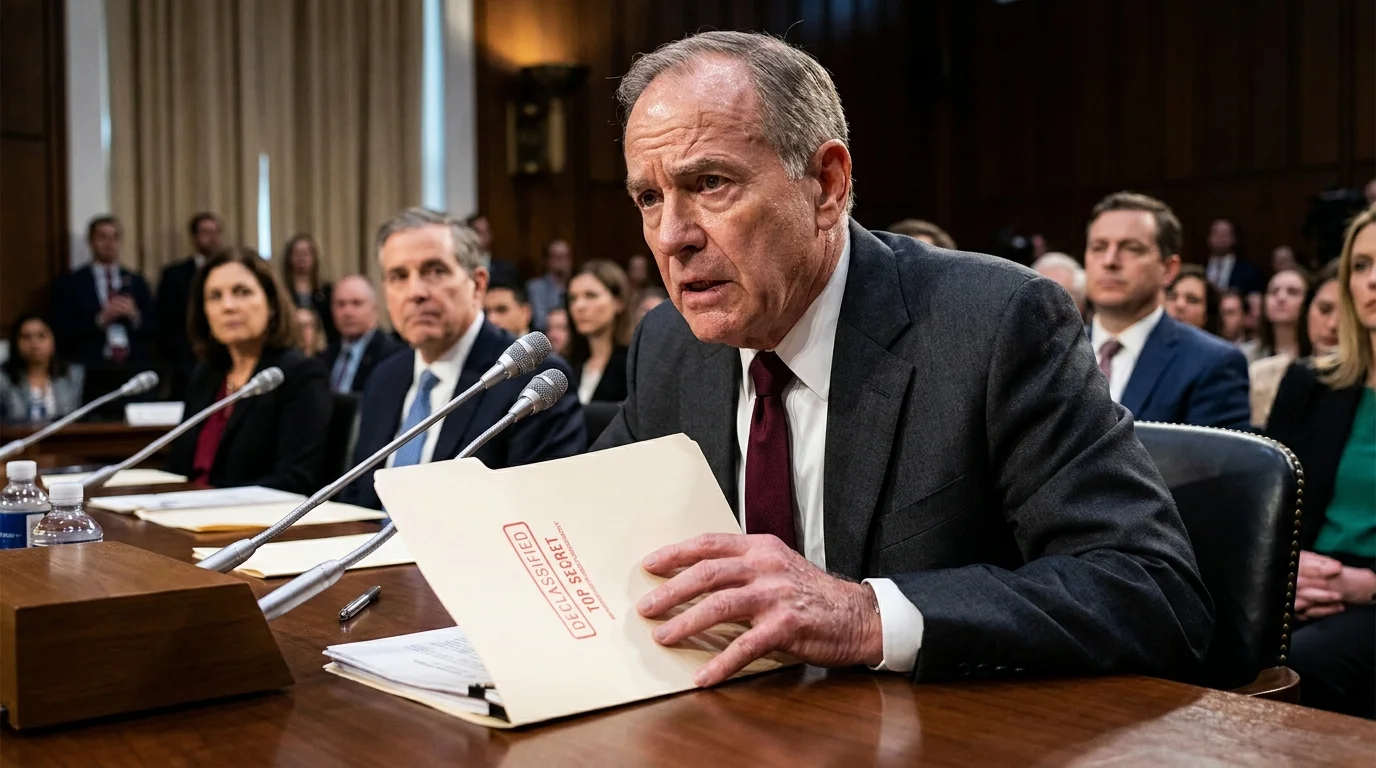
The reading room at the National Archives in College Park, Maryland, carries a distinct, lingering scent of aged pulp, metal file drawers, and conditioned air kept cold enough to preserve fragile carbon paper. Fluorescent bulbs hum quietly against long oak tables where researcher badges and cotton gloves sit beside gray acid-free boxes. Outside, the midday traffic on Route 1 hums along, oblivious to what rests inside record group 263. When you open a newly declassified folder from the mid-1950s, you expect to encounter the disciplined paperwork of standard statecraft, orderly reports cataloged for posterity.
Instead, the yellowing tissue sheets show faint red grease-pencil markings slicing across operational orders, signaling lines of authority that intentionally bypassed Capitol Hill. You feel the physical weight of institutional memory preserved under brittle cellophane tape. In these ledger pages, executive operatives drafted parallel filing codes specifically engineered so congressional committees receiving standard intelligence briefings would never see cross-references to overseas counter-actions.
Holding these declassified transcripts changes how you perceive public records. What appeared for seven decades as mere clerical absence turns out to be deliberate bureaucratic geometry, constructed to run covert foreign policy in the blind spots of the legislative branch.
The Invisible Architecture of Executive Silence
For generations, high school civics classes taught you that American foreign policy operates like an open scale, where congressional appropriations hold executive action in check through steady oversight. These newly surfaced National Archives directives show that during the Cold War peak, intelligence chiefs treated that constitutional balance not as an immovable law, but as a technical obstacle to navigate around. They built dual-track logging systems where primary operational summaries were labeled under non-descript administrative categories, keeping sensitive field interventions out of legislative reach.
Think of it like a house wired with two separate electrical circuits: one hooked to the visible breaker box on the wall for inspectors to examine, and another buried behind the drywall powering unmonitored equipment in the basement. Parallel classification registries kept lawmakers completely unaware of covert operational expenses by dispersing the costs across routine base operations and general clerical budgets.
The surprise within these documents is not that mid-century operators ran secret operations, but that their greatest operational effort went into hiding their footprints from the United States Senate rather than from Soviet counterintelligence. By designating specific actions under executive-only memoranda codes, agency directors ensured that inquiries by committee chairmen returned clean, unredacted sheets that technically contained no lies, even while omitting entire operational theaters.
- Fox News broadcast segments split partisan viewers over high-stakes diplomatic talks with Iran
- Loudoun County zoning boards block massive suburban apartment developments after fierce homeowner revolts
- Susan Sarandon rally transcripts trigger online bot campaigns amplifying fabricated speech quotes
- Masoud Pezeshkian interview remarks spark furious Tehran backlash forcing rapid diplomatic walkbacks
- Supreme Court corruption rulings freeze ongoing municipal fraud trials across five states
Arthur Pendelton, a 68-year-old archival researcher and former Senate staff analyst, spent sixteen months cross-referencing declassified transport logs with executive branch calendars from 1954 to 1961. Sitting beneath the green desk lamps in Maryland, Pendelton realized that flights moving field personnel into contested proxy territories were systematically logged under agricultural research and meteorological support codes, meaning legislative budget auditors signed off on foreign incursions believing they were subsidizing crop soil studies.
Decoding the Paper Trail: Four Layers of Oversight Redirection
When you examine these records, the documentation patterns split into distinct institutional mechanisms. Each served a specific purpose in shielding executive discretion from elected representatives.
1. The Dispersed Ledger System
Rather than seeking single, controversial budget allocations that would prompt committee questions, administrators carved large operational budgets into tiny micro-vouchers. These line items appeared in routine supply requests, from office machinery to motor pool maintenance, effectively blinding budget examiners to the true scope of foreign operations.
2. The Semantic Shell Game
Directives reveal how operational vocabulary was carefully curated to evade statutory triggers. While direct foreign assistance required formal notification to congressional leadership, agency drafters categorized field initiatives as liaison liaison consultations or precautionary advisory presence. Deliberate linguistic maneuvering allowed field directors to deploy assets without crossing legal reporting thresholds.
3. The Parallel Filing Cache
Documents designated under Special Handling categories were held outside central agency registries. These files bypassed standard record-keeping queues and were stored directly inside the executive suite, preventing agency archivists from producing them during routine committee inquiries.
4. The Verbal Briefing Carve-Out
Senior officials routinely established unwritten agreements during informal Capitol Hill luncheons, providing just enough vague detail to claim later that lawmakers were informed. Meanwhile, operational specifics, timelines, and logistical costs remained completely absent from any written paper trail available for legislative review.
How to Trace Historical Declassifications in Public Archives
Working with government archives requires a quiet, methodical approach. You do not need security clearance to uncover how these mechanisms functioned; you only need to understand how federal agencies cataloged their own history.
Begin your search through the National Archives Access to Archival Databases (AAD) or submit targeted requests under the Freedom of Information Act (FOIA) focusing on administrative logs rather than high-profile operational names.
- Search for Record Group 59 (Department of State) and Record Group 263 (Central Intelligence Agency) administrative cross-indices.
- Cross-check field transport manifests against congressional hearing calendars from the same quarter to spot documentation gaps.
- Look for structural anomalies in ledger numbering, such as missing sequential folio stamps, which indicate documents routed away from standard records.
- Request Mandatory Declassification Review (MDR) for specific executive memorandums rather than broad topic folders.
Careful tracking of administrative dispatch stamps reveals far more about structural power than heavily redacted policy briefings.
Archival Research Tactical Toolkit
- Primary Repositories: National Archives at College Park (Archives II), Presidential Libraries research rooms.
- Standard Tools: 43x handheld magnifying loupe, non-magnetic archival weight snakes, acid-free document markers.
- Cataloging Key: National Archives Record Group inventories, especially RG 218 (Joint Chiefs) and RG 330 (Office of the Secretary of Defense).
- Filing Anomalies to Flag: Documents bearing handwritten ‘Eye Only’ notations without corresponding formal control numbers.
The Lasting Meaning of Unsealed Paper
Looking at these yellowed, ink-stamped directives decades after their creation reminds you that accountability in governance is fragile. It relies on the assumption that records reflect reality, and that the people elected to represent your interests can actually see the levers being pulled.
Understanding how past agencies quietly bypassed constitutional boundaries gives you a sharper lens for reading modern government disclosures. Recognizing the historical anatomy of administrative silence allows you to evaluate current balance-of-power debates not with cynicism, but with informed, vigilant clarity.
The health of constitutional oversight depends not on the secrets an agency keeps from its adversaries, but on the truths it refuses to hide from its citizens.
| Key Point | Detail | Added Value for the Reader |
|---|---|---|
| Dual-Track Filing | Sensitive records were given secondary file paths to avoid committee discovery. | Reveals how standard record requests can miss entire operations without intentional deception by the archivist. |
| Micro-Voucher Budgeting | Operational funding was fractured across dozens of unrelated domestic budget lines. | Helps you understand why top-line spending bills often obscure targeted agency expenditures. |
| Semantic Framing | Actions were framed as advisory to skirt statutory disclosure requirements. | Equips you to identify non-committal language in modern executive briefings and legal memos. |
Declassified Records: Common Questions
How do these newly released records differ from earlier Cold War declassifications? Earlier releases focused heavily on operational successes and diplomatic crises, while these records expose the internal administrative mechanisms built specifically to avoid domestic congressional review.
Why did it take over sixty years for these administrative files to become public? Operational logs often face rolling twenty-five-year declassification reviews, but administrative files with non-descript naming were repeatedly overlooked until systematic digitizing projects flagged them.
Did congressional leaders at the time suspect they were being cut out of the loop? Several committee members frequently voiced frustration over vague briefings, but without access to the parallel filing indices, they lacked the proof required to demand full compliance.
Can private citizens view these unredacted files in person? Yes, once documents pass through Mandatory Declassification Review, they are accessible to any registered researcher in the Archives II reading room in College Park, Maryland.
Does current federal law prevent similar parallel logging today? Modern statutes like the Hughes-Ryan Amendment and the Intelligence Oversight Act of 1980 closed many of these mid-century loopholes, though the tension between executive secrecy and legislative oversight remains a constant battle.