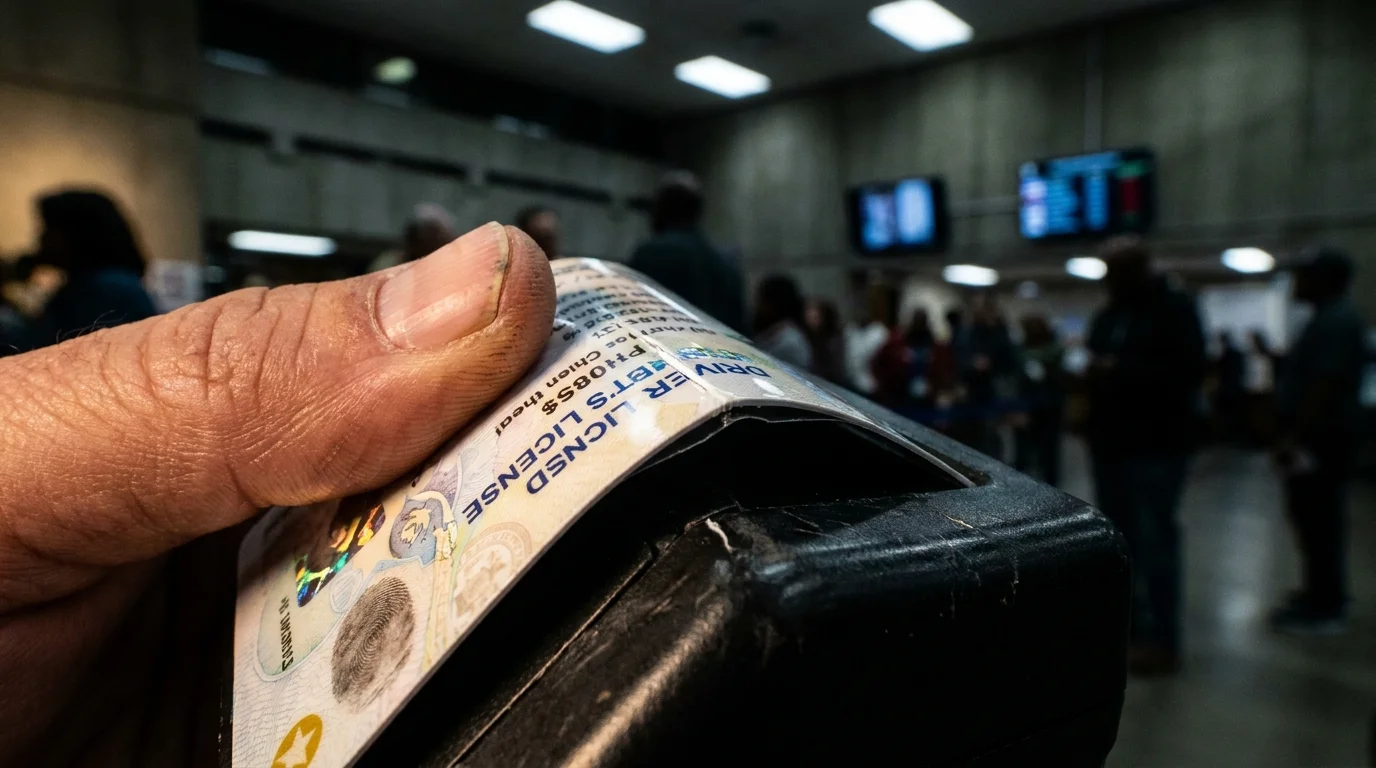
The high school gymnasium smells of damp raincoats, lemon wax, and ancient timber. Under the hum of buzzing fluorescent tubes, neighbors shift their weight from foot to foot on basketball court tape, waiting for a poll worker with half-moon spectacles to scan down a binder of names. You step up to the table with your driver’s license in hand, confident you did everything right six months ago when you renewed your plates online.
Then comes the pause. The pencil stops. The poll worker tilts her head, glances from the plastic card to the thick ledger, and offers a quiet, practiced sigh. Your physical residence does not align with the official municipal precinct register, turning your standard check-in into an unexpected administrative dead end.
You are handed a ballpoint pen and an envelope printed on stiff cardstock: a provisional ballot. Outside, passing cars throw headlights against the wet windows, but inside this room, your vote has just been shunted into a holding pen. What feels like an isolated computer glitch is actually an invisible, clockwork collision occurring in hundreds of swing-state polling places right now.
The Two-Ledger Illusion and the Ghost Address
Most voters assume state agencies exist as one harmonious, interconnected brain. We naturally believe that typing an apartment change into the state motor vehicle portal automatically refreshes our polling location down the street. In truth, state government behaves less like a unified web and more like two stubborn stone towers communicating through scribbled notes passed across a windy courtyard.
When you update an address at the Department of Motor Vehicles, you adjust a tax, licensing, and driving registry. A split database architecture silently divides the administrative state from the board of elections. Under the National Voter Registration Act, updating your license triggers an automated prompt asking if you wish to refresh your voter profile, but the transaction often stalls at the boundary where character limits and clerical syntax collide.
The central disconnect is remarkably mundane: data formatting. A driver’s licensing database accepts secondary location lines such as ‘Unit 4B’, ‘Apt 4-B’, or an unnumbered rural route box without flinching. County voter registries, however, lean on strict geocoding systems tied to tax parcels and precinct boundary lines. If the data packet sent from the motor vehicle division truncates your apartment number, drops a directional letter like ‘North’, or registers a postal box instead of your physical bedroom parcel, the electoral database rejects the automated update.
- SALT deduction cap rollback slashes suburban property tax refunds across high-income districts
- New Hampshire independent voters derail frontrunner campaign momentum through decisive moderate swings
- Federal transit concessions freeze out local vendors while hiking commuter ticket surcharges
- Natalie Harp memos trigger fierce debate prep clashes inside rival war rooms
- Nevada caucus organizers upend early primary momentum through aggressive hospitality union mobilizations
You walk away from the motor vehicle counter assuming your democratic profile is pristine. Yet inside county election headquarters, that rejected sync packet sits in an exception queue or simply dissolves, leaving your voter record marooned at the home you vacated two years ago.
Elena Ruiz, a 34-year-old field hydrologist in Washoe County, Nevada, discovered this structural chasm the hard way during a recent midterm primary. Having leased a modest bungalow across county line borders four months prior, she diligently checked the voter registration prompt at a self-service DMV kiosk. When poll workers couldn’t locate her on the precinct roster, she was handed an affidavit envelope; three weeks later, a public records audit revealed her provisional slip was discarded during canvas because her DMV record reflected a post office drawer rather than the geographic street coordinates required to pull a specific ward ballot.
Precinct Boundaries and the Three Friction Zones
A provisional ballot is not a guaranteed vote; it is an affidavit requiring human review during canvass week. When your registered address does not perfectly match the precinct ledger where you stand in line, election officials face clear statutory walls.
For the Recent Apartment Mover: Multi-unit complexes produce the highest volume of rejected ballots. If a leasing office shifts you from Building C to Building A within the same complex, the post office treats it as a non-issue. Yet to an election board, that movement can place your living room into an adjoining city council or school district ward. Marking a standard ballot in the wrong ward invalidates local races on your sheet, forcing board examiners to disqualify or partially void your paper slip.
For the Rural Route Commuter: County roads and unincorporated fire numbers frequently trigger systemic mismatches. Emergency response coordinates clash with postal delivery paths when state motor vehicle software attempts to verify an address against national address databases. If your driver’s license displays a rural route or postal box while the voter roll demands a county GIS parcel identifier, a human clerk must manually resolve the mapping conflict before certifying your envelope.
For the College Town Resident: Students moving across campus boundaries face an acute version of this ledger conflict. Moving from an east campus dormitory to an off-campus twin home shifts precinct jurisdictions within a quarter-mile radius. Poll workers at university facilities often lack the authority to override out-of-precinct submissions, leaving entire stacks of provisional envelopes vulnerable to immediate post-election rejection during board certification audits.
Navigating the Polling Desk: A Step-by-Step Recovery
Finding out your name does not match the poll register can trigger panic, but handling the situation with cold, procedural calm protects your ballot. Poll workers are neighbors trying their best under strict statutory mandates, not adversaries.
- Request an immediate look-up in the statewide electronic pollbook database rather than relying solely on the paper ward ledger.
- Verify if the mismatch stems from an omitted apartment number, a maiden name change, or an outdated municipality boundary.
- If directed toward a provisional ballot, ask specifically whether casting that ballot in this building will count for federal, state, and county races, or if traveling across town to your historic precinct ensures full enumeration.
- Review the written provisional affirmation carefully, ensuring the signature on the outer jacket exactly matches the pen stroke on your driver’s license.
- Retain the receipt stub containing your unique tracking identifier, which states are legally required to provide so you can monitor qualification status online.
Maintain an unbending attention to detail during the affidavit signature process. When signature strokes drift away from historical driver’s license records, county canvas boards use that visual variation to reinforce an address mismatch rejection.
Keep a digital file on your smartphone containing a digital image of a municipal utility statement dated within thirty days, alongside your official registration receipt. If state statute allows a cure period, this documentation gives you the leverage to validate an affidavit before the canvas window shuts.
The Reclaimed Ballot
Standing in a voting booth with a felt marker is an act of civic belonging that should never feel brittle. Yet the systems that translate physical movement into administrative records remain human, fragmented, and prone to silent errors. A computer screen error code should not drown out your quiet civic voice.
Taking ownership of the gap between the vehicle registry and the county voter roll strips away the anxiety of election morning. When you understand the quiet mechanics running beneath the floorboards of the state house, you no longer rely on good luck when you sign the register. You step onto the gymnasium floor informed, verified, and entirely in command of your ballot.
The legitimacy of an individual vote should depend on the voter’s clear civic intent, not on whether a municipal database dropped a hyphen from an apartment address.
| Key Point | Detail | Added Value for the Reader |
|---|---|---|
| DMV Data Handoff | Licensing software uses standard postal formatting; voter rolls use county geographic tax parcels. | Identifies why online DMV address updates fail to migrate cleanly to voter registers. |
| Ward Boundary Rules | Living a single street over can place your home in a different legislative or municipal ward. | Explains why casting a provisional ballot in the wrong physical precinct voids local races. |
| Post-Election Cure Window | Most swing states offer 3 to 6 days after voting to supply proof of residency to the county board. | Provides a clear deadline to rescue a flagged affidavit envelope before canvass certification. |
Frequently Asked Questions
Will my provisional ballot be counted if I cast it in the wrong precinct?
In many states, casting a ballot in the wrong voting precinct disqualifies the entire submission, while other states count only the statewide or federal contests for which you were eligible. Check your local county clerk rules immediately if you are directed to an unfamiliar table.Why didn’t my address change automatically when I updated my driver’s license?
While motor vehicle offices capture updated contact information, technical formatting discrepancies between DMV databases and county parcel files often cause automated voter updates to fail silent system validations.What documentation rescues an address-flagged provisional ballot?
A current residential utility bill, bank statement, pay stub, or lease agreement showing your full legal name and current physical address serves as primary proof during county canvass curing sessions.How do I check if my provisional ballot was certified or discarded?
Federal law requires election jurisdictions to supply a free provisional tracking system, accessible via website lookup or automated telephone service, using the receipt number provided at check-in.Can an election observer challenge my address mismatch at the desk?
Yes, appointed observers may flag discrepancies between identification cards and pollbooks, which is why requesting an administrative supervisor review before accepting a provisional ballot remains vital.