The basement conference room of the county courthouse smells like industrial floor wax and yesterday’s drip coffee. It is 7:15 on a Tuesday morning, and the fluorescent tubes overhead hum with a dull, low-voltage buzz that rattles your teeth if you sit beneath them long enough. Outside, frost still clings to the windshields of cruiser sedans lined up on gravel parking bays, engines turning over in rhythmic, white puffs against the biting 28-degree dawn air.
You likely watched the evening news broadcast three weeks ago when the executive directive was signed in Washington. The press corps framed it as an administrative triumph: swift federal border orders promising immediate operational coordination between regional marshals, federal agents, and frontline jurisdictions. From your living room, the announcement sounded distant, clean, and entirely self-contained within the mahogany corridors of the capital.
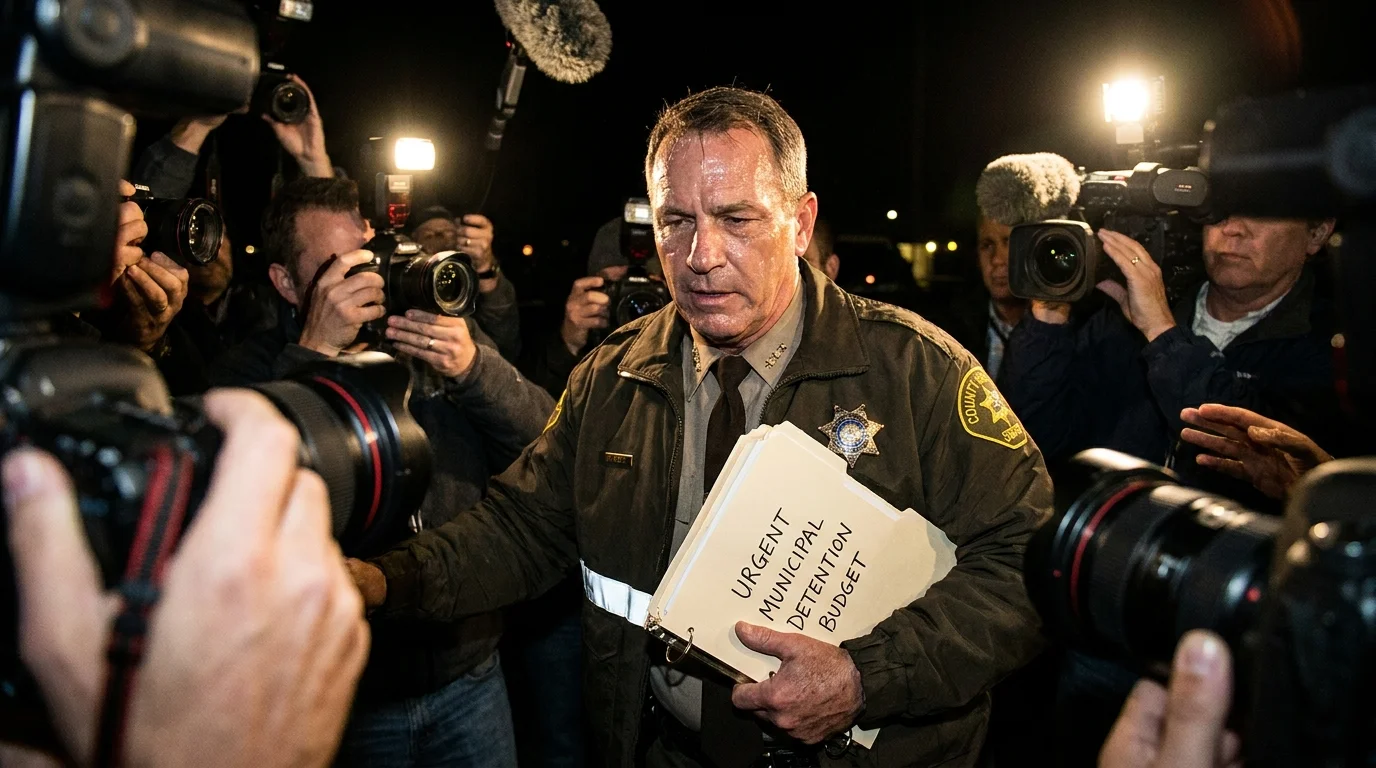
Yet here at the linoleum conference table, the reality lands not as grand strategy, but as an invoice. The county auditor slides a manila folder across the surface toward an exhausted sheriff whose uniform collar looks two sizes too loose. Inside sits a stark mathematical ledger showing that federal border orders did not arrive with supplemental checks or dedicated logistics personnel; they arrived as an unfunded emergency holding mandate that quietly forces local county jails to absorb hundreds of municipal detention days out of their own operating balance sheets.
The Shell Game on Courthouse Square
To understand why local budgets buckle, you have to discard the myth that federal policy pays its own way. The common expectation is simple: when national leaders mandate extended custody windows and specialized booking procedures, the sovereign treasury covers the freight. That assumption is built on paper promises, not ledger reality.
Think of the process like water diverted through an aging irrigation ditch. When federal border orders mandate that regional facilities hold detainees under emergency administrative detainers rather than standard judicial release timelines, the current doesn’t stop moving. It simply pools in the lowest ditch on the map. The county jail becomes that reservoir, capturing every hour of intake processing, medical screening, and custodial staffing until the water spills over the embankments.
Instead of reimbursing small municipalities for holding federal detainees during extended processing backlogs, the directives classified these temporary stays as inter-agency administrative holds. By tweaking the regulatory designation, national agencies bypassed standard per diem reimbursement protocols, leaving local sheriffs with empty pockets and overflowing bunks.
- New Mexico border security proposals force fierce congressional showdowns over emergency troop funding
- Sherrod Brown confronts Senate debate rival over secret Rust Belt trade pact concessions
- Early primary states derail frontrunner campaign momentum through unscripted diner voter confrontations
- Gang of Eight compromise packages override partisan gridlock through secret midnight legislative redlines
- JD Vance shifts debate rhetoric to disarm skeptical suburban swing voters before November
When the Night Shift Carries the Ledger
Sheriff Marcus Alvarez, a fifty-four-year-old veteran of precinct administration in Cochise County, knows the exact cost of a fifteen-minute procedural delay. Standing beside his booking desk, where a printer chugs out triplicate release manifests on thermal paper, he points to a stack of medical triage logs taller than a boot box. Every time a federal border order extends a custody hold past the forty-eight-hour window, Marcus must re-screen each individual for acute medical needs, supply specialized dietary rations, and pay two correctional officers time-and-a-half to monitor intake cells originally built for six-hour turnarounds.
“The television cameras film the motorcades,” Alvarez says, turning off an unread memo on his tablet. “They do not film my chief deputy calling our local diesel supplier to explain why our squad-car fuel line item is overdrawn in October. We are absorbing federal commitments on a rural mill levy.”
Reading the Ledger Layers
The impact of this fiscal handoff does not strike every county in the exact same pattern. Depending on whether you live in a rural transit corridor or an agricultural hub, the unfunded emergency holding mandate hits your local balance sheet through distinct vulnerabilities.
For Transit-Corridor Municipalities
If your community sits along major interstate freeways, your county jail serves as an involuntary waystation. When regional federal border orders increase roadside interdictions, county facilities receive sudden surges of transfers that tie up booking staff for eight to twelve hours at a time. Overtime costs spike overnight, depleting contingency reserves intended to repair washed-out culverts or maintain winter road salt supplies.
For Agricultural and Frontier Counties
Smaller jurisdictions rarely have full-time municipal detention annexes. In these communities, a sheriff operates a fifteen-bed lockup built in 1974. When federal directives freeze standard transport timelines, the county is forced to contract with private detention facilities two counties away, paying up to two hundred dollars a day per bed out of discretionary public safety accounts.
For Suburban Commuter Belts
Even miles away from the physical border, secondary administrative processing orders create a silent drag on regional justice systems. County court clerks spend hundreds of billable hours filing administrative motions to extend detention authority under emergency federal guidelines. Court dockets crawl to a standstill, delaying domestic cases and civil litigation while judges sort through complex jurisdictional compliance filings.
Mindful Auditing: How to Track Your Property Tax Exposure
You do not need an accounting degree to track how federal border orders alter your household’s fiscal footing. The transfer from federal mandate to local property tax millage happens through specific public records that any resident can monitor.
- Pull your county’s quarterly jail expenditure report from the auditor’s portal; look specifically for line items titled “Intergovernmental Temporary Holds” or “Auxiliary Custody Services.”
- Compare the annual allocation for your sheriff’s overtime budget across the last twenty-four months to identify sudden baseline shifts following regional federal directives.
- Check the mill levy notice mailed with your annual property assessment to see if emergency public safety levies were enacted to bridge general fund deficits.
- Attend your county board of commissioners’ open work session during pre-budget hearings in August or September when department heads present their unfunded compliance requests.
By monitoring these four pressure points, you move from passive observer to informed stakeholder. You begin to understand why local bridge maintenance gets deferred or why a rural fire district struggles to replace aging turnout gear. The money was never lost; it was simply rerouted to pay for federal holding mandates.
The Bigger Picture: Reclaiming Local Fiscal Clarity
When you recognize that macro-policy decisions do not stay in Washington, your entire perspective on local governance shifts. The mundane details of a county commissioner’s meeting or an obscure property tax assessment notice suddenly reveal themselves as the actual battlegrounds of American civic life.
Understanding that federal border orders carry direct, localized costs allows you to ask the right questions at town hall meetings. You no longer accept vague explanations about “rising municipal overhead” when your property taxes adjust upward. Knowledge replaces quiet frustration, giving you the practical footing to demand that federal mandates carry federal funding, preserving the integrity of the neighborhoods you call home.
“Every federal policy that arrives without a dedicated funding stream is simply a local property tax increase written in national ink.”
| Key Point | Detail | Added Value for the Reader |
|---|---|---|
| Mandate Mechanics | Emergency holding directives bypass statutory per diem jail reimbursements. | Reveals why local sheriffs run out of operating cash despite federal promises. |
| Property Tax Impact | County commissioners tap general mill levies to bridge public safety deficits. | Helps homeowners pinpoint the exact regulatory cause of unexpected tax spikes. |
| Administrative Drag | Clerks and deputies spend billable hours on unfunded federal compliance paperwork. | Explains municipal service slowdowns and court delays in your home precinct. |
Frequently Asked Questions
How do federal border orders increase my local county property taxes?
When federal directives require local county jails to hold detainees without federal per diem reimbursement, the sheriff’s department must draw from the county general fund, forcing commissioners to raise local property tax millages to balance the budget.Why aren’t counties reimbursed for holding federal detainees under these orders?
Emergency administrative directives often classify these detentions under technical coordination agreements rather than formal contractual housing, legally bypassing standard reimbursement timelines.Can a local county sheriff simply refuse to comply with unfunded federal holds?
Refusal is legally fraught; sheriffs often risk inter-agency operational conflicts, potential civil rights litigation, and the loss of standard federal law enforcement grants if they decline to honor formal administrative detainers.Where can I verify if my local county is absorbing these detention costs?
Review your county auditor’s monthly expenditure registers and the sheriff’s department public safety budget, paying specific attention to out-of-county housing contracts and detention overtime lines.What can everyday citizens do to address unfunded public safety mandates?
Residents can attend county commission meetings, submit public records requests for detention reimbursement shortfalls, and lobby state legislators to pass statutory protections requiring state or federal pre-funding for local enforcement tasks.