You step into a roadside diner off Route 3 in Merrimack at six in the morning, where the air smells of scorched home fries, wet wool coats, and black roast coffee. Outside, windshields are glazed in stubborn sheets of opaque frost, but inside, thick porcelain mugs rattle gently against sticky diner Formica. You watch a presidential hopeful slide into a worn vinyl booth, their down jacket squeaking against cracked pleating, trying to project effortless warmth while their knuckles ache from the morning draft.
Silicon Valley strategists insist that modern elections are won inside algorithmic ad exchanges and targeted video feeds. Yet as you watch an undecided machinist cross his arms and take a measured sip from a steaming mug, you realize national donor momentum still lives and dies on eye contact in drafty corners. The algorithm vanishes entirely the moment an ordinary citizen looks a candidate in the eye and asks why residential heating oil costs five dollars a gallon.
A brief pause over local school redistricting or an awkward, hurried handshake before reaching for a pancake can dismantle a national strategy faster than an eight-figure advertising campaign. While national party committees squabble over primary calendar sequencing and threaten sanctions against rogue statehouse leaders, the harsh physics of this early testing ground remain unyielding. When a contender drops fewer than four hundred votes across traditional northern townships, their national broadcast fundraising pacings can dry up in a matter of hours.
The Precision Anvil of the Granite State
Modern campaign headquarters treat voter acquisition like digital equity trading, pouring capital into automated dashboards in hopes that mathematical modeling will guarantee turnout. That logic confuses reach with connection, like mistaking a photograph of a hearth fire for actual heat. In New Hampshire, political reality functions like an unyielding anvil: every diner booth and snowbank encounter tests a candidate’s structural integrity under localized, unforgiving pressure.
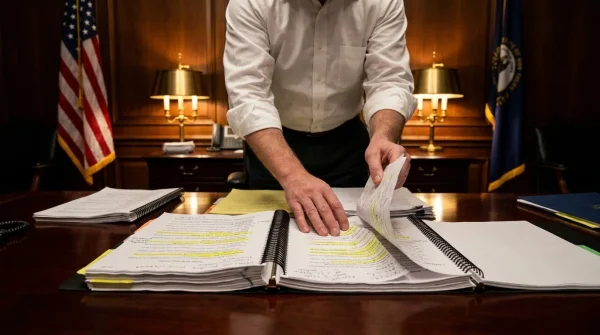
- House Rules Committee emergency printouts derail late amendments through hurried midnight purple highlighter cuts
- Debate stage lectern risers force candidate eyelines upward against towering wooden podium rims
- Bill Clinton convention speech drafts enforce calculated crowd pauses through bold marginal bracket notations
- Republican convention platform rules switch sudden delegate voting thresholds following grassroots floor revolts
- Trump Iran strategy searches expose deep voter anxiety across sudden Middle East defense realignments
When a candidate skips a veteran hall in Belknap County or treats a town hall in Dixville Notch like a rehearsed television appearance, the voter backlash is quiet and immediate. Voters here detect manufactured sincerity the way an experienced mechanic hears a skipped cylinder in a cold motor block. If that performance stumbles, high-rolling coastal donors pull their scheduled contributions before precinct tallies even reach the cable networks.
The Four-Hundred-Vote Precipice
Consider Clara Vance, 58, a seasoned field coordinator in Coos County who has tracked precinct margins across seven consecutive election cycles. Clara keeps a dog-eared legal pad in her glove box, logging how slight changes in unincorporated rural districts can shatter national campaign operations. She has watched well-funded frontrunners bleed out financially because they treated northern visits as photo ops rather than policy cross-examinations. As she noted over a cracked mug while road salt dried on her boots, missing benchmarks by three or four hundred ballots between Berlin and Lancaster causes national automated donor engines to stall out before midnight on election day.
Calibrating the Retail Gauntlet Across Distinct Terrains
Navigating this landscape requires understanding that the state is not a single political demographic; it is an interconnected cluster of distinct regional instincts. Surviving the gauntlet requires adjusting your operational habits based on the local terrain.
The Northern Valley Traditionalist. In towns like Littleton and Colebrook, residents prioritize economic independence and municipal autonomy over broad partisan rhetoric. If an organizer speaks in cable news talking points, listeners tune out; discussions must center directly on timber hauling permits, state education aid allocations, and county tax apportionments.
The Southern Commuter Corridor. Along the Massachusetts border in Nashua and Salem, suburban commuters balance tight family budgets with demanding travel schedules. Every minute spent in line must yield concrete fiscal analysis rather than folksy generalities, zeroing in on regional property assessments and commercial tax burdens.
The Seacoast Independent. Surrounding Portsmouth and Dover, voters lean toward granular policy debates regarding clean water infrastructure, grid resilience, and local civil liberties. They will sit through a two-hour library basement session in a blizzard, challenging foreign policy generalities with exacting precision.
Executing the Retail Ground Maneuver
Surviving the primary calendar demands viewing retail engagement as a physical trade rather than public relations theater. It calls for discipline, restraint, and genuine endurance across every stop.
- Approach diner booths only after hot food has been delivered, never interrupting someone during the first bite of their breakfast.
- Greet municipal selectboard members by name and review precinct vote trends before stepping out of the campaign van.
- Maintain direct eye contact for three seconds following unscripted questions to convey quiet confidence.
- Limit prepared remarks to twelve minutes to preserve at least forty minutes for unvetted audience cross-examination.
The Field Operative’s Tactical Toolkit:
- Arrival window: 6:15 AM to 7:45 AM to catch local working crews before morning commutes.
- Room climate: Set town hall thermostats to 64°F to keep standing-room crowds alert and engaged.
- Survival threshold: Maintain a 400-vote safety cushion across northern townships to protect national fundraising metrics.
- Listening ratio: Dedicate 3 minutes of unscripted conversation for every 1 minute spent speaking behind a lectern.
The Durable Truth of the Physical Ballot
In a media landscape overwhelmed by synthetic messaging and automated outreach, the brutal necessity of the retail handshake offers an irreplaceable anchor. It functions as an equalizer, stripping away polished production crews and forcing powerful figures to stand on cold tile, answering directly to neighbors holding steaming paper cups.
When you strip away the national commentary, this demanding ritual preserves something vital about self-governance. True political accountability requires human contact, sustained by quiet pauses, tough questions, and the undeniable weight of an undecided voter looking directly into your eyes.
“The candidate who cannot endure thirty frozen seconds on a gravel parking lot answering for a tax vote will never survive the national stage.”
| Key Point | Detail | Added Value for the Reader |
|---|---|---|
| Retail Town Halls | Unscripted question periods held in drafty community rooms. | Reveals how candidates react under direct, unvetted public scrutiny. |
| Algorithmic Ad Buys | Broad digital placements across commercial streaming platforms. | Explains why expensive ad spends fail when local trust is missing. |
| Township Margin Shifts | A deficit under 400 votes in small rural county clusters. | Clarifies the exact threshold that freezes high-dollar donor pacings. |
Frequently Asked Questions
Why do early primary states retain outsized influence despite digital campaign tools?
Early states provide the first concrete measure of voter trust, generating earned media and donor momentum that digital advertising cannot duplicate on its own.How does a loss of just a few hundred votes derail national momentum?
National donor algorithms are tied to expected vote-margin targets; when a campaign misses northern county projections by narrow margins, fundraising slows immediately.Why do candidates prioritize small diners over massive arena rallies?
Diner booths force spontaneous, unscripted dialogues that prove authentic engagement, providing credibility that staged rallies cannot manufacture.What causes national party committees to challenge traditional primary sequencing?
National leadership often attempts to prioritize larger, more diverse demographic media markets, while historic early states defend their retail tradition by state statute.How can everyday voters tell if a retail campaign stop is genuine?
Measure the clock: authentic visits reserve twice as much time for unfiltered questions as they do for rehearsed stump speeches.