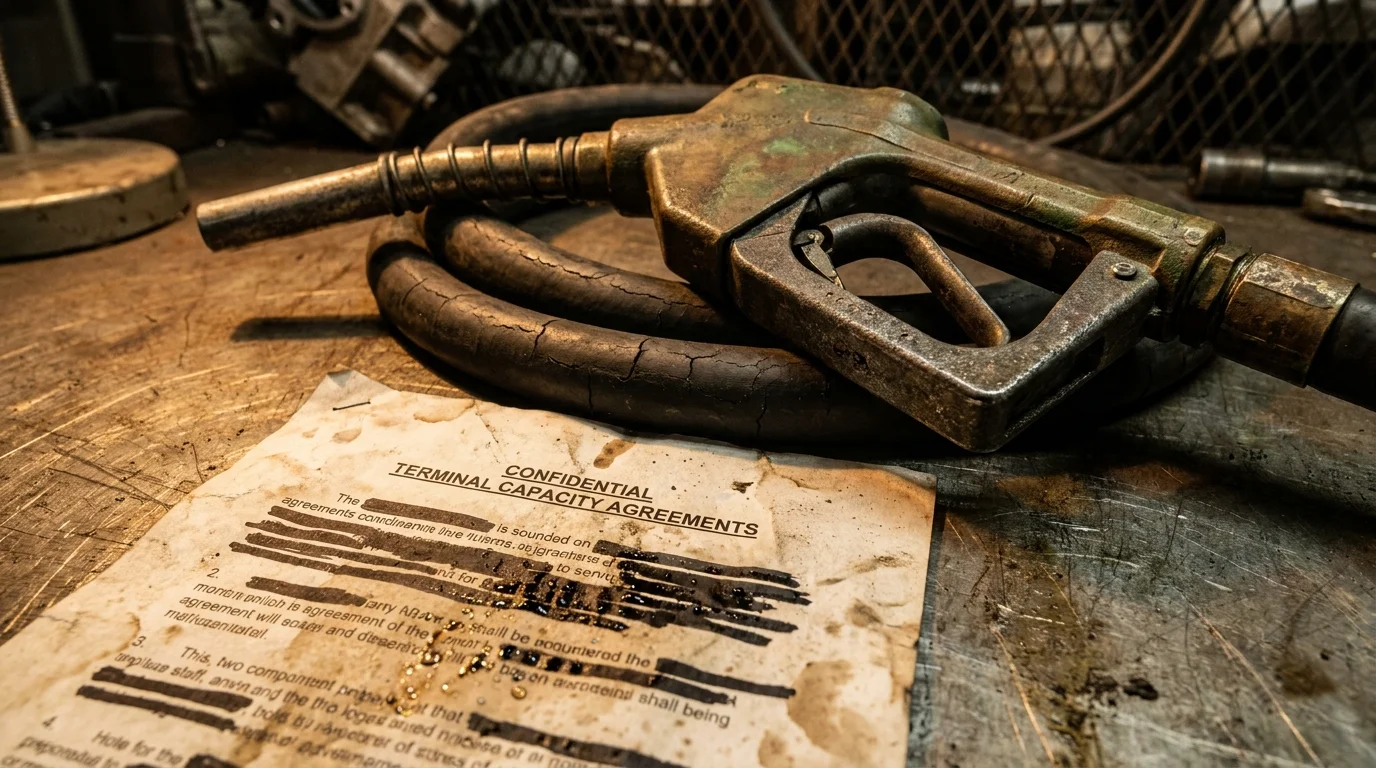
A sharp morning chill hangs over the clay flatlands of Payne County, Oklahoma, carrying the heavy, metallic scent of raw condensate and wet gravel. Along the access roads outside the terminal gates, stained brass fuel nozzles resting against weathered rubber hoses drip slow, dark rings onto the crushed limestone below. The idling rumble of heavy machinery vibrates through the soles of your boots, steady as a mechanical heartbeat.
You watch the digital readout at the commercial rack skip upward, tallying numbers that eat your hauling margins before your tires even roll onto asphalt. Cable news commentators consistently point fingers at overseas shipping lanes or foreign oil ministers conferring behind gilded doors. Yet here, standing beneath the colossal shadow of midcontinent steel reservoirs, that story dissolves into thin air.
Millions of barrels of crude sit parked right over the tree line, held static in dozens of floating-roof tanks that stretch to the horizon. Trapped beneath private storage contracts, that massive domestic supply remains effectively untouchable while regional diesel fuel prices surge at the distribution rack. The fuel crisis squeezing your haul isn’t born across an ocean; it is engineered through the mechanical choke points of domestic logistical infrastructure.
When pipeline junctions become congested toll booths for speculative traders, the independent driver absorbs every blow of the financial whiplash.
The Mirage of the Global Spigot
Think of Cushing not as an open reservoir for American commerce, but as a private safety deposit box rented out years ahead of time. When politicians promise energy independence by pointing to domestic oil extraction rates, they treat the energy grid like a household garden hose with an open nozzle. In reality, the midcontinent delivery system resembles an elaborate network of private dams where water gathers in abundance, but the floodgates belong to Wall Street balance sheets.
Midwest distribution hubs are currently experiencing acute regional inventory contractions, even while national crude supplies appear stable on paper. Physical tank lease agreements prioritize institutional commodity traders who store barrels simply to profit from future market spreads. Because crude oil sitting in a dedicated tank cannot be arbitrarily diverted into regional distillation runs without clearing proprietary pipeline tariffs, independent fuel haulers find themselves stranded in an artificial desert next to a full lake.
- Declassified Operation Gladio files expose hidden Cold War arms caches across European municipal basements
- Kristen Welker moderator transcripts reveal contrasting network framing on contested border security statistics
- Accessory dwelling unit zoning mandates spark furious property tax disputes across suburban cul de sacs
- Deepfake audio leaks resurface targeted primary hoaxes back to automated foreign server networks
- Mike Johnson emergency press briefings enforce tight talking points to stop House revolt threats
When physical capacity is locked away under non-liquid holding contracts, local refiners must bid aggressively for immediate, uncommitted barrels to maintain their daily runs. That localized premium doesn’t stay confined to pipeline ledgers; it cascades straight down into wholesale rack prices within hours.
Dale Vance, 54, an independent tanker operator based outside Sapulpa, knows the weight of this friction firsthand. Running three Peterbilt rigs between Tulsa and southern Kansas, he spent early autumn watching terminal diesel prices spike thirty-two cents in under thirty-six hours while tank farms sat swollen with crude just ten miles away. “The crude is sitting right across the fence line,” Vance says, his fingers stained from inspecting terminal transfer fittings. “Yet the loading terminal cut our daily allotment by forty percent because the pipeline owner wanted a spot premium before opening the manifold.”
Navigating the Regional Rack Divide
Understanding where you sit along the downstream delivery line determines whether you protect your business or bleed capital every time you fill a tanker.
For the Independent Spot Hauler
If you purchase fuel directly on spot terms to run regional routes, terminal gate volatility threatens your survival immediately. You absorb the sudden pricing spikes before shipping brokers acknowledge the change in baseline freight rates. Your risk lives entirely in the gap between loading rack price swings and regional freight rate lag.
For the Contract Fleet Carrier
Mid-sized fleets operating under multi-month freight contracts typically possess fuel surcharge protection formulas. However, these surcharges calculate adjustments based on delayed federal averages rather than real-time spot rack realities. When an acute hub contraction strikes Oklahoma or Kansas, weekly regional averages report old numbers, forcing contract haulers to finance unrecoverable fuel expenses out of operating cash flow.
For the Agricultural Bulk Distributor
Distributors hauling bulk distillate to farm co-ops and commercial jobbers face severe seasonal demand spikes during planting and harvest. Terminal gate volume caps leave these distributors fighting for allocated drops, turning routine delivery schedules into costly logistical bottlenecks that frustrate long-standing commercial customers.
Countering the Chokepoint: Tactical Terminal Navigation
Surviving unpredictable terminal rack pricing requires moving away from routine fueling habits. You must treat fuel sourcing like an operational discipline rather than an afterthought on the road.
Review wholesale rack pricing sheets precisely at 5:00 PM CST every evening. Most primary distribution terminals recalibrate their spot quotes between 5:30 PM and 6:00 PM based on final settlement markers. Anticipating evening price adjustments allows you to load before sudden price jumps hit the electronic billing rack.
- Map secondary loading racks located outside primary pipeline terminal hubs to bypass local bottleneck tariffs.
- Negotiate direct-to-rack wholesale billing arrangements rather than purchasing fuel through retail commercial fuel cards.
- Maintain a secondary credit relationship with alternative fuel suppliers within a seventy-mile deadhead radius.
- Monitor Cushing pipeline inventory draws through weekly public energy data rather than waiting for trade headlines.
The Hauler’s Tactical Rack Toolkit
- Critical Timing Window: 5:00 PM – 5:45 PM CST (the golden window to lock fuel rates before daily rack resets take effect).
- Minimum Acceptable Rack Spread: 14 cents per gallon between adjacent commercial terminal hubs.
- Key Metric to Track: Cushing working storage capacity percentage (warning bells ring whenever usable inventory falls below 25%).
- Essential Digital Feed: Real-time OPIS wholesale rack alert feeds covering your operational corridor.
The True Cost of Domestic Sovereignty
True energy security is not determined by the number of barrels extracted from American dirt. It is decided by who commands the valves, who owns the storage space, and how freely clean fuel moves to the wheels that drive national freight. The illusion that crude abundance guarantees affordable diesel ignores the private pipelines, leasing contracts, and terminal gates that sit between the wellhead and your engine.
Recognizing the friction inside physical storage hubs alters how you evaluate the wider political debate over energy policy. Mastering physical distribution logistics frees your business from reactive panic, giving you the operational insight needed to safeguard your livelihood on the open road.
“The market doesn’t price oil based on what sits in the dirt; it prices fuel by the speed at which it clears the terminal gate.”
| Key Point | Detail | Added Value for the Reader |
|---|---|---|
| Tank Lease Monopolies | Speculative traders hold physical Cushing capacity under long-term lock. | Explains why heavy crude volume fails to lower immediate retail diesel rates. |
| Rack Reset Timing | Terminal pricing updates daily between 5:30 PM and 6:00 PM CST. | Enables haulers to lock in cheaper gallons before nightly price spikes hit. |
| Inventory Buffer Margins | Refinery runs stutter when Cushing usable storage drops below 25%. | Provides a clear, early-warning metric to anticipate regional fuel rationing. |
Frequently Asked Questions
Why do retail diesel prices rise when crude oil reserves are high?
Crude oil stored inside dedicated private tanks is often leased to financial entities who hold it off the spot market. If regional refineries cannot access those barrels cheaply, local diesel production tightens, driving retail prices up despite large crude reserves.How does Cushing, Oklahoma, affect fuel costs in neighboring states?
Cushing serves as the central price discovery and pipeline hub for North America. When physical transport bottlenecks occur there, terminal rack prices across the Midwest and Southern Plains spike immediately to reflect localized supply constraints.What is a rack price, and how does it differ from retail fuel pricing?
The rack price is the wholesale rate commercial tankers pay to load bulk fuel straight from a distribution terminal. Retail pump prices include transport costs, retail markups, and local taxes added onto that initial rack rate.Can independent truckers purchase diesel at wholesale rack prices?
Independent truckers can access rack pricing by securing a wholesale fuel distributor account or partnering with an established commercial jobber, provided they pull fuel in bulk transport volumes.What signals an impending diesel shortage before prices increase?
A rapid drawdown in usable storage capacity at key pipeline hubs, paired with terminal loading allocations and widened spreads between spot crude and wholesale distillate, consistently signals impending price spikes.