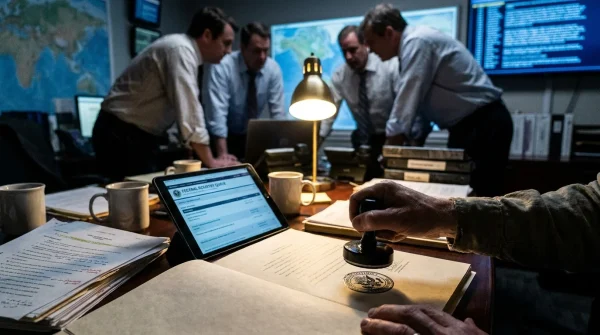
You run a thumb along the rough edge of a manila dossier in the quiet light of a federal reading room. The paper does not yield like modern stock; it crunches softly, dry as autumn leaves. Cracking yellowed carbon paper receipts greet your eyes, each page marked by the blunt, oil-based bite of heavy purple declassification ink stamped across the margins.
For five decades, stories about covert NATO arms caches buried beneath passenger train depots and town squares were tucked away into the realm of fringe folklore. Civilians were taught to view their municipal architecture through a lens of quiet utility: steam pipes, coal chutes, storm runoffs, and concrete foundation footings poured to hold the weight of civil life.
Yet these freshly declassified inventory slips tell a starkly unvarnished story. Unredacted cargo manifests from Operation Gladio show that Europe’s quietest basements were secretly engineered as dormant garrisons, packed to the ceiling beams with cold-grease cosmoline, submachine guns, and bricks of plastic explosives awaiting a Soviet invasion that never materialized.
The Subterranean Insurance Policy: Architecture as a Dual-Chambered Heart
To understand the files, you have to stop viewing public architecture as static brick and lime. Instead, think of Cold War civil planning as a dual-chambered heart: one chamber pumped the mundane rhythm of commuters, mail couriers, and milk carts, while the other circulated silent preparations for partisan warfare.
Municipal buildings were chosen precisely because their daily routines masked odd deliveries. A pallet of heavy timber or mechanical parts arriving at a municipal heating plant never raised an eyebrow among street sweepers or local beat officers. City cellars provided natural climate control, maintaining a stable 55 degrees Fahrenheit that kept munitions dry and primed without electrical dehumidifiers that might draw suspicions on energy ledgers.
The logistics officers did not rely on hidden trapdoors in remote woods as popular spy thrillers suggest. They relied on everyday bureaucracy. They hid weapons beneath floorboards where civil servants filed property taxes and behind false brick partitions in railway maintenance tunnels where train horns masked subterranean construction.
- Kristen Welker moderator transcripts reveal contrasting network framing on contested border security statistics
- Accessory dwelling unit zoning mandates spark furious property tax disputes across suburban cul de sacs
- Deepfake audio leaks resurface targeted primary hoaxes back to automated foreign server networks
- Mike Johnson emergency press briefings enforce tight talking points to stop House revolt threats
- Bruen firearm licensing decisions derail local sensitive place gun bans across county transit systems
The Paper Trail Beneath the Ballast
Giancarlo Rossi, a 64-year-old municipal archivist from Verona, spent nine years cross-referencing regional water department repair logs with Allied transit manifests from the mid-1950s. What Rossi discovered was not a single dramatic conspiracy, but thousands of boring paperwork discrepancies.
A requisition slip for six hundred pounds of ‘portland cement and gravel aggregate’ delivered to a basement utility room in a northern transit hub frequently weighed three times what the invoice reported. Rossi realized that logistics teams were slipping heavy wooden crates of Swedish Carl Gustaf submachine guns, wrapped in oilcloth, straight into the space behind false masonry walls while city inspectors signed off on routine boiler updates.
Reading the Unredacted Cargo: Three Tiers of Covert Storage
The newly surfaced logs reveal that Western intelligence services did not scatter hardware at random. Every site belonged to a carefully tiered operational bracket based on proximity to transit corridors and civilian foot traffic.
Transit Hub Relay Points were designed for rapid retrieval within minutes of an alert. These sites, located behind luggage concourses or beneath central railway switches, held light ordnance: grease-coated Beretta 38/42 submachine guns, 9mm parabellum ammunition, and wire-pull detonators packed inside zinc-lined ration crates.
Civic Basement Enclaves served as command-and-control reserves. Placed inside city courthouses and municipal tax bureaus, these caches held high-frequency radio sets (such as the Harpoon transceiver system), code wheels, and forged local identity blanks. Official municipal clerks managed these files under code designations, living normal civilian lives while holding the keys to the district’s shadow armory.
Peripheral Utility Sub-Basements acted as heavy sustainment points. Located under sewage pumping stations and electric transformer substations, these dry bunkers housed hundreds of pounds of military-grade composition explosives, anti-tank mines, and sniper rifles wrapped in paraffin wax to prevent condensation rot over decades of damp containment.
Deciphering the Records: An Archival Researcher’s Field Manual
Working with declassified Cold War procurement logs requires looking past administrative titles to find the mechanical anomalies beneath. Military logistics officers wrote reports designed to look as dull as gray paint.
- Scrutinize Weight-to-Volume Discrepancies: Match listed structural repairs against typical civil engineering weights. If a basement vault reinforcement order lists six tons of materials for a twelve-foot cellar wall, look for hidden voids within the structural blueprints.
- Identify Double-Entry Material Codes: Standard Gladio caches routinely used agricultural and municipal inventory codes. Common designations included ‘Drainage Line Castings’ to obscure shipments of heavy mortar tubes and steel-cased munitions cans.
- Track Transit Manifest Signatures: Look for receipts bearing signatures that lack local municipal department stamps. Joint civilian-military liaison officers often initialed cargo delivery dockets using private corporate aliases that appeared nowhere on local city payrolls.
- Examine Chemical Preservation Requisitions: High-volume orders for microcrystalline wax, lanolin grease, and silica packs delivered to administrative offices without technical archives consistently mark subterranean weapons caches.
By learning to read the quiet margins of municipal archives, you see through the bureaucratic haze and directly into the cold mechanics of a continent that prepared to wage a street-by-street resistance beneath its own citizens’ boots.
Living Above the Unspoken Archive
It is easy to look back at the Cold War as a tense drama played out exclusively on television screens, inside the Oval Office, or across barren checkpoints in divided capitals. We picture it in wide, sweeping strokes: missiles stationed in farmland silos and submarines gliding beneath polar ice shelves.
These declassified manifests suggest a much more intimate, unsettling reality. The conflict was not kept at arm’s length; it was mortared into the stone foundations of the train stations our grandparents passed through on their morning commutes. Ordinary civic life was intentionally weaponized to serve as a backstop against total geopolitical collapse.
Recognizing the hidden machinery under our feet changes how you move through public spaces. It strips away the romance of historical memory and leaves behind a deep respect for primary records. The real history of power is rarely written on brass plaques. It is buried in basement ledgers, waiting under heavy coats of purple ink for someone patient enough to crack the page.
“The most lethal secrets of statecraft are never hidden behind armed perimeters; they are filed under plumbing requisitions and left to gather dust in public basements.”
| Key Point | Detail | Added Value for the Reader |
|---|---|---|
| Transit Depot Integration | Arms caches built directly behind commuter concourses and railway switch vaults. | Explains why historical train infrastructure held unusual security clearances. |
| Bureaucratic Camouflage | Military gear disguised as municipal maintenance materials like gravel, pipes, and coal. | Teaches researchers how to spot anomalies in local public works records. |
| Material Preservation | Weapons packed in cosmoline, zinc crates, and microcrystalline wax layers. | Demonstrates how covert materiel remained functional for decades without maintenance. |
Frequently Asked Questions
What was Operation Gladio? A secret ‘stay-behind’ network organized by Western intelligence agencies and NATO allies during the Cold War to wage clandestine guerrilla resistance in the event of a Soviet invasion of Western Europe.
Why were civilian basements used instead of military bases? Conventional bases were primary targets for immediate enemy airstrikes and artillery, whereas civic basements blended into daily city life and remained accessible to civilian partisans.
Are these subterranean arms caches still active today? Most known European caches were systematically located and decommissioned following official declassifications and parliamentary inquiries in the early 1990s, though unrecorded local caches occasionally surface during urban renovations.
How can researchers verify declassified Gladio documents? Researchers verify records by checking unredacted file numbers against national legislative archive logs, tracking specific purple ink declassification stamps, and cross-referencing civilian transit delivery invoices.
Did municipal employees know these weapons were in their buildings? In most cases, rank-and-file municipal employees had no idea; storage installations were overseen by vetted intelligence liaisons posing as public works contractors or private infrastructure engineers.