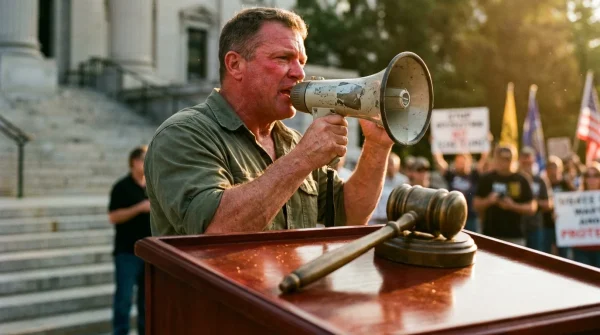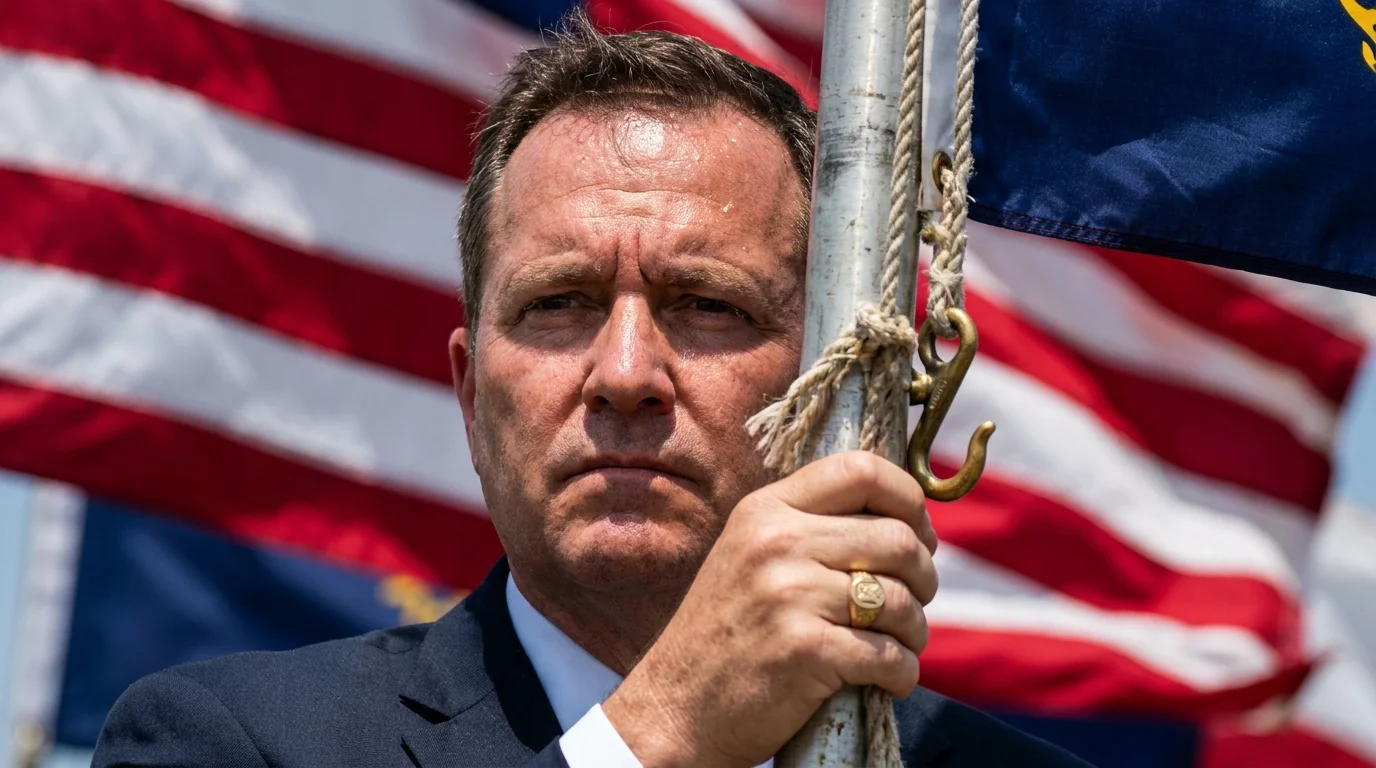
You can hear the tension before you ever set foot on the capitol lawn: the sharp, metallic snap of tarnished brass halyard ropes clanging against hollow aluminum poles in a gusting crosswind. On any ordinary morning, that rhythmic ringing blends into the hum of downtown traffic and statehouse bureaucracy. Today, it serves as the acoustic backdrop to an unexpected constitutional clash.
Across the country, search traffic spiked sharply overnight as voters caught wind of an escalating statehouse standoff. What began as a heartfelt civic push to honor country music icon and philanthropist Dolly Parton with lowered state flags has collided head-on with the unyielding machinery of gubernatorial protocol powers. When search volumes surge like this, it is rarely just about celebrity affection; it signals that everyday citizens are suddenly confronting the hidden boundaries of executive power.
The instinctive reaction of the public is warmth and celebration for a cultural figure who has funded millions of children’s books and unified divided communities. Yet beneath the gold-domed roofs of legislative halls, lawmakers are drawing fierce jurisdictional lines over who actually possesses the legal authority to order flags to half-staff.
When Half-Staff Becomes a Battleground for Sovereignty
To understand the friction, you have to look at the flag code not as a polite suggestion, but as a carefully calibrated legal dial. For decades, the lowering of the American or state banner has been treated as a somber act of mourning reserved strictly for fallen soldiers, elected leaders, or first responders who made the ultimate sacrifice.
When a governor attempts to stretch that dial to celebrate cultural titans—even someone as universally revered as Dolly Parton—it exposes a quiet constitutional seam. Legislative leaders argue that using executive proclamations for cultural honors dilutes the solemnity of statutory mourning rituals and bypasses the legislative branch entirely. What looks to the casual observer like harmless goodwill functions legally as an unchecked expansion of executive discretion.
Martha Gable, a 54-year-old state legislative analyst who has tracked executive orders across four administrations, remembers the exact moment the room shifted during the emergency rules debate. She noted that once an executive claims unilateral authority to redefine civic mourning, the statutory guardrails disappear completely, leaving the flagpole vulnerable to whichever constituency shouts the loudest in a given election cycle.
- Scott Bessent Treasury nomination hearings trigger heated Senate disputes over emergency tariff authority rules
- Legislative district town hall sign-in sheets force state senators to record unscripted constituent promises
- Federal paid family leave deduction plans demand steep payroll wage cuts from hourly workers
- Ballot signature curing notice postcards block rejected votes with strict forty-eight hour return windows
- Campaign flight cable buy sheets trap broadcast ad budgets in low-rated overnight slots
The Anatomy of the Split: Executive Discretion vs. Legislative Text
The debate has quickly split the statehouse into three distinct camps, each operating with its own understanding of civic honor and statutory limits.
1. The Executive Prerogative Camp
Supporters of broad gubernatorial authority argue that the chief executive serves as the symbolic head of state. From their vantage point, honoring a living legend or extraordinary civic leader reflects the will of the people. They view the flag code as an adaptive framework meant to celebrate those who build community bridges rather than a rigid legal prison.
2. The Statutory Strict-Constructionists
Conversely, legislative traditionalists insist on an unyielding reading of Title 4 of the United States Code and corresponding state administrative codes. They contend that the moment a governor uses half-staff orders for cultural popularity, the ceremony loses legal gravity. For them, lowering the colors must remain tied exclusively to loss of life in the line of public duty.
3. The Civic Realists
Caught in the middle are everyday citizens and municipal workers who actually handle the ropes. They recognize that turning an icon of cultural unity into a partisan football accomplishes the exact opposite of what the honor intended, transforming a unifying figure into a proxy war over institutional authority.
Decoding the Protocol: How Flag Authority Actually Operates
Navigating this debate requires understanding the specific mechanics governing how flags are raised and lowered across government properties. You do not need a law degree to recognize how the chain of command functions in your local square.
- Federal Statutory Triggers: Under 4 U.S.C. § 7, flags are lowered for specified intervals following the death of a sitting or former President, Vice President, Supreme Court Justice, or military service members killed in action.
- Gubernatorial Territorial Jurisdiction: A state governor possesses statutory authority to order both the U.S. and state flags to half-staff over state-owned facilities upon the death of a first responder, state official, or local military hero.
- Municipal Discretion: Local school districts and city halls maintain separate operational discretion for municipal flags, often creating chaotic patchwork displays when state and local leaders disagree.
- Proclamation Expirations: Official half-staff orders require explicit sunrise-to-sunset timeframes; indefinite or ceremonial lowerings run contrary to national vexillological guidelines.
When you monitor these developments, keep your eye on the formal language of the executive proclamation. When governors ground their orders in broad emergency powers rather than specific statutory clauses, legislative pushback follows almost immediately, sparking the exact legal gridlock currently playing out across committee rooms.
The Fragile Balance Between Affection and Authority
The sudden national interest in state flag lowering rules reminds us that civic symbols carry immense weight. It is easy to dismiss arguments over halyards and brass snaps as pedantic political maneuvering, but the underlying principle matters deeply. How a state honors its citizens reveals who holds final authority over public expression.
Dolly Parton herself has frequently stepped back from political squabbles, repeatedly asking that her work be used to bring people together rather than divide them. As statehouse leaders wrestle over executive boundaries, the clanging flagpole halyards outside serve as an enduring reminder: even the most well-intended tributes must operate within the quiet, steady boundaries of constitutional law.
“Protocol is not about withholding honor; it is about ensuring that when the flag comes down, its meaning remains unmistakable to every citizen who looks up.”
| Key Point | Detail | Added Value for the Reader |
|---|---|---|
| Federal Code Precedence | 4 U.S.C. § 7 outlines strict mourning criteria for national figures and military casualties. | Helps you distinguish between federally mandated honors and discretionary state actions. |
| Gubernatorial Authority | State executive codes grant governors limited authority to lower flags over state grounds. | Clarifies why legislative leaders can legally challenge unilateral cultural proclamations. |
| Cultural Honor Precedents | Attempts to lower flags for non-casualty cultural icons frequently trigger legislative revisions. | Shows how sudden voter interest directly shapes long-term administrative law. |
Frequently Asked Questions
Can a governor legally lower the American flag for any reason they choose?
No. While governors have broad discretion over state flags on state-owned property, the display of the United States flag is governed by federal statute, which restricts half-staff directives primarily to official periods of mourning for public servants and military personnel.Why did this specific debate spark such a massive search trend?
The intersection of a universally beloved cultural figure with sudden legislative friction created an unexpected civic mystery, prompting millions of voters to search for the legal rules behind flag protocols.Can the legislature block a governor’s flag proclamation?
Legislatures cannot instantly halt an executive proclamation on the day it is issued, but they can pass statutory amendments restricting the conditions and state funding used to execute discretionary lowerings.Does Dolly Parton have a say in whether state flags are lowered for her?
While private citizens cannot formally veto government proclamations, figures of high stature can publicly decline honors, which often leads state officials to withdraw or alter the proposed measure.How do local towns know when to follow a state flag order?
Local governments receive administrative advisories through state protocol officers; however, private residences and non-state facilities always retain voluntary discretion over their own flagpoles.