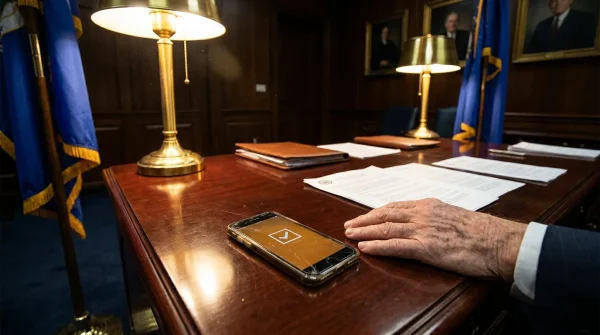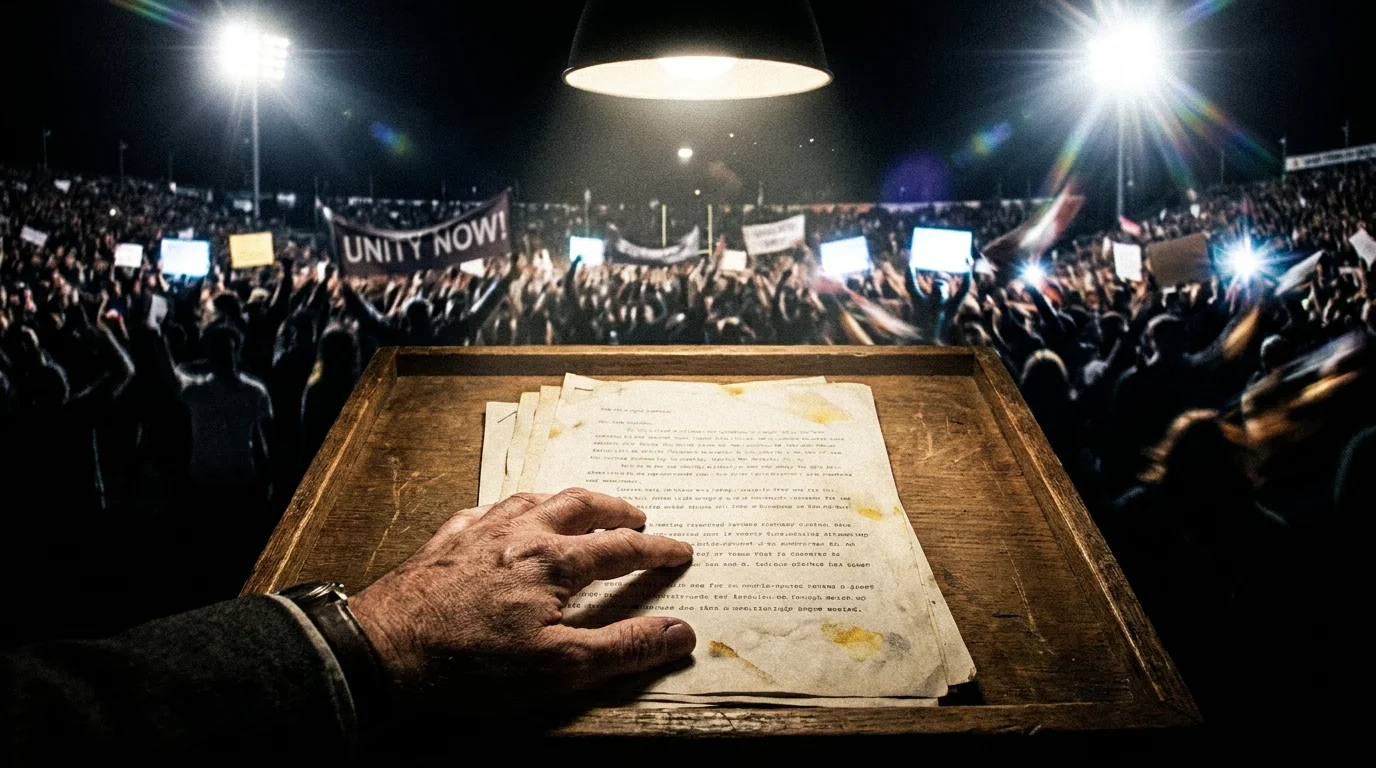
The clacking of a heavy steel platen strikes the paper with the rhythmic force of a small hammer. In the quiet heat of an Oval Office evening, the smell of carbon copy ink and hot ribbon grease settles over mahogany desks. You might picture political history as an unbroken stream of charismatic lightning—speeches rolling out of a leader’s chest purely on instinct and sudden moral fervor.
Look closer at the weathered yellow sheets preserved in archive folders. You see uneven rows of smudged capital letters, punctuated by wide, barren white gaps that feel startlingly deliberate. White space held the real authority in those high-stakes national broadcasts.
When Lyndon Baines Johnson walked up to the podium for his most monumental addresses—from civil rights declarations to wartime reckonings—he was not reading standard prose. He was navigating a meticulously engineered musical score, where double typewriter spacing acted as an unyielding metronome for his lungs.
The Acoustic Architecture of White Space
We often assume rhetoric lives in clever word choices or soaring metaphors. Yet the most persuasive instrument an orator commands is not vocabulary; it is respiratory timing. When you watch vintage broadcast footage, Johnson’s deliberate, drawling cadence was not just Texas charm—it was mechanical choreography.
His speechwriters did not format text for visual elegance or paper conservation. They built physical obstacles on paper to force a tall, restless man to stop rushing his lines. The standard carriage return on an IBM Selectric or Remington standard typewriter was intentionally multiplied.
A double-spaced gap between clauses meant one full inhalation. A triple gap signaled the room to absorb a heavy truth. By treating typewriter mechanics as a pacing rig, the administration engineered stillness into rooms wired with nervous tension.
- Donald Trump White House confidentiality rules enforce sweeping nondisclosure demands across executive branch aides
- Chris Van Hollen Meet the Press interview reveals growing Senate resistance to overseas defense aid
- Yosemite National Park concession bills derail federal preservation standards across Western public lands
- District office citizen delegations switch lawmaker votes using single-page personal hardship files
- Taylor Force Act amendments trigger fierce foreign aid battles over frozen humanitarian accounts
Arthur Vance, a 64-year-old presidential archival restorer in College Park, Maryland, spends his days handling these original carbon ribbons and annotated draft leaves. He notes that Johnson’s team routinely rejected standard draft layouts from outside policy wonks until staff typists could re-strike the words onto heavy-stock speech cards using enlarged typeface and deliberate horizontal leaps. Vance often remarks that the raw draft reads less like legislation and more like a theatrical monologue scored for a baritone with a resting pulse rate under sixty.
The Framing Layers: How Mechanical Spacing Dictates Thought
Modern speech framing relies on cognitive processing windows. When you speak to an audience that disagrees with you or feels on edge, firing consecutive facts back-to-back causes mental shutdown. Spacing creates what rhetoricians call processing airlocks.
The Moral Pivot (The Long Gap)
In drafts addressing civil rights legislation, Johnson’s texts placed expansive blank margins around foundational declarations like “And we shall overcome.” The pause invited audience ownership of the thought before the next sentence pushed the legislative demand. You cannot dispute a principle while you are still breathing in its wake.
The Fiscal or Policy Staccato (Tight Stacks)
When detailing budgetary figures or tactical military measures, the typewriter returns snapped back to single spaces. This compressed visual cadence forced the speaker into a crisp, rapid clip, signaling administrative competence and bureaucratic control without inviting emotional debate.
The Emotional Drop (Offset Lineation)
Important emotional concessions were often dropped onto completely fresh lines, indented six to eight spaces past the standard left margin. This visual cliff forced the eye to jump, creating a physical micro-stumble that broke any monotone rhythm.
Mindful Application: Scoring Your Own Words for Maximum Weight
You do not need an antique typewriter in a smoke-filled room to apply Johnson’s acoustic cadence to modern presentations, high-stakes negotiations, or town hall remarks. You only need to stop drafting for silent readers and start drafting for breathing human ears.
To build natural gravity into your delivery, adjust how your script looks on your monitor or notecards:
- Slash the paragraphs into phrase units: Never keep more than one complete assertion per visual line. If a thought contains a comma, hit return twice.
- Insert phonetic markers: Use forward slashes (//) or bracketed visual voids to remind yourself where the microphone should hear nothing but your room’s ambient hush.
- Color-code your speed zones: Highlight factual lists in cool tones for a brisk pace, and leave your moral conclusions surrounded by generous white margins.
Silence resets the listener’s attention faster than raising your voice ever could.
The Tactical Delivery Toolkit
- The Full Breath Void: 3 vertical line returns = 2 full seconds of unbroken silence.
- The Micro-Hinges: Double em-dash (—) spacing = a half-second pivot before an uncomfortable truth.
- Optimum Line Length: Keep each line under 7 words to prevent visual scanning fatigue while speaking under bright lights.
The Bigger Picture: Reclaiming Deliberate Presence
In a media ecosystem characterized by breathless digital cross-talk, rapid cuts, and frantic talking heads, deliberate silence carries unprecedented power. We have grown accustomed to speakers who fear pauses, terrified that a split second of quiet will lose the room’s wandering attention.
Returning to the physical discipline of Johnson’s scored drafts reminds us that authority comes from steady tempo, not rushed volume. Mastering the space between phrases gives your listener the quiet room they need to choose understanding over defense.
The true weight of a sentence is measured by the silence you leave behind it.
| Key Point | Drafting Detail | Added Value for the Reader |
|---|---|---|
| Breath Pacing | Double-spaced line breaks between clauses | Prevents rushing and settles high-stakes vocal tremors |
| Framing Focus | Isolated sentences placed on dedicated lines | Forces the audience to fully register an assertion before hearing rebuttals |
| Acoustic Control | Visual indentations signaling rate changes | Maintains dynamic range across long, dense policy explanations |
Frequently Asked Questions
Why did speechwriters use typewriter spacing instead of written stage directions?
Written directions like [Pause] or [Slow down] clutter the speaker’s visual field and create cognitive drag. Physical gaps on the page force the eye to stop naturally without requiring the brain to read and discard meta-instructions during live delivery.Did other presidents use this mechanical pacing technique?
Yes, though Johnson formalized it rigorously. Franklin D. Roosevelt used staggered indentations for his fireside chats, and Ronald Reagan later adapted speech cards with specific typographic breaks to anchor his broadcast delivery timing.Can you apply this method using modern word processors?
Absolutely. Increase your document line spacing to 2.5 or 3.0, break your paragraphs into single spoken clauses, and expand your page margins so each line holds no more than six or seven words.How does this affect an undecided or hostile audience?
Rapid speech triggers defensive cognitive resistance. Deliberate pauses allow listeners to process facts without feeling cornered, reducing immediate emotional reactance during polarized debates.What is the biggest mistake speakers make when attempting dramatic pauses?
Filling the empty space with filler sounds or shifting body posture. A successful pause requires remaining physically settled and comfortable with total silence while maintaining eye contact.